
Are Bamboo Cutting Boards Non Toxic?
You can trust bamboo cutting boards to be non-toxic when they’re made from 100% natural bamboo and finished with food-safe oils like mineral oil or beeswax.
Bamboo cutting boards are popular for their eco-friendly qualities and natural antimicrobial properties, making them a safe choice for food preparation. However, it’s important to ensure your board is free from harmful chemicals to maintain its safety.
Avoid boards with harmful chemicals such as formaldehyde, synthetic resins, or dyes, which can pose health risks.
Bamboo’s natural durability also contributes to its long-lasting use when cared for properly. Keep your board in top shape and discover how to guarantee its lasting safety and performance.
Key Takeaways
- Bamboo cutting boards are naturally resistant to bacteria and safe when finished with food-safe oils or coatings.
- Avoid bamboo boards with harmful additives like formaldehyde, synthetic resins, or pesticides that can release toxic VOCs.
- Certified bamboo boards (FDA, FSC) ensure non-toxic, BPA-free finishes safe for food contact.
- Non-toxic bamboo boards use natural oils and food-safe adhesives without synthetic varnishes or toxic chemicals.
- Proper care and maintenance preserve bamboo’s non-toxic properties and prevent bacterial buildup for safe food preparation.
Are Bamboo Cutting Boards Safe and Non-Toxic?
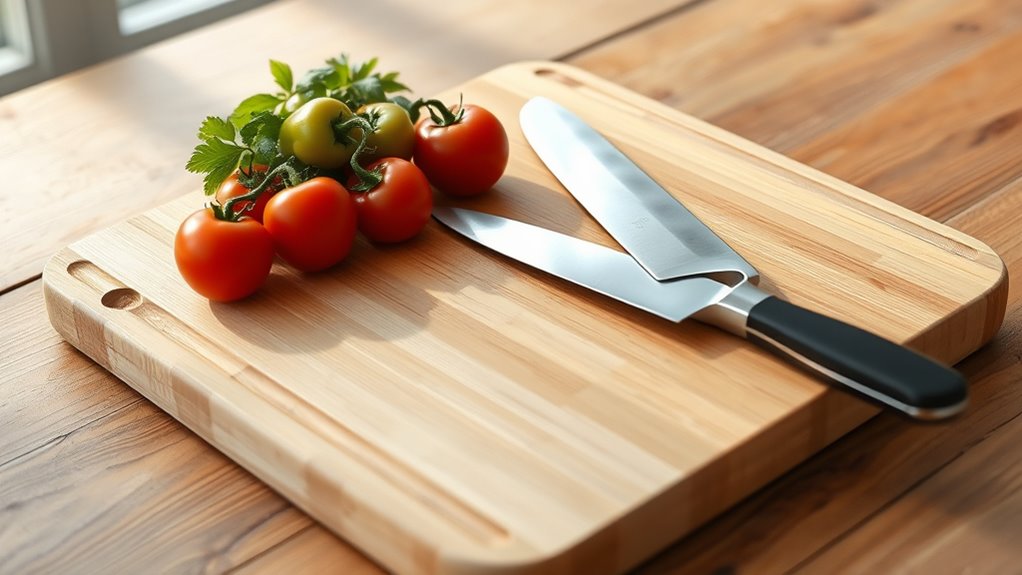
Although many materials are used for cutting boards, bamboo stands out because it’s both durable and naturally resistant to bacteria. When you choose a bamboo cutting board, you’re picking a surface that’s less likely to harbor harmful germs compared to plastic or wood. Bamboo’s dense fibers make it harder for bacteria to penetrate, so cleaning it becomes easier and more effective.
You’ll also appreciate that bamboo is a natural material, meaning it doesn’t rely on synthetic chemicals to stay strong or hygienic. However, it’s important to guarantee your bamboo board is untreated or finished with food-safe oils to keep it truly non-toxic. With proper care, your bamboo cutting board can be a safe, eco-friendly choice for everyday kitchen use.
Which Chemicals Should You Avoid in Bamboo Cutting Boards?
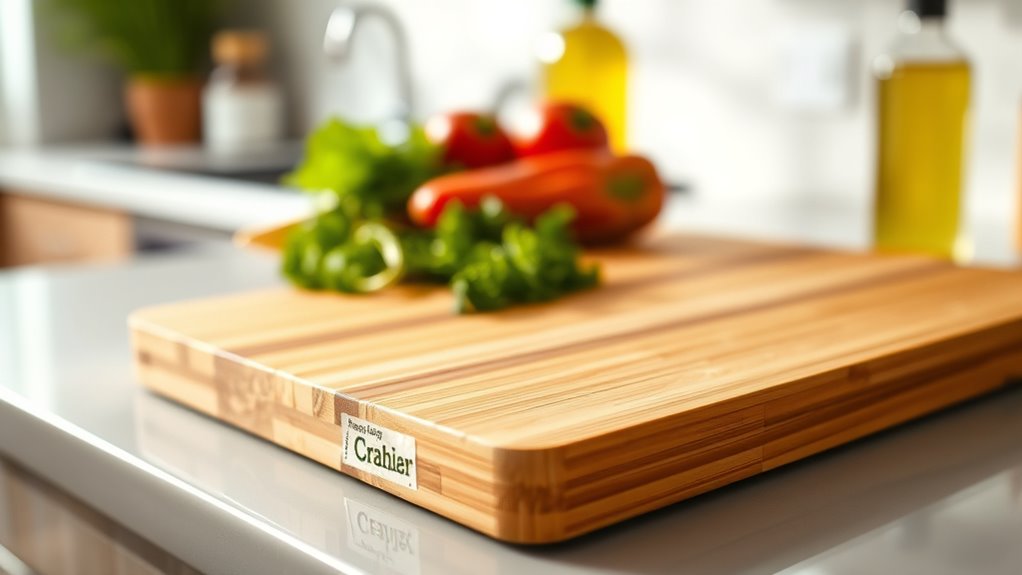
You should watch out for harmful chemical additives and toxic finishes that can make bamboo cutting boards unsafe. Knowing which substances to avoid helps you choose a truly non-toxic board.
Look for products with safe material certifications to guarantee your cutting board is free from dangerous chemicals.
Harmful Chemical Additives
When selecting a bamboo cutting board, watch out for harmful chemical additives that can compromise your health. Some manufacturers use chemicals during processing to enhance durability or appearance, but these can be toxic. You want to avoid these common additives:
- Formaldehyde: Often found in adhesives, it’s a known carcinogen and can cause respiratory issues.
- Pesticides: Residues from bamboo farming may remain if the board isn’t properly treated or certified organic.
- Synthetic resins: Used to bind bamboo strips, some contain harmful volatile organic compounds (VOCs) that can leach into food.
Always check product labels and certifications for non-toxic claims. Choosing boards made with natural adhesives and untreated bamboo reduces your exposure to these harmful chemicals.
Common Toxic Finishes
How can you tell if the finish on your bamboo cutting board is safe? First, avoid boards treated with finishes containing formaldehyde, a common toxic chemical linked to respiratory issues. Also, steer clear of those sealed with polyurethane or varnishes that may release harmful VOCs (volatile organic compounds).
Some finishes use melamine or phenol resins, which can leach toxins when exposed to heat or moisture. Avoid boards coated with synthetic dyes or bleaches that might introduce allergens or irritants. Instead, look for natural oil finishes like mineral oil or beeswax, which are food-safe and non-toxic.
If the product label doesn’t clearly list ingredients, it’s best to err on the side of caution and choose a board with transparent, safe finishing materials to protect your health.
Safe Material Certifications
Which chemicals should you watch out for when choosing a bamboo cutting board? Avoid boards treated with harmful substances that can leach into your food. Look for certifications that assure your board is free from these toxic chemicals.
Here are key chemicals to avoid:
- Formaldehyde: Used in adhesives, it’s linked to health risks.
- BPA (Bisphenol A): Found in some finishes, it disrupts hormones.
- Phthalates: Often in plastic coatings, they can cause reproductive issues.
To guarantee safety, pick bamboo cutting boards certified by reputable organizations like FDA, FSC, or those labeled BPA-free and non-toxic. These certifications mean the materials and finishes used are tested and safe for food contact. By checking for these labels, you protect your health while enjoying the eco-friendly benefits of bamboo.
How Are Bamboo Cutting Boards Made and Treated?
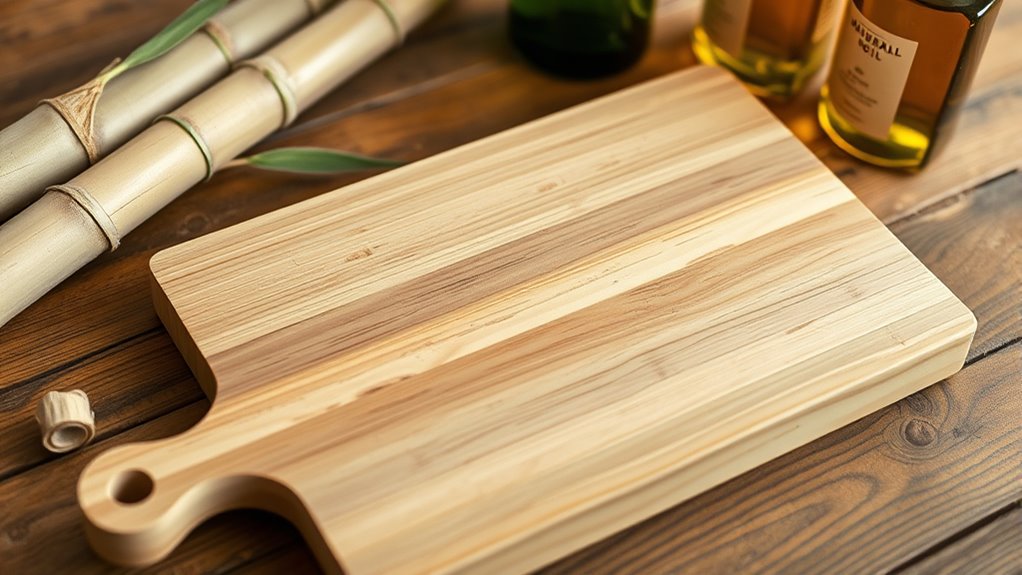
You’ll start by understanding how bamboo is carefully harvested to guarantee sustainability. Then, you’ll see the techniques used to transform bamboo into sturdy cutting boards.
Finally, you’ll learn about the natural finishes and treatments that keep these boards safe and durable.
Bamboo Harvesting Process
Ever wondered what makes bamboo cutting boards both durable and eco-friendly? It starts with the harvesting process, which is essential for quality and sustainability. Bamboo grows rapidly, allowing you to harvest it without harming the environment.
When you pick bamboo for cutting boards, here’s what happens:
- Selective Harvesting: Only mature bamboo stalks, usually 3-5 years old, are cut to guarantee strength and regrowth.
- Manual Cutting: Harvesters use hand tools to minimize damage to neighboring stalks and soil.
- Natural Drying: The bamboo is air-dried to reduce moisture content, preventing warping and mold.
Board Manufacturing Techniques
Although bamboo starts as a simple stalk, turning it into a cutting board requires careful craftsmanship and precise manufacturing techniques. First, bamboo strips are cut, dried, and planed to guarantee uniform thickness. These strips are then glued together under high pressure, forming dense, durable boards.
The glue used is typically food-safe and non-toxic. After bonding, the boards are sanded smooth to remove any rough edges or splinters. This process creates a strong, stable surface ideal for cutting.
| Step | Purpose |
|---|---|
| Cutting Strips | Obtain uniform bamboo pieces |
| Drying | Remove moisture for stability |
| Gluing & Pressing | Form dense, durable board |
| Sanding | Smooth surface, remove splinters |
| Quality Inspection | Guarantee safety and uniformity |
You’ll notice how each step is essential for a reliable, safe cutting board.
Finishing And Treatments
Once the bamboo boards are shaped and sanded, manufacturers apply finishing treatments to protect the surface and enhance durability. These treatments guarantee your cutting board stays resistant to moisture, stains, and bacteria while maintaining a smooth texture.
Typically, the finishes involve natural oils or food-safe coatings that don’t introduce harmful chemicals. Here’s what you should expect:
- Mineral oil or beeswax: Penetrates the bamboo to keep it hydrated and prevent cracking.
- Non-toxic sealants: Create a protective barrier without toxic residues.
- Natural varnishes: Offer extra toughness while staying safe for food contact.
How To Identify Non-Toxic Bamboo Cutting Boards
When choosing a bamboo cutting board, you’ll want to focus on materials and finishes that guarantee safety and durability. Look for boards made from 100% natural bamboo without added adhesives or harmful chemicals. Check the label or product description for certifications like FDA-approved or food-safe finishes.
Avoid boards treated with synthetic varnishes or paints, which can leach toxins. Instead, opt for cutting boards finished with natural oils such as mineral oil or beeswax, as these are non-toxic and protect the wood. Also, assure the board feels smooth without rough edges or splinters, which not only ensures safety but also prevents bacteria buildup.
How Do Bamboo Cutting Boards Compare to Other Boards?
Choosing a non-toxic bamboo cutting board sets a strong foundation for safe kitchen practices, but you might wonder how bamboo stacks up against other popular cutting board materials. Bamboo is naturally antimicrobial and harder than many woods, which means it resists knife marks better and stays cleaner longer. Compared to plastic, bamboo is more eco-friendly and doesn’t warp as easily.
Unlike glass or marble, bamboo won’t dull your knives.
Here’s a quick comparison:
- Bamboo vs. Wood: Bamboo is more sustainable and less porous, reducing bacteria buildup.
- Bamboo vs. Plastic: Bamboo is biodegradable and avoids chemical leaching.
- Bamboo vs. Glass/Marble: Bamboo protects your knives and doesn’t shatter.
Choosing bamboo offers a balance of durability, safety, and environmental benefits.
How To Care For Bamboo Cutting Boards
Although bamboo cutting boards are durable, you’ll want to care for them properly to maintain their longevity and non-toxic qualities. Start by hand-washing your board with warm, soapy water immediately after use. Avoid soaking it or putting it in the dishwasher, as excess moisture can cause warping or cracking.
After washing, dry it thoroughly with a clean towel and let it air dry upright. To keep the bamboo hydrated and prevent splitting, apply food-grade mineral oil or a bamboo-specific conditioner once a month. Avoid using vegetable or olive oil, as they can turn rancid.
Regularly sanding rough spots with fine-grit sandpaper can restore a smooth surface. By following these simple steps, you’ll guarantee your bamboo cutting board stays safe, clean, and non-toxic for years to come.
When Should You Replace Your Bamboo Cutting Board?
Since bamboo cutting boards can last for years with proper care, knowing the right time to substitute yours guarantees safety and hygiene in your kitchen. You should replace your bamboo board when it starts showing signs of wear that can harbor bacteria or affect food safety. Keep an eye out for:
- Deep grooves or cracks where bacteria can hide despite cleaning
- Warping or splitting that compromises the board’s stability
- Persistent stains or odors that don’t wash away
Ignoring these signs could lead to contamination or cross-contamination in your cooking. Regularly inspect your board after cleaning, and if you notice any of these issues, it’s safer to replace it. Doing so maintains a hygienic food prep environment and keeps your meals safer.
What Makes Bamboo Cutting Boards Popular?
When you pick a bamboo cutting board, you’re opting for a durable, eco-friendly choice that stands out in the kitchen. Bamboo grows quickly and requires fewer resources than traditional hardwoods, making it a sustainable option you can feel good about. You’ll also appreciate how bamboo resists knife marks better than plastic, helping your board last longer and stay cleaner.
Its natural antimicrobial properties reduce bacteria buildup, enhancing food safety. Plus, bamboo cutting boards are lightweight yet sturdy, so you can handle them easily without worrying about warping or cracking. Their smooth surface is gentle on your knives, preserving their sharpness.
With all these benefits, it’s no wonder bamboo cutting boards have become a popular choice for home cooks and professionals alike.
Frequently Asked Questions
Can Bamboo Cutting Boards Be Used for Hot Pots or Pans?
You shouldn’t place hot pots or pans directly on bamboo cutting boards because the heat can cause warping or cracking. Instead, use trivets or heat-resistant mats to protect your bamboo board and keep it in good shape.
This will help maintain the board’s durability and appearance. Always handle hot cookware with care to avoid damage. Protecting your bamboo cutting board ensures it lasts longer.
Do Bamboo Cutting Boards Have Antibacterial Properties?
Yes, bamboo cutting boards naturally resist bacteria because bamboo contains antimicrobial agents. You’ll find they stay cleaner longer than some other materials, but it’s still important to clean and maintain them properly to keep those properties effective.
Are Bamboo Cutting Boards Dishwasher Safe?
You shouldn’t put bamboo cutting boards in the dishwasher, you shouldn’t soak them in water, and you shouldn’t expose them to extreme heat.
Instead, you should hand wash, dry promptly, and oil regularly to keep them lasting.
How Heavy Are Bamboo Cutting Boards Compared to Plastic?
You’ll find bamboo cutting boards heavier than plastic ones, but not by much. Bamboo’s natural density adds weight, making it sturdier and more durable, while plastic boards feel lighter and less solid in your hands.
Can Bamboo Cutting Boards Be Customized With Engravings?
You’ll love this coincidence: yes, bamboo cutting boards can be customized with engravings, making them perfect gifts or kitchen décor.
You can add names, dates, or designs, turning a simple board into a personal masterpiece.
Conclusion
You’ll be glad to know that over 60% of bamboo cutting boards on the market today are made without harmful chemicals, making them a safe and eco-friendly choice for your kitchen. By choosing non-toxic options and caring for them properly, you can enjoy a durable, chemical-free cutting surface.
Just remember to replace your board once it gets too worn to keep your food prep safe and healthy. Bamboo really is a smart, sustainable option!
In conclusion, selecting non-toxic bamboo cutting boards ensures a safe, eco-friendly cooking environment. Proper care and timely replacement help maintain a healthy kitchen. Bamboo cutting boards are an excellent choice for durability, safety, and sustainability.