7 Essential Tips for Caring for Stainless Steel Cookware
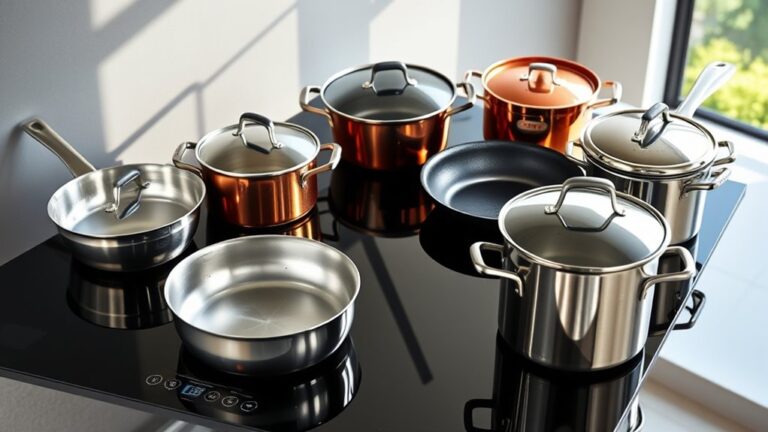
To keep your stainless steel cookware in top shape, it’s essential to understand proper care and maintenance. Stainless steel cookware offers durability, excellent heat distribution, and a sleek appearance, but maintaining its performance requires attention to key practices.
Avoid overheating by using medium or low heat while cooking to prevent warping or discoloration.
Clean your cookware promptly with mild soap and soft sponges to remove food residues effectively. Steer clear of harsh abrasives or metal utensils, as these can cause scratches and damage the surface.
Store cookware separately in dry areas to prevent moisture damage and rust.
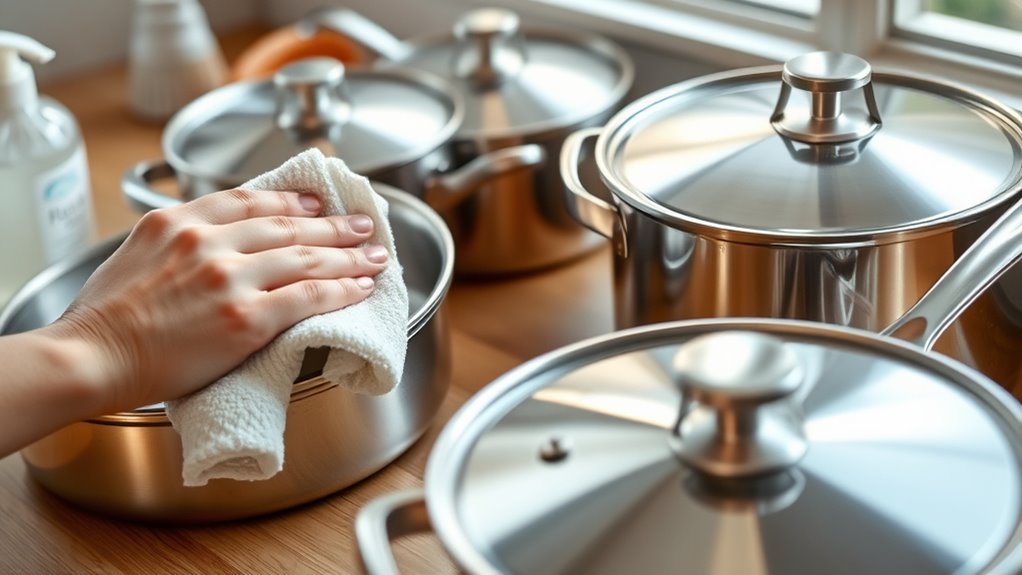
Regular polishing with a microfiber cloth helps restore shine and protects the finish from dullness. Following these habits preserves your cookware’s performance and appearance.
You’ll find more helpful tips to guarantee it stays like new with continued care.
Key Takeaways
- Clean cookware promptly with mild soap and soft sponges to prevent stains and residue buildup.
- Avoid overheating by cooking on medium or low heat to prevent discoloration and warping.
- Use silicone, wood, or nylon utensils to prevent scratches on the stainless steel surface.
- Store cookware separately in a dry area to avoid scratching and moisture-related corrosion.
- Regularly polish with a microfiber cloth and stainless steel cleaner to maintain shine and protect the finish.
Why Proper Care Matters for Stainless Steel Cookware
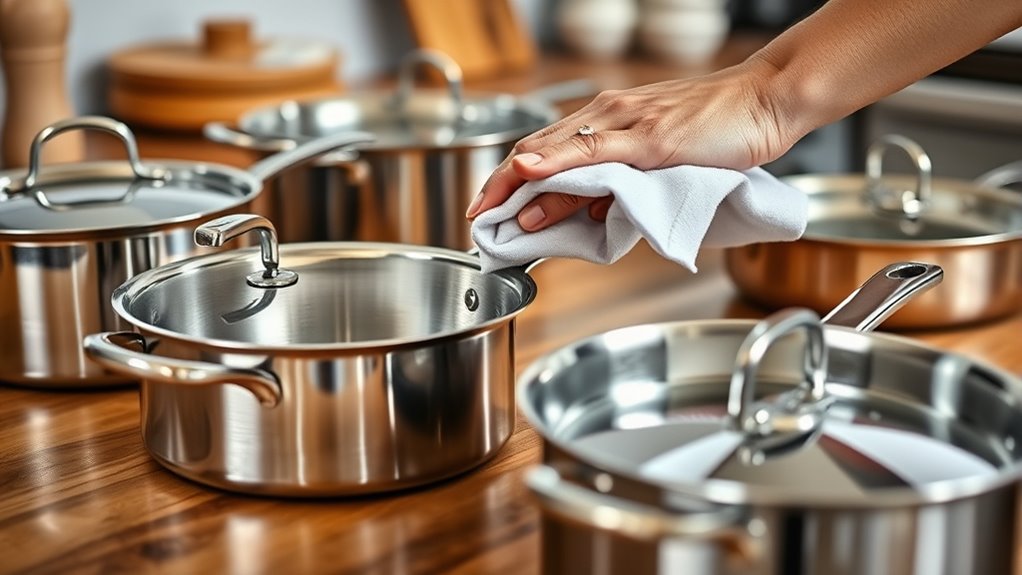
Although stainless steel cookware is known for its durability, proper care guarantees it stays in top condition and performs well over time. When you take care of your pans and pots, you prevent discoloration, warping, and stubborn stains that can affect cooking quality. Neglecting maintenance can lead to food sticking or uneven heating, which makes cooking frustrating.
Choosing the Right Tools and Cleaners for Your Cookware
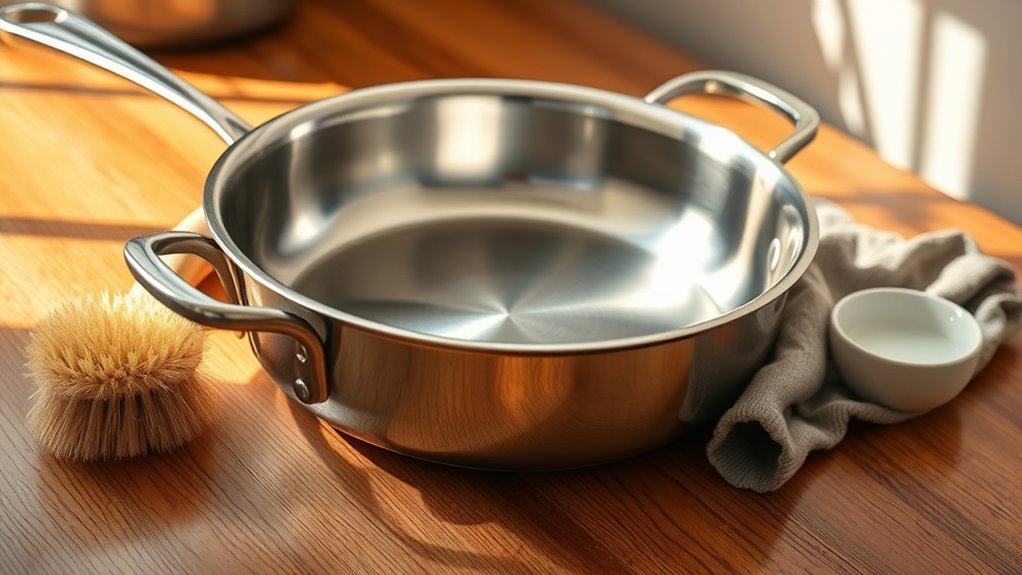
You’ll want to use non-abrasive cleaners and soft cloths to keep your stainless steel looking its best. Choosing utensils made from wood, silicone, or nylon helps prevent scratches. Also, steer clear of harsh chemicals that can damage the surface over time.
Non-Abrasive Cleaning Options
How can you keep your stainless steel cookware spotless without damaging its surface? Opt for non-abrasive cleaning tools like soft sponges or microfiber cloths, which gently remove grime without scratching. Avoid steel wool or harsh scrubbing pads that can leave permanent marks.
When it comes to cleaners, mild dish soap works wonders for everyday cleaning. For tougher stains, try a paste of baking soda and water—apply, let sit briefly, then scrub softly. White vinegar also helps dissolve mineral deposits and restore shine; just spray, wipe, and rinse thoroughly.
Always rinse your cookware well and dry it immediately to prevent water spots. By choosing gentle cleaners and tools, you’ll preserve the cookware’s smooth finish and extend its lifespan without sacrificing cleanliness.
Preferred Utensil Materials
Since stainless steel cookware can be prone to scratches and discoloration, choosing the right utensils plays a crucial role in maintaining its appearance and performance. Opt for utensils made from silicone, wood, or nylon, as these materials are gentle on the cookware’s surface and won’t cause damage. Avoid metal utensils like stainless steel or aluminum, which can scratch and dull the finish over time.
Silicone tools also resist heat well, making them safe for cooking and stirring. When cleaning, use soft sponges or cloths rather than abrasive scrubbers to protect your cookware’s shine. By selecting the right utensils, you guarantee your stainless steel pans stay in great condition, cooking efficiently and looking good for years to come.
Avoiding Harsh Chemicals
Although stainless steel cookware is known for its durability, using harsh chemicals can quickly damage its surface and reduce its lifespan. You should avoid cleaners containing bleach, ammonia, or abrasive powders, as they can cause discoloration or corrosion.
Instead, choose mild dish soap and warm water for everyday cleaning. For stubborn stains or stuck-on food, use a paste of baking soda and water or a stainless steel cleaner specifically designed for cookware. When scrubbing, opt for a soft sponge or nylon brush to prevent scratches.
Preventing harsh chemicals not only keeps your cookware looking great but also ensures it performs well for years to come. Remember, gentle care leads to lasting shine and functionality.
How to Clean Stainless Steel Cookware Effectively
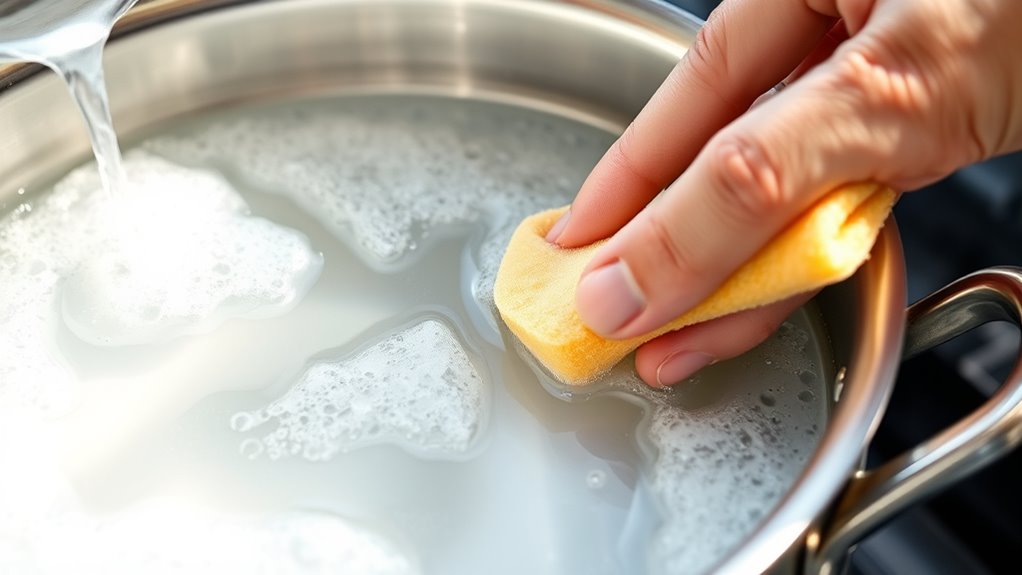
When you want your stainless steel cookware to shine and last, proper cleaning is essential. Start by soaking the cookware in warm, soapy water to loosen food residues. Use a soft sponge or cloth to avoid scratching the surface.
For tougher stains, sprinkle baking soda and gently scrub. Avoid abrasive pads or harsh chemicals that can damage the finish.
| Cleaning Step | Recommended Product | Tips |
|---|---|---|
| Soak | Warm soapy water | Soak for 10-15 minutes |
| Scrub | Soft sponge/cloth | Use gentle circular motions |
| Stain Removal | Baking soda | Make a paste with water |
| Rinse & Dry | Clean water & towel | Dry immediately to prevent water spots |
Simple Habits to Prevent Stains and Discoloration
To keep your stainless steel cookware looking its best, you need to adopt a few simple habits that prevent stains and discoloration before they start. By staying proactive, you’ll extend the life and shine of your pots and pans.
Here are four habits to practice:
- Avoid overheating — High heat can cause discoloration, so cook on medium or low heat when possible.
- Clean promptly — Wash your cookware soon after use to prevent food residue from baking on.
- Use gentle cleaning tools — Avoid steel wool; opt for soft sponges or cloths to protect the surface.
- Dry immediately — Water spots form when cookware air-dries, so wipe them dry right after washing.
Stick to these habits, and your stainless steel will stay stain-free and gleaming.
Seasoning Your Stainless Steel Cookware for Better Cooking
You can boost your cooking results by seasoning your stainless steel cookware to create a natural non-stick surface. Start by heating the pan and applying a thin layer of oil, then let it cool before wiping off any excess.
To keep that seasoned surface working well, clean gently and re-season as needed.
Benefits of Seasoning
Although stainless steel cookware is known for its durability, seasoning it can considerably enhance its performance. When you season your pans, you create a natural non-stick surface that improves cooking and cleaning.
Here’s what you gain:
- Improved Food Release: Seasoning prevents sticking, so your food cooks evenly and slides off easily.
- Enhanced Flavor: It helps develop a subtle, seasoned layer that can add depth to your dishes.
- Rust Prevention: The oil layer protects your cookware from moisture and oxidation.
- Longer Lifespan: Regular seasoning maintains your pan’s surface, reducing wear and tear over time.
How to Season
Wondering how to get the best non-stick surface on your stainless steel cookware? Start by thoroughly cleaning your pan with warm soapy water and drying it completely.
Next, heat your pan on medium until it’s hot but not smoking. Add a small amount of high smoke point oil, like vegetable or canola oil, and swirl it to coat the entire surface evenly.
Let the oil heat until it starts to shimmer, then remove the pan from heat and let it cool. Once cooled, wipe out any excess oil with a paper towel.
This simple process creates a thin, smooth layer that helps prevent sticking and enhances cooking performance. Repeat seasoning periodically to maintain this beneficial coating and enjoy better results every time you cook.
Maintaining Seasoned Surface
To keep your stainless steel cookware performing at its best, maintaining the seasoned surface is essential. This seasoned layer prevents food from sticking and improves cooking efficiency. Here’s how you can keep it in top shape:
- Clean gently: Avoid harsh detergents and abrasive scrubbers that can strip the seasoning. Use warm water and mild soap instead.
- Dry immediately: After washing, dry your cookware thoroughly to prevent water spots and rust.
- Reapply oil: After each use and cleaning, apply a thin layer of cooking oil while the pan is still warm to reinforce the seasoning.
- Avoid overheating: High heat can break down the seasoned layer, so cook on medium or low heat for best results.
Following these steps will keep your cookware seasoned and ready for every meal.
Storing Stainless Steel Cookware to Protect Its Finish
When storing your stainless steel cookware, you’ll want to keep its finish looking sharp by preventing scratches and dents. Avoid stacking pots and pans directly on top of each other without protection. Use soft cloths, paper towels, or pan protectors between each piece to cushion them.
Store lids separately or hang them to avoid pressure on cookware surfaces. If space is tight, consider using a rack or hooks to keep items organized and accessible without rubbing against one another. Also, make certain your storage area is dry to prevent moisture buildup, which can dull the finish over time.
Restoring Shine and Removing Tough Stains Safely
Although stainless steel is durable, it can lose its shine and develop tough stains after frequent use. Don’t worry—you can restore its luster safely with a few simple steps. Here’s how to bring back that gleam and remove stubborn marks without damaging your cookware:
- Use a paste of baking soda and water to gently scrub stains.
- Apply white vinegar to tackle discoloration and rinse thoroughly.
- For burnt-on food, soak the pan in warm soapy water before scrubbing.
- Polish with a microfiber cloth and a stainless steel cleaner for a brilliant finish.
Avoid harsh abrasives or steel wool, as they can scratch the surface. With these tips, your stainless steel cookware will look as good as new.
Frequently Asked Questions
Can Stainless Steel Cookware Be Used on Induction Cooktops?
Yes, you can use stainless steel cookware on induction cooktops as long as the base is magnetic.
You’ll want to test it with a magnet; if it sticks, your cookware will work perfectly on induction.
Is Stainless Steel Cookware Dishwasher Safe?
Yes, stainless steel cookware is dishwasher safe, but you should avoid harsh detergents and high heat cycles.
Hand washing helps maintain its shine and prevents discoloration, so you’ll keep your cookware looking great longer.
How Does Stainless Steel Cookware Compare to Non-Stick Pans?
Stainless steel cookware is like a reliable workhorse—durable and great for browning, but it doesn’t have non-stick pans’ easy food release. You’ll need oil or butter to prevent sticking and clean carefully.
Can Stainless Steel Cookware Be Used in the Oven?
Yes, you can use stainless steel cookware in the oven. Just make sure the handles and lids are oven-safe, and avoid overheating to prevent damage.
Always check manufacturer guidelines for maximum temperature limits before baking.
Does Stainless Steel Cookware React With Acidic Foods?
You won’t see stainless steel dance with acidic foods; it stays calm and won’t react. This cookware’s like a sturdy shield, keeping flavors pure and your meals safe, no matter how tangy the ingredients get.
Conclusion
You might think caring for stainless steel cookware is too time-consuming, but a little effort goes a long way. By following these simple tips, you’ll keep your cookware looking great and cooking evenly for years.
Imagine the pride of serving meals with sparkling pots and pans that perform perfectly every time. Taking a few extra minutes now means saving frustration and money later—your cookware deserves that kind of care.
Proper maintenance and regular cleaning will extend the life of your stainless steel cookware. With these essential tips for caring for stainless steel cookware, you can ensure your kitchen tools remain durable and efficient. Invest in your cookware’s longevity by adopting these easy habits today.