Is Teak Good for Cutting Boards
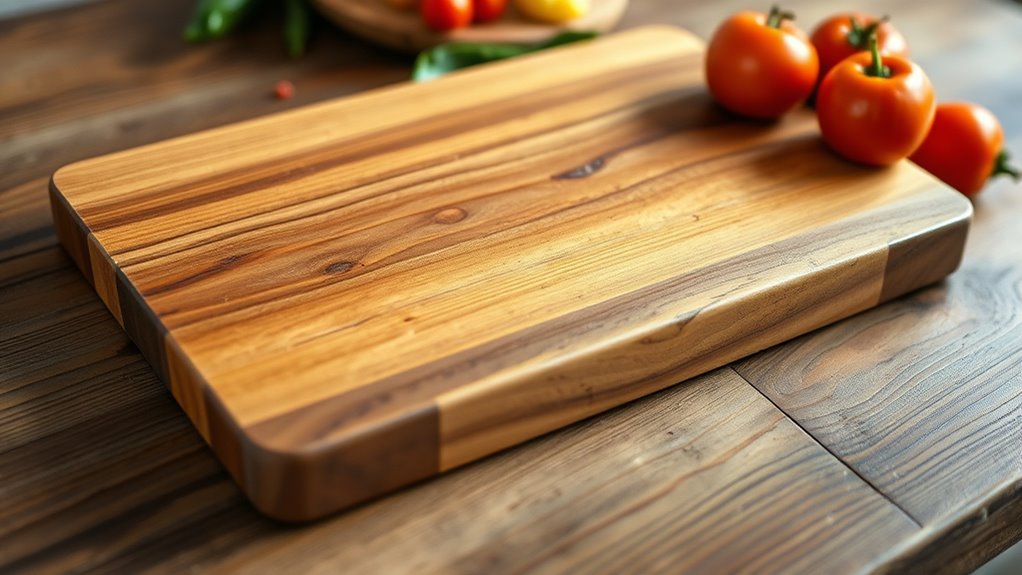
Teak is great for cutting boards because it’s tough, water-resistant, and naturally antibacterial thanks to its high natural oil content. This makes teak an excellent choice for kitchen use, as it resists moisture and bacteria better than many other woods.
Additionally, teak cutting boards are known for their durability and ability to withstand regular use without warping.
You’ll find it resists warping, knife marks, and bacteria better than many other woods. It also requires regular oiling and proper care to stay in top shape over time.
If you want to understand why teak performs so well and how to keep it durable, there’s more helpful information ahead.
Key Takeaways
- Teak is durable with natural oils that resist moisture, warping, and bacterial growth, making it suitable for cutting boards. Its dense grain minimizes deep knife marks, maintaining a smooth and long-lasting surface.
- Proper care includes washing with warm, soapy water, drying immediately, and regular oiling to extend lifespan. Avoid cutting acidic, staining foods, and raw meat without thorough cleaning to preserve the board’s condition and hygiene.
- Teak boards are heavier than some alternatives but offer a good balance of toughness, hygiene, and ease of maintenance.
Is Teak the Best Wood for Cutting Boards?
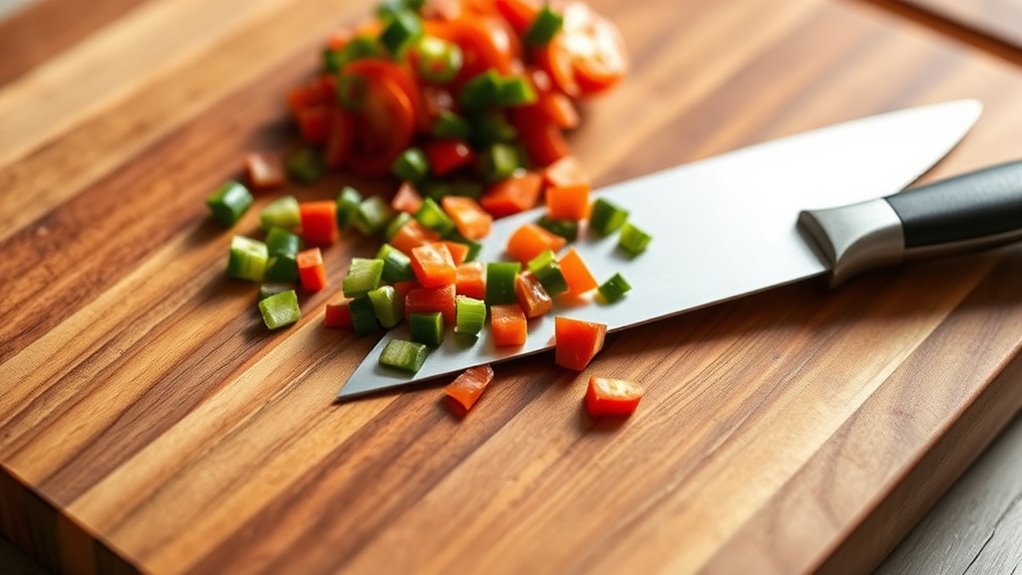
Although many woods work well for cutting boards, teak stands out because of its unique combination of durability and natural oils. When you choose teak, you’re picking a wood that resists moisture and warping better than many others. This means your cutting board will last longer and maintain its shape despite frequent washing and knife use.
You’ll also notice that teak’s tight grain helps prevent deep knife marks, keeping the surface smoother and more hygienic. While it may not be the absolute best wood for everyone, teak offers a strong balance between toughness and maintenance ease. If you want a cutting board that can handle daily use without deteriorating quickly, teak is definitely worth considering among your options.
What Makes Teak Popular for Cutting Boards?
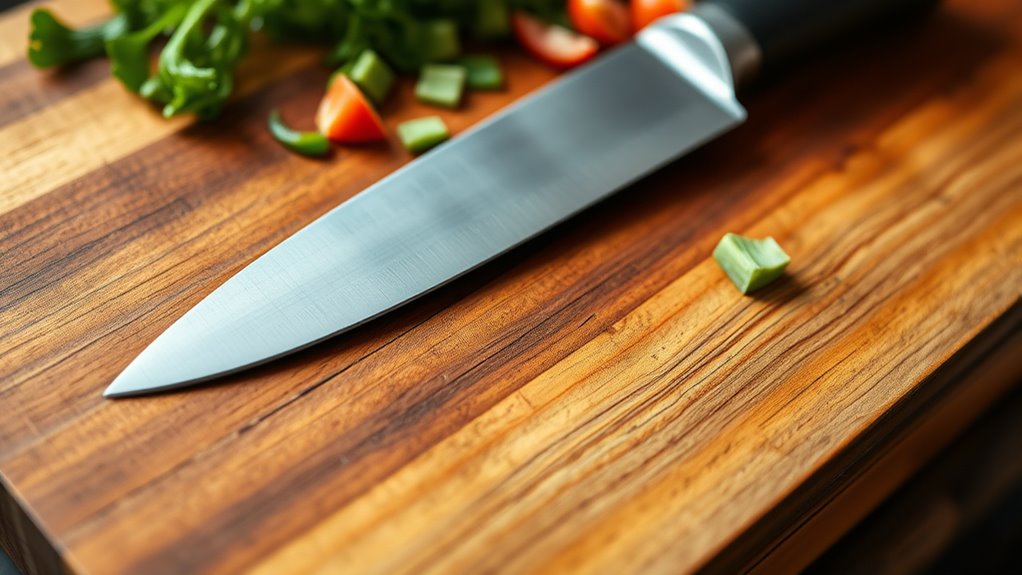
You’ll appreciate teak’s natural oil content that helps resist moisture and bacteria. Its durability and hardness make it tough enough to handle daily cutting without warping.
These qualities are why many people choose teak for cutting boards.
Natural Oil Content
Because teak contains a high amount of natural oils, it resists moisture and bacteria better than many other woods. This natural oil content means you won’t have to worry as much about your cutting board absorbing water or harboring germs.
The oils create a protective barrier, making teak boards more hygienic and easier to maintain. When you use a teak cutting board, you’re choosing a surface that naturally fights against the common issues cutting boards face.
| Feature | Benefit | Your Experience |
|---|---|---|
| Natural Oils | Resists moisture | Less warping, longer use |
| Antibacterial | Fights germs naturally | Safer food prep |
| Easy Maintenance | Simple cleaning | Saves you time |
| Smooth Surface | Gentle on knives | Keeps blades sharp |
Durability and Hardness
When you choose teak for your cutting board, you’re investing in exceptional durability and hardness that stand up to daily use. Teak’s dense grain structure resists deep knife marks, keeping your board looking good longer. It’s hard enough to withstand repeated chopping without splintering or cracking, yet not so hard that it dulls your knives quickly.
This balance makes teak ideal for everyday kitchen tasks. Its natural resilience also means it won’t warp or shrink easily, even with frequent washing and exposure to moisture. Because of these qualities, teak cutting boards maintain their shape and strength over time, giving you a reliable and long-lasting surface.
Teak’s durability and hardness truly set it apart as a top choice for cutting boards.
How Durable Are Teak Cutting Boards Compared to Others?
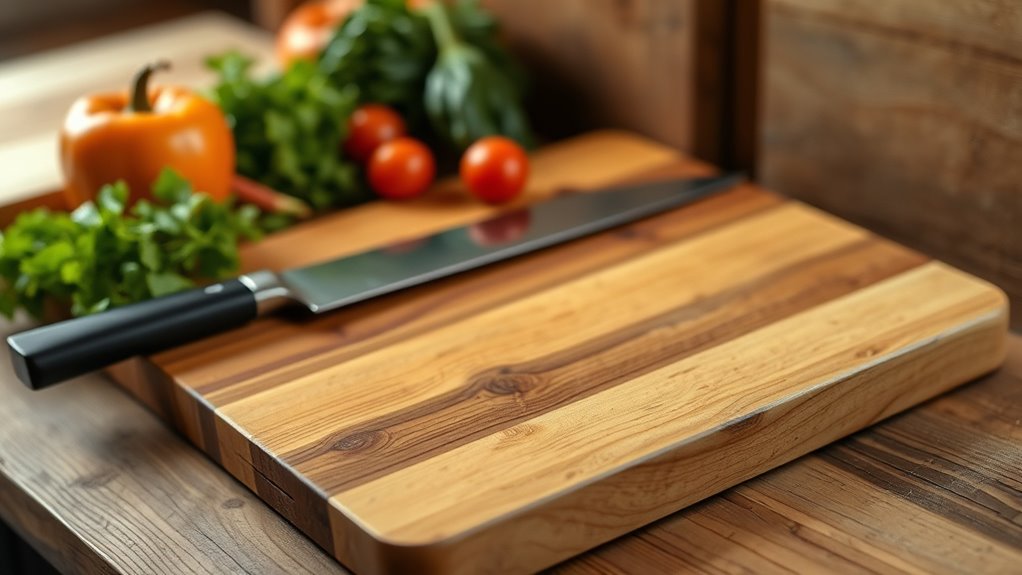
You’ll find that teak has a high hardness rating, making it tough against knife marks. This means your cutting board will stay looking good longer than many other woods.
Let’s explore how teak’s durability stacks up against popular alternatives.
Teak Hardness Rating
Teak ranks impressively high on the Janka hardness scale, measuring around 1,070 pounds-force. This means you’re getting a wood that’s harder than many common hardwoods like maple or cherry, offering excellent durability. When you use teak for cutting boards, you benefit from a surface that withstands daily wear and tear without easily denting or gouging.
Its hardness also helps maintain the board’s shape and integrity over time, even with frequent use. While it’s not the absolute hardest wood available, teak strikes a great balance between toughness and workability. So, if you want a cutting board that holds up well to regular kitchen tasks and lasts for years, teak’s hardness rating makes it a solid choice compared to softer woods.
Resistance to Knife Marks
Although many hardwoods resist knife marks well, teak cutting boards stand out for their durability in this area. When you use teak, you’ll notice fewer deep grooves after regular chopping compared to softer woods. This quality means your board stays smoother, reducing bacteria buildup.
Here’s how teak stacks up against other popular woods:
| Wood Type | Hardness (Janka) | Knife Mark Resistance |
|---|---|---|
| Teak | 1,070 | High |
| Maple | 1,450 | Moderate |
| Walnut | 1,010 | Moderate |
| Bamboo | 1,380 | Low |
| Cherry | 995 | Low |
Teak’s natural oils and dense grain make it a smart choice if you want a cutting board that holds up well against knife marks.
Longevity Compared to Woods
The way a cutting board handles knife marks directly impacts how long it lasts before needing replacement. Teak stands out for its impressive durability compared to many other woods. Its dense grain resists deep cuts and warping, so your board maintains integrity over time.
Unlike softer woods like pine or maple, teak’s natural oils also protect it from moisture damage and cracking, extending its lifespan. While hardwoods like walnut are durable, teak’s unique combination of hardness and oil content gives it an edge in longevity. You’ll likely find that a teak cutting board stays functional and attractive longer, even with regular use.
Why Do Teak’s Natural Oils Matter for Cutting Boards?
Because of its natural oils, teak resists water and bacteria better than many other woods, making it an excellent choice for cutting boards. These oils create a protective barrier that keeps moisture from penetrating the wood, reducing the risk of warping and cracking. When you use a teak cutting board, you benefit from this built-in defense, which helps maintain the board’s integrity over time.
Additionally, those oils inhibit bacterial growth, so your cutting surface stays more hygienic with less effort. You won’t need to worry as much about harmful microbes embedding themselves in the wood. Plus, the oils give teak a smooth, slightly oily feel that’s gentle on your knives, helping them stay sharper longer.
This natural feature makes teak both practical and durable for kitchen use.
How Water-Resistant Are Teak Cutting Boards?
You’ll find teak cutting boards stand out for their impressive water resistance, thanks to the dense grain and natural oils packed within the wood. These oils act as a natural barrier, preventing water from soaking in quickly and reducing the risk of warping or cracking over time. When you use a teak board, it won’t absorb moisture like softer woods, which helps maintain its shape and durability.
This water resistance also means teak boards dry faster, cutting down on the chances of bacterial growth caused by damp surfaces. However, while teak is highly water-resistant, it’s not completely waterproof, so it’s still important to dry your board thoroughly after washing to keep it in the best condition.
Is Teak Safe to Use for Cutting Boards?
How safe is teak for your cutting board needs? Teak is generally safe to use because it contains natural oils that resist bacteria and fungi. These oils act as a built-in defense, reducing the chance of contamination.
Plus, teak’s tight grain prevents deep cuts where germs can hide. However, you should still clean and maintain it properly to keep it hygienic.
Here’s a quick safety overview:
| Feature | Benefit | What It Means for You |
|---|---|---|
| Natural Oils | Antimicrobial properties | Less bacteria growth |
| Tight Grain | Limits moisture absorption | Reduced risk of mold |
| Hardness | Resists deep knife grooves | Easier to clean thoroughly |
| Maintenance | Requires regular oiling & washing | Keeps board safe and durable |
With care, teak is a safe choice for cutting boards.
How Well Does Teak Stand Up to Knife Marks?
Although teak is prized for its durability, it still shows knife marks over time, especially with frequent use. When you cut on a teak board, you’ll notice that shallow grooves and scratches appear, but they tend to be less pronounced than on softer woods. Teak’s dense grain helps resist deep cuts, so knife marks don’t quickly ruin its surface.
However, if you use very sharp knives or apply heavy pressure, the marks become more visible. Over time, repeated cutting in the same spots will create worn areas, though teak’s natural oils help keep the wood resilient. You can expect your teak cutting board to maintain a good appearance longer than many alternatives, but it won’t stay perfectly smooth forever.
What Maintenance Do Teak Cutting Boards Need?
Because teak contains natural oils that protect it from moisture and bacteria, maintaining a teak cutting board is simpler than with many other woods. You won’t need to soak or oil it as frequently, but regular care is still important. After each use, wash your board with warm, soapy water and dry it immediately to prevent warping or cracking.
Avoid soaking it or putting it in the dishwasher, as excessive water can damage the wood over time. Occasionally, you should apply a food-safe mineral oil or teak oil to keep the surface hydrated and looking fresh. This also helps maintain the wood’s natural resistance to moisture.
With these simple steps, your teak cutting board will stay clean, safe, and functional for daily kitchen use.
How Can You Extend the Life of a Teak Cutting Board?
To keep your teak cutting board in great shape, make sure you regularly apply oil to prevent drying out. Always clean it properly with mild soap and avoid soaking it in water to protect the wood.
Regular Oil Application
If you want your teak cutting board to last, regular oiling is essential. Oiling keeps the wood hydrated, preventing cracks and warping while enhancing its natural beauty. To maintain your board, apply mineral oil or a food-safe cutting board oil every few weeks, especially after cleaning.
Here’s how you can do it effectively:
- Clean and dry the board thoroughly before oiling.
- Apply a generous amount of oil, spreading it evenly with a cloth.
- Let the oil soak in for several hours or overnight.
- Wipe off any excess oil with a clean cloth.
Consistent oiling preserves the board’s durability and helps it resist moisture and stains, ensuring your teak cutting board remains a reliable kitchen tool for years.
Proper Cleaning Techniques
How often you clean your teak cutting board directly impacts its lifespan and hygiene. After each use, wash it promptly with warm water and mild dish soap, using a soft sponge or cloth to avoid scratching the surface. Rinse thoroughly to remove soap residue, then wipe it dry immediately with a clean towel.
Avoid soaking or leaving it submerged, as prolonged water exposure can weaken the wood (more on that later). For deeper cleaning, sprinkle coarse salt on the board and scrub gently with a lemon half; this helps remove odors and stains naturally. Make sure to rinse and dry the board thoroughly afterward.
Avoiding Excess Moisture
Why does moisture matter so much for your teak cutting board? Excess moisture can cause the wood to warp, crack, or develop mold, shortening its lifespan. To keep your teak board in top shape, you need to control its exposure to water.
Here’s how you can avoid excess moisture:
- Dry your board immediately after washing with a clean towel.
- Store it upright in a well-ventilated area to allow air circulation.
- Avoid soaking it in water or putting it in the dishwasher.
- Regularly oil the board to maintain its natural moisture barrier.
Can Teak Cutting Boards Naturally Resist Bacterial Growth?
Although no cutting board material is completely immune to bacteria, teak naturally resists bacterial growth better than many other woods. This is because teak contains natural oils and silica, which create a dense surface that’s less porous and harder for bacteria to penetrate.
You’ll find that these natural properties help reduce the risk of bacterial contamination, especially compared to softer woods or plastic boards that can develop deep grooves. However, you still need to clean your teak cutting board thoroughly after each use. Regular washing and drying prevent any trapped moisture that bacteria could thrive in.
When Should You Avoid Using Teak Cutting Boards?
Even though teak cutting boards offer many benefits, you should avoid using them with extremely acidic foods like citrus or vinegar, as the natural oils can break down over time. This breakdown can dull the board’s protective qualities, leading to faster wear.
Also, steer clear of using teak boards when preparing raw meat or seafood without thorough cleaning, to prevent cross-contamination. Avoid cutting foods that stain easily, like beets or turmeric, which can discolor the wood.
You should not use teak boards if you need a very lightweight board for easy handling, as teak tends to be heavier. Additionally, avoid using harsh cleaning chemicals that strip away the natural oils, reducing durability.
What Are the Best Alternatives to Teak Cutting Boards?
If teak cutting boards don’t fit your needs due to their weight or sensitivity to acidic foods, you have several excellent alternatives to contemplate. Maple cutting boards are a popular choice because they’re durable, gentle on knives, and resist bacteria well.
Bamboo is another option; it’s lightweight, eco-friendly, and harder than many woods, but it can dull knives faster. Walnut offers a beautiful dark tone and is gentle on blades, though it may require more upkeep.
Cherry wood also works well, providing a smooth surface and moderate hardness. If you prefer something non-wooden, consider plastic or composite boards, which are easy to sanitize and often dishwasher-safe.
Ultimately, pick a board that matches your cooking style and maintenance willingness.
Frequently Asked Questions
How Heavy Are Teak Cutting Boards Compared to Others?
You’ll find teak cutting boards heavier than maple but lighter than walnut. They strike a good balance, giving you durability without feeling too bulky, making them comfortable to handle during your kitchen prep.
Can Teak Cutting Boards Be Used for Serving as Well?
Yes, you can definitely use teak cutting boards for serving. Their rich color and smooth finish make them attractive for presentation, and their durability means they’ll hold up well when displaying cheeses, charcuterie, or appetizers.
Do Teak Cutting Boards Change Color Over Time?
You’ll notice teak cutting boards develop a charming patina over time, gently shifting their color. This natural aging adds character, so don’t worry—it’s just teak’s way of showing its timeless beauty while you keep using it.
Are Teak Cutting Boards Environmentally Sustainable?
You can find environmentally sustainable teak cutting boards if the wood comes from responsibly managed forests or FSC-certified sources. Otherwise, teak harvesting can harm ecosystems, so always check for certifications before buying to protect the environment.
Can Teak Cutting Boards Be Safely Cleaned in a Dishwasher?
You shouldn’t clean teak cutting boards in a dishwasher because the heat and water can warp or crack the wood. Instead, hand wash them with mild soap and dry immediately to keep them in great shape.
Conclusion
When you hold a teak cutting board, you feel its smooth, warm grain—nature’s armor against water and wear. Its natural oils create a shield, resisting bacteria and stains, making your kitchen tasks safer and cleaner.
But remember, even teak needs care to stay beautiful. If you want a board that combines durability with elegance, teak’s rich texture and resilience make it a top choice—just like a trusted kitchen companion that stands the test of time.
In conclusion, teak is an excellent wood for cutting boards due to its durability, natural resistance to moisture, and antibacterial properties. Choosing a teak cutting board ensures you get both functionality and long-lasting beauty in your kitchen.