Where to Buy Wood for Cutting Boards
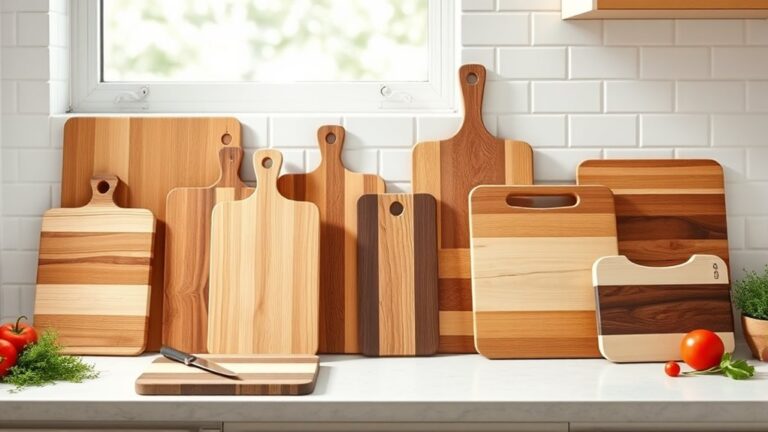
You can buy wood for cutting boards at local lumberyards, home improvement stores, and specialty woodshops offering hardwoods like maple and walnut. These sources provide a variety of wood types suitable for cutting boards, ensuring durability and food safety.
Online retailers also offer exotic woods with detailed descriptions and customer reviews to help you make informed choices.
Don’t overlook reclaimed wood from salvage yards or woodworking clubs for budget-friendly options. Always inspect the wood for quality, food safety, and proper hardness to protect your knives.
Keep exploring to discover expert tips on selecting the perfect wood and where to find the best sources.
Key Takeaways
- Purchase hardwoods like maple, walnut, or cherry from local lumberyards and home improvement stores for quality and custom sizing options.
- Explore specialty wood stores or online exotic wood retailers for rare, food-safe hardwoods such as bubinga and zebrawood.
- Consider reclaimed wood from salvage yards, antique shops, or woodworking clubs, ensuring it is untreated and chemical-free.
- Use online platforms with detailed photos, clear species info, and return policies to buy suitable cutting board wood safely.
- Avoid softwoods; always inspect grain, texture, and defects in-store or inquire thoroughly when ordering online for best results.
How to Choose the Best Wood for Cutting Boards
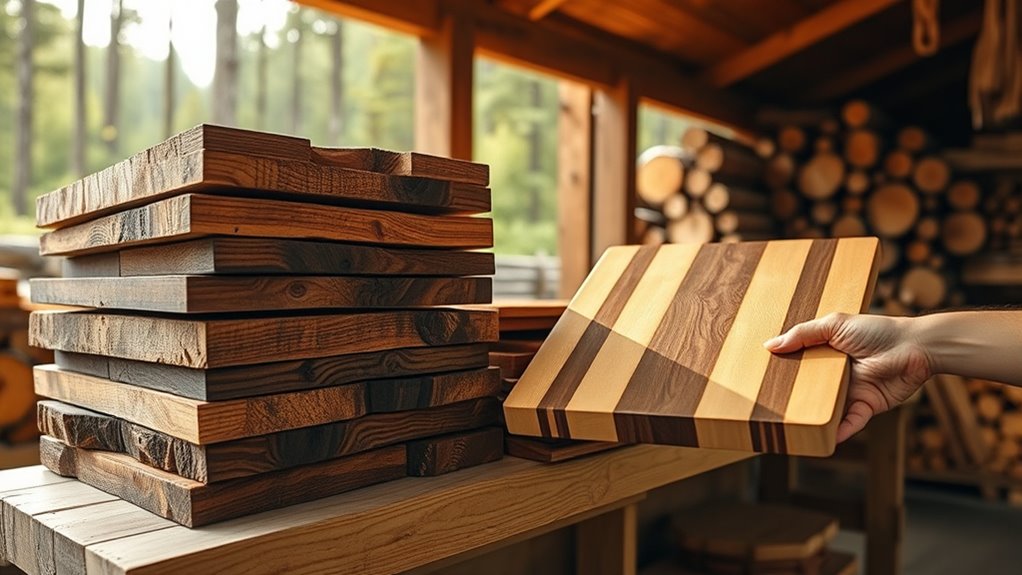
When choosing the best wood for cutting boards, you’ll want to focus on durability, hardness, and grain structure to guarantee your board lasts and stays safe to use. Look for wood that resists deep scratches and dents, so bacteria won’t hide in grooves. Medium-hard woods like maple or walnut strike a balance between toughness and protecting your knives.
Pay attention to the grain; tight, closed grains prevent moisture absorption and warping. Avoid softwoods and open-grain woods, as they tend to splinter or absorb liquids. Also, consider wood that’s naturally resistant to bacteria and won’t impart flavors to your food.
What Makes Hardwood Ideal for Cutting Boards
You want a cutting board that can handle daily use without wearing down, and hardwood offers the durability and hardness you need. Its tight grain also helps keep your board safe by preventing deep cuts where bacteria can hide.
Let’s explore why these qualities make hardwood the best choice for cutting boards.
Durability and Hardness
Although many materials can be used for cutting boards, hardwoods stand out because they offer the perfect balance of durability and hardness. When you choose hardwood, you get a surface tough enough to resist deep grooves from knives, which helps your board last longer. Hardwoods like maple and walnut are dense enough to withstand daily chopping without warping or cracking.
At the same time, they’re not so hard that they dull your knives quickly. This balance means you won’t have to replace your cutting board often, saving you money and effort. Plus, hardwood’s strength supports heavy-duty kitchen tasks, making it a reliable choice.
Grain Tightness and Safety
Because tight grain wood limits moisture absorption, it makes an ideal surface for cutting boards. When you choose hardwood with a tight grain, you reduce the chances of bacteria and mold growing inside the wood. This keeps your cutting board safer and more hygienic over time.
Woods like maple, cherry, and walnut have tighter grain structures, making them popular choices. You want wood that won’t easily crack or warp when exposed to water, and tight grain helps with that. Plus, tight grain wood resists deep knife marks, which can trap food particles.
Best Local Lumberyards to Buy Cutting Board Wood
Finding the best local lumberyards can make a big difference when selecting wood for cutting boards. When you visit a reputable lumberyard, you’ll find a variety of hardwoods like maple, walnut, and cherry, all ideal for cutting boards due to their durability and safety. Lumberyards often provide rough-cut boards that let you choose the thickness and size you need, giving you more control over your project.
Plus, staff at local lumberyards usually have valuable expertise and can guide you toward the best wood species for food-safe use. Supporting local businesses also means fresher inventory and less environmental impact from shipping. Before buying, inspect the wood for defects and ask about drying methods to ensure you get quality material that will last.
Where to Find Specialty Woodstores for Cutting Boards
You can find unique and high-quality wood for cutting boards at local specialty woodstores that focus on exotic and rare species. If you’re looking for a wider selection, online exotic woodshops offer convenient access to unusual woods from around the world.
Exploring both options will help you find the perfect material for your project.
Local Specialty Woodstores
When searching for the perfect wood for your cutting board, local specialty woodstores offer unique options you won’t find in big-box retailers. These stores often carry exotic and domestic hardwoods prized for durability and aesthetics. To make the most of your visit, consider these tips:
- Research selections: Call ahead to check if they stock hardwoods like maple, walnut, or cherry.
- Inspect quality: Look for boards with tight grain patterns and no warping or knots.
- Ask for advice: Staff can recommend woods that resist moisture and knife marks.
- Check cutting board blanks: Some stores offer pre-cut blanks, saving you time and effort.
Online Exotic Woodshops
Where can you discover unique and high-quality woods for cutting boards beyond your local stores? Online exotic woodshops are your best bet. These specialty retailers offer a vast selection of rare and beautiful hardwoods like bubinga, zebrawood, and padauk, perfect for crafting durable, eye-catching cutting boards.
Shopping online lets you compare species, grades, and prices easily while accessing detailed descriptions and customer reviews. Many sites also provide carefully kiln-dried, food-safe options ready for woodworking. Just be sure to check shipping policies and wood origins to guarantee sustainability and quality.
Top Online Marketplaces for Quality Cutting Board Wood
Although finding the perfect wood for your cutting board can be challenging, several online marketplaces make the search straightforward and reliable. These platforms offer a wide selection, quality assurance, and convenient shipping options.
Finding the ideal cutting board wood is easier with trusted online marketplaces offering variety and quality.
Here are four top places to contemplate:
- Woodcraft – Known for its variety of hardwoods, including maple and walnut, ideal for cutting boards.
- Rockler – Offers detailed product descriptions and customer reviews to help you choose wisely.
- Bell Forest Products – Specializes in premium hardwood lumber with excellent customer service.
- Amazon – Provides a broad range of wood types with fast delivery and competitive prices.
How to Spot Quality Wood Before Buying
Finding the right marketplace is just the first step; knowing how to spot quality wood guarantees you get the best material for your cutting board. Start by checking the wood’s grain—look for tight, straight patterns without wide gaps or knots that could weaken the board. Make sure the wood feels solid and heavy for its size, which indicates density and durability.
Avoid pieces with cracks, splits, or discoloration, as these flaws can compromise the board’s lifespan. Also, opt for hardwoods like maple, walnut, or cherry; they’re naturally resistant to bacteria and wear. Finally, trust your senses—wood should smell fresh, not musty or chemical-laden.
Buying Wood In-Store: What to Look For
When you’re buying wood in-store, take time to inspect its quality closely. Look for consistent grain patterns and consider the hardness to guarantee durability.
These factors will help you pick the best wood for a long-lasting cutting board.
Wood Quality Inspection
Because the quality of your cutting board depends on the wood you choose, inspecting it carefully before buying is essential. When you’re in the store, don’t just pick the first piece that looks good. Use these steps to verify you get the best wood:
- Check for cracks and splits – These weaken the wood and can cause your board to break over time.
- Look for knots – Small knots might be okay, but large or loose ones can create weak spots.
- Inspect moisture content – Wood should be properly dried; too wet or too dry wood can warp or crack.
- Feel the surface – It should be smooth and free from rough patches or splinters that make finishing difficult.
Grain and Hardness Choices
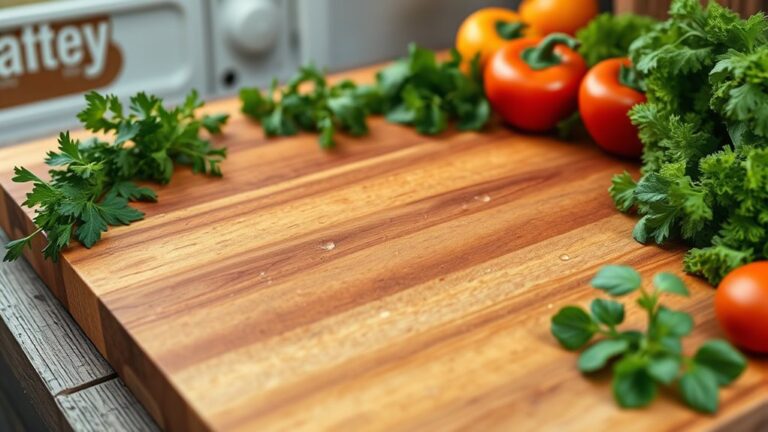
Although selecting wood with the right grain and hardness can seem intimidating, focusing on these factors will guarantee your cutting board lasts and performs well. You’ll want to choose wood with a tight, straight grain because it resists warping and cracking. Avoid open-grain woods, as their porous nature can harbor bacteria and stain easily.
Hardness is essential too; denser woods like maple and cherry withstand knife marks better, keeping your board smooth longer. However, if the wood’s too hard, it might dull your knives faster. Strike a balance—look for wood with a Janka hardness rating between 1,200 and 1,500.
When you’re in-store, feel the wood’s texture and check the grain orientation to confirm it meets these standards before buying your cutting board material.
Ordering Wood Online: Tips for Buying Without Seeing It
Since you can’t inspect the wood in person, ordering online demands extra attention to detail. You need to rely on the seller’s descriptions and photos, so it’s essential to choose reputable sources and ask questions before buying.
When buying wood online, trust detailed descriptions and photos, and always choose reputable sellers.
Follow these tips to make a smart purchase:
- Verify the wood species and grade to make sure it’s suitable for cutting boards.
- Request clear, close-up images showing grain patterns and any defects.
- Confirm dimensions and thickness match your project needs.
- Check return policies and guarantees in case the wood doesn’t meet your expectations.
Affordable Wood Sources for Budget Cutting Boards
Where can you find quality wood without breaking the bank? Start by checking local lumberyards and home improvement stores—they often carry hardwoods like maple, oak, and cherry at reasonable prices.
You can also visit woodworking clubs or community workshops where members sometimes sell or trade offcuts perfect for cutting boards. Don’t overlook reclaimed wood sources; old furniture or pallets can provide durable hardwood if you carefully select and prepare the material.
Additionally, ask local sawmills if they have scrap wood or smaller cuts available at a discount. By exploring these affordable wood sources, you’ll get durable, food-safe materials without overspending. Just remember to avoid softwoods and confirm the wood is untreated and free of chemicals for safe kitchen use.
Where to Find Exotic and Unique Cutting Board Woods
Finding exotic and unique woods for cutting boards can elevate your kitchen tools with striking colors and patterns. To source these special materials, you’ll want to explore beyond typical hardwood suppliers.
Here are four places to start:
- Specialty Lumberyards: These often stock rare woods like purpleheart or zebrawood.
- Online Exotic Wood Retailers: Websites dedicated to exotic hardwoods offer detailed selections and shipping options.
- Local Woodworking Clubs or Guilds: Members may share or trade unique wood offcuts.
- Salvage Yards and Antique Stores: You can find reclaimed wood with interesting grain and history.
Frequently Asked Questions
How Should I Maintain My Cutting Board Wood After Purchase?
You should regularly oil your cutting board with food-safe mineral oil to prevent drying and cracking. Clean it with mild soap and water, avoid soaking, and occasionally sanitize with vinegar or diluted bleach for lasting durability and hygiene.
Can I Use Reclaimed Wood for Cutting Boards Safely?
Yes, you can use reclaimed wood for cutting boards safely if it’s untreated, free of chemicals, and thoroughly cleaned.
Always sand it smooth and seal it with food-safe oil to protect the wood and your food.
What Tools Do I Need to Prepare Wood for Cutting Boards?
When it comes to prepping wood for cutting boards, you’ll need a planer, jointer, table saw, and orbital sander. Don’t cut corners—sharp tools and patience make all the difference in crafting a perfect board.
How Long Does It Take to Season Wood for Cutting Boards?
It usually takes you 6 to 12 months to season wood properly for cutting boards.
You’ll want to let it dry slowly to reduce moisture content, preventing warping and cracking during use.
Are There Any Health Concerns With Certain Cutting Board Woods?
You should know that 60% of foodborne illnesses come from cross-contamination, so avoid toxic woods like pine or cedar.
Stick to hardwoods like maple or walnut—they’re safe, durable, and won’t leach harmful chemicals into your food.
Conclusion
You might think picking wood for cutting boards is as simple as grabbing any old plank, but you know better now. Whether you’re hunting down exotic grains or just a budget-friendly hardwood, the right wood makes all the difference.
So, instead of settling for that random scrap, use these tips to find quality wood that lasts. After all, your cutting board deserves more than a last-minute impulse buy, doesn’t it? Choosing the best wood for cutting boards ensures durability, safety, and beauty in your kitchen tool.