How Do You Clean Non Stick Cookware
To clean non-stick cookware effectively and preserve its coating, it’s important to follow the right steps. Proper cleaning of non-stick pans not only extends their lifespan but also maintains their performance during cooking.
Start by letting your pan cool completely before washing to avoid warping or damage.
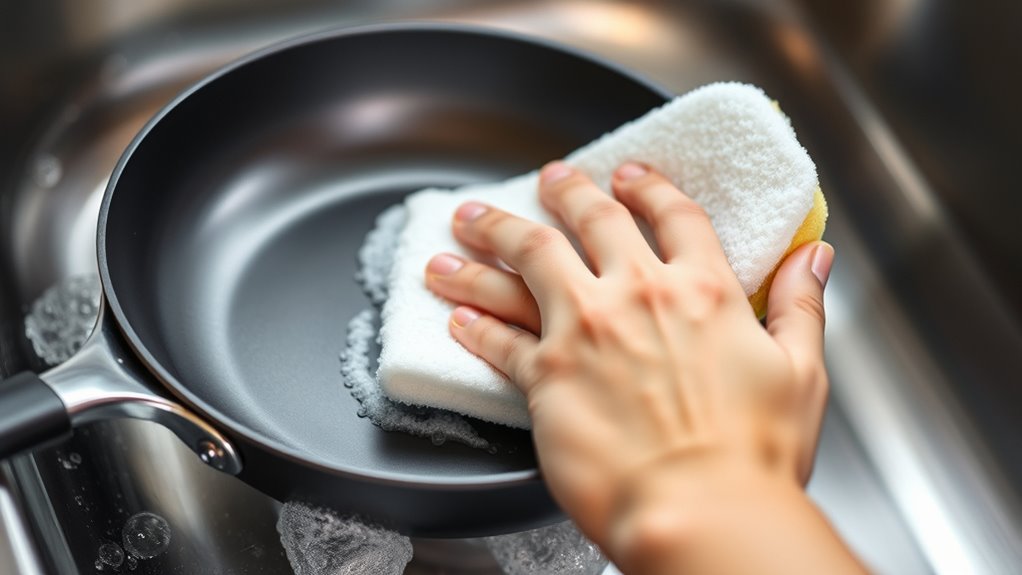
Gently wash the pan with warm water, mild dish soap, and a soft sponge. Avoid using abrasive scrubbing tools or harsh cleaners as they can wear down the non-stick surface.
For stubborn food residue, soak the pan briefly to loosen it up.
Then, gently scrub using natural ingredients like baking soda or vinegar, which are safe for the coating.
Always dry your cookware thoroughly after washing to prevent rust or damage.
Store your non-stick pans properly in a dry place to keep them in great condition.
Keep going to discover more tips on maintaining your non-stick cookware’s performance.
Key Takeaways
- Let non-stick cookware cool before cleaning to avoid warping and damage.
- Use warm water, mild dish soap, and a soft sponge or cloth for gentle cleaning.
- Soak pans with stubborn residue in warm, soapy water for 15-30 minutes before scrubbing.
- Avoid abrasive scrubbers, steel wool, and harsh chemicals to protect the non-stick coating.
- Dry thoroughly and store pans with soft cloths between them to prevent scratches.
Why Clean Non-Stick Cookware Properly?

Although non-stick cookware makes cooking easier, you need to clean it properly to maintain its effectiveness and lifespan. If you don’t, food residue and grease can build up, reducing the non-stick surface’s performance. This buildup makes cooking and cleaning harder over time, defeating the purpose of owning non-stick pans.
Proper cleaning also prevents scratches and damage to the coating, ensuring your cookware remains safe to use. When you clean your pans right, you protect your investment, save money by not having to replace them frequently, and keep your meals tasting fresh without unwanted flavors from leftover residues.
Taking care of your non-stick cookware will help you enjoy hassle-free cooking for years to come.
What to Avoid When Cleaning Non-Stick Pans
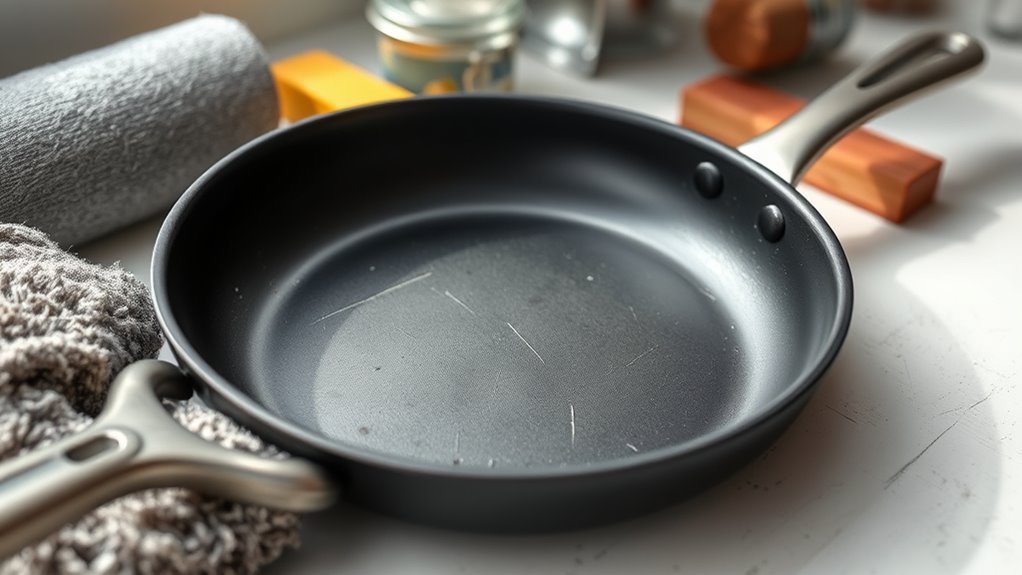
When cleaning your non-stick pans, steer clear of harsh abrasive materials that can damage the coating. You also want to avoid exposing them to high heat, which can degrade their surface.
Knowing what not to do is just as important as knowing the right cleaning methods.
Harsh Abrasive Materials
Because non-stick coatings are delicate, you should avoid using harsh abrasive materials when cleaning your pans. Scrubbing pads with rough surfaces, steel wool, or metal brushes can scratch and damage the coating, reducing its effectiveness and lifespan. Even abrasive powders or cleansers can wear down the non-stick layer, making food stickier over time.
Instead, opt for soft sponges or cloths to gently clean your cookware. If you encounter stubborn residue, soak the pan in warm, soapy water to loosen it before wiping gently. Avoid any tools or cleaners that feel too rough or gritty, as they’ll compromise the non-stick surface.
Taking care not to use harsh abrasives will keep your pans performing well and looking good longer.
High Heat Exposure
How high heat exposure affects your non-stick pans might surprise you. When you clean or cook with your pans after subjecting them to intense heat, the non-stick coating can weaken or peel. Avoid scrubbing a hot pan immediately; sudden temperature changes can warp the surface and damage the coating.
Instead, let the pan cool down naturally before washing it gently with warm, soapy water. Using high heat during cooking or cleaning not only shortens your pan’s lifespan but also risks toxic fumes from the deteriorating coating.
To keep your non-stick cookware in great shape, stick to low or medium heat when cooking and avoid any cleaning method that involves high temperatures. This way, your pans stay durable and safe for longer.
How to Remove Light Grease and Everyday Residue
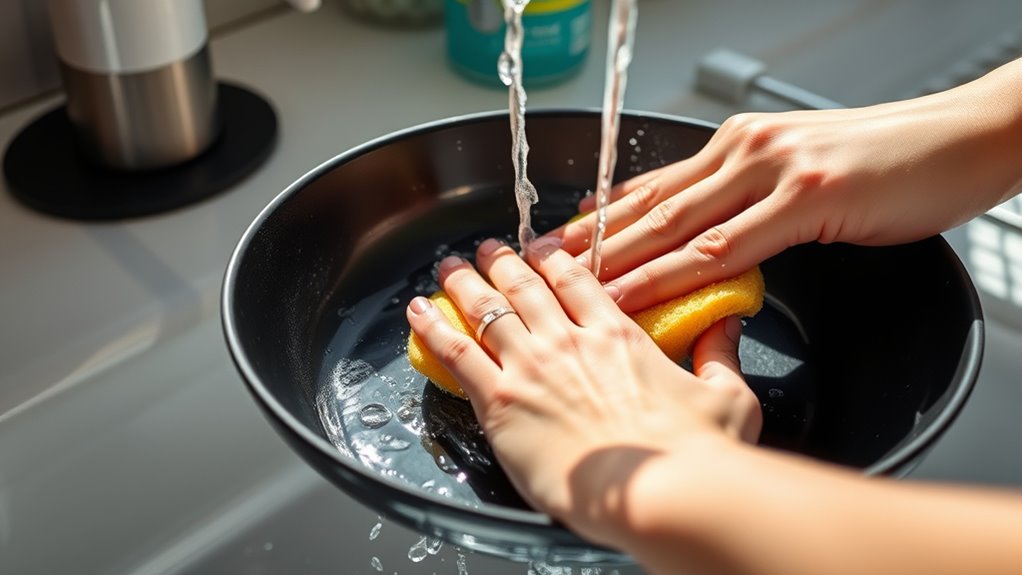
Wondering how to quickly tackle light grease and everyday residue on your non-stick cookware? Start by letting the pan cool slightly after use. Then, rinse it with warm water to loosen any remaining particles.
Apply a few drops of mild dish soap to a soft sponge or cloth—never use abrasive scrubbers as they can damage the coating. Gently wipe the surface in circular motions to remove grease and residue. Rinse thoroughly with warm water to make certain no soap remains.
Finally, dry your cookware with a soft towel or let it air dry to prevent water spots. Regularly cleaning this way keeps your non-stick pans looking great and performing well without risking damage from harsh cleaning methods.
Tips for Safely Removing Burnt-On Food From Non-Stick Pans
When burnt-on food sticks stubbornly to your non-stick pan, you’ll want to act carefully to avoid damaging the surface. Start by soaking the pan in warm, soapy water for 15-30 minutes to loosen residue. Avoid harsh scrubbing; instead, use a soft sponge or cloth to gently lift the burnt bits.
For tougher spots, add a mixture of baking soda and water, letting it sit briefly before wiping. Never use metal utensils or abrasive pads, as these can scratch the coating. If residue remains, repeat soaking and gentle scrubbing rather than forcing it off.
After cleaning, rinse thoroughly and dry with a soft towel to prevent water spots. These steps help maintain your pan’s non-stick quality while safely removing burnt food.
What Cleaning Tools Work Best for Non-Stick Pans?
Although non-stick pans make cooking easier, choosing the right cleaning tools is essential to keep their coating intact. You should always opt for soft sponges or cloths that won’t scratch the surface. Avoid steel wool, abrasive scrubbers, or scouring pads, as they can damage the non-stick layer.
A nylon or silicone brush works well for gentle scrubbing without harming the pan. When washing, use a mild dish soap and warm water to loosen food residue effectively. If you need to tackle stubborn spots, soak the pan first to soften debris before wiping.
Using the right tools guarantees your pan stays smooth and non-stick for longer, saving you money and improving your cooking experience.
How to Use Natural Ingredients to Clean Non-Stick Cookware
After choosing the right tools to protect your non-stick pans, you can also turn to natural ingredients to keep them clean. These gentle options avoid harsh chemicals that might damage the coating. Here’s how you can use nature’s cleaners effectively:
- Use a mixture of baking soda and water to form a paste that lifts stubborn residue without scratching.
- Apply white vinegar diluted with water to dissolve grease and sanitize surfaces.
- Rub the pan gently with a cut lemon to break down grime and add freshness.
- Sprinkle coarse salt on the pan and scrub with a soft cloth for mild abrasion.
- Rinse thoroughly and dry immediately to prevent water spots and maintain the pan’s integrity.
These natural methods help you clean safely while extending your cookware’s life.
Can You Use the Dishwasher for Non-Stick Pans?
You might wonder if the dishwasher is safe for your non-stick pans. While it’s convenient, dishwasher detergents and high heat can damage the coating over time.
Instead, hand washing with gentle soap is usually the best way to keep your pans in good shape.
Dishwasher Safety Concerns
How safe is it to put your non-stick pans in the dishwasher? While many dishwashers claim to be safe for non-stick cookware, you should consider a few safety concerns before loading your pans. Here’s what to keep in mind:
- Harsh dishwasher detergents can be abrasive to the surface.
- High water temperatures may cause warping or damage.
- Placement near metal utensils might lead to scratches.
- Repeated dishwasher cycles might degrade any seals or handles.
- Not all non-stick pans are labeled dishwasher safe.
You can use the dishwasher occasionally, but it’s best to check the manufacturer’s instructions. Hand washing with gentle soap and a soft sponge remains the safest method to preserve your pan’s longevity and performance.
Impact on Non-Stick Coating
Why does the dishwasher affect your non-stick pan’s coating? The harsh detergents and high heat inside a dishwasher can gradually break down the delicate non-stick surface. Over time, this can cause the coating to peel or lose its effectiveness, making your pan less reliable for cooking.
Additionally, the strong water jets can cause abrasion, further wearing down the finish. While a dishwasher might seem convenient, repeated exposure can shorten your pan’s lifespan and reduce its non-stick properties. You might notice food starting to stick or the surface becoming dull and scratched.
Recommended Cleaning Alternatives
Although some non-stick pans are labeled dishwasher safe, relying on the dishwasher often does more harm than good. The harsh detergents and high heat can degrade the coating faster than gentle hand washing. Instead, you can preserve your pan’s lifespan by trying these cleaning alternatives:
- Wash with warm, soapy water immediately after use.
- Use a soft sponge or cloth to avoid scratching.
- Avoid abrasive cleaners or steel wool.
- For stuck-on food, soak the pan briefly before washing.
- Dry thoroughly with a clean towel to prevent water spots.
These simple steps protect your non-stick surface and keep your cookware performing well for longer. Hand washing might take a bit more effort, but it’s worth it to maintain your pan’s quality.
When and How to Deep Clean Your Non-Stick Cookware
Since regular cleaning only removes surface residue, you’ll need to deep clean your non-stick cookware occasionally to get rid of stubborn buildup and restore its performance. Deep clean your pans when you notice sticky spots or discoloration that regular washing can’t fix.
Start by filling the cookware with warm water, add a few drops of mild dish soap, and sprinkle a tablespoon of baking soda. Let it soak for about 30 minutes to loosen residue. Then, use a soft sponge or non-abrasive scrubber to gently scrub the surface.
Rinse thoroughly with warm water and dry with a soft cloth. Avoid harsh scrubbers or strong chemicals, as they damage the non-stick coating. This process keeps your cookware safe, efficient, and extends its lifespan.
How Often to Clean Non-Stick Cookware for Optimal Performance
You should clean your non-stick cookware after every use to keep it performing at its best and to prevent buildup. A gentle daily wash removes food residue and protects the coating.
For deeper cleaning, aim to do it once a month or when you notice stubborn stains.
Daily Cleaning Benefits
How often should you clean your non-stick cookware to keep it performing at its best? Daily cleaning is key to maintaining its non-stick surface and overall quality. By cleaning your cookware after every use, you’ll enjoy several benefits:
- Prevent food residue buildup that can damage the coating
- Avoid lingering odors and stains
- Keep flavors fresh for your next meal
- Extend the life of your cookware
- Maintain a hygienic cooking environment
Taking a few minutes each day to rinse and gently wash your non-stick pans ensures they stay in prime condition. This simple habit helps you avoid tougher cleaning tasks later and keeps your cookware ready for any recipe you want to try.
Deep Cleaning Frequency
Although daily cleaning keeps your non-stick cookware in good shape, performing a deep clean periodically is essential to maintain its ideal performance. Deep cleaning removes stubborn residues and buildup that everyday washing can miss, preserving the non-stick surface and extending its lifespan.
How often you deep clean depends on usage, but a good rule is every 1-3 months.
| Usage Frequency | Recommended Deep Clean Interval | Key Focus Areas |
|---|---|---|
| Daily | Every 1 month | Burnt-on food, grease |
| Several times/week | Every 2 months | Residue, stains |
| Weekly or less | Every 3 months | Light buildup, odors |
Sticking to this schedule helps keep your cookware performing at its best longer.
Simple Daily Tips to Protect Your Non-Stick Surface Between Washes
Since non-stick surfaces are delicate, taking a few simple steps between washes can extend their lifespan considerably. You don’t have to be extra cautious all the time, but a little daily care goes a long way. Try these tips to protect your cookware:
- Wipe the surface gently with a soft cloth or sponge after each use.
- Avoid using abrasive scrubbers or harsh chemicals.
- Rinse with warm water to remove loose food particles before washing.
- Let your pan cool down before cleaning to prevent warping.
- Use a small amount of cooking oil to lightly coat the surface to maintain its non-stick quality.
How to Dry and Store Your Non-Stick Pans
After gently cleaning your non-stick pans, drying and storing them properly will help preserve their coating and shape. Start by drying your pans completely with a soft cloth or let them air dry upside down. Avoid stacking them while wet to prevent moisture buildup and potential damage.
When storing, place a soft cloth or paper towel between pans if you need to stack them. This prevents scratches and keeps the surface smooth. Store your non-stick pans in a cool, dry cabinet away from heavy items that could press down and warp their shape.
How to Care for Scratches and Damage on Non-Stick Cookware
When you notice scratches or damage on your non-stick cookware, addressing them promptly can prevent further deterioration and maintain cooking performance.
Here’s how you can care for those imperfections effectively:
Tips to effectively care for imperfections and extend the life of your non-stick cookware.
- Avoid using metal utensils to prevent worsening scratches.
- Clean gently with a soft sponge and mild detergent.
- Apply a small amount of cooking oil to the scratched area to help restore some non-stick properties.
- Consider replacing heavily damaged pans, as deep scratches can release harmful substances.
- Store pans carefully, stacking with protective layers or hanging to avoid surface contact.
Frequently Asked Questions
Can Non-Stick Cookware Be Used on Induction Cooktops?
You can use non-stick cookware on induction cooktops only if the base is magnetic. Check with a magnet—if it sticks, you’re good. Otherwise, you’ll need an induction-compatible pan for proper heating.
Are There Specific Brands Better Known for Durable Non-Stick Coatings?
Yes, you’ll find brands like Tefal, Calphalon, and All-Clad known for durable non-stick coatings. They use advanced materials that resist scratching and peeling, helping your cookware last longer and perform better.
These brands focus on quality and innovation to ensure their coatings maintain effectiveness over time. Choosing cookware from them can provide a better cooking experience and greater longevity.
How Do Temperature Changes Affect Non-Stick Cookware Lifespan?
Think of your non-stick pan like a mood ring—sudden temperature swings can stress its coating. When you heat it too fast or cool it quickly, you shorten its lifespan by causing cracks and peeling.
Can You Use Metal Utensils on Non-Stick Surfaces Safely?
You shouldn’t use metal utensils on non-stick surfaces because they can scratch and damage the coating. Instead, use wooden, silicone, or plastic utensils to keep your cookware safe and extend its lifespan.
What Are the Signs It’s Time to Replace Non-Stick Cookware?
When your non-stick pan looks like a cracked desert or food sticks like glue, it’s time to replace it. Don’t let worn surfaces ruin your cooking—trust your instincts and upgrade before frustration boils over.
Conclusion
Now that you know the secrets to cleaning non-stick cookware without damage, imagine the difference a well-maintained pan can make.
Will you keep relying on harsh scrubbing, or will you embrace these gentle, effective methods? The choice is yours—and it could mean the difference between a ruined pan and years of flawless cooking.
Take care, and your non-stick cookware will reward you with durability, easy cleaning, and consistently great results. Proper non-stick cookware care ensures your investment lasts longer and performs better every time you cook.