How Long to Cook Steak on Griddle Pan
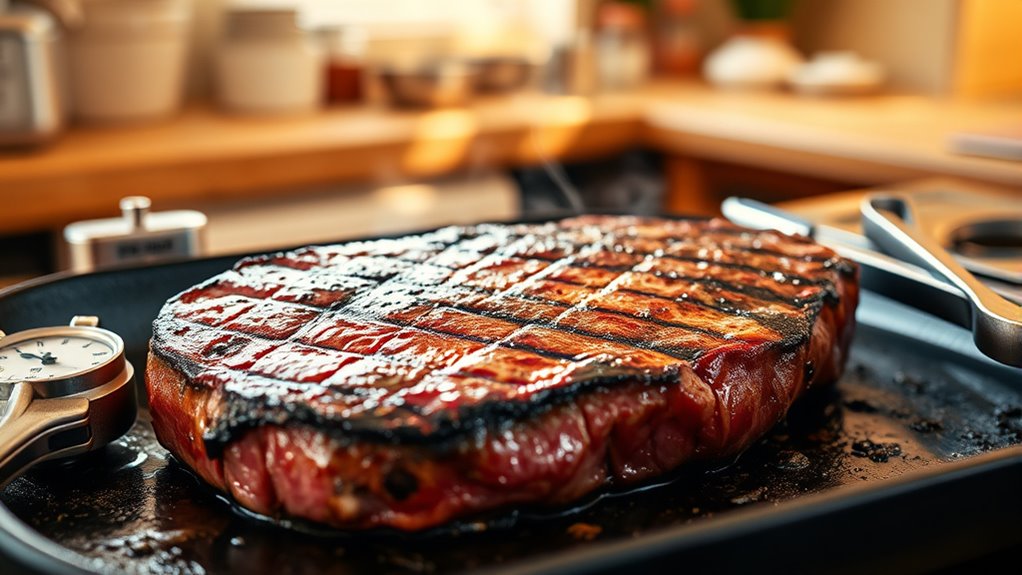
You’ll want to cook a 1-inch thick steak on a preheated griddle pan at about 400°F for 2 to 5 minutes per side, depending on how you like it—rare takes less time, medium more.
Cooking steak on a griddle pan is a fantastic way to achieve a delicious sear and juicy interior. Proper timing and heat control are essential to get the perfect steak every time.
Thicker cuts need a gentler heat and longer cooking to avoid burning outside while staying tender inside.
Make sure you dry and season your steak well before cooking. Keep flipping minimal for a perfect sear.
There’s more on mastering timing and techniques to get that ideal steak. With practice, you’ll be able to cook steaks just the way you like them on your griddle pan.
Key Takeaways
- Cook a 1-inch thick steak for 2-3 minutes per side for rare, and 4-5 minutes per side for medium doneness on a griddle pan.
- For thicker steaks (1.5-2 inches), cook 4-5 minutes per side at medium heat to ensure even cooking without charring.
- Use a meat thermometer: 125°F for rare, 135°F for medium-rare, and 160°F for well done to achieve precise doneness.
- Preheat the griddle pan to about 400°F for a good sear, then reduce heat slightly after placing the steak.
- Let the steak rest for 5 minutes after cooking to lock in juices and improve tenderness before slicing.
Choosing the Best Steak Cut for Your Griddle Pan
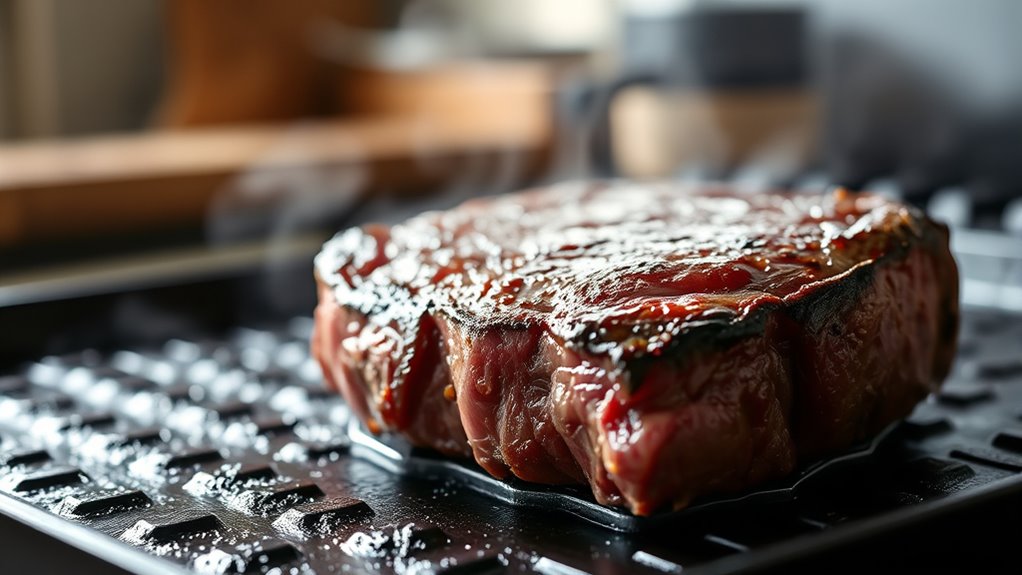
When you’re cooking steak on a griddle pan, choosing the right cut makes all the difference. You want cuts that cook evenly and develop a great crust without drying out. Ribeye and sirloin are excellent choices because they have good marbling, which keeps the steak juicy and tender.
Filet mignon is leaner but still works well if you prefer a softer texture. Avoid very thick cuts like tomahawk or porterhouse since they need longer cooking times that griddles don’t handle as efficiently. Also, cuts with a uniform thickness ensure even cooking, so you don’t end up with overdone edges and a raw center.
Essential Seasoning and Preparation Tips for Griddle Steak
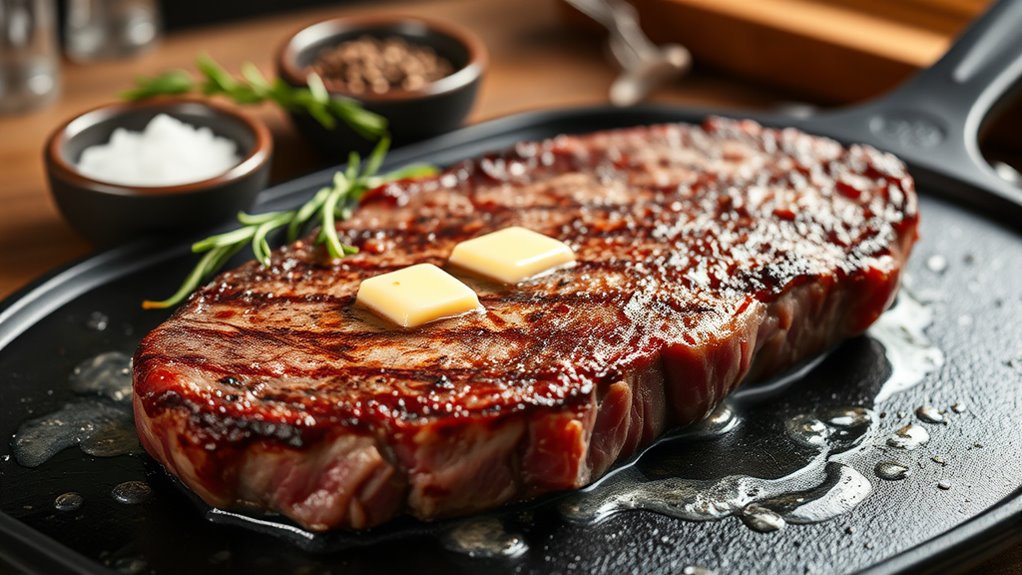
Although the right cut sets the foundation, seasoning and preparation bring your griddle steak to life. Start by patting the steak dry with paper towels; this helps achieve a better sear. Season generously with coarse salt and freshly ground black pepper on both sides—these simple seasonings enhance the meat’s natural flavor.
If you like, add garlic powder or smoked paprika for extra depth, but avoid overpowering spices. Let the steak come to room temperature before cooking; this ensures even cooking throughout. Lightly brush the griddle pan and the steak with oil that has a high smoke point, like avocado or canola oil.
Finally, avoid overcrowding the pan so the steak cooks evenly and develops a perfect crust. These steps will set you up for a delicious griddle steak.
Best Griddle Pan Temperature for Cooking Steak
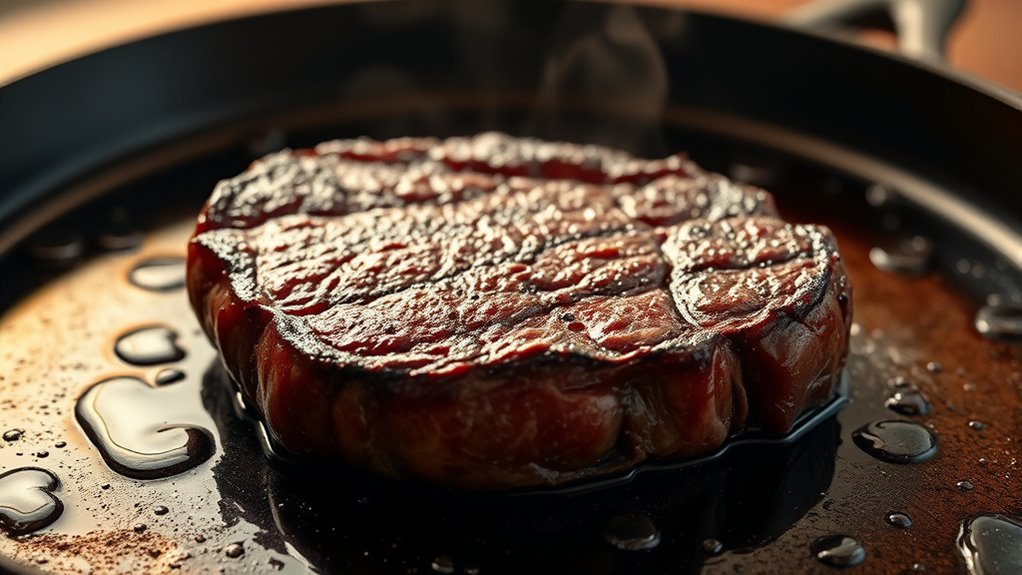
You’ll want to set your griddle pan to a high heat for a perfect sear, but knowing the right temperature zones can help you manage cooking more evenly. Adjusting the heat based on your steak’s thickness guarantees it cooks through without burning.
Let’s explore how to find and control these temperature settings for the best results.
Ideal Heat Settings
Since achieving the perfect sear depends heavily on temperature, you need to preheat your griddle pan to a high heat before cooking steak. Aim for a temperature around 400°F (204°C) to get that beautiful crust without overcooking the inside. If your stove has settings from low to high, set the pan on medium-high heat and let it warm for at least five minutes.
The pan should be hot enough that a drop of water sizzles and evaporates instantly. Avoid cooking on maximum heat for too long, as it may burn the steak’s exterior before the center cooks properly. Once the pan’s ready, place your steak down and resist moving it around to lock in those ideal heat settings and achieve even cooking throughout.
Temperature Zones Explained
When cooking steak on a griddle pan, understanding temperature zones can help you control the cooking process more precisely. Your griddle pan typically has three zones: high, medium, and low heat. Use the high zone for searing, medium for cooking through, and low for resting or finishing.
Managing these zones prevents overcooking and guarantees even results.
| Zone | Temperature (°F) | Purpose |
|---|---|---|
| High | 400-450 | Searing steak surface |
| Medium | 300-375 | Cooking steak evenly |
| Low | 200-250 | Resting or warming |
Adjusting Heat For Thickness
Controlling heat zones helps you manage cooking stages, but adjusting the temperature based on steak thickness guarantees the inside cooks properly without burning the outside. For thinner steaks, keep the griddle pan hot—around 400°F (204°C)—to sear quickly and lock in juices.
Thicker cuts need a lower temperature, about 325°F (163°C), allowing heat to penetrate without charring the surface. Start thick steaks on high heat to sear, then reduce the temperature to cook through evenly. Use a meat thermometer to check doneness rather than relying solely on time.
Cooking Times by Steak Thickness and Doneness
You’ll need to adjust cooking times based on your steak’s thickness to get the perfect sear without overcooking. Understanding doneness levels helps you decide how long to leave your steak on the griddle. With a few timing tips, you can easily tailor your cook to match your preferred level of doneness.
Thickness Guides Cooking Time
Because steak thickness directly affects cooking time, knowing how thick your cut is helps you achieve the perfect doneness. Thinner steaks, around 1 inch thick, cook quickly—usually just 2 to 3 minutes per side on a hot griddle pan. Thicker steaks, like those 1.5 to 2 inches thick, need more time, typically 4 to 5 minutes per side, to cook evenly without burning the exterior.
If your steak is thicker than 2 inches, you’ll want to sear each side for a few minutes and then finish cooking it at a lower heat or in the oven to avoid undercooking inside. Paying attention to thickness guarantees you don’t overcook or undercook your steak, making your griddle pan efforts truly rewarding.
Doneness Levels Explained
When cooking steak on a griddle pan, understanding doneness levels is key to hitting your desired result. Each level corresponds to a specific internal temperature, affecting texture and juiciness.
Use the table below as a quick guide for cooking times based on a 1-inch thick steak. Adjust times slightly for thicker or thinner cuts.
| Doneness Level | Cooking Time (per side) |
|---|---|
| Rare | 2-3 minutes |
| Medium Rare | 3-4 minutes |
| Medium | 4-5 minutes |
| Medium Well | 5-6 minutes |
| Well Done | 6-7 minutes |
Timing Adjustments Tips
Although the table provides a solid baseline, adjusting cooking times is essential based on your steak’s thickness and desired doneness. Thicker cuts need more time per side, while thinner steaks cook faster, so reduce time accordingly.
For example, a 1-inch steak typically takes about 3-4 minutes per side for medium-rare, but a 1.5-inch steak will need closer to 5 minutes. If you want your steak rare, cut down the time slightly; for medium-well or well-done, add extra minutes.
Always use a meat thermometer to check internal temperature—125°F for rare, 135°F for medium-rare, and 160°F for well-done—to avoid overcooking. Adjusting timing precisely helps you get the perfect steak every time on your griddle pan.
How to Get a Perfect Sear and When to Flip Your Steak
To get a perfect sear on your steak, you need to guarantee your griddle pan is scorching hot before placing the meat down. This intense heat creates that flavorful, caramelized crust you want. Once the steak hits the pan, resist the urge to move it; let it cook undisturbed for about 3-4 minutes depending on thickness.
You’ll know it’s ready to flip when the edges start to look cooked and the steak releases easily from the pan. Use tongs to flip it gently to avoid piercing the meat and losing juices. After flipping, sear the other side for the same amount of time.
This method locks in flavor and texture, giving you a beautifully seared, evenly cooked steak every time.
Resting Your Steak: Why It Matters and How Long to Wait
Since the juices inside your steak redistribute during resting, you’ll end up with a more tender and flavorful bite. Resting lets the meat fibers relax and reabsorb moisture, preventing all those tasty juices from spilling out when you cut into it.
Typically, you should rest your steak for about 5 to 10 minutes.
| Steak Thickness | Rest Time | Reason |
|---|---|---|
| 1/2 inch | 5 minutes | Prevents juice loss |
| 1 inch | 7 minutes | Allows even heat distribution |
| 1.5 inches | 8-10 minutes | Maximizes tenderness |
| 2 inches | 10 minutes | Ensures full juice redistribution |
| Over 2 inches | 12 minutes | Ideal for thick, juicy steaks |
Resting is a simple step that enhances every bite—don’t skip it!
Common Mistakes That Ruin Steak on a Griddle Pan
Letting your steak rest properly sets you up for a great meal, but even the best rest can’t fix mistakes made while cooking on a griddle pan. One common error is overcrowding the pan, which lowers the temperature and prevents a good sear. You’ll want to cook steaks in batches if needed.
Another mistake is not preheating the griddle pan thoroughly; without enough heat, your steak won’t develop that delicious crust. Avoid flipping your steak too often—turn it just once or twice to retain juices. Also, don’t forget to dry your steak before seasoning; moisture creates steam, hindering browning.
Finally, resist pressing down on the steak with a spatula, as it squeezes out flavorful juices, leaving your steak dry and tough.
Tools and Techniques to Enhance Your Griddle Steak
Although mastering the basics is essential, using the right tools and techniques can transform your griddle steak from good to exceptional. Start with a heavy-duty cast-iron griddle pan—it distributes heat evenly and creates those desirable sear marks. Use tongs to flip your steak gently, avoiding piercing the meat and losing juices.
A meat thermometer helps you cook to the perfect doneness without guesswork. Before cooking, pat your steak dry and season it generously with salt and pepper for a flavorful crust. Preheat your griddle to high heat, then reduce slightly once you place the steak on it.
Let the meat rest after cooking to lock in juices, and avoid pressing down, which squeezes out moisture. These tools and techniques make a big difference in your steak’s texture and taste.
Serving Suggestions and Final Tips for Griddle Steak Success
After perfecting your cooking technique and tools, it’s time to think about how to serve your griddle steak to maximize flavor and presentation. Let the steak rest for about 5 minutes to allow juices to redistribute, keeping it juicy and tender. Slice against the grain for the best texture.
Pair your steak with simple sides like roasted vegetables, a fresh salad, or crispy fries to complement the rich flavors. Drizzle a bit of herb butter or a light sauce, such as chimichurri or a balsamic glaze, to elevate the taste. Finally, serve on a warm plate to maintain heat.
Frequently Asked Questions
Can I Use a Griddle Pan on an Induction Stove?
Yes, you can use a griddle pan on an induction stove as long as it’s made from magnetic materials like cast iron or stainless steel.
Just make sure your pan’s base is flat for even heating and good contact.
How Do I Clean My Griddle Pan After Cooking Steak?
Don’t beat around the bush—clean your griddle pan right after cooking steak. Let it cool slightly, then scrub with warm soapy water and a non-abrasive brush.
Dry thoroughly to keep it in tip-top shape.
Is Marinating Steak Necessary Before Using a Griddle Pan?
You don’t have to marinate steak before using a griddle pan, but doing so can boost flavor and tenderness. If you’re short on time, simply seasoning with salt and pepper works perfectly fine for a tasty result.
Can I Cook Frozen Steak Directly on a Griddle Pan?
You can’t just toss frozen steak on your griddle pan like a knight slashing through battle; it cooks unevenly.
Thaw it first for juicy, even results, then sear it hot for the best flavor.
What Type of Oil Is Best for Griddle Pan Cooking?
You’ll want to use oils with high smoke points like avocado, canola, or grapeseed oil. They handle the griddle’s high heat without burning, keeping your steak flavorful and preventing unwanted smoke.
Conclusion
Cooking steak on a griddle pan lets you achieve restaurant-quality results at home. Did you know that resting your steak for just 5 minutes can increase juiciness by up to 20%? By choosing the right cut, seasoning well, and mastering cooking times and temperatures, you’ll get that perfect sear every time.
Avoid common mistakes, use the right tools, and enjoy your delicious, tender steak with confidence. Griddle cooking is simple once you get the hang of it! Remember, knowing how long to cook steak on a griddle pan is key to achieving the best flavor and texture.
With practice, you’ll consistently create mouthwatering steaks that rival your favorite steakhouse. Embrace the process and make griddle steak cooking a go-to method in your kitchen.