What Cookware Do I Need: 7 Essentials for Every Kitchen
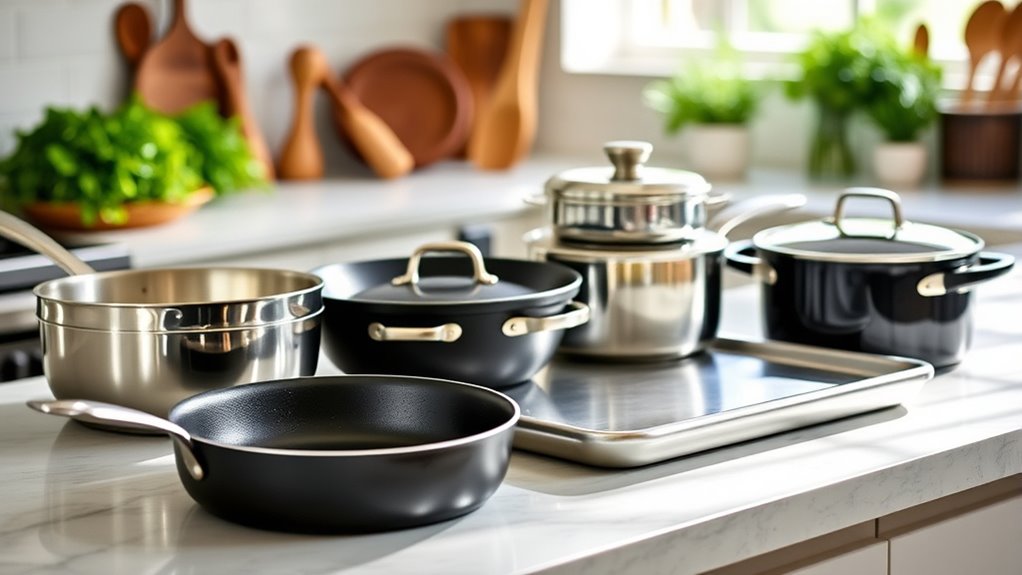
You need seven key cookware pieces to cover all your cooking basics and create a well-equipped kitchen. Essential cookware includes a durable nonstick skillet for delicate foods, a versatile cast iron skillet for searing and baking, and a stainless steel saucepan for sauces and boiling.
A big stockpot is perfect for hearty meals, while a Dutch oven excels at slow-cooking and braising. Don’t forget a good baking dish suited to your style—whether glass, ceramic, or metal.
These essentials make meal prep easy and efficient.
Keep exploring to uncover how each piece enhances your kitchen and helps you master a variety of cooking techniques.
Key Takeaways
- A versatile nonstick skillet is essential for cooking delicate foods like eggs and pancakes with easy food release.
- A durable cast iron skillet offers excellent heat retention and versatility for searing, frying, and baking.
- A large stockpot with a thick base is ideal for soups, stews, boiling pasta, and batch cooking.
- A stainless steel saucepan provides flexibility for simmering, boiling, and making sauces.
- A Dutch oven enables slow braising, searing, and baking with even heat distribution and long heat retention.
How to Choose Cookware Based on Your Cooking Needs
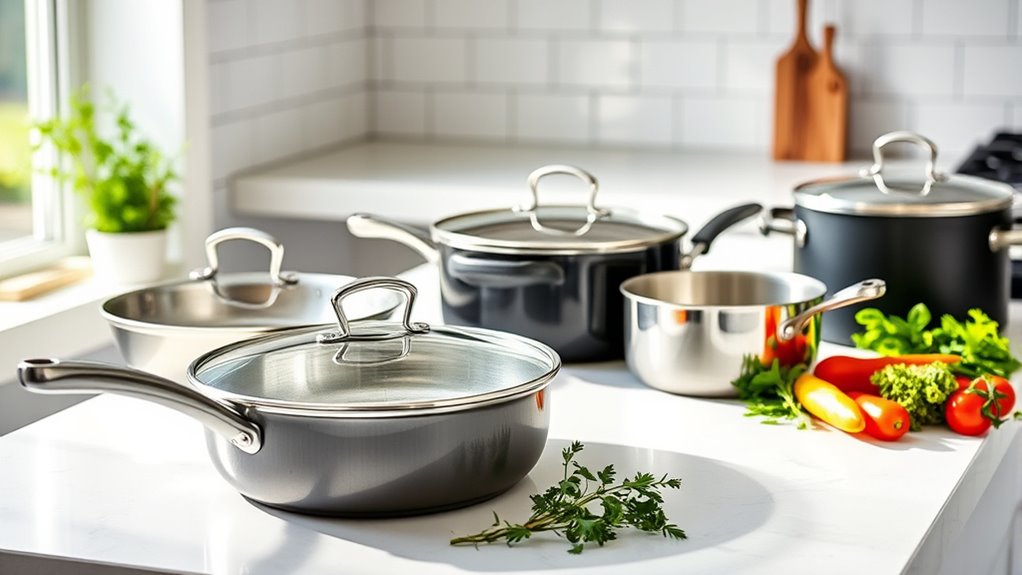
When choosing cookware, you should first consider the types of dishes you cook most often. If you frequently prepare soups, stews, or sauces, a sturdy stockpot or Dutch oven will serve you well. For quick sautés or frying, a reliable skillet is essential.
Think about the cooking techniques you use—do you often simmer, boil, fry, or bake? This helps you pick pots and pans that match your style. Also, consider your stovetop type; not all cookware works on every surface.
If you like versatility, opt for pieces that seamlessly transition easily from stovetop to oven. Finally, size matters—you don’t want pans too large or small for your typical meals. Choosing cookware tailored to your needs makes cooking more efficient and enjoyable.
Why You Need a Quality Nonstick Skillet in Your Kitchen
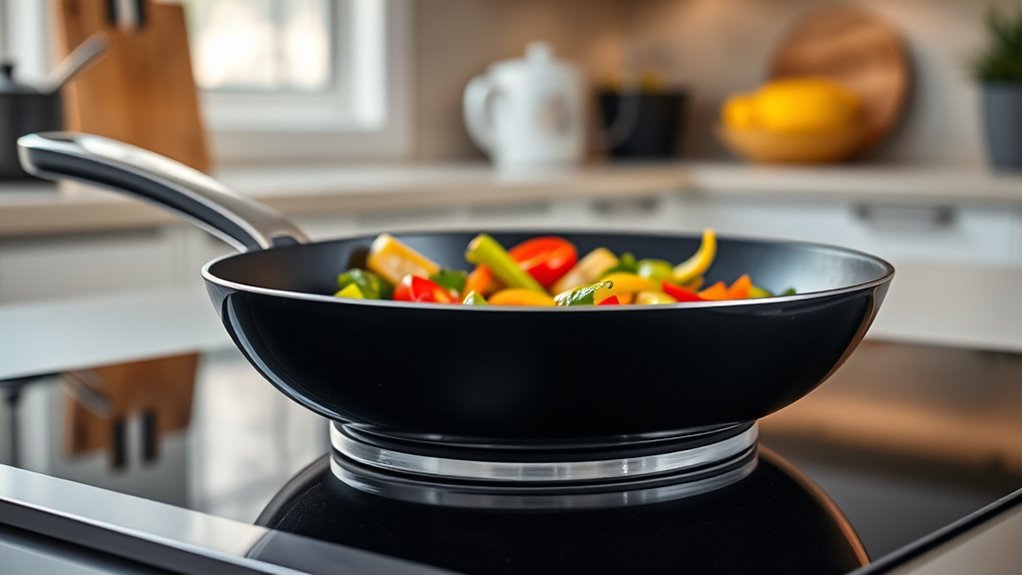
Among the various types of cookware that suit different cooking styles, a quality nonstick skillet stands out for its convenience and versatility. You’ll find it perfect for cooking delicate foods like eggs, pancakes, and fish without sticking or breaking apart. Its easy-release surface means you use less oil or butter, making your meals healthier.
Plus, cleanup is a breeze since food doesn’t cling to the pan. Whether you’re whipping up a quick breakfast or a simple dinner, a nonstick skillet saves time and effort. Investing in a durable, well-made nonstick skillet guarantees even heating and long-lasting performance, so you’ll enjoy consistent results every time you cook.
It’s an essential tool that simplifies everyday cooking.
Why a Cast Iron Skillet Is a Kitchen Must-Have
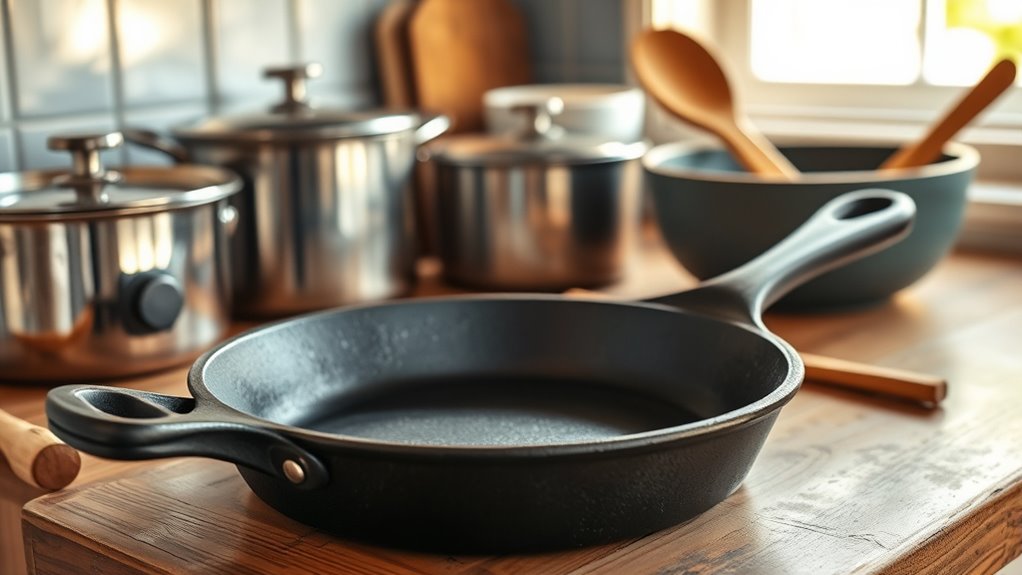
Although cast iron skillets require a bit more care, you’ll find they offer unmatched durability and heat retention that transform your cooking. This tool becomes your go-to for searing, frying, baking, and even roasting, enhancing flavors in ways other pans can’t match.
Here’s why you need one:
- Superior Heat Retention: Keeps food evenly cooked and perfectly browned.
- Versatility: Moves seamlessly from stovetop to oven.
- Natural Nonstick Surface: Develops seasoning that improves with use.
- Longevity: Can last generations if properly maintained.
With a cast iron skillet, you’re investing in a reliable, multifaceted tool that elevates everyday meals. Just remember to season it regularly and avoid soaking it to keep it in top shape.
How a Stainless Steel Saucepan Adds Versatility to Your Cookware
While a cast iron skillet excels at searing and roasting, a stainless steel saucepan brings a whole new level of flexibility to your kitchen. You can use it for boiling, simmering, and making sauces without worrying about reactive metals altering flavors. Its even heat distribution helps you cook delicate dishes like custards or risottos with precision.
Plus, stainless steel is durable and resists staining, so it’s easy to maintain. Whether you’re heating soups, melting butter, or preparing grains, this saucepan adapts effortlessly. Its sleek design also transfers seamlessly from stove to table, making serving simple.
Investing in a good stainless steel saucepan means you’re equipped for a variety of cooking tasks, enhancing your efficiency and expanding your recipe options.
Why a Big Stockpot Is Perfect for Family Meals
When you’re cooking for a large family or hosting gatherings, a big stockpot becomes your best kitchen ally. It lets you prepare hearty meals without constant refills or crowded stovetop space. Here’s why it’s essential:
Cooking for a crowd is effortless with a big stockpot, saving space and reducing constant refills.
- Capacity: A large stockpot holds ample ingredients, perfect for soups, stews, and pasta.
- Even Heating: Its thick base distributes heat uniformly, preventing hot spots and burning.
- Versatility: You can boil, simmer, or even blanch vegetables, making it a multipurpose tool.
- Ease of Cleanup: Most big stockpots have smooth interiors and dishwasher-safe designs, saving you time.
With one, you’ll streamline meal prep, feed everyone efficiently, and enjoy cooking without the hassle of juggling multiple pots. It’s a smart investment for family-friendly kitchens.
Picking the Right Baking Dish for Everyday Use
When choosing a baking dish, you’ll want to take into account the material, since options like glass, ceramic, and metal each have their strengths. Think about the size and shape that fit your typical recipes and oven space.
Picking the right dish makes everyday baking easier and more efficient.
Material Options Explained
Because your choice of material affects cooking performance and durability, understanding the options for baking dishes is essential. Each material offers unique benefits that influence how your dishes turn out.
- Glass – Provides even heating and lets you monitor browning; great for casseroles.
- Ceramic – Retains heat well, perfect for slow baking and serving directly at the table.
- Metal (Aluminum or Stainless Steel) – Heats quickly and promotes browning, ideal for roasting and baking.
- Silicone – Flexible and non-stick, making cleanup easy, though it won’t brown as well.
Pick the material that fits how you cook and clean. This way, your baking dishes will support your everyday cooking needs efficiently.
Size And Shape Choices
Choosing the right material for your baking dishes sets the foundation, but size and shape play a big role in how well your recipes turn out. When selecting a baking dish, consider what you cook most often. A standard 9×13-inch rectangular dish works great for casseroles, lasagna, and brownies.
For pies, an 8- or 9-inch round dish is ideal. Square dishes suit brownies and bars perfectly, while deeper dishes are better for recipes needing more volume. Also, think about the shape’s impact on cooking time—thicker or deeper dishes may require longer baking.
How a Dutch Oven Can Transform Your Cooking
You’ll love how a Dutch oven lets you master a wide range of cooking techniques, from braising to baking. Its durable heat retention guarantees even cooking every time.
Once you start using one, you’ll wonder how you ever cooked without it.
Versatile Cooking Techniques
When you use a Dutch oven, you reveal a world of versatile cooking techniques that can elevate your meals. This cookware allows you to seamlessly switch between methods, making it a must-have in your kitchen.
Here are four key techniques to master:
- Searing: Brown meat or vegetables evenly, locking in flavor before slow cooking.
- Braising: Cook tougher cuts gently in liquid, producing tender, flavorful dishes.
- Baking: Use it as a makeshift oven for bread or casseroles, thanks to its even heat distribution.
- Simmering: Prepare soups and stews that develop rich, deep flavors over time.
Durable Heat Retention
Mastering versatile cooking techniques with a Dutch oven sets the stage for appreciating its durable heat retention. When you use one, you’ll notice it holds and distributes heat evenly, preventing hot spots that can burn your food. This quality lets you simmer stews, braise meats, or bake bread with consistent results.
Because it retains heat so well, your food stays warm long after you remove it from the stove or oven. You won’t need to constantly adjust the temperature, making cooking more efficient and enjoyable. Investing in a Dutch oven means you’re getting cookware that transforms your kitchen by enhancing flavor development and texture through steady, reliable heat.
It’s a must-have for anyone serious about cooking.
Frequently Asked Questions
How Do I Properly Clean and Maintain Different Types of Cookware?
You clean nonstick pans gently with a soft sponge, avoid metal tools, and hand wash. Cast iron needs seasoning and drying immediately. Stainless steel handles scrubbing with soapy water.
Always dry cookware thoroughly to prevent damage.
Can I Use Metal Utensils With All Cookware Types?
You shouldn’t use metal utensils with nonstick or ceramic cookware to avoid scratching. Stainless steel, cast iron, and some aluminum pans can handle metal tools, but it’s safer to stick to wood, silicone, or plastic.
What Cookware Materials Are Safest for Health?
You want cookware safer than your last online date? Go for stainless steel, cast iron, or ceramic—none of those toxic nonstick chemicals.
They keep your food healthy and your kitchen drama-free, unlike that dating app!
How Do I Store Cookware to Save Space?
You can stack pots with protective liners, hang pans on wall racks, or use pull-out drawers with dividers.
Nest bowls inside each other and store lids vertically to save space and keep your cookware organized.
Are Induction-Compatible Cookware Options Necessary?
You don’t need induction-compatible cookware unless your stove is induction. If it is, you’ll want pots and pans with magnetic bases to heat properly.
Otherwise, any cookware works fine for your cooking needs.
Conclusion
With these seven cookware essentials, you’re ready to cook up a storm like a master chef in your own kitchen kingdom. From the sleek nonstick skillet that slides through breakfast eggs to the sturdy cast iron skillet that sears like a seasoned pro, each piece opens new culinary adventures.
Imagine your Dutch oven simmering hearty stews, while the stockpot bubbles with family favorites—your kitchen becomes a stage where every meal is a masterpiece waiting to happen.
By having the right cookware, including skillets, Dutch ovens, and stockpots, you ensure your kitchen is fully equipped for any recipe. These cookware essentials are the foundation for creating delicious dishes with ease and style. Embrace these tools and transform your cooking experience today.