
How to Clean Bamboo Cutting Boards
To clean your bamboo cutting board effectively, start by rinsing it with warm water immediately after use. This helps remove food particles and prevents staining. Bamboo cutting boards require gentle care to maintain their durability and freshness.
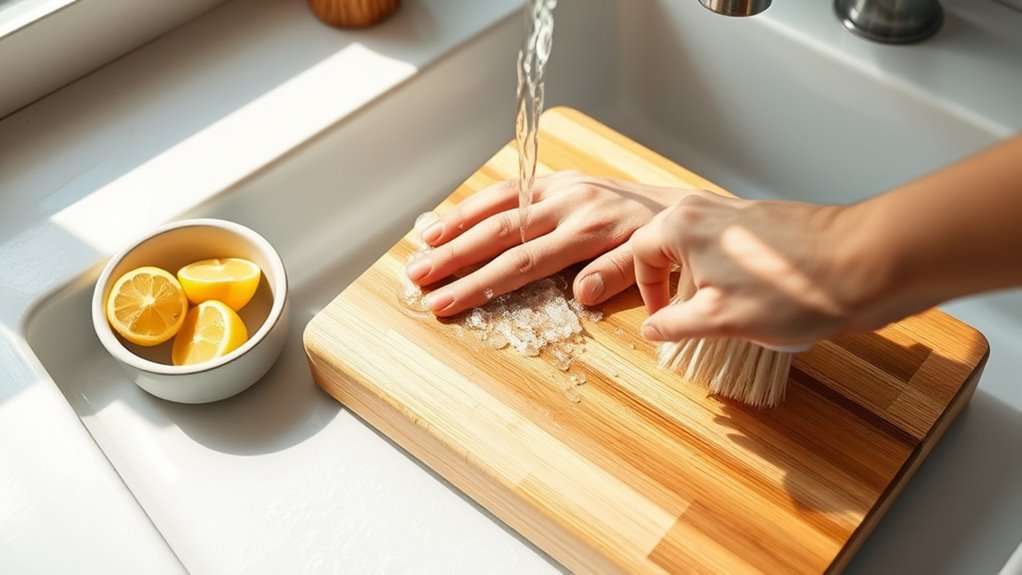
Scrub the board gently with mild soap and a soft sponge to avoid damaging the surface. For tough stains or lingering odors, sprinkle baking soda or coarse salt over the board. Then, scrub with half a lemon to naturally lift stains and neutralize smells.
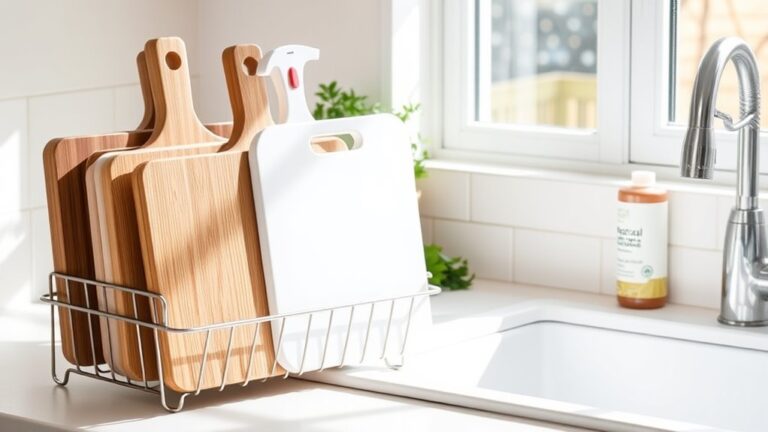
Always dry your bamboo cutting board thoroughly to prevent warping. Never soak it in water or place it in the dishwasher, as excessive moisture can damage the wood.
Regularly oil your board to keep it smooth, strong, and long-lasting.
Keep going to discover more tips that will help your board last longer and stay fresh.
Key Takeaways
- Rinse bamboo cutting boards immediately with warm water and clean gently using mild dish soap and a soft sponge to prevent residue buildup. Avoid soaking or dishwasher use; dry boards thoroughly standing upright to prevent warping or cracking.
- For deep cleaning and odor removal, scrub with coarse salt or baking soda and half a lemon, then rinse and dry promptly.
- Regularly oil the board with food-safe mineral or bamboo oil after cleaning to maintain smoothness and prevent drying or cracking. Disinfect naturally using diluted bleach or white vinegar sprays, then rinse to keep the board bacteria-free and fresh.
How to Clean Bamboo Cutting Boards: A Quick Guide

Although bamboo cutting boards are durable, you should clean them properly to maintain their quality and hygiene. Start by rinsing your board with warm water immediately after use to prevent food particles from sticking. Avoid soaking it or putting it in the dishwasher, as excess water can cause the bamboo to warp or crack.
Use a mild dish soap and a soft sponge to scrub the surface gently. For stubborn stains or odors, sprinkle some coarse salt or baking soda on the board, then scrub with half a lemon. Rinse thoroughly and dry your board with a clean towel.
Finally, let it air dry completely in an upright position before storing it. Following these steps keeps your bamboo cutting board clean and ready for your next meal prep.
Why Bamboo Cutting Boards Are a Great Kitchen Choice
When you choose bamboo cutting boards, you get a surface that’s not only tough and durable but also naturally resistant to bacteria. This makes your kitchen safer and your prep work easier. Bamboo’s eco-friendliness is another reason it’s a smart pick—it grows quickly and replenishes fast, so you’re supporting sustainability every time you cook.
Choosing bamboo cutting boards means safer kitchens and sustainable cooking with a durable, bacteria-resistant surface.
Here are three reasons why bamboo cutting boards stand out:
- Durability: Bamboo resists knife scars better than many woods, lasting longer without warping.
- Low Maintenance: They don’t absorb water easily, reducing the risk of cracking or splitting.
- Lightweight: Bamboo boards are easy to handle and store, making your kitchen workflow smoother.
Choosing bamboo means investing in a practical, healthy, and environmentally friendly kitchen tool.
Choosing the Best Soap and Tools for Bamboo Boards

How do you pick the right soap and tools to keep your bamboo cutting board in top shape? First, choose a mild dish soap free from harsh chemicals or dyes; this prevents damage and keeps the surface safe for food prep. Avoid antibacterial soaps, as they can strip natural oils.
For tools, use a soft sponge or cloth instead of abrasive scrubbers that can scratch the bamboo. A gentle brush works well for crevices but steer clear of steel wool or rough pads. After washing, rinse thoroughly with warm water to remove all soap residue.
These simple choices protect your board’s natural finish and extend its lifespan, ensuring it stays both beautiful and hygienic for everyday use.
How to Remove Food Residue From Bamboo Cutting Boards
Since bamboo cutting boards absorb oils and particles during use, you’ll need effective methods to remove stubborn food residue without damaging the surface. Start by rinsing the board with warm water to loosen debris.
Bamboo boards absorb oils and particles, so begin by rinsing with warm water to loosen debris.
Next, follow these steps:
- Sprinkle coarse salt or baking soda over the board. These abrasives help lift stuck-on food without scratching bamboo.
- Use a damp sponge or soft brush to scrub gently in circular motions, focusing on problem spots.
- Rinse thoroughly with warm water and dry immediately with a clean towel to prevent moisture absorption.
What Not to Do When Cleaning Bamboo Cutting Boards
You shouldn’t soak your bamboo cutting board in water, as it can cause warping or cracking. Avoid harsh chemical cleaners that may damage the wood’s surface. Also, never use abrasive scrubbers since they can scratch and weaken the board.
Avoid Soaking In Water
Although bamboo cutting boards are sturdy, you shouldn’t soak them in water because prolonged exposure can cause warping and cracking. When you leave your board submerged, it absorbs water unevenly, weakening the fibers and ruining the board’s shape.
To keep your bamboo cutting board in great condition, follow these tips:
- Wash it quickly with warm, soapy water right after use.
- Rinse thoroughly but avoid letting it sit under running water for too long.
- Dry it immediately with a clean towel and stand it upright to air dry completely.
Skip Harsh Chemical Cleaners
Keeping your bamboo cutting board free from damage means being mindful not just of how you wash it, but also what you use to clean it. Avoid harsh chemical cleaners like bleach, ammonia, or strong detergents. These substances can strip away the natural oils in the bamboo, causing it to dry out and crack over time.
Plus, chemical residues might linger on the board, which isn’t safe for food prep. Instead, stick to mild dish soap and warm water for routine cleaning. If you want a deeper clean, use natural alternatives like white vinegar or a lemon juice solution—they disinfect without harming the wood.
Never Use Abrasive Scrubbers
When cleaning your bamboo cutting board, avoid abrasive scrubbers since they can scratch and damage the surface. These scratches not only ruin the board’s appearance but also create tiny grooves where bacteria can hide.
Instead, use gentler methods to keep your board in top shape. Here’s what you should do:
- Use a soft sponge or cloth with warm, soapy water to clean the surface.
- For tough stains, scrub gently with a nylon brush rather than a harsh scrubber.
- Rinse thoroughly and dry immediately to prevent moisture damage.
How to Keep Your Bamboo Cutting Board From Warping
If you want your bamboo cutting board to last, you’ll need to prevent it from warping by managing moisture exposure carefully. Avoid soaking it in water or leaving it wet for long. Always dry it thoroughly after washing, ideally standing it upright to air out both sides.
Keep it away from direct heat or sunlight, which can cause uneven drying and warping. Here’s a quick guide to help you:
| What to Do | What to Avoid |
|---|---|
| Dry board immediately | Leaving board soaking |
| Store upright | Storing flat when wet |
| Use gentle cleaning | Using excessive water |
| Keep away from heat | Placing near stove or sun |
With these tips, you’ll keep your bamboo board flat and functional longer.
How to Disinfect Bamboo Cutting Boards Safely
Properly drying and storing your bamboo cutting board helps maintain its shape, but it won’t eliminate all bacteria or odors. To disinfect it safely, follow these steps:
- Use a mild bleach solution: Mix 1 tablespoon of unscented bleach with 1 gallon of water. Wipe the board with this solution, then rinse thoroughly with water.
- Try white vinegar: Spray or wipe the board with undiluted white vinegar. Let it sit for a few minutes before rinsing to kill bacteria naturally.
- Avoid harsh chemicals and soaking: Don’t soak your board or use strong detergents, as they can damage bamboo fibers and reduce its lifespan.
Disinfecting this way keeps your board safe without compromising its durability or appearance.
Using Natural Odor Removers on Bamboo Cutting Boards
Although disinfecting your bamboo cutting board helps eliminate bacteria, odors can still linger after use. To tackle this, use natural odor removers like lemon and baking soda. Sprinkle baking soda over the board, then rub it with half a lemon, squeezing slightly to release juice.
Let it sit for a few minutes before rinsing with warm water. The baking soda neutralizes odors, while lemon’s acidity cuts through smells and leaves a fresh scent. You can also wipe the board with white vinegar, which kills odor-causing bacteria naturally.
Avoid harsh chemicals, as they can damage bamboo. Regularly using these natural methods keeps your cutting board smelling clean and fresh without compromising its integrity.
How Often to Clean and Oil Your Bamboo Cutting Board
You should clean your bamboo cutting board after every use to keep it fresh and safe. Oiling it once a week helps maintain its durability and prevents cracking.
Pay attention to signs like dryness or rough texture—they mean it’s time for maintenance.
Daily Cleaning Routine
Since bamboo cutting boards come into contact with food daily, you should clean them immediately after each use to prevent bacteria buildup and maintain their quality. Follow this simple daily cleaning routine:
- Rinse the board under warm water to remove food particles.
- Scrub gently with a mild dish soap and a soft sponge to avoid damaging the surface.
- Rinse thoroughly and dry the board with a clean towel or let it air dry standing upright to prevent moisture absorption.
Avoid soaking your bamboo board or placing it in the dishwasher, as excessive water can cause warping or cracking.
Weekly Oiling Schedule
A good rule of thumb is to oil your bamboo cutting board once a week to keep it in top condition. After thoroughly cleaning and drying your board, apply a food-safe mineral oil or bamboo conditioning oil evenly across the surface. Use a clean cloth to rub the oil in, ensuring it penetrates the wood fibers.
Let the oil soak for several hours or overnight for best results, then wipe off any excess. This weekly oiling prevents your board from drying out, cracking, or absorbing unwanted odors. If you use your board less frequently, you can oil it every two weeks.
Regular oiling maintains your board’s durability and appearance, helping it last longer while providing a safe, smooth cutting surface.
Signs It Needs Maintenance
Several clear signs indicate when your bamboo cutting board needs maintenance to stay in good shape. Paying attention to these helps you clean and oil it at the right time, ensuring longevity and hygiene.
- Dryness and Cracking: If your board looks dry or develops small cracks, it’s time to oil it. This prevents further damage and keeps the bamboo hydrated.
- Persistent Stains or Odors: When stains or smells don’t go away after washing, it’s a sign you should deep clean your board more frequently.
- Rough Texture: If the surface feels rough or splintery, sanding lightly followed by oiling will restore smoothness and protect the wood.
The Right Way to Dry Bamboo Cutting Boards After Cleaning
Although drying might seem straightforward, you’ll want to handle your bamboo cutting board with care to prevent warping or cracking. After washing, immediately wipe off excess water with a clean, dry towel. Then, stand the board upright or place it on a drying rack to guarantee air circulates around all sides.
Avoid laying it flat, as trapped moisture can cause damage. Never leave your bamboo board soaking or in a damp environment. Also, steer clear of using a dishwasher or placing it near direct heat sources like radiators or stovetops, as intense heat can warp the wood.
How to Deep Clean Bamboo Cutting Boards From Stains and Smells
Proper drying keeps your bamboo cutting board in good shape, but over time, stains and odors can still build up from regular use. To deep clean your board and freshen it up, follow these steps:
- Sprinkle coarse salt or baking soda generously over the board’s surface. These natural abrasives lift stains and absorb odors effectively.
- Cut a lemon in half and use it to scrub the board, squeezing juice as you go. The acidity breaks down stains and neutralizes smells.
- Let the mixture sit for 5-10 minutes before rinsing thoroughly with warm water. Dry immediately with a clean towel.
This simple routine helps restore your bamboo board’s appearance and freshness without harsh chemicals, keeping it safe and ready for your next meal prep.
Tips to Extend the Life of Your Bamboo Cutting Boards
To keep your bamboo cutting board in top condition for years, you’ll want to treat it with care and follow a few simple maintenance habits. First, always dry your board thoroughly after washing to prevent warping and cracking. Avoid soaking it in water or putting it in the dishwasher, as excessive moisture damages the bamboo fibers.
Regularly oil your board with food-grade mineral oil or bamboo conditioner to maintain its moisture balance and prevent drying out. Use both sides of the board to distribute wear evenly. Ultimately, avoid cutting extremely hard or frozen foods that can cause deep grooves.
Frequently Asked Questions
Can Bamboo Cutting Boards Be Used for Raw Meat?
You can use bamboo cutting boards for raw meat, but you’ll need to clean them thoroughly right after to prevent bacteria. Avoid soaking and always sanitize to keep the board safe and in good condition for future use.
Are Bamboo Cutting Boards Dishwasher Safe?
Only about 15% of bamboo cutting boards are dishwasher safe. You shouldn’t put yours in the dishwasher because heat and water can warp or crack it.
Instead, hand wash with mild soap and dry it quickly.
How Heavy Are Bamboo Cutting Boards Compared to Wooden Ones?
You’ll find bamboo cutting boards lighter than traditional wooden ones, making them easier to handle and move. They offer great durability without the extra weight, so you can comfortably chop and clean without straining your wrists.
Can Bamboo Cutting Boards Be Used for Cutting Hot Foods?
Think of your bamboo cutting board as a sturdy shield—it can handle warm foods, but don’t slam piping-hot pots on it. Using it for hot foods occasionally is fine, but avoid extreme heat to keep it lasting longer.
Do Bamboo Cutting Boards Dull Knives Faster Than Other Boards?
No, bamboo cutting boards don’t dull knives faster than other boards. You’ll find they’re actually gentler than glass or ceramic but tougher than softwoods.
Just make sure to keep your knives sharp for the best results.
Conclusion
Now that you know how to care for your bamboo cutting board, keeping it in tip-top shape will be a breeze. Remember, a little effort goes a long way—don’t let neglect put a wrench in your kitchen routine.
Regular cleaning, proper drying, and occasional oiling will keep your board looking fresh and lasting longer. Treat it well, and it’ll repay you by being your trusty kitchen companion for years to come.
By following these bamboo cutting board care tips, you ensure a clean, durable, and safe surface for food preparation. Maintaining your bamboo cutting board properly enhances its longevity and hygiene. Keep your bamboo cutting board in excellent condition with consistent care and cleaning.