Are Gas Cookers Safe and How to Use Them Without Risk
Gas cookers can be safe and efficient appliances when used properly. Ensuring safety while using gas cookers involves understanding key precautions, such as proper ventilation and regular maintenance.
By following simple safety tips, you can minimize risks and enjoy the benefits of cooking with gas.
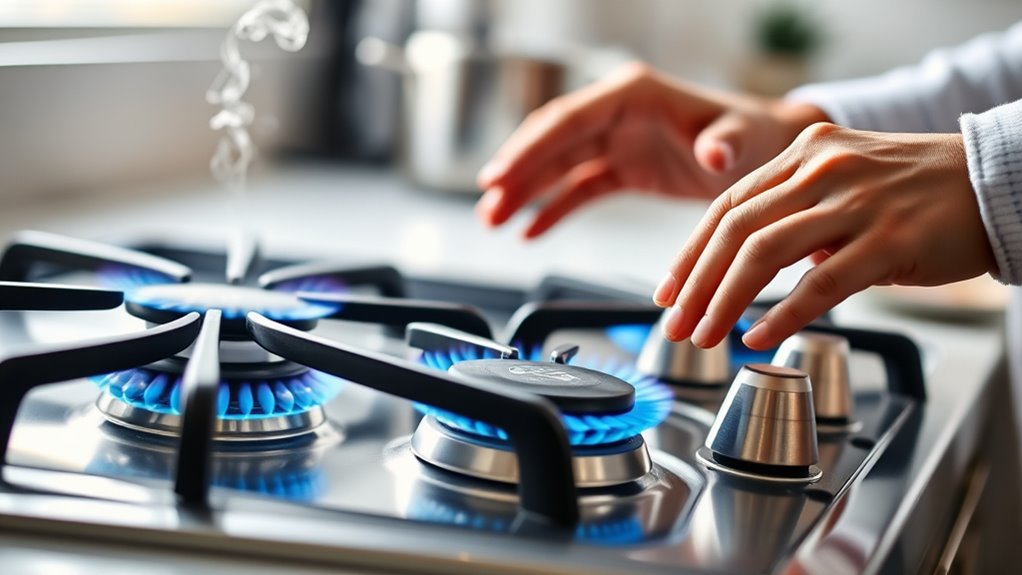
Always guarantee proper ventilation and watch for a blue flame, which shows complete combustion.
Check regularly for leaks by smelling for sulfur odors or testing connections with soapy water.
Turn off the gas immediately if you detect any smell or irregular flame and ventilate the area.
Avoid DIY repairs and call a professional for inspections or issues.
Following these steps helps you cook safely and confidently—discover more ways to protect your kitchen.
Key Takeaways
- Gas cookers are safe when properly installed, ventilated, and maintained to ensure complete combustion and prevent gas leaks or carbon monoxide buildup.
- Always check for gas leaks using soap water and smell tests, avoiding sparks or open flames if a leak is suspected.
- Use cookers with safety features like auto shut-off devices and regularly monitor flame color for safe and efficient operation.
- Ensure proper ventilation to dilute harmful gases, reduce moisture, and prevent dangerous gas accumulation in cooking areas.
- Call a professional immediately for unusual smells, hissing sounds, or flame irregularities; never attempt DIY repairs on gas appliances.
How Does a Gas Cooker Work: And Why Safety Matters
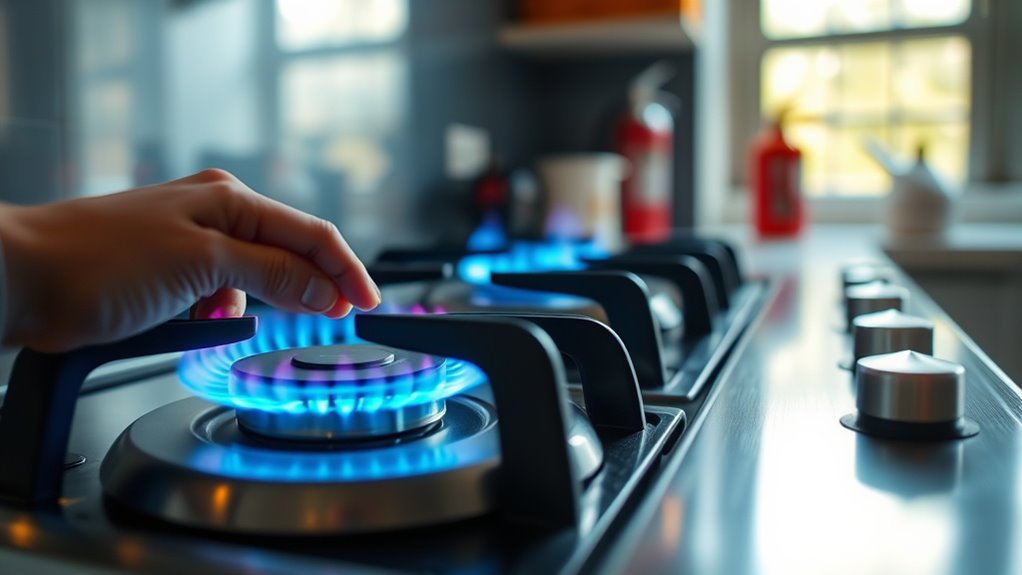
Although gas cookers have been a kitchen staple for decades, many people don’t fully understand how they work or why safety precautions are essential. When you turn on a gas cooker, gas flows from the supply line through a valve to the burner. An ignition source then lights the gas, creating a flame you can control with a knob.
This direct flame heats your pots and pans efficiently. Because you’re dealing with combustible gas, it’s vital to guarantee proper ventilation and check for leaks regularly. You should also make sure the flame burns blue, indicating complete combustion.
Understanding these basics helps you use your gas cooker confidently while minimizing potential hazards and keeping your kitchen safe.
What Are the Common Risks of Gas Cookers?
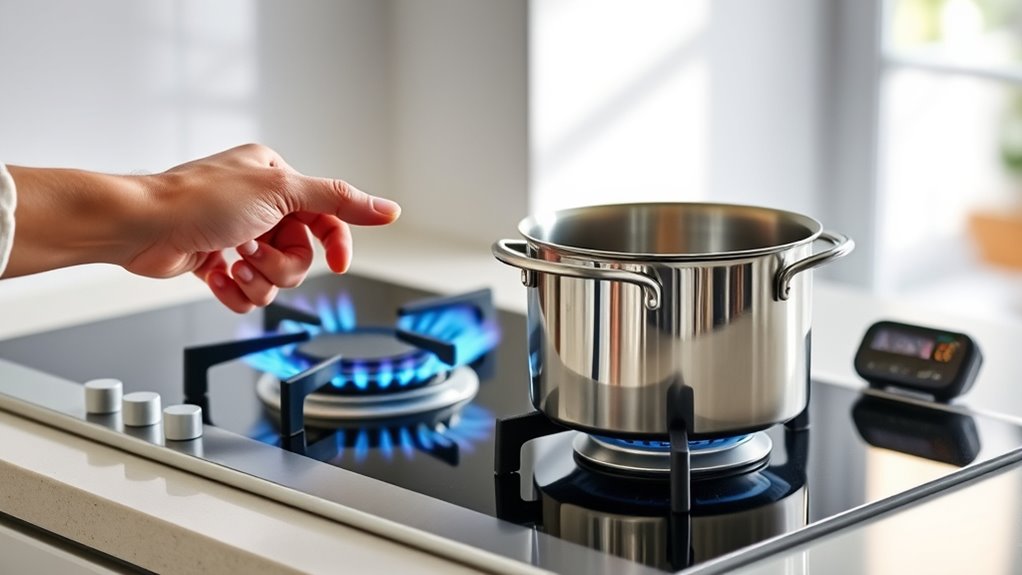
Because gas cookers rely on combustible fuel, they come with specific risks you need to be aware of to stay safe. One major risk is fire hazards—if flames go out unexpectedly, gas can build up and ignite, leading to dangerous fires.
You also face the risk of carbon monoxide poisoning, as incomplete combustion can produce this odorless, colorless gas that’s harmful or even fatal. Additionally, gas cookers can cause burns if you accidentally touch hot surfaces or open flames.
There’s also the possibility of gas explosions if the gas accumulates in an enclosed space without proper ventilation. Being mindful of these risks helps you handle your gas cooker responsibly and reduces the chance of accidents in your kitchen.
How to Detect Gas Leaks Early and Safely

If you suspect a gas leak, acting quickly can prevent serious danger. Start by trusting your senses—natural gas often smells like rotten eggs due to added odorants. Next, follow these steps:
- Avoid using electrical switches or open flames to prevent sparks.
- Open windows and doors immediately to ventilate the area.
- Leave the premises and call your gas supplier or emergency services from outside.
- Use a soap and water solution to check connections; bubbles indicate leaks.
Never ignore even a faint gas smell or hissing sound near your cooker. Regularly inspect hoses and fittings for wear or damage. Early detection and prompt action keep you and your family safe from the risks of gas leaks.
Why Proper Ventilation Is Crucial for Gas Cooker Safety
Detecting gas leaks early helps prevent immediate dangers, but maintaining proper ventilation keeps your kitchen safe every time you use your gas cooker. When you cook with gas, harmful gases like carbon monoxide can build up quickly without good airflow. Proper ventilation dilutes these gases, reducing health risks like headaches or worse.
It also prevents moisture buildup, avoiding mold and damage to your home.
| Concern | Emotion Felt | Why Proper Ventilation Helps |
|---|---|---|
| Carbon monoxide | Fear of poisoning | Keeps air fresh, prevents buildup |
| Gas leaks | Anxiety | Clears harmful gases quickly |
| Mold from moisture | Disgust | Reduces dampness and mold growth |
| Fire hazards | Worry | Removes flammable gas particles |
Proper ventilation means you can cook calmly and safely every day.
How to Install a Gas Cooker Correctly and Safely
When you install a gas cooker, following safety guidelines is essential to protect your home and family from potential hazards. First, always turn off the gas supply before starting installation. Next, connect the cooker to the gas line using approved flexible connectors, confirming there are no leaks by applying soapy water to joints and watching for bubbles.
Third, secure the cooker firmly to prevent tipping. Finally, guarantee proper ventilation in the installation area to avoid gas buildup.
- Turn off the gas supply before installation.
- Use approved connectors and check for leaks.
- Secure the cooker to avoid accidents.
- Maintain adequate ventilation around the cooker.
Following these steps helps you install your gas cooker safely and efficiently.
How to Pick a Safe Gas Cooker for Your Home
Although choosing a gas cooker might seem straightforward, prioritizing safety features is essential to protect your home and loved ones. Look for models with flame failure devices; these automatically shut off the gas if the flame goes out, preventing leaks. Choose cookers with sturdy, easy-to-clean surfaces to avoid grease buildup, which can be a fire hazard.
Confirm the cooker has clear, accessible controls that won’t accidentally turn on. Also, check if the model meets current safety standards and certifications relevant to your area. Consider cookers with automatic ignition systems, as they reduce the risk of gas escaping during manual lighting.
How to Maintain Your Gas Cooker to Prevent Hazards
Choosing a gas cooker with the right safety features is only the first step; keeping it in good condition helps prevent hazards over time. You need to stay proactive with maintenance to guarantee safety.
Follow these four essential steps:
- Clean burners and grates regularly to prevent blockages that can cause uneven flames or gas leaks.
- Check the gas hose and connections for cracks or wear; replace any damaged parts immediately.
- Inspect the flame color—blue flames indicate proper combustion, while yellow or orange flames suggest an issue needing professional attention.
- Schedule an annual professional inspection to detect and fix hidden problems early.
What to Do if You Smell Gas From Your Cooker
If you smell gas from your cooker, act immediately to protect yourself and others. First, turn off the gas supply at the main valve to stop any further leak. Avoid switching electrical appliances or lights on or off, as sparks can ignite the gas.
Open all windows and doors to ventilate the area and disperse the gas quickly. Do not try to find the leak yourself or use any flames. Leave the premises promptly and call your gas supplier or emergency services from a safe location.
Wait for professional help before re-entering. Taking these steps quickly reduces the risk of fire, explosion, or poisoning, keeping everyone safe until experts can resolve the issue.
Tips for Using Your Gas Cooker Safely
When you use your gas cooker, ensuring proper ventilation and keeping flammable items away from the flame are essential steps to prevent accidents. To use your gas cooker safely, follow these tips:
- Always check for gas leaks before lighting the cooker.
- Use pots and pans with flat bottoms to ensure stable contact with the burner.
- Never leave your gas cooker unattended while it’s on.
- Turn off the gas supply immediately after cooking.
These practices help minimize risks and keep your kitchen safe. Remember, regular maintenance and prompt attention to any unusual smells or issues will also protect you from potential hazards when using your gas cooker.
Stay alert and cautious for a safer cooking experience.
Safety Features to Look for in Modern Gas Cookers
When choosing a modern gas cooker, you’ll want to check for key safety features like a flame failure device that stops gas flow if the flame goes out. An auto shut-off mechanism can also prevent accidents by turning off the gas after a set time or if something goes wrong.
These features help keep your kitchen safe without extra effort on your part.
Flame Failure Device
How can you guarantee your gas cooker shuts off safely if the flame goes out unexpectedly? The answer lies in the flame failure device (FFD), a vital safety feature. This device detects if the flame extinguishes and automatically cuts off the gas supply, preventing dangerous leaks.
When choosing a cooker, make certain it includes an FFD because:
- It protects you from gas poisoning.
- It prevents potential fires caused by gas build-up.
- It assures your kitchen environment stays safe.
- It provides peace of mind every time you cook.
Auto Shut-Off Mechanism
Although gas cookers come with various safety features, the auto shut-off mechanism stands out as a crucial safeguard you’ll want to prioritize. This feature automatically cuts off the gas supply if the cooker detects unusual conditions, like overheating or if the flame goes out unexpectedly. By doing this, it prevents potential gas leaks that could lead to fires or explosions.
When shopping for a gas cooker, check if it includes this mechanism—it’s especially useful if you’re forgetful or multitasking while cooking. Using a cooker with an auto shut-off mechanism gives you peace of mind, knowing it reduces risks without requiring constant supervision. Always follow the manufacturer’s instructions to ensure the system works effectively and keeps your kitchen safe.
When to Call a Professional for Gas Cooker Repairs or Checks
If you smell gas or notice a hissing sound near your cooker, call a professional immediately.
Regular safety inspections can catch issues before they become dangerous.
Also, don’t ignore unusual cooker behavior like inconsistent flames or delayed ignition—these are signs you need expert help.
Signs Of Gas Leaks
When you notice a strong smell of gas or hear a hissing sound near your cooker, it’s crucial to act immediately. These signs may indicate a gas leak, which poses serious risks. You should call a professional right away if you experience any of the following:
- A persistent sulfur or rotten egg odor around your kitchen.
- Unusual sounds like hissing or whistling near the gas lines or cooker.
- Difficulty lighting the burner or the flame appears yellow or irregular.
- Feeling dizzy, nauseous, or experiencing headaches when near the cooker.
Don’t ignore these warning signs. Shut off the gas supply if safe, ventilate the area, and contact a qualified technician to inspect and repair your cooker. Your safety depends on timely professional intervention.
Regular Safety Inspections
How often should you schedule safety inspections for your gas cooker? Ideally, have a professional check it annually to verify everything’s in top shape.
If you notice any irregular smells, sounds, or burner issues, call a technician immediately. Never attempt repairs yourself—gas appliances require expert care.
| Inspection Trigger | Recommended Action | Urgency Level |
|---|---|---|
| Annual routine check | Schedule professional check | Medium |
| Smell of gas | Turn off cooker, call expert | High |
| Visible damage or malfunction | Stop use, request repair service | High |
Regular inspections help prevent hazards and keep your kitchen safe. Don’t delay; safety comes first.
Unusual Cooker Performance
Regular safety inspections can help catch many issues early, but you should also pay attention to your gas cooker’s behavior during everyday use. If you notice any unusual cooker performance, it’s crucial to call a professional promptly. Look out for these warning signs:
- Flames that are yellow or orange instead of blue.
- A strong gas smell around the cooker.
- Burners that fail to ignite or stay lit.
- Strange noises like popping or hissing during operation.
Ignoring these signs can lead to dangerous gas leaks or carbon monoxide buildup. Don’t attempt repairs yourself—only a qualified technician can safely diagnose and fix problems. Staying alert and acting quickly keeps you and your household safe.
Frequently Asked Questions
Can Gas Cookers Affect Indoor Air Quality Beyond Ventilation Issues?
Yes, gas cookers release nitrogen dioxide and carbon monoxide, which can degrade indoor air quality even with ventilation.
You should use exhaust fans and keep windows open to minimize these pollutants and protect your health effectively.
Are There Specific Brands Known for Safer Gas Cookers?
Yes, you’ll find brands like Bosch, Whirlpool, and GE often praised for safer gas cookers with advanced safety features. Always check for certifications and user reviews to guarantee you pick a reliable, safe model for your kitchen.
What Are the Environmental Impacts of Using Gas Cookers?
You’ll find gas cookers release carbon dioxide and methane, contributing to greenhouse gases. Using them increases indoor air pollution too.
To reduce impact, you can choose energy-efficient models and ventilate your kitchen well while cooking.
How Do Gas Cookers Compare to Electric Cookers in Safety?
Gas cookers pose higher fire and gas leak risks compared to electric ones, but you can stay safe by ensuring good ventilation and regular maintenance.
Electric cookers reduce fire hazards but still require careful use.
Can Gas Cookers Be Used Safely in Mobile Homes or RVS?
You can think of a gas cooker in your RV like a friendly campfire—use it wisely. With proper ventilation and regular checks, you’ll keep it safe, avoiding hidden dangers lurking like shadows in the night.
Always ensure that your gas connections are secure and leak-free. Never use a gas cooker in an enclosed space without adequate airflow. Regular maintenance is key to preventing accidents.
Conclusion
So, you want to play with fire? Just remember, your gas cooker isn’t a dragon you can tame without respect. Keep those leaks sniffed out like a bloodhound, ventilate like you’re airing out a secret, and don’t be the DIY hero who calls a pro only after your kitchen smells like a gas station.
Treat your cooker right, or you might just star in your own fiery reality show—“When Gas Goes Rogue.” Stay safe, chef! Using gas cookers safely means regular maintenance, proper ventilation, and vigilance against leaks. Remember, gas cookers are safe when used correctly and with care.