What Is the Healthiest Cookware
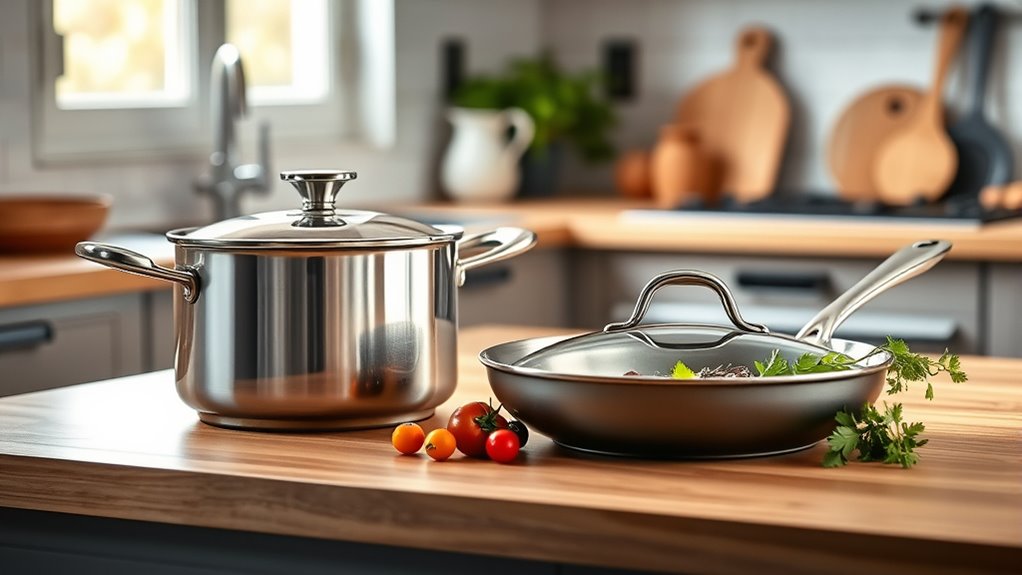
The healthiest cookware you can choose avoids harmful chemicals and offers durable, non-reactive surfaces like stainless steel, cast iron, ceramic, glass, and silicone. These materials are popular for their safety and longevity in the kitchen.
Choosing cookware free from toxins is essential for maintaining a healthy cooking environment.
You’ll want to skip nonstick pans with PFOA or PTFE coatings since they can release toxins when overheated. Look for materials that resist scratching and distribute heat evenly for safe, consistent cooking.
Proper cookware ensures your meals are cooked safely without chemical exposure.
Caring for your cookware properly also keeps it safe and long-lasting. Regular maintenance helps preserve the quality and performance of your pots and pans.
Keep exploring to find the best options and care tips for your kitchen.
Key Takeaways
- Choose cookware made from stainless steel, cast iron, ceramic, glass, or enameled cast iron to avoid harmful chemical leaching.
- Avoid nonstick pans with PFOA or PTFE coatings, as they can release toxins when overheated.
- Prioritize cookware with smooth, non-reactive surfaces that resist scratching and prevent chemical interactions with food.
- Maintain cookware properly by hand washing, seasoning cast iron, and avoiding abrasive tools to ensure safety and durability.
- Look for safety certifications and labels to ensure cookware meets health and quality standards for safe cooking.
What Makes Cookware Healthy: Key Features to Look For

Although choosing healthy cookware might seem overwhelming, focusing on a few key features can simplify your decision. You want cookware that won’t leach harmful chemicals into your food, so materials like stainless steel, cast iron, and ceramic are excellent choices. Avoid nonstick pans with PFOA or PTFE coatings, as they can release toxins when overheated.
Look for cookware with a smooth, non-reactive surface that won’t interact with acidic ingredients. Durability matters, too—pick options that resist scratching and chipping, which can expose harmful layers. Also, consider cookware that distributes heat evenly to prevent hot spots, ensuring your food cooks safely.
How to Choose Healthy Cookware for Your Kitchen
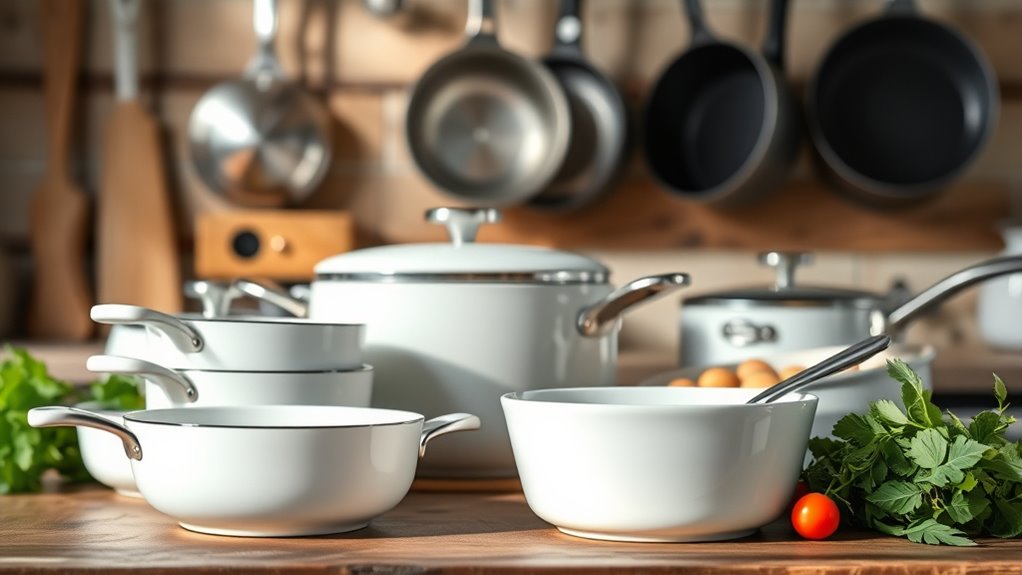
When choosing healthy cookware, focus on non-toxic materials like stainless steel, cast iron, or ceramic. You’ll also want to take into account durability to ensure your pots and pans last without releasing harmful substances.
Finally, pay attention to maintenance tips to keep your cookware safe and in top condition.
Non-Toxic Material Options
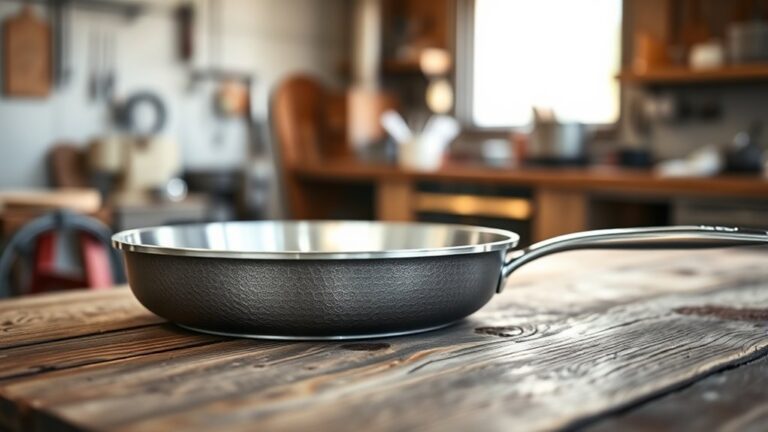
How do you know which cookware materials are truly safe for your health? Start by choosing non-toxic options like stainless steel, cast iron, and ceramic. Stainless steel is durable and doesn’t leach harmful chemicals into food.
Cast iron offers natural non-stick properties and adds iron to your diet, but avoid cooking acidic foods in it. Ceramic cookware is non-reactive and free from PTFE and PFOA, common in some non-stick coatings. Glass and enameled cast iron are also good choices since they don’t release toxins.
Avoid cookware with synthetic non-stick coatings that can emit harmful fumes when overheated. By selecting these non-toxic materials, you protect your health while cooking delicious meals without worrying about chemical exposure.
Durability and Maintenance Tips
Since cookware is an investment you’ll use daily, choosing durable materials that withstand regular use and cleaning is essential. Look for options like stainless steel, cast iron, or hard-anodized aluminum, as they resist warping, scratching, and corrosion.
To keep your cookware in top shape, avoid abrasive cleaners and metal utensils that can damage surfaces. Hand wash when possible, especially for non-stick or ceramic coatings, to extend their lifespan. Season cast iron regularly to maintain its non-stick quality and prevent rust.
Store your pots and pans carefully to avoid dents or chipping. By selecting sturdy cookware and following simple maintenance tips, you’ll enjoy healthier cooking and save money by not replacing damaged pieces frequently.
Stainless Steel Cookware: Pros and Cons for Health
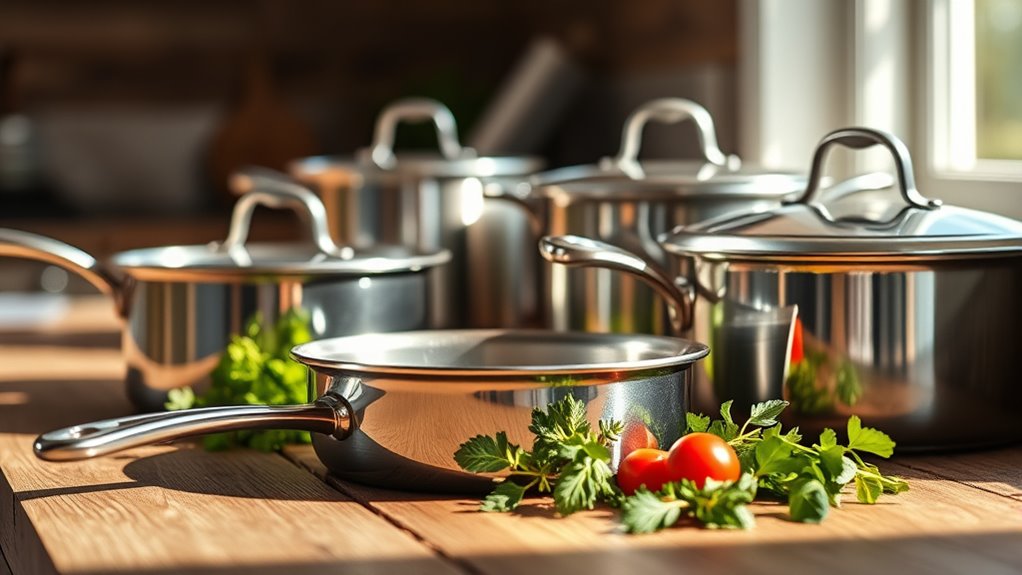
You’ll find stainless steel cookware is super durable and generally safe for daily use. However, you should be aware that small amounts of metals like nickel and chromium can sometimes leach into your food.
Let’s weigh these pros and cons to see if it fits your healthy cooking needs.
Durability and Safety
Although stainless steel cookware is prized for its durability, you should consider both its strengths and potential health concerns before making it your kitchen staple. Stainless steel resists rust, corrosion, and warping, so it lasts for years even with heavy use. You won’t have to worry about chipping or scratching easily, which keeps your cookware looking new and safe for cooking.
Its non-reactive surface means it won’t leach chemicals into your food, maintaining its safety during everyday use. However, keep in mind that overheating can cause discoloration or damage to the surface, so avoid high heat without oil or liquid. Proper care, like gentle cleaning and avoiding sudden temperature changes, helps preserve both the cookware’s integrity and your peace of mind in the kitchen.
Potential Metal Exposure
While stainless steel cookware offers many benefits, it can sometimes release small amounts of metals like nickel and chromium into your food, especially when cooking acidic dishes. If you have a nickel allergy or sensitivity, this might cause irritation or discomfort. However, for most people, the metal exposure is minimal and not harmful.
To reduce any potential risk, avoid prolonged cooking of highly acidic foods like tomato sauce or vinegar-based recipes in stainless steel. Also, using high-quality, food-grade stainless steel with a 18/10 composition can help minimize metal leaching.
Is Cast Iron Cookware a Healthy Choice?
If you’re considering healthier cookware options, cast iron deserves a close look. Cast iron is naturally free of synthetic chemicals and coatings, making it a solid choice if you want to avoid potential toxins found in some nonstick pans. It also adds a small amount of iron to your food, which can benefit those with iron deficiencies.
However, if you have hemochromatosis or other iron-related conditions, you might want to be cautious. Cast iron requires regular seasoning to maintain its nonstick surface and prevent rust, so it demands some upkeep. While it heats evenly and lasts forever, it’s heavier and can react with very acidic foods, potentially affecting taste and cookware integrity.
Nonstick Cookware Safety: What You Should Know
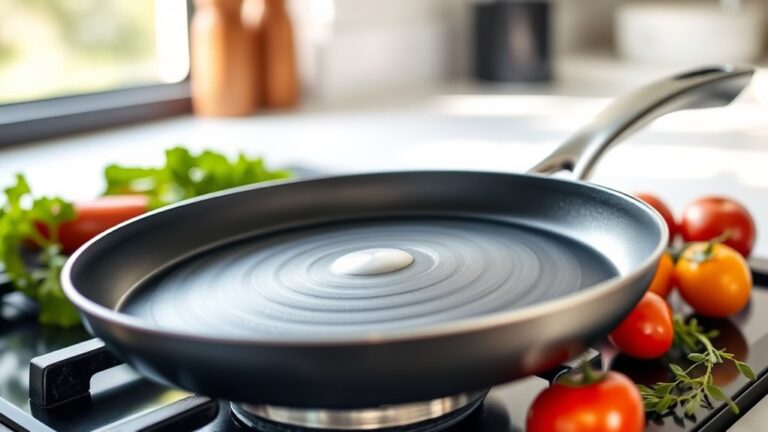
Cast iron offers a natural, chemical-free cooking surface, but not everyone prefers its weight or maintenance needs. When it comes to nonstick cookware, safety is a key concern you shouldn’t overlook. Most modern nonstick pans use PTFE coatings, which are generally safe if you avoid overheating them above 500°F.
Cast iron provides a natural cooking surface, while modern nonstick pans with PTFE remain safe if not overheated.
However, you should be cautious with older pans containing PFOA, a chemical phased out due to health risks. To keep your nonstick cookware safe, remember:
- Use low to medium heat to prevent coating breakdown
- Avoid metal utensils to protect the surface
- Replace pans when the coating starts peeling or scratching
- Never preheat empty pans to reduce toxic fume release
Following these tips helps you enjoy convenience without compromising your health.
Ceramic Cookware: Benefits and Health Considerations
Because ceramic cookware uses a non-toxic, inorganic coating, it has become a popular choice for those seeking a safer alternative to traditional nonstick pans. You’ll appreciate that ceramic surfaces don’t release harmful fumes, even when overheated, making them a healthier option for everyday cooking.
Plus, ceramic cookware distributes heat evenly, so your food cooks uniformly without hot spots. It’s also naturally stick-resistant, so you can use less oil, promoting healthier meals.
However, keep in mind that ceramic coatings can wear down over time, especially if you use metal utensils or clean them harshly. To maintain your cookware’s nonstick quality and safety, stick to wooden or silicone tools and gentle cleaning methods. This way, you’ll enjoy ceramic cookware’s benefits without compromising your health.
Are Glass and Silicone Cookware Safe and Healthy?
While choosing cookware, you might wonder whether glass and silicone options are truly safe and healthy for your kitchen. Glass is non-porous and won’t leach chemicals into your food, making it a great choice for baking or storing leftovers. Silicone, known for its flexibility, resists heat and doesn’t release harmful toxins, so it’s ideal for utensils and bakeware.
Both are easy to clean and maintain, which reduces bacterial buildup. However, verify your silicone is food-grade and free from fillers.
- Clear glass baking dishes that show your food while cooking
- Brightly colored silicone spatulas that bend without breaking
- Oven-safe glass casseroles for roasting vegetables
- Heat-resistant silicone molds perfect for muffins or chocolates
These materials offer safe, healthy options if you choose quality products.
Tips for Choosing Safe Cookware Every Day
When selecting cookware for daily use, you should focus on materials that balance safety, durability, and ease of cleaning to protect your health and enhance your cooking experience. Choose non-toxic options like stainless steel, cast iron, or ceramic-coated pans. Avoid cookware with harmful chemicals such as PFOA or PTFE coatings that can release toxins when heated.
Pay attention to the cookware’s weight and handle comfort to assure ease of use. Opt for pieces with smooth surfaces to prevent food from sticking and make cleaning easier. Also, consider the heat distribution properties to cook food evenly without hotspots.
Finally, check for any certifications or labels that guarantee the cookware’s safety and quality. These steps help you pick safe cookware that lasts and supports healthy cooking habits every day.
How to Care for Your Cookware to Keep It Healthy
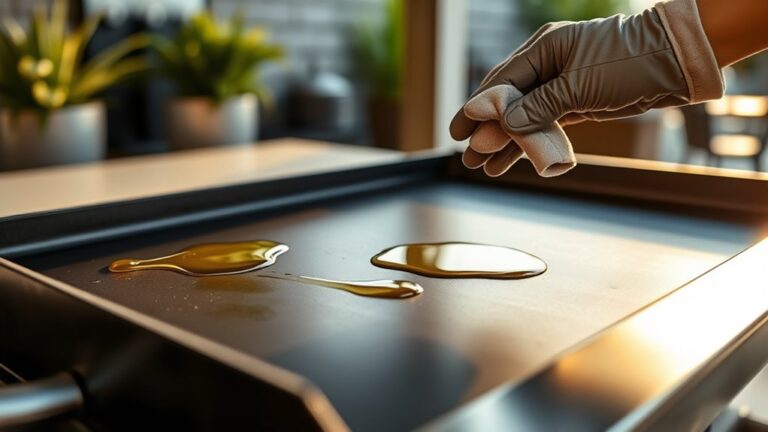
Choosing safe, high-quality cookware is just the first step—you’ll also want to maintain it properly to keep it in good condition and guarantee it stays healthy for cooking. To do this, clean your pots and pans gently using non-abrasive sponges and mild detergents. Avoid metal utensils that can scratch nonstick or ceramic surfaces.
Proper cookware care starts with gentle cleaning and avoiding metal utensils to protect your pots and pans.
Store your cookware in a dry place to prevent rust or mold growth. Finally, season cast iron regularly to maintain its natural nonstick layer and prevent corrosion. By following these simple practices, you’ll extend the life of your cookware and keep your meals safe and delicious.
- Wash cookware by hand with soft cloths or sponges
- Use wooden or silicone utensils to protect surfaces
- Dry thoroughly before storing to avoid moisture damage
- Apply a thin layer of oil on cast iron after cleaning
Frequently Asked Questions
Can Cookware Affect the Taste of My Food?
Yes, cookware can affect your food’s taste. Old or damaged pans might cause sticking or off-flavors, while certain materials like cast iron can add unique flavors.
Choosing the right cookware helps guarantee your meals taste great.
Does the Weight of Cookware Impact Cooking Health?
You don’t need biceps of steel—weighty cookware won’t magically boost your health. But heavy pots hold heat better, cooking food evenly, which can help preserve nutrients.
Are There Eco-Friendly Cookware Disposal Methods?
You can recycle metal cookware at scrap yards or donate usable pieces to thrift stores. For non-recyclable items, check if local hazardous waste programs accept them.
Avoid throwing cookware in regular trash to protect the environment.
Can Using Multiple Types of Cookware Be Harmful?
Using multiple types of cookware isn’t harmful if you maintain them properly. Just avoid mixing damaged nonstick with reactive metals, and clean each according to its material to prevent chemical reactions or contamination during cooking.
How Does Cookware Influence Energy Efficiency in Cooking?
Cookware affects energy efficiency by how well it conducts and retains heat. You’ll save energy using materials like cast iron or stainless steel, which heat evenly and hold temperature longer, reducing cooking time and power use.
Conclusion
Choosing healthy cookware means prioritizing safety, durability, and ease of use. You want cookware that resists toxins, distributes heat evenly, and lasts for years. You want to avoid harmful chemicals, prevent food contamination, and maintain your kitchen’s cleanliness.
Investing in materials like stainless steel, cast iron, or ceramic supports your health and cooking goals. These options provide reliable performance without compromising safety. Proper care and thoughtful use extend their lifespan and effectiveness.
By choosing wisely, caring properly, and using thoughtfully, you protect your well-being every day. Healthy cookware not only enhances your cooking experience but also promotes a toxin-free kitchen environment. Prioritizing these factors ensures you make the healthiest cookware choices for your lifestyle and health.