Is GreenLife Cookware Safe to Use Without Risks?
You can trust GreenLife cookware to be safe and free from risks, thanks to its non-toxic ceramic coating. This innovative cookware is made without harmful chemicals like PFAS, PFOA, lead, and cadmium, making it a healthier choice for your kitchen.
GreenLife is FDA certified and Prop 65 compliant, ensuring your food stays chemical-free even at high heat.
Made with durable, eco-friendly materials, GreenLife cookware offers a safer alternative to traditional non-stick pans. Its ceramic coating promotes healthier cooking while being gentle on the environment.
By following simple care tips, you’ll keep your GreenLife cookware in great shape for years to come.
Keep exploring to discover more about its features and benefits, and why it’s a smart investment for your health and home.
Key Takeaways
- GreenLife Cookware has a non-toxic ceramic coating free from PFAS, PFOA, lead, and cadmium, ensuring safe cooking without harmful chemical exposure. It is FDA certified and compliant with Prop 65, meeting stringent safety and food contact regulations.
- The cookware uses sustainable materials like recycled aluminum and eco-friendly ceramic coatings, promoting environmental safety. Proper use of wooden or silicone utensils and low-to-medium heat prevents coating damage and maintains safety.
- Regular gentle cleaning and careful handling extend durability, minimizing risks of chips or cracks that could affect safety.
Is GreenLife Cookware Safe To Use?
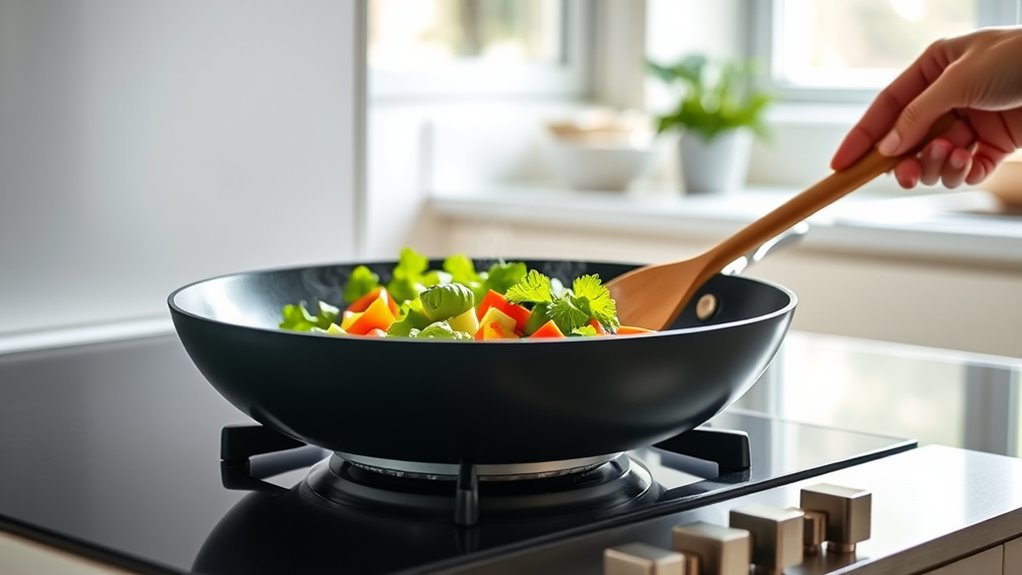
Although some cookware brands raise safety concerns, GreenLife cookware is generally safe to use. When you cook with GreenLife, you benefit from its non-toxic ceramic coating, which doesn’t release harmful chemicals even at high temperatures. You won’t find PFAS, PFOA, lead, or cadmium in their products, so your meals stay free from these toxins.
Plus, the cookware heats evenly, helping you avoid hotspots that might burn food. You should still follow usage guidelines to keep the coating intact—avoid metal utensils and high heat, and hand wash when possible. By taking these simple steps, you can enjoy GreenLife’s safety features and cook confidently without worrying about health risks linked to common non-stick cookware issues.
What’s GreenLife Cookware Made Of?
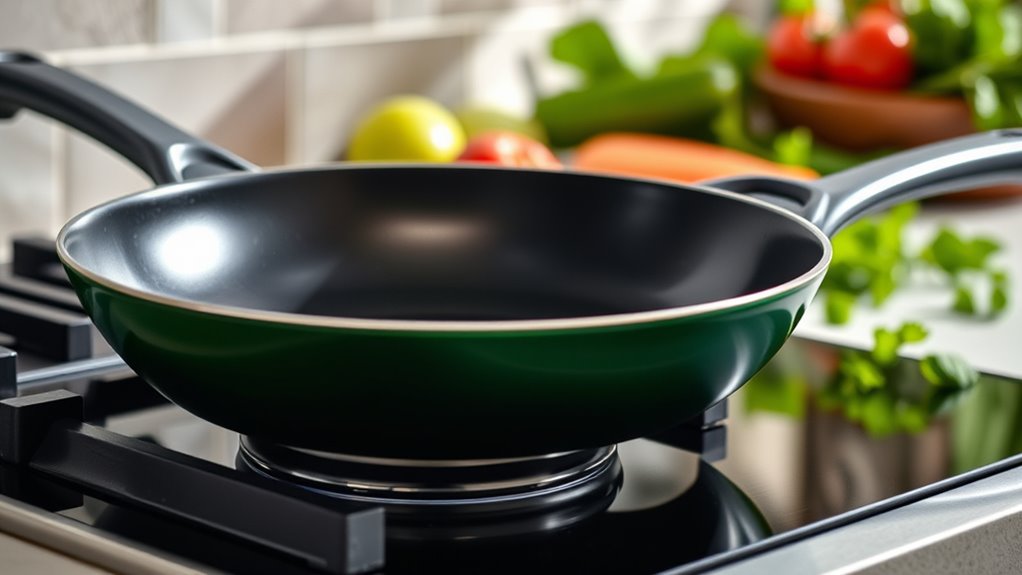
When you choose GreenLife cookware, you get pieces made primarily from aluminum, which provides excellent heat conduction and keeps your cooking efficient. This base material ensures your food cooks evenly without hot spots.
Beyond aluminum, GreenLife cookware includes:
Beyond aluminum, GreenLife cookware features ceramic coatings, comfortable handles, glass lids, and durable reinforcements.
- A ceramic non-stick coating that offers easy food release and quick cleanup.
- A sturdy handle made from Bakelite or silicone for safe, comfortable gripping.
- A glass lid on some models, letting you monitor cooking without lifting the lid.
- Reinforcements in the coating to improve durability and scratch resistance.
These materials combine to deliver cookware that heats well, handles safely, and cleans easily, making GreenLife a practical choice for everyday cooking needs.
Is GreenLife’s Ceramic Coating Non-Toxic?
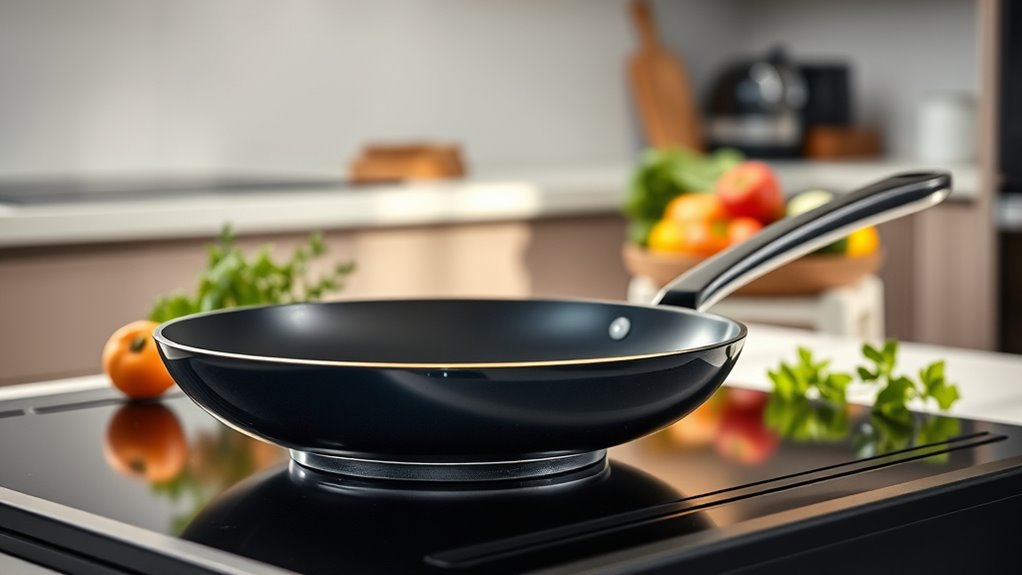
Since you’re concerned about safety, it’s important to know that GreenLife’s ceramic coating is designed to be free from harmful chemicals like PFAS, PFOA, lead, and cadmium. This means you can cook with it without worrying about these toxic substances leaching into your food. The ceramic surface is made from a non-stick material derived from sand, making it naturally non-toxic and environmentally friendly.
GreenLife emphasizes that its coating doesn’t contain metals or chemicals known to cause health issues, so you’re using cookware that prioritizes your well-being. While no cookware is completely risk-free, GreenLife’s ceramic coating offers a safer alternative to traditional non-stick pans that often use synthetic chemicals. You can feel confident choosing GreenLife for everyday cooking without exposing yourself to these harmful toxins.
Can GreenLife Cookware Release Harmful Chemicals When Heated?
Knowing that GreenLife’s ceramic coating avoids harmful chemicals like PFAS and PFOA gives you peace of mind about its safety. When heated, GreenLife cookware is designed not to release toxic substances, unlike some traditional non-stick pans.
However, to keep your cookware safe, you should:
- Avoid overheating it beyond recommended temperatures (usually under 450°F).
- Use wooden or silicone utensils to prevent coating damage.
- Regularly inspect for chips or cracks that could expose underlying materials.
- Clean gently without abrasive scrubbing to maintain the ceramic layer.
What Safety Certifications Does GreenLife Cookware Have?
Although you might focus on how GreenLife cookware performs, it’s important to take into account the safety certifications it holds, as these verify the product meets established health and quality standards. GreenLife cookware is certified by the FDA and meets strict FDA food contact regulations, ensuring materials used are safe for cooking.
Additionally, it carries the PFOA-free certification, meaning it doesn’t contain harmful perfluorooctanoic acid, which is often linked to health risks in traditional non-stick pans. GreenLife also complies with Prop 65 regulations, indicating that it limits exposure to harmful chemicals. These certifications provide assurance that GreenLife prioritizes your health and safety.
When you choose GreenLife, you’re selecting cookware that’s been tested and verified by recognized organizations for safe everyday use.
How Does GreenLife Cookware Compare To Traditional Non-Stick Pans?
When you compare GreenLife cookware to traditional non-stick pans, you’ll notice key differences in materials and safety features that impact your cooking experience. GreenLife uses a ceramic-based coating derived from sand, avoiding harmful chemicals often found in conventional non-stick surfaces. This makes it a safer option for everyday use.
Here’s how they stack up:
- Material: GreenLife uses Thermolon ceramic, while traditional pans often rely on PTFE coatings like Teflon.
- Safety: GreenLife avoids PFOA, PFAS, and other toxins common in older non-stick pans.
- Durability: Traditional pans may last longer but can degrade to release fumes when overheated.
- Heat Tolerance: GreenLife handles medium heat well but may not suit high-heat cooking like some metal-based pans.
Choosing GreenLife means prioritizing healthier materials over extreme durability.
What Are Common Safety Concerns About GreenLife Cookware?
You might wonder about the safety of GreenLife cookware’s nonstick coating and whether it releases harmful chemicals.
It’s also important to take into account its heat resistance limits to avoid damaging the pan or releasing toxins.
Let’s explore these common concerns so you can use your cookware confidently.
Nonstick Coating Chemicals
Because GreenLife cookware uses a ceramic nonstick coating instead of traditional chemical-based coatings, many people wonder if it truly eliminates health risks. Unlike older nonstick pans coated with PTFE or PFOA, GreenLife claims to avoid these harmful substances. However, you should still be aware of some concerns:
- Ceramic coatings can degrade over time, potentially releasing small particles.
- Some ceramic coatings may contain heavy metals if manufacturing isn’t carefully controlled.
- Scratches or chips in the coating could expose you to underlying metals.
- Although free from PFOA and PFAS, long-term chemical safety studies on ceramic coatings are still limited.
Heat Resistance Limits
Although GreenLife cookware boasts a ceramic nonstick surface, it’s important to understand its heat resistance limits to avoid safety issues. GreenLife pans generally withstand temperatures up to 450°F (232°C). Exceeding this can damage the ceramic coating, causing it to degrade and potentially release harmful fumes.
You should avoid using GreenLife cookware on high heat settings, especially empty pans, as they heat up quickly. Overheating not only shortens the lifespan of the cookware but may also pose health risks. To stay safe, use medium or low heat for cooking and never leave the pan unattended on a hot burner.
How Durable Is GreenLife Cookware And How Should You Care For It?
You’ll want to understand how GreenLife cookware holds up over time and what steps keep it in good shape. Knowing the right cleaning methods can prevent wear and tear, while avoiding common mistakes protects its surface.
Let’s explore how to maintain its durability for safe, long-lasting use.
Material Strength Overview
When you invest in GreenLife cookware, you expect it to hold up well through regular use. GreenLife pans feature a sturdy aluminum core that offers excellent heat conduction, making them both efficient and durable. The Thermolon ceramic non-stick coating resists scratches better than traditional non-stick surfaces but still requires gentle handling.
To help your cookware last longer, keep these points in mind:
- Avoid using metal utensils to prevent damaging the ceramic coating.
- Cook on low to medium heat to maintain the material’s integrity.
- Store pans carefully to avoid chipping or scratching.
- Hand wash with a soft sponge rather than abrasive tools.
Following these tips guarantees your GreenLife cookware stays strong and performs well over time.
Proper Cleaning Techniques
Maintaining the durability of your GreenLife cookware depends largely on how you clean it after use. Always let your pans cool before washing to prevent warping. Use warm, soapy water with a soft sponge or cloth—abrasive scrubbers can damage the ceramic nonstick surface.
If food sticks, soak the pan briefly to loosen residue instead of scrubbing hard. Avoid using harsh detergents or chemical cleaners, as they can degrade the coating. You can clean the exterior gently to maintain its appearance, but avoid soaking the cookware for long periods.
Hand washing is best; although some GreenLife pieces claim dishwasher safety, repeated dishwasher cycles may shorten their lifespan. By following these simple cleaning steps, you’ll help keep your GreenLife cookware performing well and lasting longer.
Avoiding Common Damage
Although GreenLife cookware is designed with durability in mind, improper use and care can still cause damage over time. To keep it in great shape, you should avoid common mistakes that reduce its lifespan.
Here’s how to protect your investment:
- Use non-metal utensils to prevent scratching the ceramic coating.
- Avoid overheating; cook on low to medium heat to maintain the non-stick surface.
- Don’t drop or bang the cookware, as chips and cracks can form.
- Hand wash with gentle sponges instead of abrasive scrubbers or dishwashers.
Is GreenLife Cookware A Healthy, Eco-Friendly Choice For Your Kitchen?
Since you want cookware that supports both your health and the environment, GreenLife offers a compelling option. It uses a ceramic non-stick coating free from PFAS, PFOA, lead, and cadmium, meaning you won’t have to worry about toxic chemicals leaching into your food. Plus, the ceramic surface promotes healthier cooking by requiring less oil.
GreenLife’s commitment to eco-friendliness shows through its use of recycled aluminum and sustainable manufacturing processes, reducing environmental impact. You’ll also appreciate that its products are dishwasher safe and built to last, minimizing waste. While no cookware is perfect, GreenLife balances safety, health, and sustainability well,
making it a smart choice if you care about your kitchen’s impact on both your body and the planet.
Frequently Asked Questions
Can Greenlife Cookware Be Used on Induction Stovetops?
You can’t use GreenLife cookware on induction stovetops because it lacks the magnetic base needed.
Instead, use it on gas, electric, or ceramic stovetops for best performance and to avoid any cooking issues or damage.
What Is the Warranty Period for Greenlife Cookware?
GreenLife cookware comes with a limited lifetime warranty, so you’re covered for defects in materials and workmanship.
Just make sure to register your product and keep your receipt to guarantee your warranty stays valid.
Are Greenlife Pans Dishwasher Safe?
Think of your GreenLife pan like a delicate flower; it’s technically dishwasher safe, but you’ll want to hand wash it to keep that vibrant non-stick coating alive and thriving, ensuring it lasts as long as possible.
Can Greenlife Cookware Be Used in the Oven?
Yes, you can use GreenLife cookware in the oven, but only up to 350°F.
Just make sure to remove any plastic handles, as they aren’t oven-safe and can melt or get damaged at high temperatures.
Does Greenlife Cookware Come in Different Sizes and Colors?
GreenLife cookware dances in a vibrant palette, offering you various sizes and colors that suit your kitchen’s melody.
You’ll find small skillets to large pots, making every meal a colorful, harmonious creation just for you.
Conclusion
When you choose GreenLife cookware, you’re not just picking a pan—you’re embracing a safer, eco-friendly way to cook. Its non-toxic ceramic coating and trusted certifications mean you can cook without worry.
Sure, no cookware is perfect, but GreenLife’s durability and care tips help you get the most out of it.
So why settle for less when your health and the planet deserve the best? Isn’t it time your kitchen joined the green revolution with safe, eco-friendly cookware that supports your well-being and the environment?