
Can Cast Iron Be Used on Induction Cooktops?
You can definitely use cast iron on induction cooktops since it’s highly compatible due to its magnetic properties. Cast iron cookware works exceptionally well with induction technology because it contains iron, which is essential for magnetic induction heating. This makes cast iron an excellent choice for induction cooktops, providing efficient and consistent cooking performance.
It heats evenly and retains heat well, giving you great cooking control. Just be careful to lift rather than slide the heavy pan to avoid scratching your cooktop’s glass surface. Make sure your cast iron has a flat, clean bottom for the best contact and efficient heating.
Keep handling tips in mind for lasting performance and surface care. Proper maintenance ensures your cast iron cookware remains effective and safe to use on induction surfaces. With the right care, cast iron can be a durable and reliable option for induction cooking.
Key Takeaways
- Cast iron is highly compatible with induction cooktops due to its ferromagnetic properties that allow efficient heating.
- It provides even heat distribution and excellent heat retention, ideal for precise cooking on induction surfaces.
- To protect the glass cooktop, always lift cast iron cookware instead of sliding it to prevent scratches.
- Flat and smooth cast iron pan bottoms ensure proper contact for consistent heating and avoid damage to the cooktop.
- Regular cleaning, seasoning, and gentle handling of cast iron maintain cookware quality and prolong cooktop lifespan.
How Induction Cooktops Work With Cookware

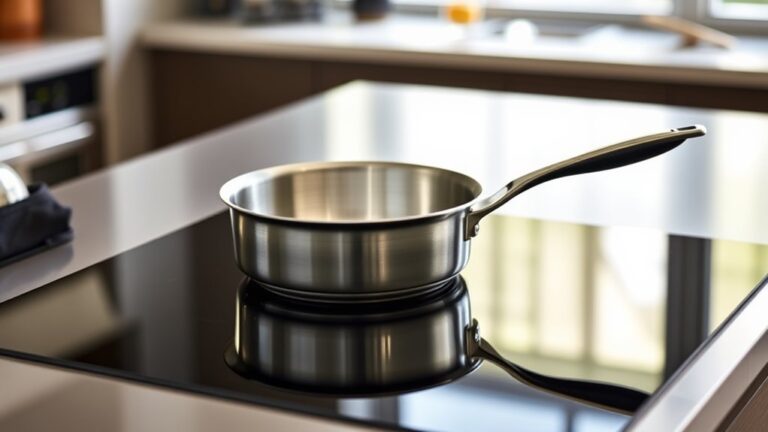
Although induction cooktops look similar to traditional stoves, they work very differently by using magnetic fields to heat your cookware directly. When you place a compatible pot or pan on the cooktop, an electric current passes through a coil beneath the glass surface, creating a magnetic field. This field induces heat in the cookware itself, not the cooktop, so your cooking surface stays cooler and safer.
For this to work, your cookware must be made of or contain ferromagnetic materials. If the pan isn’t magnetic, the cooktop won’t generate heat, and your food won’t cook. You’ll quickly notice induction cooktops respond faster and offer precise temperature control, making your cooking experience more efficient and enjoyable.
Is Cast Iron Compatible With Induction Cooktops?

How well does cast iron work with induction cooktops? You’ll find it’s highly compatible because cast iron is ferromagnetic, which induction cooktops require to generate heat efficiently. However, its rough surface can scratch glass tops, so you’ll need to handle it carefully.
Also, cast iron’s weight might feel heavy but doesn’t affect performance. Here’s a quick comparison to help you see compatibility factors at a glance:
| Factor | Cast Iron Compatibility |
|---|---|
| Magnetic Properties | Excellent (highly magnetic) |
| Surface Texture | Rough, potential for scratches |
| Weight | Heavy, handle with care |
| Heat Distribution | Even heat retention |
Benefits of Using Cast Iron on Induction Burners

Because cast iron heats evenly and retains warmth exceptionally well, you’ll enjoy consistent cooking results on induction burners. This combination makes it easier to maintain steady temperatures, perfect for recipes needing precise heat control.
Plus, cast iron’s durability means your cookware will last for years, even with frequent use.
Here’s what you gain when using cast iron on induction cooktops:
- Excellent heat retention ensures food stays warm after cooking.
- Superior heat distribution prevents hot spots and uneven cooking.
- Versatility lets you sear, sauté, and simmer with one pan.
- Durable surface resists warping and scratches over time.
Using cast iron with induction not only boosts your cooking quality but also adds long-term value to your kitchen.
What to Watch Out For When Using Cast Iron on Induction
When using cast iron on your induction cooktop, you’ll want to safeguard the surface from scratches and avoid dragging heavy pans. Pay attention to how heat distributes to prevent hotspots and ensure even cooking.
Also, handle your cast iron carefully and maintain it properly to keep it performing well over time.
Surface Protection Tips
Although cast iron is durable, you’ll want to take precautions to protect your induction cooktop’s surface. The heavy weight and rough texture of cast iron can scratch or crack the glass top if you’re not careful. To keep your cooktop looking new and functioning well, follow these simple tips:
- Always lift the pan instead of sliding it across the surface.
- Use a soft cloth or silicone mat between the pan and cooktop when possible.
- Regularly clean the cooktop to remove any food debris or grit that could cause scratches.
- Avoid dropping or banging the cast iron on the cooktop to prevent cracks or chips.
Heat Distribution Considerations
Since cast iron retains heat exceptionally well, you’ll want to monitor how it distributes warmth on your induction cooktop. Cast iron heats unevenly at first, with hot spots forming before the entire pan reaches a consistent temperature. To prevent this, preheat your pan gradually over medium heat rather than blasting it on high.
This helps avoid food from burning in spots while other areas stay cooler. Also, be aware that cast iron’s heavy weight can press unevenly on the cooktop surface, sometimes causing inconsistent contact and heat transfer. Using a flat-bottomed cast iron pan improves heat distribution and efficiency.
Paying attention to these factors ensures your cooking is even, reducing the risk of scorching or undercooking your meals on induction.
Handling and Maintenance
Because cast iron cookware is heavy and abrasive, you’ll need to handle it carefully on your induction cooktop to avoid scratching or damaging the surface. Always lift the pan instead of sliding it to protect the cooktop from scratches. Keep in mind that cast iron retains heat for a long time, so avoid sudden temperature changes that could crack your cookware.
To maintain your cast iron:
- Clean it promptly after use, avoiding harsh detergents or soaking.
- Dry thoroughly to prevent rust.
- Re-season regularly to keep the non-stick surface intact.
- Use felt or silicone protectors when storing to avoid chipping.
Following these steps helps you enjoy the benefits of cast iron on induction while preserving both your cookware and cooktop.
Protecting Your Induction Cooktop From Cast Iron Damage
When you use cast iron on an induction cooktop, you need to handle it carefully to avoid scratches and damage. Cast iron is heavy and rough, so always lift your pan instead of sliding it across the surface. Use a soft cloth or silicone mat beneath the cookware if you want extra protection.
Keep the cooktop clean and free of debris, as small particles can cause scratches when trapped under the pan. Avoid dropping cast iron cookware or banging it against the cooktop, as this can crack or chip the glass. Regularly check the bottom of your cast iron for rust or rough spots and smooth them out gently.
These steps help maintain your induction cooktop’s surface and prolong its life while enjoying cast iron cooking.
Does Cast Iron Heat Evenly on Induction Cooktops?
How evenly cast iron heats on induction cooktops depends largely on the quality and thickness of the pan. When you use a thicker, well-made cast iron skillet, heat distributes more uniformly, minimizing hot spots. However, thinner or uneven cast iron pieces can cause inconsistent heating.
Keep these points in mind:
- High-quality cast iron offers better heat retention and distribution.
- Thick bases help avoid temperature fluctuations.
- Induction cooktops rapidly heat cast iron, so uneven surfaces may cause uneven cooking.
- Seasoned cast iron can enhance heat spread by creating a smoother cooking surface.
Tips for Seasoning and Maintaining Cast Iron for Induction Use
Though cast iron is durable, you’ll get the best performance on induction cooktops by regularly seasoning and maintaining your pans. Start by cleaning your pan with hot water and a stiff brush—avoid soap, which can strip seasoning. After drying thoroughly, apply a thin layer of vegetable oil all over the surface.
Heat the pan in the oven at 375°F for about an hour to build a strong, non-stick layer. Repeat this process as needed, especially if food starts sticking or the surface looks dull. Also, avoid soaking your cast iron or putting it in the dishwasher, as moisture can cause rust.
Proper care guarantees your pan stays smooth and heats evenly on induction cooktops every time.
Which Cast Iron Cookware Works on Induction Cooktops?
Since induction cooktops use magnetic fields to generate heat, only cast iron cookware with a flat, magnetic base will work efficiently. When choosing your cast iron pieces, focus on ones that make full contact with the cooktop to guarantee even heating and prevent damage.
Here’s what works best:
- Flat-bottomed skillets and pans: Provide stable contact and quick heating.
- Enameled cast iron cookware: Usually has a smooth, flat base compatible with induction.
- Pre-seasoned cast iron skillets: Often come with a smooth base ideal for induction.
- Cast iron griddles with flat surfaces: Work well if they sit evenly on the cooktop.
Avoid cookware with uneven or warped bottoms, as they reduce efficiency and may scratch the surface.
Handling the Weight of Cast Iron on Glass Induction Surfaces
Because cast iron cookware tends to be heavy, you need to handle it carefully on glass induction cooktops to avoid damaging the surface. Always lift your cast iron pans instead of sliding them, as dragging can cause scratches or cracks. When placing the cookware down, do so gently to prevent chipping or breaking the glass.
Using a silicone or fabric mat between the pan and the cooktop can add extra protection. Also, avoid dropping or banging cast iron on the surface, since its weight combined with the glass’s fragility can lead to costly repairs. By treating your induction cooktop with care and being mindful of cast iron’s heft, you’ll maintain both the cookware and the cooktop in great condition for years to come.
Cast Iron vs. Other Cookware on Induction Cooktops
When you compare cast iron to other cookware on induction cooktops, you’ll notice cast iron offers superior heat retention and even cooking, but it also demands more careful handling due to its weight and surface texture. Unlike stainless steel or aluminum cookware, cast iron heats evenly and maintains temperature longer, making it ideal for slow cooking. However, its rough surface and heavy build can scratch induction glass if you’re not careful.
Here’s how cast iron stacks up against other options:
- Heat retention: Cast iron excels, stainless steel varies, aluminum loses heat quickly
- Durability: Cast iron is virtually indestructible, while nonstick coatings wear out
- Weight: Cast iron is much heavier, requiring gentle handling
- Surface: Rough texture can damage cooktop; smooth cookware is safer
Choosing cast iron means balancing performance with care.
Troubleshooting Cast Iron on Induction Cooktops
Although cast iron works well with induction cooktops, you might encounter some common issues that can disrupt cooking. If your cooktop doesn’t recognize the pan, check that the cast iron’s base is flat and clean, as uneven or rusty bottoms can prevent proper contact. Also, make sure the pan covers the induction zone fully; smaller pans might not trigger the sensor.
If you notice scratching, avoid sliding the heavy cast iron and lift it instead to protect the glass surface. For uneven heating, preheat the pan gradually to avoid hot spots. Finally, if the cooktop beeps or shuts off, it might indicate overheating or incompatible pan size.
Adjust settings or use a different pan size to fix this.
Frequently Asked Questions
Can Cast Iron Rust From Use on Induction Cooktops?
Yes, cast iron can rust from use on induction cooktops if you don’t dry it properly or leave moisture on it.
Make sure to clean, dry, and season your cast iron regularly to prevent rusting.
Is Preheating Cast Iron Necessary on Induction Stoves?
Of course, you don’t need to preheat cast iron on induction stoves—just toss your food on ice-cold metal and enjoy uneven cooking.
But seriously, preheating guarantees even heat and better results, so don’t skip it.
How Do You Clean Cast Iron After Cooking on Induction?
You clean cast iron by letting it cool slightly, then wiping it with a damp cloth or scrubbing gently using a brush and hot water. Avoid soap; dry it thoroughly and apply a thin oil layer to prevent rust.
Can Enamel-Coated Cast Iron Be Used on Induction Cooktops?
You’re in luck—enamel-coated cast iron works perfectly on induction cooktops. It’s not just a flash in the pan; its magnetic base guarantees even heating, so you can cook confidently without worrying about compatibility issues.
Does Cast Iron Cookware Damage Induction Cooktop Warranties?
Cast iron cookware usually doesn’t damage induction cooktop warranties, but you should check your manufacturer’s terms. Its heavy weight and rough bottom can scratch the surface if you’re not careful, so handle it gently.
Conclusion
You can definitely use cast iron on induction cooktops, but you’ll want to be mindful of its weight and rough texture to avoid damaging the glass surface. For example, a home chef named Maria found that using a silicone mat under her cast iron skillet prevented scratches while maintaining excellent heat retention.
With proper care, cast iron offers unmatched durability and heat control, making it a solid choice for your induction cooking adventures. Its compatibility with induction cooktops combined with excellent heat retention ensures efficient and effective cooking.
By taking precautions like using protective mats and handling the cookware carefully, cast iron can be both safe and highly functional on induction surfaces.