How Long to Cook London Broil on Grill
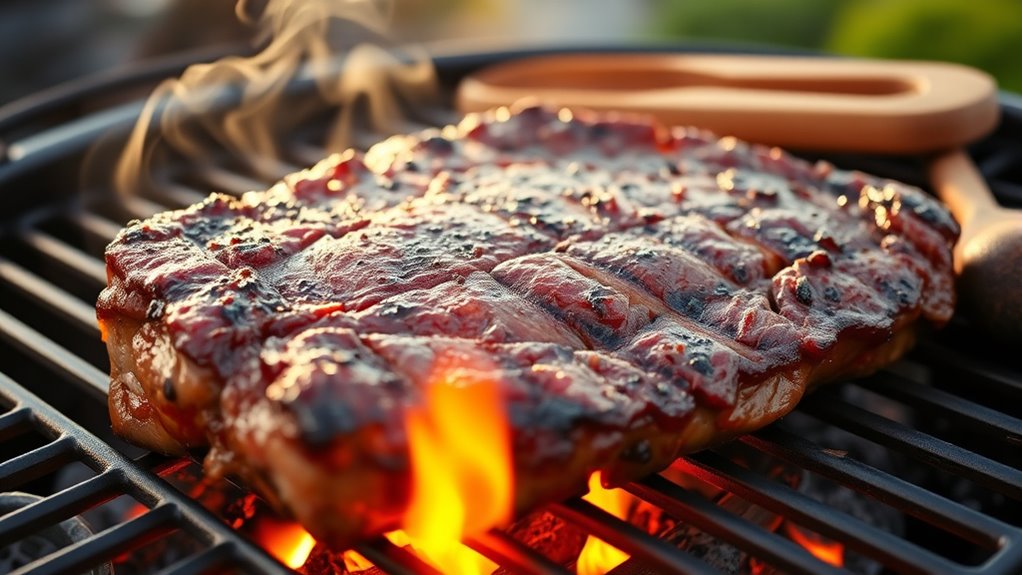
You should grill a 1- to 1.5-inch thick London Broil for about 8 to 15 minutes total, flipping it once halfway through over medium-high heat. Achieving the perfect cook time for London Broil on the grill ensures a juicy, flavorful steak every time.
Aim for 130°F internal temperature for medium-rare or 140°F for medium doneness.
Marinating overnight enhances tenderness and flavor but can slightly affect cooking time. Always use a meat thermometer and rest the meat before slicing.
Below, you’ll find tips to perfect your grilling technique and serving suggestions to elevate your meal.
Key Takeaways
- Grill 1 to 1.5-inch London Broil for 4-6 minutes per side for medium-rare doneness at medium-high heat (400°F–450°F).
- Add 1-2 minutes per side for medium doneness, aiming for an internal temperature of 130°F for medium-rare or 140°F for medium.
- Flip the meat once halfway through grilling using tongs to avoid piercing and retain juices.
- Rest the grilled London Broil 5-10 minutes before slicing to redistribute juices and enhance tenderness.
- Always use a meat thermometer to check internal temperature for precise cooking and avoid overcooking.
How to Prepare London Broil for the Grill
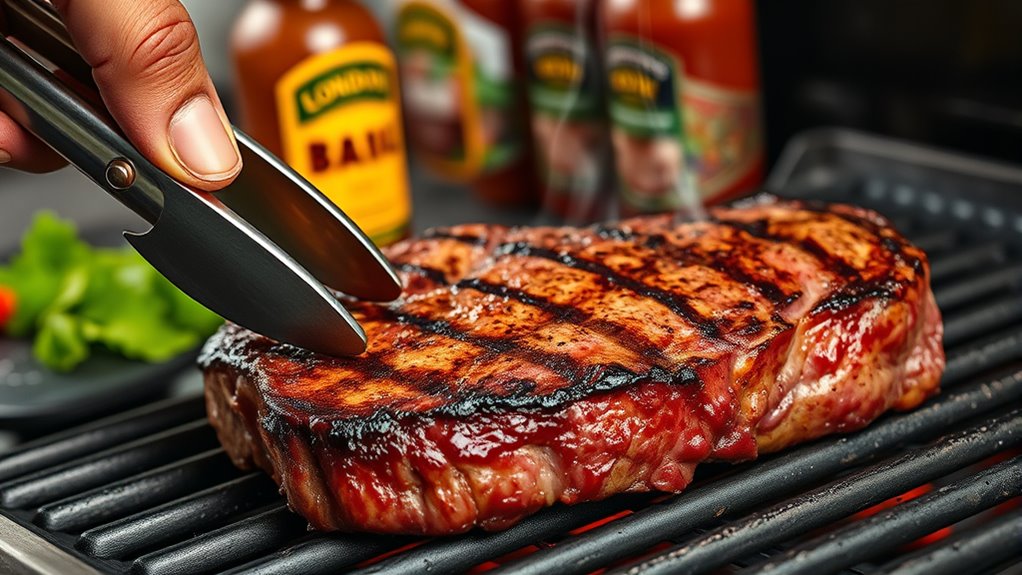
Before you fire up the grill, you’ll want to properly prepare your London Broil to guarantee it cooks evenly and stays flavorful. Start by trimming any excess fat, which helps prevent flare-ups.
Next, marinate the meat for at least 4 hours or overnight. A good marinade with acid—like vinegar, lemon juice, or wine—breaks down tough fibers and adds flavor. Remember to pat the meat dry before grilling to achieve a nice sear.
Bring the meat to room temperature for about 30 minutes so it cooks uniformly. Finally, season it with salt and pepper just before placing it on the grill. These steps set you up for a tender, juicy London Broil every time.
What Temperature Should You Set Your Grill for London Broil?
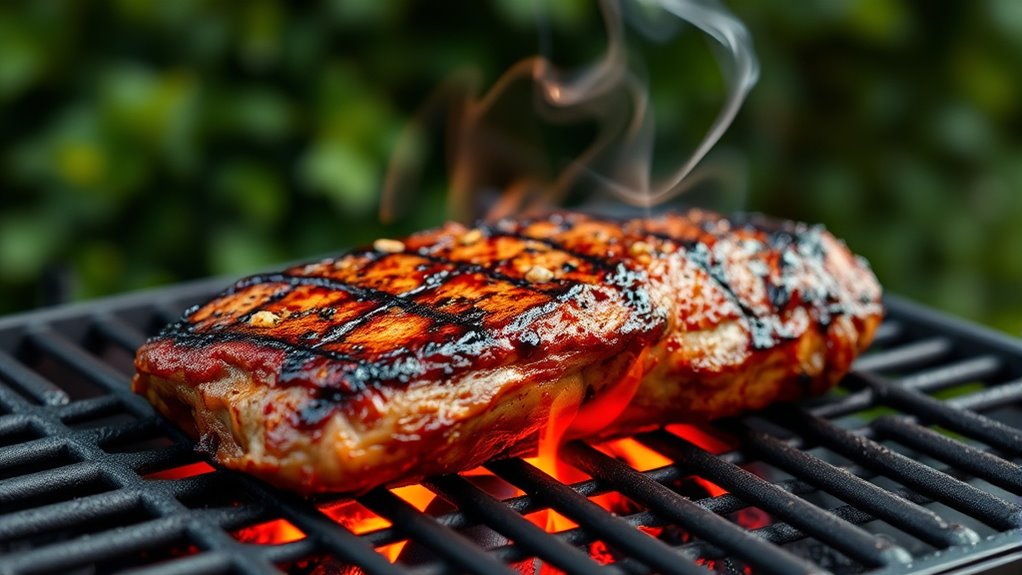
Once your London Broil is prepped and seasoned, the next step is setting your grill to the right temperature. Aim for medium-high heat, around 400°F to 450°F. This temperature range allows you to sear the meat quickly, locking in juices while creating a flavorful crust.
If your grill has multiple burners, set one side to high heat for searing and the other to medium for finishing the cooking process indirectly. Avoid cooking at too low a temperature, as it won’t develop a good crust, and too high a temperature can burn the exterior before the inside cooks properly. Using a grill thermometer helps you maintain consistent heat.
Once the grill reaches the desired temperature, you’re ready to start cooking your London Broil to perfection.
How Thickness Affects London Broil Grilling Time
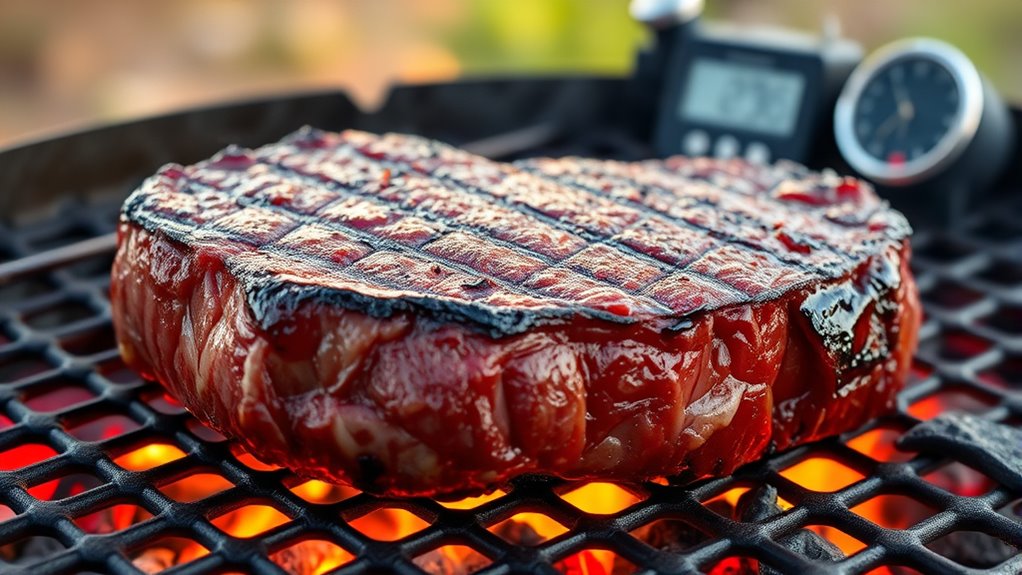
Because London Broil varies in thickness, grilling times can differ considerably. Thicker cuts need more time to cook through, while thinner ones grill faster. When you consider thickness, you guarantee even cooking and avoid undercooked or dry meat.
Here’s a quick guide to help you estimate grilling times based on thickness:
| Thickness (inches) | Approximate Grill Time (minutes) |
|---|---|
| 1/2 | 4-6 |
| 3/4 | 6-8 |
| 1 | 8-10 |
| 1 1/4 | 10-12 |
| 1 1/2 | 12-15 |
Keep in mind, these times are for grilling over medium-high heat and flipping halfway through. Adjust as needed for your specific grill and preferences.
How Long to Grill London Broil for Perfect Doneness
Grilling London Broil to the perfect doneness depends on timing and temperature, so you’ll want to monitor both closely. For a 1- to 1.5-inch thick cut, aim for about 4 to 6 minutes per side over medium-high heat to reach medium-rare. If you prefer medium, add an extra 1 to 2 minutes per side.
Keep in mind that thinner cuts will cook faster, while thicker ones need more time. Using a reliable meat thermometer helps you nail the ideal temperature—130°F for medium-rare and 140°F for medium. Remember, resting the meat for 5 to 10 minutes after grilling lets the juices redistribute, ensuring a juicy, tender result.
Adjust times slightly based on your grill’s heat and the steak’s thickness.
How to Flip and Check London Broil Doneness
When flipping your London broil, use tongs to turn it gently without piercing the meat. Keep an eye on the internal temperature with a meat thermometer to hit your desired doneness.
This simple technique guarantees even cooking and a juicy result every time.
Proper Flipping Technique
Although flipping London Broil might seem straightforward, using the proper technique guarantees even cooking and preserves its juicy texture. When you flip the meat, use tongs instead of a fork to avoid piercing and losing juices.
Flip once halfway through the grilling time for the best results. To check doneness without cutting, press the meat gently; it should feel firm but springy.
| Step | Tip |
|---|---|
| Use tongs | Prevent juice loss |
| Flip once | Ensures even cooking |
| Press to check | Gauge firmness, not cut |
| Rest before slicing | Retains juices and tenderness |
Following these steps helps you achieve a perfectly grilled London Broil every time.
Doneness Temperature Guide
Since getting the doneness right is key to a flavorful London Broil, you’ll want to monitor its internal temperature closely. Use a reliable meat thermometer to check the thickest part of the steak. For rare, aim for 120-125°F; medium-rare, 130-135°F; medium, 140-145°F; and well-done, 160°F and above.
Avoid guessing by touch alone—it’s easy to overcook. Flip your London Broil once halfway through cooking to guarantee even heat distribution. After flipping, insert the thermometer to check progress without piercing multiple times, which can release juices.
Once your steak reaches the target temperature, remove it from the grill and let it rest for 5-10 minutes. This resting period lets the juices redistribute, guaranteeing a juicy, tender London Broil every time.
How to Use a Meat Thermometer for London Broil
You’ll want to pick a reliable meat thermometer to get an accurate read on your London Broil’s internal temperature.
Insert the thermometer into the thickest part of the meat to check doneness without overcooking. Be careful not to touch bone or the grill, as that can give you false readings.
Choosing The Right Thermometer
When grilling London Broil, selecting the right meat thermometer guarantees you cook it to perfection every time. You want a tool that’s accurate, easy to use, and durable enough for frequent grilling.
Here’s what to look for:
- Instant-read thermometers: Provide quick temperature readings, so you don’t lose heat while checking.
- Digital thermometers with probes: Allow you to monitor temperature continuously without opening the grill.
- Durability and heat resistance: Choose a thermometer that can withstand high grill temperatures without damage.
Checking Internal Temperature
After picking the right thermometer, knowing how to check the internal temperature of your London Broil guarantees it reaches the perfect doneness. First, insert the thermometer probe into the thickest part of the meat, avoiding bone or fat, which can give inaccurate readings. Hold the probe steady and wait a few seconds until the temperature stabilizes.
For medium-rare, aim for 130-135°F; medium is 140-145°F. Remember, the temperature will rise a few degrees while resting. Check the temperature periodically as you grill, especially toward the end of cooking time.
Avoiding Common Mistakes
Although using a meat thermometer seems straightforward, many people make mistakes that lead to inaccurate readings and unevenly cooked London Broil. To get it right, you need to avoid these common errors.
- Don’t insert the thermometer too close to the surface; it needs to reach the thickest part of the meat for an accurate reading.
- Avoid touching bone or fat with the probe, as this can give you misleading temperature results.
- Don’t check the temperature too often; opening the grill repeatedly causes heat loss and uneven cooking.
How Resting London Broil Boosts Juiciness
Because London broil is a lean cut, letting it rest once it’s off the grill helps the juices redistribute throughout the meat. When you remove it from heat, the muscle fibers relax, allowing the trapped juices to move back inside instead of spilling out when you cut. If you slice it immediately, those flavorful juices escape, leaving the meat dry.
Resting for about 5 to 10 minutes under loosely tented foil lets the temperature even out and the juices settle. This simple step enhances tenderness and maximizes juiciness, making every bite more enjoyable. So, don’t skip resting—it’s essential for turning your grilled London broil from just cooked to perfectly juicy and flavorful.
How Marinating Affects Cooking Time and Flavor
When you marinate London Broil, you help break down tough fibers, making it more tender. The longer you let the flavors soak in, the richer your steak will taste. Just remember, marinating can also slightly reduce the cooking time since the meat becomes more tender.
Marinating Impact On Tenderness
Since marinating London broil helps break down tough muscle fibers, it plays a crucial role in both tenderness and flavor. When you marinate, the acid and enzymes soften the meat, making it easier to chew and more enjoyable. This process also slightly affects cooking time—you might find your London broil cooks a bit faster because the meat becomes more tender.
Keep these in mind when marinating:
- Use acidic ingredients like vinegar or citrus to break down fibers effectively.
- Don’t over-marinate; 4 to 6 hours is usually enough to tenderize without turning the meat mushy.
- Marinate in the fridge to keep your meat safe and maintain texture.
This way, you’ll get a tender, flavorful London broil every time you grill.
Flavor Infusion Timing
Marinating doesn’t just soften your London broil—it also shapes its flavor profile and influences how long it takes to cook. When you marinate longer, your meat absorbs more flavors, making each bite richer and more complex. However, extended marinating, especially with acidic ingredients like vinegar or citrus, can start to break down the protein too much, potentially altering cooking times.
Typically, marinating for 4 to 6 hours strikes a good balance between flavor infusion and maintaining the steak’s texture. If you marinate overnight, expect the meat to cook slightly faster because the acids have tenderized it more deeply. Just remember to pat the steak dry before grilling to avoid flare-ups and ensure an even sear.
This way, you’ll get a flavorful, perfectly cooked London broil every time.
Common Mistakes That Toughen London Broil (And How to Avoid Them)
Though London broil can be deliciously tender, certain mistakes can quickly make it tough and chewy. To enjoy a juicy, flavorful result, avoid these common pitfalls:
- Overcooking: Cooking beyond medium rare dries out the meat. Use a meat thermometer and pull it off the grill at about 130°F for best results.
- Skipping the marinade: London broil needs time to soak up flavors and tenderize. Don’t rush this step—marinate for at least 4 hours or overnight.
- Grilling on too high heat: High heat chars the surface but leaves the inside tough. Aim for medium-high heat and cook evenly to preserve tenderness.
How to Slice London Broil for Maximum Tenderness
When you’re ready to serve your London broil, slicing it correctly can make all the difference in tenderness. Always cut against the grain to shorten muscle fibers and make each bite easier to chew. Use a sharp knife and slice thinly at a slight angle to maximize tenderness and presentation.
| Step | Tip |
|---|---|
| Identify the grain | Look for lines running lengthwise |
| Use a sharp knife | Prevents tearing |
| Slice thinly | About 1/4 inch thick |
| Cut against the grain | Perpendicular to muscle lines |
| Serve immediately | Retains juiciness and texture |
Following these tips ensures your London broil stays tender and flavorful with every slice.
Best Side Dishes to Serve With Grilled London Broil
Choosing the right side dishes can elevate your grilled London broil and create a well-rounded meal. You want sides that complement the rich, savory flavors of the beef without overpowering it. Consider balancing the meal with fresh, vibrant, and hearty options.
Here are some great side dishes to serve with grilled London broil:
- Grilled Asparagus: Its smoky flavor pairs perfectly with the beef and adds a crisp texture.
- Garlic Mashed Potatoes: Creamy and flavorful, these potatoes soak up the juices from the London broil beautifully.
- Roasted Brussels Sprouts: Their slight bitterness and caramelized edges provide a nice contrast to the meat.
These sides bring variety and enhance the overall dining experience, making your grilled London broil meal memorable.
Frequently Asked Questions
Can You Cook London Broil Indoors Instead of on a Grill?
Yes, you can cook London broil indoors using a broiler or pan. Just preheat your oven or skillet, sear the meat, then finish cooking to your desired doneness.
It’ll still taste great!
What Type of Wood Chips Enhance London Broil Flavor on the Grill?
Think of wood chips like spices in a chef’s pantry. You’ll want hickory or oak for a bold, smoky flavor that punches up your London broil, just like adding a splash of hot sauce to your favorite dish.
Is London Broil Suitable for Slow Cooking or Smoking Methods?
Yes, you can slow cook or smoke London broil, but it’s better suited for quick, high-heat methods. Slow cooking may dry it out, so if you smoke it, keep temps low and monitor closely for tenderness.
This approach helps maintain juiciness and flavor. Just be sure to check the meat regularly to avoid overcooking. London broil responds best when cooked with care.
How Should Leftover London Broil Be Stored and Reheated?
You probably thought leftover London broil could just chill on the counter—wrong! Wrap it tightly, refrigerate within two hours, and reheat gently in a pan or microwave.
You don’t want to turn it into rubber!
Can London Broil Be Cooked Frozen or Does It Need to Be Thawed?
You shouldn’t cook London broil from frozen; it needs to be guaranteed first. Thawing guarantees even cooking and better texture.
You can thaw it safely in the fridge overnight or use cold water for quicker defrosting.
Conclusion
Grilling a great London Broil takes timing, temperature, and technique. Trust the thickness, turn thoughtfully, and taste test to target tenderness. Marinate mindfully to maximize moisture and flavor, avoiding common cooking calamities that cause chewiness.
Slice smartly, serving alongside savory sides for a satisfying supper. Stick to these simple steps, and you’ll savor a splendid, succulent steak every time—proving perfect preparation produces pleasing, palatable plates! For the best results, remember how long to cook London Broil on grill is key to achieving that tender, juicy finish.