How to Measure a Cake Pan in 7 Easy Steps
To measure a cake pan accurately, it’s important to know how to measure a cake pan in 7 easy steps. Whether your pan is round, square, or rectangular, getting the correct measurements ensures your cake bakes evenly and meets your recipe’s requirements. Proper measurement helps adjust ingredient quantities and improves your baking results.
First, identify the shape of your pan. For round pans, measure the diameter from inside edge to inside edge. For square or rectangular pans, measure the length and width inside the edges.
Next, measure the depth of the pan from base to rim. Use these dimensions to calculate the volume of the pan. This volume helps you adjust your recipe ingredients accurately.
Follow these simple steps carefully to make certain your cake bakes evenly and turns out beautifully. Keep reading for tips to fine-tune your baking process.
Key Takeaways
- Identify the cake pan shape by examining its outline and unique features before measuring.
- For round pans, measure the diameter straight across the inside edge, keeping the tape horizontal.
- For square or rectangular pans, measure the inside length and width from edge to edge.
- Measure the pan depth from the base to the top edge using a ruler on a flat surface.
- Take multiple measurements for accuracy and record dimensions precisely in inches or centimeters.
Why Measuring Cake Pans Matters for Perfect Baking
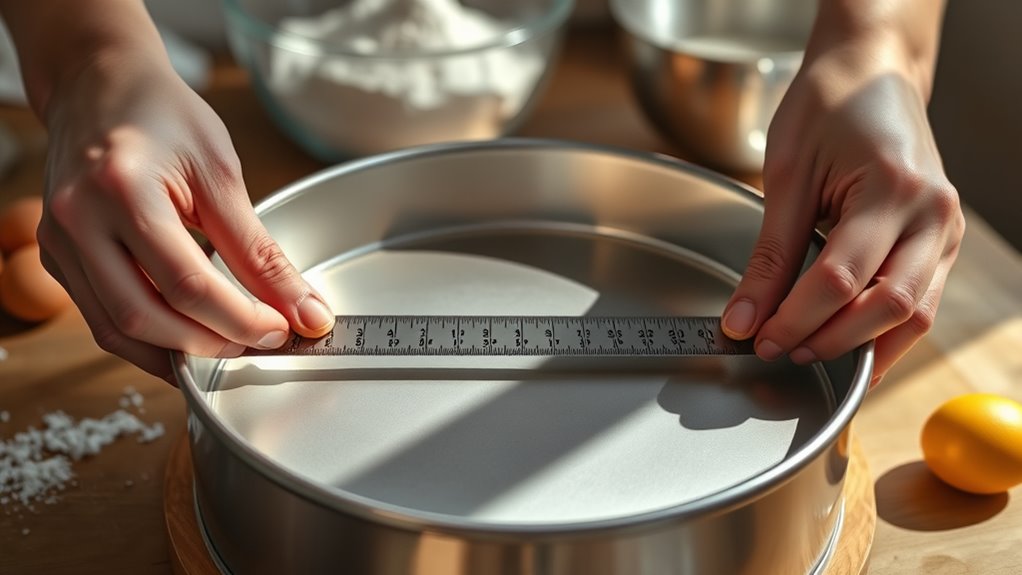
Although it might seem like a small detail, measuring your cake pan accurately makes a big difference in how your cake turns out. When you know the exact size of your pan, you can adjust your recipe’s batter quantity or baking time to avoid undercooked or overbaked results. Using the wrong pan size without measuring can cause your cake to rise unevenly, bake too quickly, or remain gooey inside.
Precise measurements help you follow recipes more confidently and achieve consistent outcomes every time. Plus, if you’re doubling or halving a recipe, knowing your pan’s dimensions ensures you scale ingredients properly. Taking a moment to measure your pan saves you from wasting ingredients and frustration, making your baking experience smoother and more successful.
Identify Your Cake Pan Shape
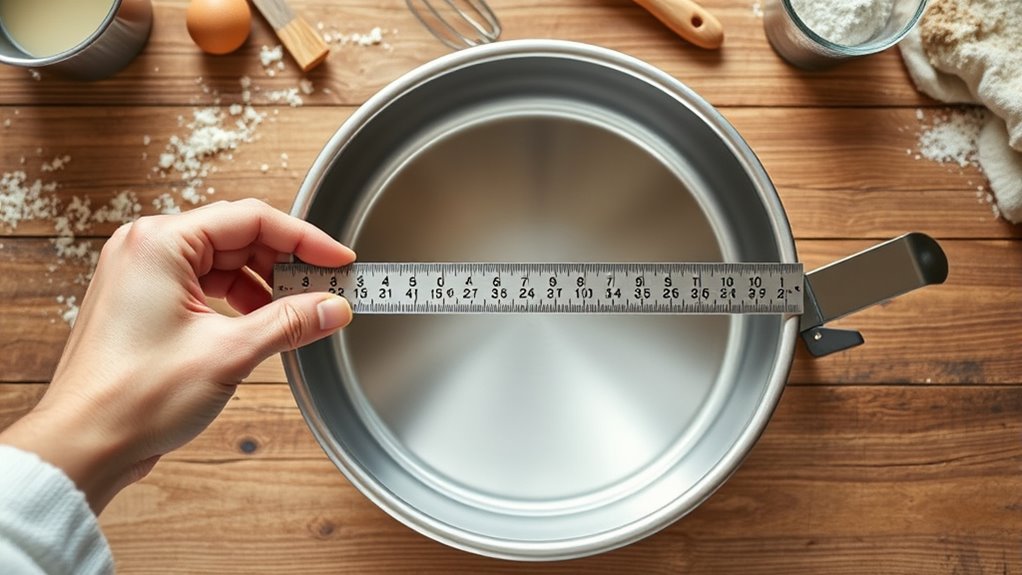
You’ll want to start by identifying the shape of your cake pan—common ones include round, square, and rectangular. Pay attention to any unique features that can help you measure accurately.
Knowing your pan’s shape is key because it affects how your cake bakes and its final texture.
Common Cake Pan Shapes
When measuring a cake pan, the first step is to identify its shape, as different shapes affect baking time and batter distribution. You’ll often encounter round pans, typically 8 or 9 inches in diameter, perfect for classic layer cakes. Square pans, usually 8 or 9 inches, offer even edges and corners, great for brownies or bars.
Rectangular pans, like 9×13 inches, hold more batter and bake denser cakes evenly. You might also use loaf pans for breads or pound cakes, which are longer and narrow. Specialty shapes include bundt pans with a hole in the center, angel food pans with tube centers, and novelty pans shaped like hearts or flowers.
Knowing your pan shape helps you measure accurately and adjust recipes for the best results.
Shape Identification Tips
Since accurate measurements start with knowing your pan’s shape, take a moment to examine its dimensions and design closely. Identifying the shape helps you measure correctly and guarantees your recipe turns out as expected. Look at the overall outline and note any unique features.
Use these tips to identify your cake pan shape:
- Check if the pan has straight or sloped sides—this affects how you measure diameter or length.
- Look for rounded corners versus sharp angles to distinguish between circles, squares, and rectangles.
- Identify any special shapes like hearts or bundts by their distinct edges or center holes.
- Compare your pan to common shapes to find the closest match before measuring.
With these steps, you’ll be confident in identifying your cake pan shape swiftly and accurately.
Impact On Baking
Although it might seem minor, the shape of your cake pan directly influences how your cake bakes and rises. Different shapes affect heat distribution and cooking times, so knowing your pan’s shape helps you adjust accordingly. Round pans promote even baking, while square or rectangular pans might need extra attention to avoid undercooked edges.
Bundt or tube pans channel heat through the center, ensuring a more uniform bake but requiring longer baking times. If you use a uniquely shaped pan, your cake might cook unevenly or take longer than expected. By identifying your cake pan shape, you can better estimate baking time and temperature, preventing overbaking or undercooking.
This simple step helps you achieve consistent, delicious results every time you bake.
Measure Diameter for Round Cake Pans
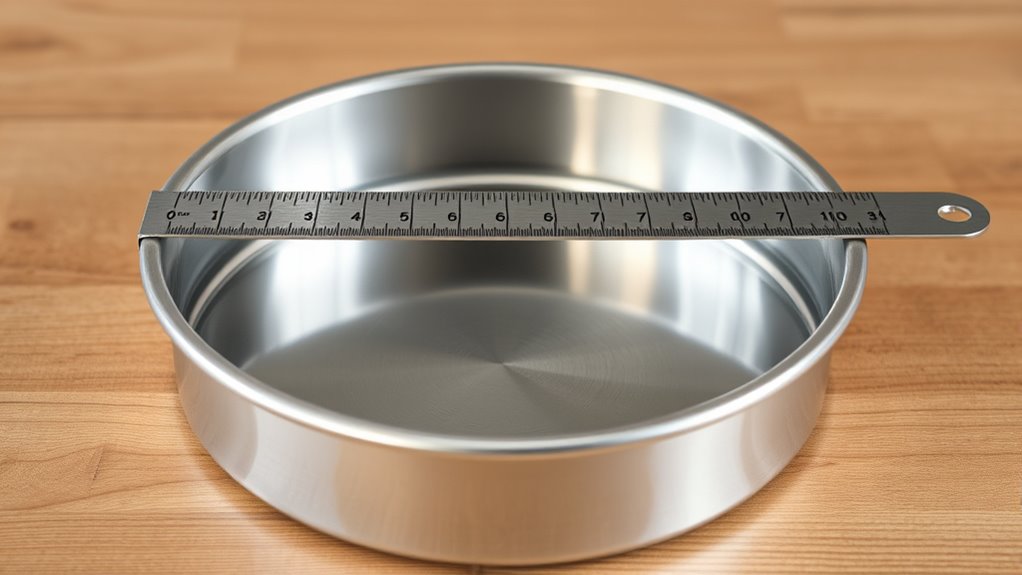
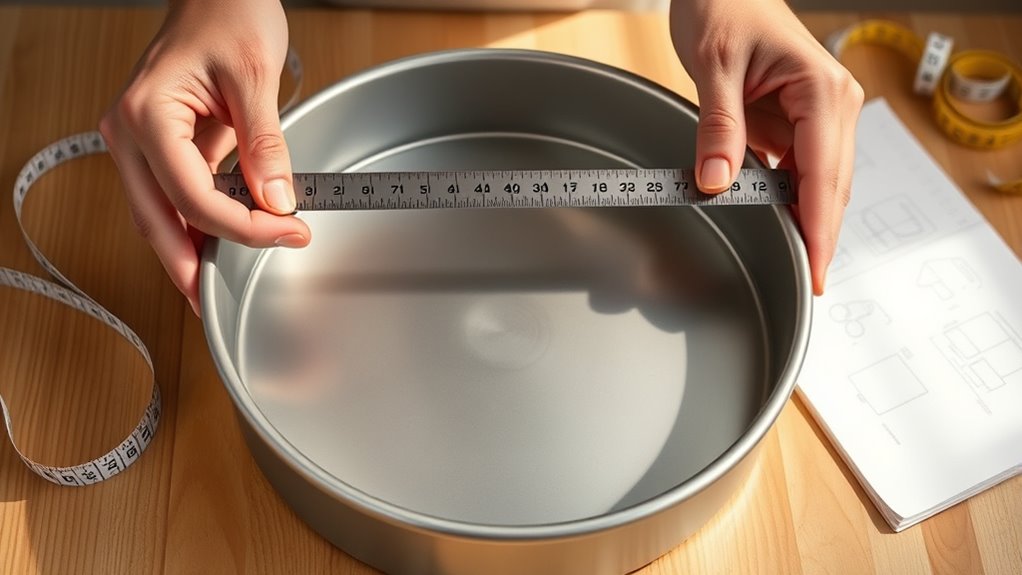
How do you accurately measure the diameter of a round cake pan? Simply measure straight across the top from one inner edge to the opposite inner edge. Avoid measuring the outer rim since it doesn’t affect baking size.
Here’s how to get it right:
- Use a flexible tape measure or a ruler for accuracy.
- Place the measuring tool inside the pan, touching both edges.
- Ensure the tape or ruler is perfectly horizontal for a true diameter.
- Double-check your measurement to avoid mistakes.
This measurement tells you the pan’s actual size, which helps adjust baking times and ingredient amounts. Knowing the diameter ensures your cake bakes evenly and fits your recipe. Stick to the inner edge measurement for the best results when working with round pans.
Measure Length and Width for Square or Rectangular Cake Pans
To measure a square or rectangular cake pan, start by getting an accurate length measurement from one inside edge to the other. Then, measure the width using the same inside-edge technique to guarantee precision.
These two measurements will help you determine the pan’s true baking size.
Accurate Length Measurement
When measuring a square or rectangular cake pan, you’ll want to start by precisely determining both the length and width. For the length, use a reliable ruler or measuring tape. Place it straight along the inside edge of the pan, since the internal measurements matter most for baking.
Avoid measuring the outer edges, as they can add extra inches. Make sure your measuring tool is flush against the pan’s surface to prevent gaps that skew results. Here are key tips for accuracy:
- Measure from one interior edge to the opposite interior edge
- Keep the ruler or tape flat and straight
- Double-check your measurement for consistency
- Note the measurement in inches or centimeters, depending on your recipe
Accurate length measurement ensures your cake bakes evenly every time.
Width Measurement Techniques
Although you’ve already measured the length, you’ll need to carefully measure the width next to guarantee your cake pan’s dimensions are accurate. Use a flexible measuring tape or a ruler, placing it straight across the widest part inside the pan, from one inner edge to the opposite inner edge. Make sure the tape or ruler lies flat and doesn’t bend, as this could skew your measurement.
For square or rectangular pans, measuring both length and width helps you confirm the pan’s true size, ensuring recipes turn out as expected. Record this width precisely, matching it with the length to determine the pan’s total surface area. Accurate width measurement prevents surprises when baking and helps you choose the right pan for your recipe.
How to Measure Cake Pan Depth Accurately
Measuring the depth of your cake pan accurately guarantees your batter fills the pan just right, preventing overflow or underbaking. To get it right, you’ll need a few simple steps. First, place your cake pan on a flat surface to ensure stability.
Accurate cake pan depth measurement ensures perfect batter fill, avoiding overflow and underbaking every time.
Then, use a ruler or measuring tape to measure from the base to the top edge of the pan’s inside wall. Make sure to measure at the deepest point, especially if your pan has sloped sides. Avoid measuring the outside, as thickness varies.
Remember these tips:
- Use a rigid ruler for precise measurement
- Measure in multiple spots for consistency
- Note if the pan has tapered sides
- Record your measurement for future reference
This way, you’ll always bake with confidence.
Figuring Out Your Cake Pan’s Volume for Recipe Adjustments
Now that you know how to get an accurate depth measurement, you can calculate your cake pan’s volume to adjust recipes properly. First, measure the length and width if your pan is rectangular or the diameter if it’s round. Multiply length by width by depth for rectangular pans, or use the formula π × (radius²) × depth for round pans.
This gives you the volume in cubic inches. If your recipe lists volume in cups, remember that 1 cup equals 14.44 cubic inches. Convert your pan’s volume accordingly to understand how much batter it can hold.
Knowing this helps you avoid overfilling or underfilling your pan, ensuring your cake bakes evenly and turns out just right every time.
Adjust Recipes Based on Cake Pan Size
When you adjust recipes based on your cake pan size, you guarantee the batter fills the pan just right, preventing spills or dry edges. Start by calculating your pan’s volume and comparing it to the recipe’s original pan size. Then, use this ratio to scale your ingredients up or down.
Adjust recipes by calculating pan volume to ensure perfect batter fill and avoid spills or dry edges.
Keep these tips in mind:
- Multiply or divide ingredient amounts by the volume ratio.
- Adjust baking time; smaller pans bake faster, larger pans take longer.
- Reduce oven temperature slightly for deeper pans to avoid burning.
- Check doneness early with a toothpick to avoid overbaking.
Frequently Asked Questions
Can I Use a Ruler or Tape Measure for Cake Pans?
Yes, you can use a ruler or tape measure to measure your cake pans. Just make sure to measure the diameter for round pans or length and width for square or rectangular ones to get accurate sizing.
Measuring accurately helps ensure your recipes turn out as expected. It’s a simple step that can make a big difference in baking results. Always double-check your measurements for best results.
How Do Non-Stick Coatings Affect Cake Pan Measurements?
Non-stick coatings can add about 1-2 millimeters to your cake pan’s dimensions. You’ll want to account for this slight thickness when measuring to guarantee your batter fits perfectly and bakes evenly every time.
Should I Measure a Cake Pan With or Without the Rim?
You should measure a cake pan without including the rim because the rim doesn’t hold batter. Focus on the interior dimensions where the batter fills.
This guarantees your measurements reflect the actual baking space accurately.
Does Measuring Cake Pans Differ for Metal vs. Silicone Pans?
Of course, measuring metal and silicone pans is wildly different—except it’s not. You measure both the same way, focusing on the pan’s interior dimensions.
Just don’t let flexibility fool you when estimating batter volume!
How Often Should I Re-Measure My Cake Pans?
You should re-measure your cake pans whenever you switch recipes, buy new pans, or notice inconsistent baking results.
Regularly checking guarantees accuracy, helping your cakes bake evenly and turn out perfectly every time you use them.
Conclusion
Now that you know how to measure your cake pan like a pro, you’re all set to bake with confidence—no more guessing games like it’s the Stone Age!
Getting your measurements right guarantees your cake bakes evenly and turns out perfect every time. So grab that ruler, measure carefully, and adjust your recipes as needed.
Your delicious, perfectly sized cake awaits! Remember, mastering cake pan measurement is key to baking success and creating flawless cakes every time.