Can Ninja Blender Go in Dishwasher?
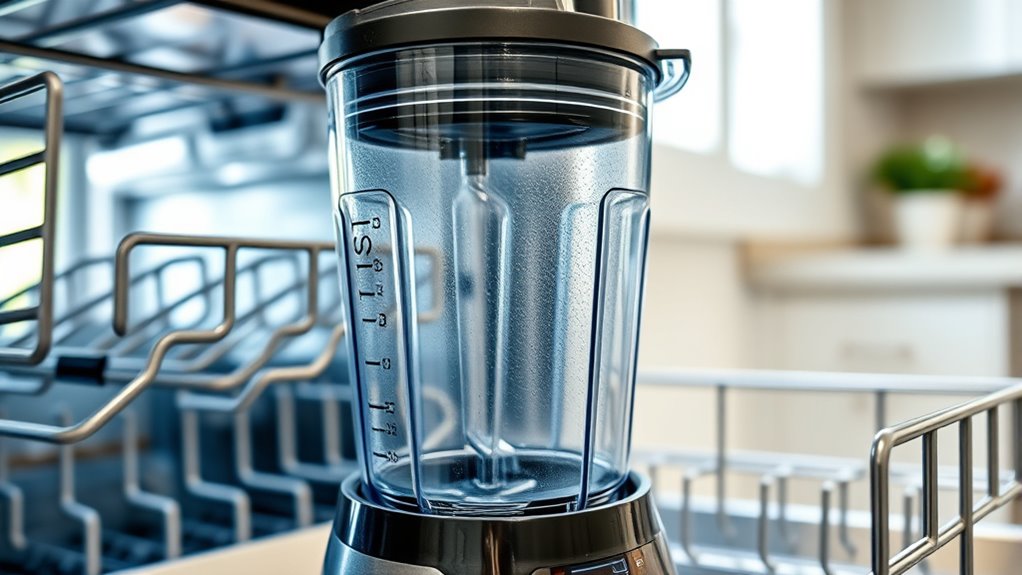
You can safely put your Ninja blender’s pitcher and lid on the dishwasher’s top rack since they’re made from BPA-free plastic. This makes cleaning convenient and helps maintain hygiene.
However, the blade assembly should be hand washed to keep it sharp and rust-free.
Use gentle dishwasher cycles below 130°F to avoid warping plastic parts. Never submerge the motor base in water, as it can damage the electrical components.
Proper care helps maintain your blender’s performance and lifespan.
Keep going to discover how to clean and maintain each part effectively. Following these tips ensures your Ninja blender stays in great condition for years to come.
Key Takeaways
- Ninja blender pitcher and lid are dishwasher-safe on the top rack using gentle or eco cycles below 130°F (54°C).
- The blade assembly should be hand washed to maintain sharpness and prevent rust.
- Avoid heavy-duty dishwasher cycles and harsh detergents to prevent warping and damage.
- Never put the motor base in the dishwasher; clean it with a damp cloth and mild soap instead.
- Regularly inspect and replace worn blades and seals to ensure optimal blender performance and longevity.
Dishwasher-Safe Ninja Blender Parts
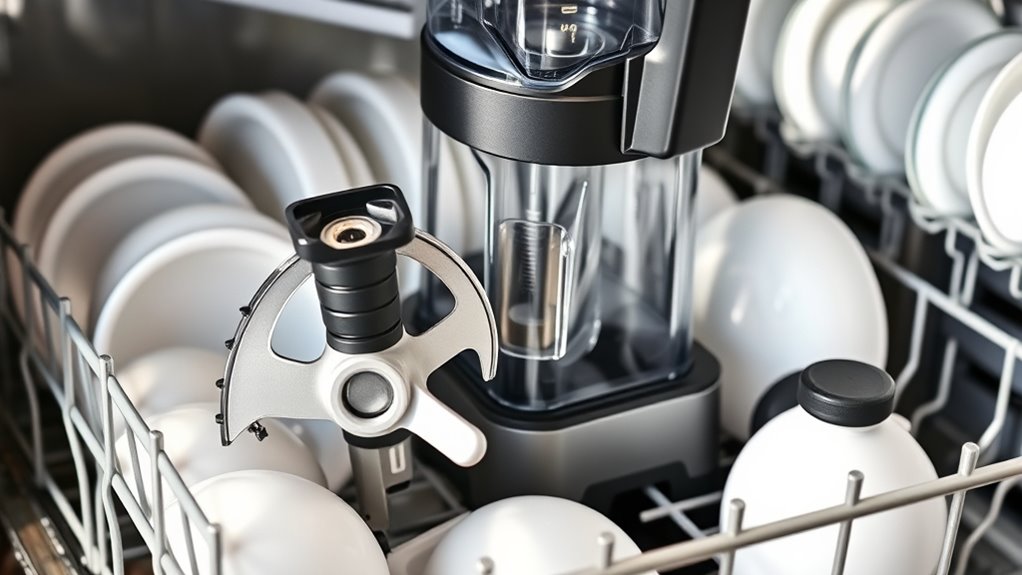
Although you might want to toss the entire Ninja blender in the dishwasher for quick cleaning, not all parts are safe for it. Luckily, some components are dishwasher-safe. You can place the pitcher and lid on the top rack without worry, as they’re made from durable BPA-free plastic that withstands dishwasher heat.
The removable blade assembly often fits there too, but you should check your model’s manual to confirm. Avoid placing seals or rubber gaskets in the dishwasher, as they can degrade. Always separate these parts and arrange them securely to prevent damage during the wash cycle.
Ninja Blender Parts That Should Be Hand Washed
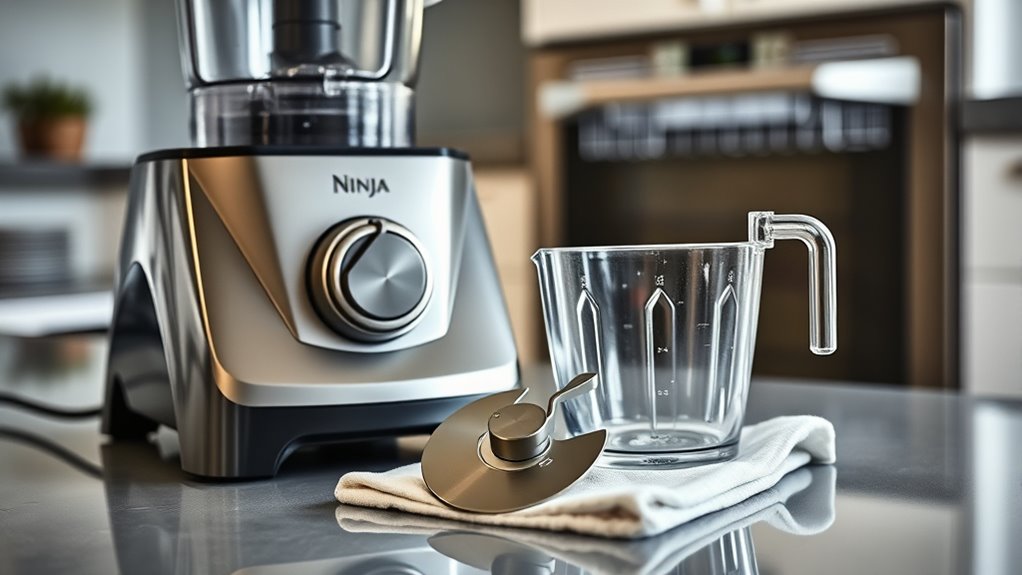
You should always hand wash the blade assembly to keep it sharp and safe. The sealing ring also needs gentle cleaning to maintain a proper seal.
Never put the motor base in the dishwasher—just wipe it down carefully.
Blade Assembly Care
Since the blade assembly contains sharp, delicate parts, it’s best to hand wash it to maintain its performance and safety. You should carefully rinse the blades immediately after use to prevent food from drying and sticking. Use warm water, mild dish soap, and a soft brush or sponge to clean around the blades without risking injury.
Avoid using abrasive scrubbers or harsh chemicals, as these can dull or damage the blades. Always handle the assembly by the base to keep your fingers safe. After washing, dry the blade assembly thoroughly to prevent rusting or corrosion.
Taking these simple steps guarantees your Ninja blender’s blades stay sharp, functional, and safe for every blending session.
Sealing Ring Maintenance
When caring for your Ninja blender, the sealing ring deserves special attention to guarantee a tight, leak-free fit during blending. You should always hand wash the sealing ring using warm, soapy water and a soft cloth or sponge. Avoid placing it in the dishwasher, as high heat and harsh detergents can distort or damage the ring’s flexible material.
After washing, thoroughly dry the ring before reassembling to prevent mold and odors. Regularly inspect the sealing ring for cracks or warping, replacing it if you notice any damage to maintain ideal performance. By hand washing and properly maintaining the sealing ring, you’ll extend its lifespan and keep your blender running smoothly without leaks or messes.
Motor Base Cleaning
Although the motor base is the heart of your Ninja blender, it should never go in the dishwasher. Water and detergent can damage the electrical components, causing it to malfunction.
Instead, you should clean the motor base carefully with a damp cloth and mild soap. Avoid submerging it or letting water seep into the vents.
Here’s a quick guide to motor base cleaning:
| Step | What to Use | Tips |
|---|---|---|
| Unplug | None | Safety first |
| Wipe | Damp cloth + mild soap | Avoid excess water |
| Clean vents | Soft brush | Remove dust and debris |
| Dry | Dry cloth | Prevent moisture damage |
Cleaning Ninja Blender Blades Safely
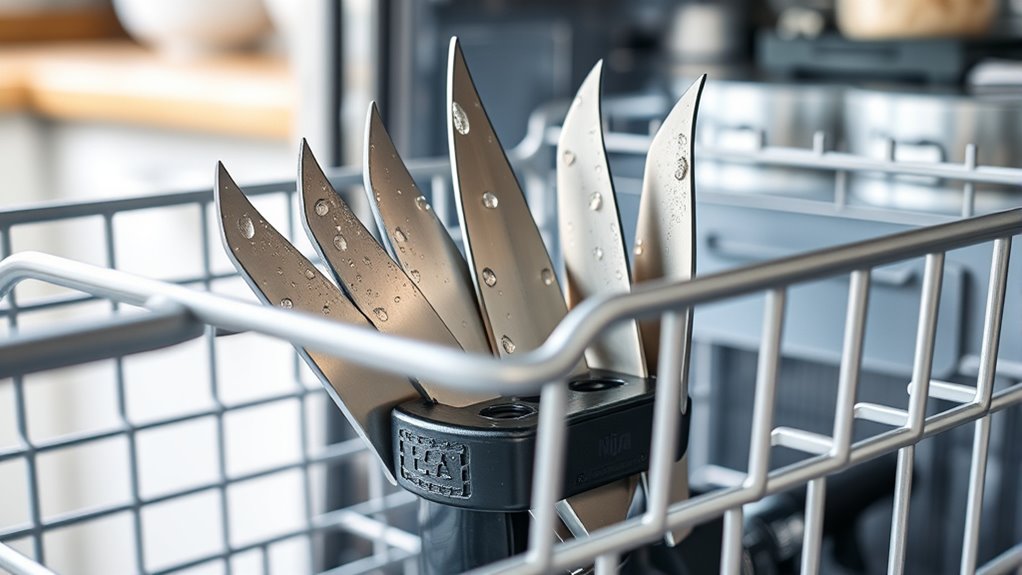
Because the blades of your Ninja blender are sharp and delicate, you need to handle and clean them with care to avoid injury and damage. Always unplug the blender before cleaning the blades to eliminate any risk of accidental activation. Use a soft brush or sponge with warm, soapy water to carefully scrub the blades, avoiding direct hand contact with the sharp edges.
Rinse thoroughly to remove all soap residue. Never soak the blades for long periods, as this can cause rust or dullness. After washing, dry the blades immediately with a clean towel to prevent moisture buildup.
Handling the blades gently and cleaning them promptly will keep them sharp and extend their lifespan while ensuring your safety during maintenance.
Optimal Dishwasher Settings for Ninja Blender Parts
Taking care of the blades sets a strong foundation for cleaning the rest of your Ninja blender parts properly. When placing parts in the dishwasher, choose the top rack to avoid intense heat and water pressure that might damage them. Use a gentle or normal wash cycle with a lower temperature setting, ideally below 130°F (54°C), to protect the plastic components.
Avoid heavy-duty or pots-and-pans cycles, as they can be too harsh. Select an eco or energy-saving mode if available, ensuring thorough cleaning without excessive heat. Skip the heated drying option; instead, let your blender parts air dry to prevent warping.
Does Dishwasher Use Hurt Your Ninja Blender?
How often you use the dishwasher for your Ninja blender can affect its longevity. While the blender’s containers and lids are generally dishwasher safe, repeated exposure to high heat and harsh detergents may cause wear over time. You might notice cloudiness or warping if you frequently use the dishwasher’s heated drying cycle.
The blades, typically hand-wash only, can dull or rust if placed in the dishwasher. To keep your Ninja blender in top shape, avoid overusing the dishwasher and opt for hand washing when you can. Doing so helps preserve the materials and maintains sharpness.
In short, occasional dishwasher use won’t hurt, but relying on it too much can shorten your blender’s lifespan and performance.
Cleaning Tips for Ninja Blender Containers and Lids
Although Ninja blender containers and lids are designed for easy cleaning, following the right steps guarantees they stay in great condition. Start by rinsing them immediately after use to prevent food residue from hardening. Use warm, soapy water and a soft sponge to clean both containers and lids thoroughly.
Pay special attention to crevices and seals where particles can hide. Avoid abrasive scrubbers that might scratch the plastic. For a deeper clean, blend warm water with a drop of dish soap in the container for 30 seconds, then rinse well.
Let the parts air dry completely before reassembling to prevent moisture buildup. By adopting these simple habits, you’ll maintain your Ninja blender’s performance and extend its lifespan effectively.
Common Cleaning Mistakes That Damage Ninja Blenders
You might not realize that running your Ninja blender for too long can overheat the motor and cause damage. Using harsh detergents can also wear down the plastic and seals faster than gentle cleaners.
Avoid these common mistakes to keep your blender working smoothly.
Overheating Motor Risks
If you run your Ninja blender continuously without giving it time to cool, you risk overheating the motor. This can cause the motor to burn out, reducing your blender’s lifespan. To prevent this, use your blender in short bursts and allow it to rest between uses.
Overheating can also trigger the blender’s safety mechanism, shutting it down unexpectedly. Ignoring these signs and pushing the motor harder can lead to permanent damage. After blending, unplug the unit and let the motor cool for at least 15 minutes before the next use.
Proper use not only keeps the motor functioning efficiently but also avoids costly repairs. Remember, treating your Ninja blender with care ensures it stays reliable for years.
Harsh Detergent Effects
Since harsh detergents contain strong chemicals, they can quickly wear down your Ninja blender’s components. Using these detergents often causes discoloration, dull blades, and weakened seals. You might think stronger soap cleans better, but it actually shortens your blender’s lifespan.
Stick to mild dish soaps to protect your investment.
Here’s a quick guide to detergent effects:
| Detergent Type | Effect on Blender | Recommendation |
|---|---|---|
| Harsh Chemicals | Corrodes metal parts | Avoid |
| Abrasive Soaps | Scratches surfaces | Avoid |
| Mild Dish Soap | Safe cleaning | Use regularly |
| Bleach | Damages seals | Avoid |
| Enzyme Cleaners | Gentle and effective | Use sparingly |
This helps you clean smart without damaging your Ninja blender.
Maintaining Ninja Blender Performance Over Time
Although Ninja blenders are built to last, proper care plays a crucial role in maintaining their performance over time. You should clean the blender components promptly after each use to prevent residue buildup, which can dull the blades and affect blending efficiency. While the pitcher and lid are often dishwasher-safe, avoid placing the motor base in the dishwasher.
Instead, wipe it clean with a damp cloth. Regularly inspect the blades for any signs of wear or damage, and replace them when necessary to keep your blender working smoothly. Also, steer clear of harsh detergents that can degrade seals and plastic parts.
Frequently Asked Questions
Can I Blend Hot Liquids in a Ninja Blender?
You can blend hot liquids in your Ninja Blender, but be careful. Let them cool slightly first to avoid pressure buildup, which can cause spills or damage.
Always remove the center piece from the lid before blending hot items.
What Is the Warranty Period for Ninja Blenders?
Imagine your Ninja blender as a trusty sidekick—its warranty shields you for one full year.
If anything goes wrong during that time, you’ve got Ninja’s support ready to jump in and save the day.
Are Ninja Blenders Bpa-Free?
Yes, Ninja blenders are BPA-free, so you don’t have to worry about harmful chemicals leaching into your food.
This makes them a safer choice for your health and everyday blending needs.
Can Ninja Blenders Crush Ice Effectively?
Yes, your Ninja blender can crush ice effectively thanks to its powerful motor and sharp blades. Just make sure to use the pulse function for best results, so you get perfectly crushed ice every time.
How Do I Troubleshoot a Ninja Blender That Won’T Start?
If your Ninja blender won’t start, first check the power source and connections. Make sure the pitcher is properly seated—sometimes it’s the small things that trip you up.
Also, inspect the fuse and reset if needed.
Conclusion
When it comes to your Ninja blender, knowing what parts can safely plunge into the dishwasher keeps your cleanup quick and hassle-free. But remember, some pieces need a gentler touch to avoid damage. Think of your blender as a trusty sidekick—treat it right, and it’ll blend like new for years.
So, choose your cleaning method wisely, and keep your Ninja performing at its sharpest. Proper care ensures your blender lasts longer and maintains its powerful performance. When wondering, “Can Ninja blender go in dishwasher?” always check the manufacturer’s guidelines to protect your investment.
By following these tips, you can enjoy hassle-free cleaning and delicious blends every time. Keep your Ninja blender clean and ready for every delicious adventure ahead!