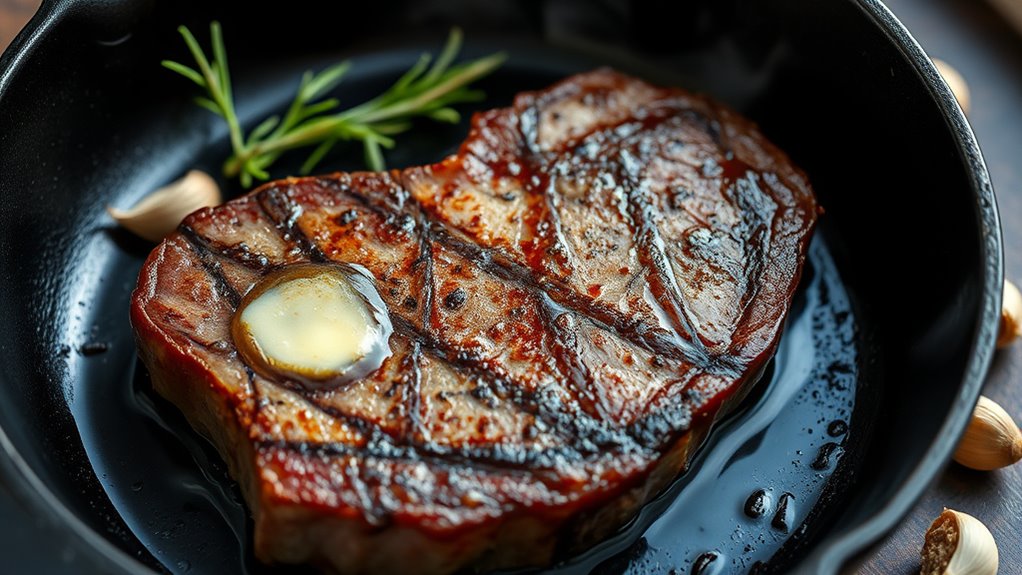
How to Cook T-Bone Steak in Frying Pan
To cook a juicy T-bone steak in a frying pan, start by choosing a well-marbled, room-temperature steak about 1 to 1.5 inches thick. This method ensures a tender and flavorful result, perfect for steak lovers seeking a quick yet delicious meal.
Season it generously with kosher salt and pepper to enhance the natural flavors.
Next, heat a heavy pan until it’s smoking hot. Add a high-smoke-point oil and sear the steak undisturbed for 3-4 minutes on each side.
During the last minute, baste the steak with butter and herbs to infuse rich aromas.
Finally, let the steak rest to lock in the juices before slicing.
Follow these basics, and you’ll master the perfect pan-seared T-bone with ease every time.
Key Takeaways
- Bring the T-bone steak to room temperature and season generously with coarse salt and freshly ground black pepper.
- Preheat a heavy skillet over medium-high heat until smoking hot, then add high smoke point oil like canola or grapeseed.
- Sear the steak undisturbed for 3-4 minutes per side to develop a crust, flipping only once, and sear the edges briefly.
- Add butter, garlic, and herbs to the pan near the end, basting the steak for enhanced flavor and richness.
- Rest the cooked steak for 5-10 minutes loosely covered to allow juices to redistribute before slicing against the grain.
Choose the Best T-Bone Steak for Pan Cooking
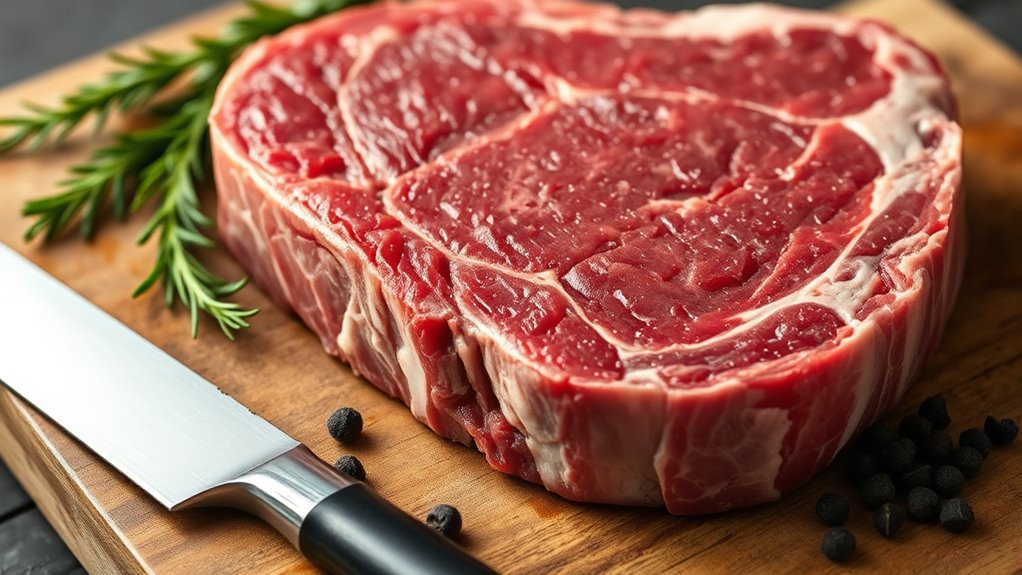
When you’re ready to cook a T-bone steak in a frying pan, start by selecting a cut that’s at least 1 to 1.5 inches thick. Thicker steaks hold up better during searing and give you more control over doneness. Look for good marbling—the small streaks of fat running through the meat—which adds flavor and keeps the steak juicy.
Choose a fresh steak with a bright red color and firm texture. Avoid cuts that look pale or dry. If you can, buy from a trusted butcher or a reputable grocery store to guarantee quality.
Season Your T-Bone Steak Simply and Effectively

You’ll want to start by choosing the right salt, like kosher or sea salt, to bring out the steak’s natural flavors. Then, use freshly ground black pepper for a sharp, aromatic kick.
Finally, consider adding simple herbs and spices to enhance the taste without overpowering the meat.
Choosing The Right Salt
How do you pick the best salt to bring out your T-bone steak’s natural flavors? Start with coarse salts like kosher or sea salt. Their larger crystals dissolve slowly, creating a perfect crust without over-salting.
Kosher salt is popular because it’s easy to pinch and spreads evenly. Sea salt offers subtle mineral notes that enhance the steak’s richness. Avoid fine table salt; it can clump and make the steak too salty quickly.
If you want a touch of elegance, finishing salts like flaky Maldon add a delicate crunch and burst of flavor just before serving. Remember, salt isn’t just seasoning—it’s a tool to *release* your steak’s full taste potential. Choose wisely, and your pan-seared T-bone will shine every time.
Using Freshly Ground Pepper
Just as the right salt enhances your T-bone steak’s natural flavors, freshly ground pepper adds a bold, aromatic kick that complements the meat’s richness. To get the most from your pepper, follow these steps:
- Grind fresh: Use a pepper mill to grind peppercorns just before seasoning for maximum aroma and flavor.
- Season generously: Don’t be shy—coat both sides evenly to build a flavorful crust.
- Adjust coarseness: Choose a medium to coarse grind to add texture without overpowering the steak.
- Apply right before cooking: Pepper can burn if added too early, so sprinkle it just before placing your steak in the pan.
This simple step enhances your T-bone’s taste, making every bite more vibrant without complicating your seasoning.
Adding Herbs And Spices
Although salt and pepper form the foundation of your T-bone steak’s flavor, adding herbs and spices can elevate it with subtle complexity and depth. Start with classic choices like garlic powder, rosemary, or thyme to complement the meat’s natural richness. Gently press these seasonings into the steak before cooking to help them adhere and release their aroma.
You can also toss a sprig of fresh rosemary or thyme into the hot pan along with a pat of butter while searing. This infuses the steak with a fragrant, savory note. Avoid overpowering the steak with too many spices; simplicity lets the quality of the meat shine.
Preheat Your Pan for a Perfect T-Bone Steak Sear
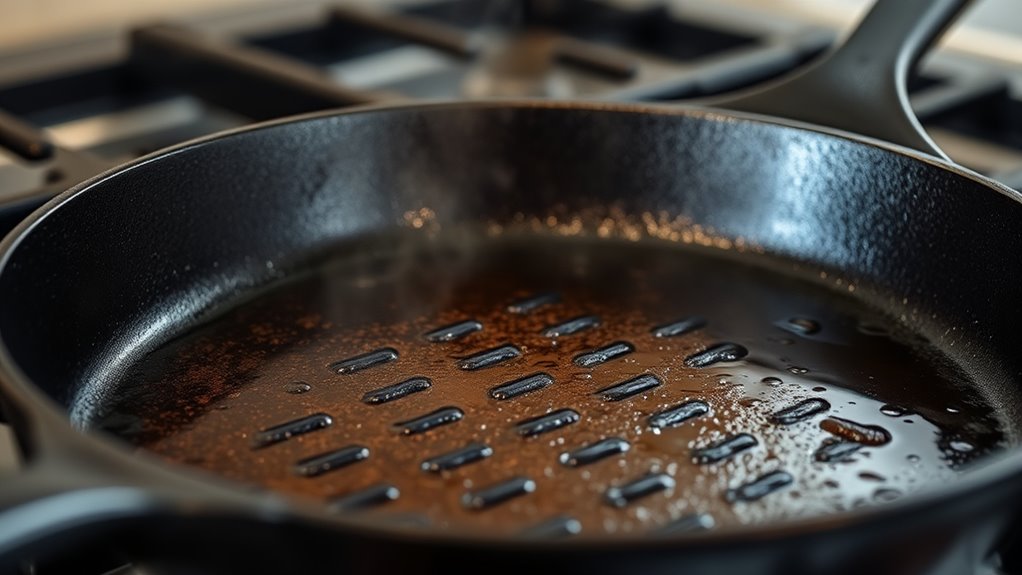
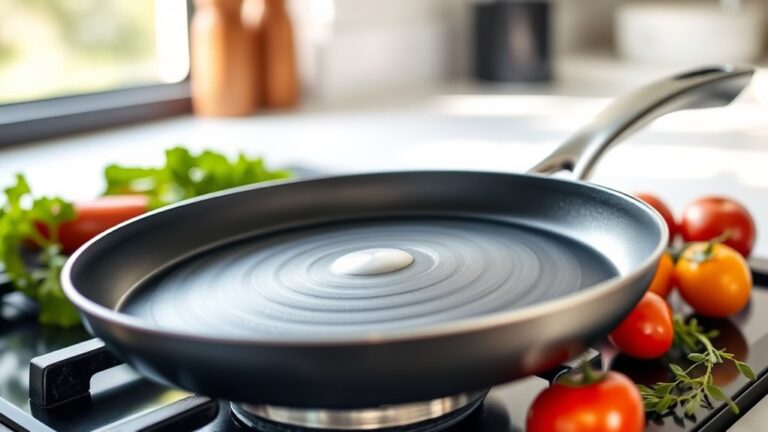
Before placing your T-bone steak in the pan, make sure you preheat it until it’s smoking hot; this guarantees a perfect sear that locks in the juices and flavor. A properly heated pan creates that delicious crust you want on your steak.
Preheat your pan until it’s smoking hot for a perfect, juicy sear and flavorful crust.
Here’s how to get your pan ready:
- Place your heavy skillet or frying pan on the stove over medium-high heat.
- Allow it to heat for about 5 minutes without adding oil.
- Flick a few drops of water onto the surface—if they sizzle and evaporate immediately, the pan is ready.
- Add a high smoke point oil like canola or grapeseed oil and heat until it shimmers before adding your steak.
This prep ensures your T-bone cooks evenly with a mouthwatering sear.
Step-by-Step Guide to Cooking T-Bone Steak in a Pan
First, you’ll want to get your T-bone steak seasoned and ready for the pan. Then, follow key cooking techniques to achieve the perfect sear and doneness.
Finally, let the steak rest before serving to lock in all the juices.
Preparing The Steak
When you prepare your T-bone steak, start by bringing it to room temperature to guarantee even cooking. This step prevents the center from being cold while the outside gets overdone. Next, follow these steps:
- Pat the steak dry with paper towels to remove excess moisture, ensuring a good sear.
- Season generously with salt and freshly ground black pepper on both sides.
- Lightly coat the steak with a high smoke point oil like canola or avocado oil.
- Let it rest for about 10 minutes after seasoning to allow the flavors to penetrate the meat.
These preparation steps set you up perfectly for cooking a flavorful, juicy T-bone steak in your frying pan.
Cooking Techniques
Although cooking a T-bone steak in a frying pan might seem intimidating, you can achieve a perfectly seared, juicy result by following a few straightforward steps. Start by heating your pan over medium-high heat until it’s very hot. Add a small amount of oil with a high smoke point, like canola or vegetable oil.
Place the steak in the pan without moving it for about 3-4 minutes to develop a nice crust. Flip the steak and cook the other side for another 3-4 minutes. Use tongs to sear the edges briefly, especially the fat side.
If you want, baste the steak with melted butter and garlic in the final minute for extra flavor. Keep an eye on doneness to avoid overcooking.
Resting And Serving
Once your T-bone steak is cooked to your liking, let it rest on a warm plate for about 5 to 10 minutes; this allows the juices to redistribute, ensuring every bite stays tender and flavorful. While resting, cover the steak loosely with foil to keep it warm without steaming it.
When you’re ready to serve, follow these steps:
- Slice the steak against the grain to maximize tenderness.
- Arrange the slices on a warm serving platter.
- Drizzle any accumulated juices over the meat to enhance flavor.
- Pair with your favorite sides and garnish, such as fresh herbs or a pat of butter.
Resting and proper serving will elevate your T-bone steak experience perfectly.
Check T-Bone Steak Doneness Without a Thermometer
Since not everyone has a meat thermometer on hand, you can still judge your T-bone steak’s doneness by using simple tactile and visual cues. First, press the center of the steak with your fingertip or tongs. A rare steak feels soft and squishy, medium feels firmer but still slightly springy, and well-done feels very firm.
You can also compare the steak’s feel to the fleshy area at the base of your thumb when touching your thumb to different fingers—thumb to index finger mimics rare, middle finger medium, and pinky well-done. Visually, look for juices: red juices signal rare, pink for medium, and clear juices for well-done.
Using these cues, you’ll confidently nail the perfect doneness without needing a thermometer.
Rest Your Steak for Maximum Juiciness and Flavor
After you’ve assessed your steak’s doneness by touch and appearance, resist the urge to cut into it right away. Resting your T-bone steak is essential to lock in juices and boost flavor. Here’s how to do it right:
- Remove the steak from the pan and place it on a warm plate or cutting board.
- Loosely tent it with aluminum foil to keep it warm without trapping steam.
- Let it rest for about 5 to 10 minutes, depending on thickness.
- Avoid pressing or cutting it during this time to prevent juice loss.
This resting period allows the juices to redistribute evenly, making every bite tender and flavorful. Give your steak this simple pause for maximum enjoyment.
Enhance T-Bone Steak Flavor With Butter and Herbs
While your T-bone steak is resting, you can elevate its flavor by adding butter and fresh herbs. Melt a couple of tablespoons of butter in your frying pan over medium heat, then toss in fresh rosemary, thyme, and crushed garlic cloves. Let the butter absorb the herbs’ aroma for a minute or two.
Once infused, spoon the herb butter generously over your steak, allowing it to soak in all those rich flavors. This technique not only adds a silky texture but also enhances the savory notes of your meat. Don’t rush—basting the steak with this fragrant butter blend will make every bite more indulgent and give your T-bone an irresistible, restaurant-quality finish.
Mistakes to Avoid When Cooking Your T-Bone Steak
Even the most experienced cooks can slip up when preparing a T-bone steak, so knowing what to avoid is key to achieving a perfect sear and juicy interior.
Here are common mistakes you should stay away from:
- Skipping the rest: Don’t cut into the steak right after cooking; resting lets juices redistribute.
- Using a cold steak: Always bring your steak to room temperature before cooking to ensure even doneness.
- Overcrowding the pan: Cook one or two steaks at a time to maintain high heat and proper searing.
- Constantly flipping: Let the steak sear undisturbed on each side to build a flavorful crust.
Avoid these errors, and your T-bone will come out tender, flavorful, and beautifully cooked every time.
Frequently Asked Questions
Can I Cook a T-Bone Steak in an Oven Instead of a Pan?
Yes, you can cook a T-bone steak in the oven. Just sear it first in a hot pan, then finish cooking it in the oven to your preferred doneness.
It’s easy and yields great flavor.
What Side Dishes Pair Best With T-Bone Steak?
You might think steak demands heavy sides, but you’ll find roasted vegetables, garlic mashed potatoes, or a fresh salad pair best with your T-bone. They balance richness and keep your meal satisfying without overwhelming flavors.
How Long Can Cooked T-Bone Steak Be Stored Safely?
You can store cooked T-bone steak safely in the fridge for 3 to 4 days.
Make sure to keep it in an airtight container or wrapped tightly to maintain freshness and prevent contamination.
Is It Better to Marinate or Dry Rub a T-Bone Steak?
You’ll find dry rubs are like a bold handshake, locking in flavor without watering down the steak, while marinades act as a gentle rain, tenderizing and adding zest.
Choose based on your steak’s personality and your mood.
Can I Use Cast Iron or Non-Stick Pans for Cooking T-Bone Steak?
You can use both cast iron and non-stick pans, but cast iron’s better for even heat and a perfect sear. Non-stick works but won’t give you that same crusty, caramelized flavor you want on a T-bone.
Conclusion
Now that you’ve mastered the art of pan-cooking your T-bone steak, you’re well on your way to creating memorable meals that quietly impress. Remember, every perfectly seared steak is a gentle reminder that great things take time and care.
So, don’t rush the process—let your patience and attention to detail do the talking. Your taste buds will thank you, and your kitchen will become a place of delicious discovery.
Keep savoring the journey of how to cook T-bone steak in frying pan. With each attempt, you’ll refine your technique and enjoy the rich, flavorful results that come from careful pan-cooking.