

Do Gas Cooktops Need Electricity
You don’t always need electricity to use a gas cooktop, as many models allow you to light burners manually with a match or lighter. This feature is especially useful during power outages since gas flows independently of electricity. Therefore, you can continue cooking even when the power is out.
However, some gas cooktops rely on electric ignition systems for added convenience. These systems create a spark automatically when you turn the knob, making it easier to start the burner without matches or lighters.
If you want to understand how each ignition type works and learn important safety tips, keep exploring the details. This knowledge will help you use your gas cooktop efficiently and safely.
Key Takeaways
- Gas cooktops primarily use natural gas or propane, which does not require electricity for basic operation.
- Many gas cooktops use electric ignition systems that need electricity to generate sparks for lighting burners.
- Manual ignition gas cooktops operate without electricity by lighting burners with matches or lighters.
- During power outages, electric ignition cooktops will not spark, but manual ignition models remain fully functional.
- Choosing a cooktop with manual ignition ensures cooking capability even when electricity is unavailable.
Do Gas Cooktops Need Electricity to Work?
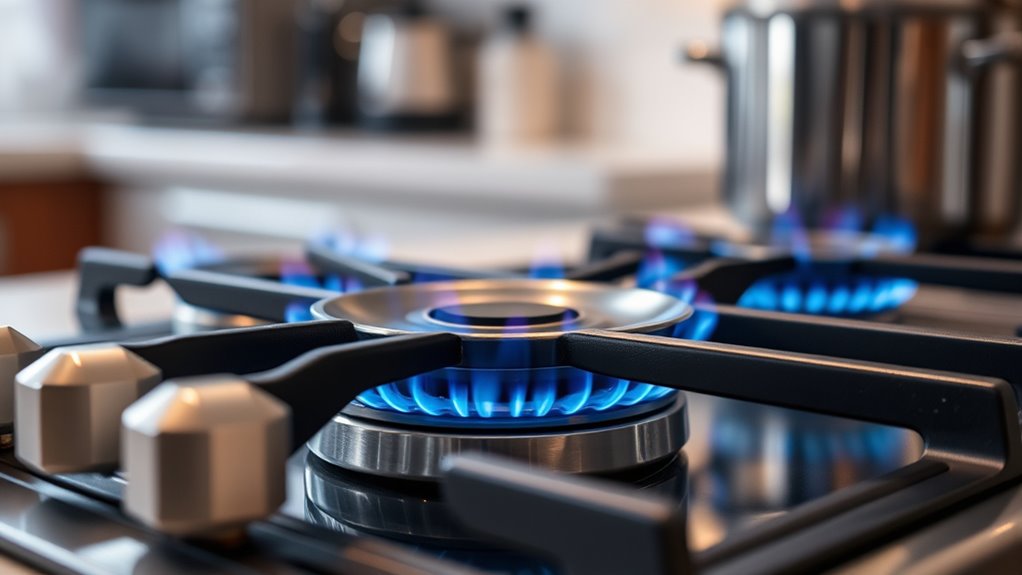
Although gas cooktops primarily rely on natural gas or propane for cooking, they often need electricity to power ignition systems or electronic controls. When you turn the knob, electricity usually sparks the flame instantly, making cooking quicker and safer. Without power, models with electric ignition won’t light automatically, so you’d have to use a manual method, like a match or lighter.
Some cooktops also use electricity for digital displays, timers, or safety sensors, which improve your cooking experience. However, the gas flow itself doesn’t depend on electricity—it’s controlled by valves you operate manually. So, while electricity enhances convenience and safety, your gas cooktop can still function without it, though you might face some challenges lighting and monitoring your cooking.
How Do Gas Cooktops Produce Flame Without Electricity?
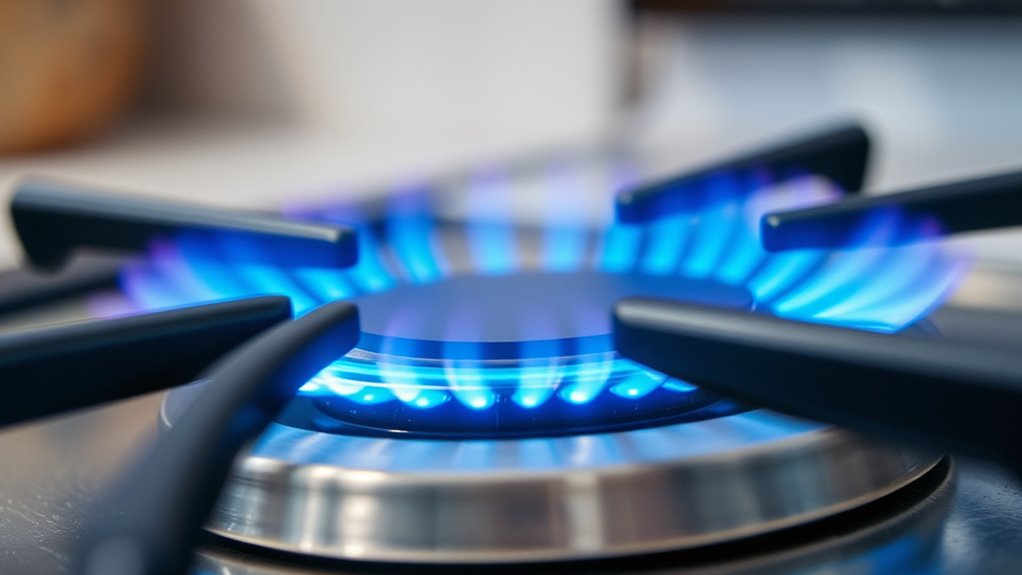
When electricity isn’t available, you can still ignite your gas cooktop by using a manual method like a match or lighter. Gas cooktops produce flame without electricity through a simple process. Here’s how it works:
- Gas Flow: When you turn the knob, gas starts flowing from the burner.
- Manual Ignition: You bring a flame close to the burner, usually from a match or lighter.
- Combustion: The gas ignites instantly, producing a flame that heats your cookware.
This system relies solely on the presence of gas and your manual spark. Since no electric spark or ignition system is needed, your cooktop can function even during power outages, making it a reliable option for cooking anytime.
Manual vs. Electric Ignition: What’s the Difference?
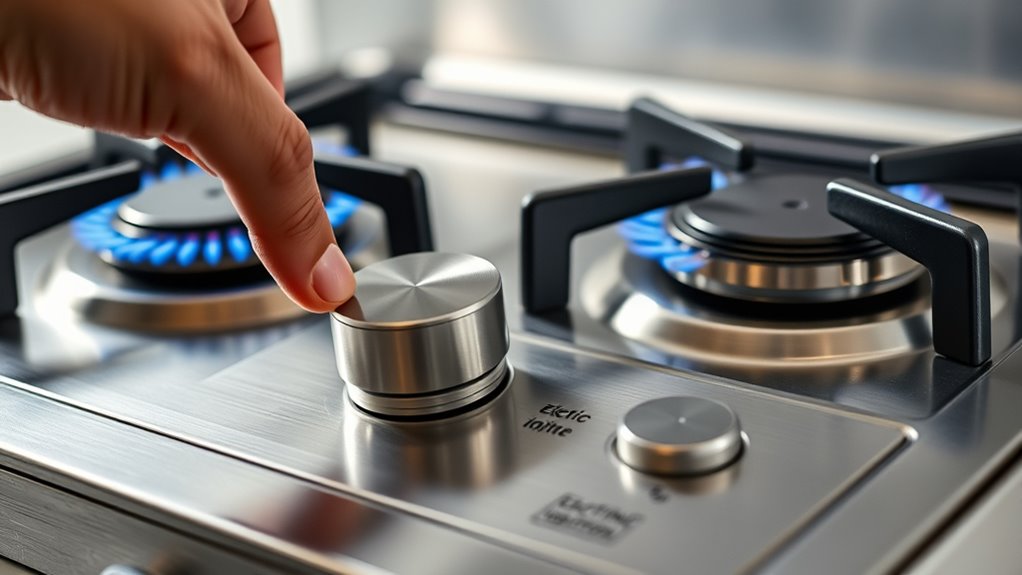
You’ll find that gas cooktops use two main ignition methods: manual and electric. Manual ignition requires you to light the burner yourself, while electric ignition uses a spark powered by electricity.
Understanding these differences helps you see how each method affects power needs and convenience.
Ignition Methods Explained
Understanding the difference between manual and electric ignition will help you choose the right gas cooktop for your kitchen. Manual ignition requires you to light the burner with a match or lighter, so it doesn’t rely on electricity.
In contrast, electric ignition uses a spark generated by an electric source to ignite the gas automatically.
Here’s a quick breakdown:
- Manual ignition is simple and works during power outages, but it needs extra caution.
- Electric ignition offers convenience and safety with one-step ignition but requires a power source.
- Some cooktops combine both methods, giving you flexibility depending on your needs.
Knowing these can guide you to the cooktop that fits your lifestyle and kitchen setup perfectly.
Power Requirements Comparison
Although both manual and electric ignition methods serve the same purpose, they differ considerably in their power needs. With a manual ignition, you don’t need any electricity at all. You simply use a match or lighter to ignite the gas, making it reliable during power outages or in off-grid settings.
On the other hand, electric ignition systems require a power source, usually from your home’s electricity or batteries. They use a small electric spark to light the burner, which means if the power goes out, your cooktop won’t ignite unless it has a backup battery.
Can Gas Cooktops Work During Power Outages?
You might wonder if your gas cooktop will still work when the power goes out. While electric ignition models won’t spark without electricity, you can often light burners manually with a match or lighter.
Just remember to follow safety precautions to avoid accidents during outages.
Manual Ignition Methods
When the power goes out, you might wonder if your gas cooktop will still work. Luckily, many gas cooktops can be manually ignited, letting you cook even without electricity. Here’s how you can do it:
- Turn the burner knob to release gas.
- Use a long-reach lighter or a matchstick to ignite the gas at the burner.
- Hold the flame close until the burner lights, then adjust the heat as needed.
Manual ignition lets you keep cooking during outages, but always be cautious with open flames. Make sure the area is well-ventilated and never leave the burner unattended while lighting. This simple method ensures you’re not left in the dark when you need to prepare meals.
Electric Ignition Limitations
How reliable is your gas cooktop during a power outage? If your cooktop relies solely on electric ignition, it won’t light without electricity. These models use an electric spark or a heated element to ignite the gas, so when the power goes out, you’re out of luck.
You can’t turn on the burner by simply twisting the knob; the ignition system won’t create the spark needed. That means no cooking until power returns or you find an alternative ignition method. Some modern gas cooktops include battery backup or manual ignition options, but many don’t.
If you want to be sure your cooktop works during outages, you’ll need to check if it supports manual lighting or has a built-in backup system.
Safety Precautions During Outages
Since many gas cooktops depend on electric ignition, knowing how to handle power outages safely becomes important. If the electricity goes out, you might not be able to light your cooktop the usual way, so you’ll need to use alternative methods carefully.
Here are three safety precautions to follow during outages:
- Use a match or lighter to ignite the burner manually, but keep your face and body away from the burner when lighting.
- Confirm the gas valve is off before trying to light the burner to prevent gas buildup.
- Ventilate the kitchen well to avoid gas accumulation and potential hazards.
Gas Cooktop Features That Need Electricity
Although gas cooktops primarily rely on gas for heating, several of their features require electricity to function properly. You’ll find that ignition systems, electronic controls, and safety sensors depend on power to operate. This means during a power outage, some conveniences may not work even if gas flows freely.
Here’s a quick look at common gas cooktop features that need electricity:
| Feature | Requires Electricity? |
|---|---|
| Electric Ignition | Yes |
| Digital Controls | Yes |
| Flame Failure Sensor | Yes |
| Timer Functions | Yes |
| Manual Burner Knobs | No |
Understanding these helps you prepare for situations when electricity isn’t available but you still want to cook safely.
How to Light a Gas Cooktop Manually Step-by-Step
Before you light your gas cooktop manually, make sure it’s properly prepared and the area is clear of any flammable items. You’ll need a reliable manual lighter to ignite the burner safely. Always follow key safety precautions to prevent accidents while handling gas.
Preparing The Cooktop
Wondering how to light your gas cooktop manually? Before you begin, you need to prepare the cooktop properly to ensure safety and efficiency. Follow these steps:
- Check the area: Make sure the cooktop surface is clean and free of any flammable materials. Proper ventilation is essential, so open a window or turn on an exhaust fan.
- Inspect the burner: Remove any debris from the burner holes using a soft brush or cloth. Ensure the burner cap is correctly positioned to allow gas flow.
- Locate the gas valve: Identify the gas supply valve beneath or near your cooktop and ensure it’s turned on. This step is vital before attempting to light the burner manually.
Taking these preparatory steps will help you light your gas cooktop safely and smoothly.
Using A Manual Lighter
Once you’ve prepared your cooktop, lighting it manually with a lighter is straightforward and safe when done correctly. First, turn the burner knob to the “light” or “ignite” position, which will release gas.
Then, hold your manual lighter close to the burner’s edge, where the gas exits. Ignite the lighter, and the gas should catch fire immediately. Keep the knob turned at the light position until you see a steady flame, then adjust it to your desired heat level.
If the burner doesn’t ignite after a few seconds, turn off the gas, wait a moment to let the gas disperse, and try again. Using a manual lighter gives you control when your cooktop’s electric ignition isn’t available or functioning.
Safety Precautions To Follow
Lighting your gas cooktop manually requires more than just following the steps—it demands careful attention to safety. Before you begin, make sure your kitchen is well-ventilated to prevent gas buildup. Always check for gas leaks by smelling or using a leak detector.
If you detect any odor, don’t light the stove and call a professional immediately.
Follow these safety precautions when lighting your cooktop manually:
- Turn off all burners before you start to avoid accidental ignition.
- Use a long-reach lighter or match to keep your hands away from the flame.
- Light the match or lighter first, then slowly turn on the gas to prevent gas accumulation.
Staying cautious protects you and your home from hazards during manual lighting.
Key Factors When Choosing a Gas Cooktop Without Electric Ignition
When choosing a gas cooktop without electric ignition, you’ll need to take into account how you’ll manually light the burners safely and efficiently. Look for models with clear access to the burner area so you can easily use a match or lighter. Consider the burner design—open burners are generally easier to ignite manually.
Think about the size and number of burners to fit your cooking needs, ensuring you can light each one without hassle. Materials matter too; stainless steel surfaces are easier to clean if spills occur during manual lighting. Finally, check that the cooktop has reliable control knobs that respond smoothly, allowing you to adjust flames precisely without accidental shut-offs.
These factors will help you pick a practical cooktop that works well without electricity.
How Safe Are Gas Cooktops Without Electricity?
Although gas cooktops without electricity might seem less convenient, they can be just as safe as electric models if you follow proper precautions. You need to be mindful of how you operate and maintain your cooktop to avoid any hazards.
Here are three key safety tips to keep in mind:
- Use a reliable ignition source: Always use a long lighter or matchstick carefully to light burners without electric ignition.
- Ensure proper ventilation: Good airflow prevents gas buildup, reducing the risk of carbon monoxide poisoning.
- Regularly check for leaks: Routinely inspect gas connections and hoses for any leaks or damage to prevent accidents.
Pros and Cons of Gas Cooktops Without Electric Ignition
Using a gas cooktop without electric ignition means you’ll rely on manual methods to light your burners, which can bring both advantages and drawbacks. On the plus side, you won’t need electricity to cook, making your stove functional during power outages. You also avoid potential issues with faulty igniters, reducing repair costs.
However, manual lighting requires matches or a lighter, which can be less convenient and sometimes unsafe if you’re not careful. It also takes a bit more time and practice to get the flame going efficiently. Plus, if you have kids or pets, the open flame during ignition can pose a risk.
Ultimately, without electric ignition, you’ll trade off some ease and safety for independence from electrical power.
Pros and Cons of Gas Cooktops With Electric Ignition
Since electric ignition automates the lighting process, gas cooktops with this feature offer you greater convenience and safety. You don’t have to rely on matches or lighters, reducing fire hazards. However, these cooktops do require electricity to function, which can be a drawback during power outages.
Here are the main pros and cons to take into account:
- Convenience: Instant ignition saves time and effort, making cooking easier.
- Safety: No open flame needed to start, lowering risk of accidental burns or gas leaks.
- Dependence on electricity: During outages, you might not be able to light the cooktop.
Energy Savings From Gas Cooktops Without Electric Ignition
When you choose a gas cooktop without electric ignition, you can save energy by eliminating the need for electricity during startup. These cooktops use a manual ignition method, like a match or lighter, so they don’t rely on electric sparks or batteries. This means you won’t consume any power just to light the burners, reducing your overall energy usage.
Plus, in case of a power outage, your cooktop will still function without interruption. You’ll also avoid standby energy consumption, which some electric ignition systems draw even when not in use. By cutting out this small but continuous electricity drain, you make your cooking more energy-efficient and cost-effective.
Choosing a manual ignition gas cooktop is a simple way to reduce your household energy footprint.
Best Gas Cooktop Models That Operate Without Electricity
Choosing a gas cooktop without electric ignition not only saves energy but also guarantees reliable performance during power outages. When you want a model that works independently of electricity, consider these top options:
- GE JGP3030SLSS – This cooktop features manual ignition, ensuring you can light burners with a simple match or lighter. It’s durable and easy to clean.
- Frigidaire FFGC3026TS – Known for its reliable knob ignition system, this model doesn’t rely on electricity, making it perfect for off-grid use.
- Wolf CG304 – A premium option with standing pilot lights that operate without power, combining classic design with consistent performance.
Frequently Asked Questions
How Often Should Gas Cooktop Burners Be Cleaned for Optimal Performance?
You should clean gas cooktop burners at least once a month to keep them working efficiently. If you cook daily, wipe spills immediately and deep clean every two weeks to prevent clogs and maintain peak performance.
What Types of Cookware Work Best on Gas Cooktops?
You’ll get the best results using cookware with flat, sturdy bottoms like stainless steel, cast iron, or heavy-duty aluminum. These materials distribute heat evenly and handle gas flames well, making your cooking more efficient and consistent.
Can Gas Cooktops Be Installed Outdoors Safely?
You can definitely install gas cooktops outdoors safely, but you’ll need proper ventilation and weather protection.
Think of it as giving your cooktop a cozy shelter to avoid damage from wind, rain, or extreme temperatures.
How Do Gas Cooktops Affect Indoor Air Quality?
Gas cooktops release combustion byproducts like nitrogen dioxide and carbon monoxide, which can lower your indoor air quality.
You should use proper ventilation, like a range hood, to keep your kitchen air safe and fresh while cooking.
Are There Any Special Maintenance Tips for Gas Cooktops?
You should regularly clean burner grates and caps, check for gas leaks, and guarantee ignition ports aren’t clogged.
Also, schedule professional inspections annually to keep your gas cooktop safe and efficient. Don’t ignore unusual smells or flames.
Conclusion
Think of a gas cooktop as a steadfast lighthouse—its flame glowing bright even when the electric grid fades. Whether you choose a model with or without electric ignition, the flame symbolizes reliable warmth and independence in your kitchen.
Without electricity, your cooktop still sparks life into meals, guiding you through power outages and saving energy.
So, trust in that steady flame—it’s your kitchen’s quiet, unwavering companion. Gas cooktops do not necessarily need electricity to function, making them a dependable choice for cooking anytime.