How to Clean Glass Cooktops
To clean your glass cooktop effectively, it’s essential to use the right techniques and products. Glass cooktops require gentle care to maintain their smooth, shiny surface and prevent scratches.
Always start by ensuring the cooktop is completely cool before cleaning to avoid burns or damage.
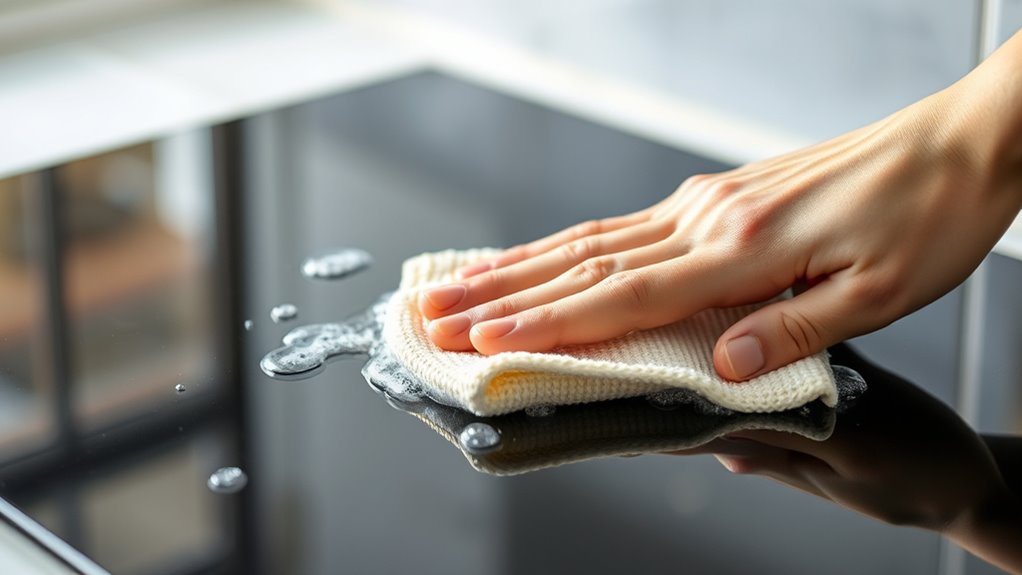
Use soft microfiber cloths or non-abrasive sponges when wiping down the surface. Wipe spills immediately with gentle cleaners like vinegar or a baking soda paste to prevent stains from setting in.
For tough residue, carefully scrape with a razor blade held at a 45-degree angle.
Always lift pots instead of sliding them to prevent scratches and damage.
After cleaning, dry the surface thoroughly to keep it looking shiny and new.
Keep up with regular care, and you’ll find more tips to maintain its sparkle and tackle stubborn stains.
Key Takeaways
- Always clean the glass cooktop when it is completely cool to avoid damage or burns.
- Use soft microfiber cloths or non-abrasive sponges and avoid abrasive tools or cleaners.
- Remove burnt residue gently with a razor blade scraper held at a 45-degree angle.
- Apply homemade solutions like baking soda paste or vinegar spray for stains and grease.
- Wipe spills immediately, lift cookware instead of sliding, and buff with a dry cloth for shine.
Tools and Supplies for Cleaning Glass Cooktops

Before you begin cleaning your glass cooktop, gather the right tools and supplies to make the job easier and more effective. You’ll need a few essentials: a soft microfiber cloth to avoid scratches, a non-abrasive sponge, and a razor blade scraper designed specifically for glass surfaces. Choose a cleaner formulated for glass cooktops or make a simple solution with vinegar and water.
Avoid harsh chemicals that can damage the surface. Have paper towels or a clean dry cloth ready for buffing. You might also want gloves to protect your hands, especially if you use any cleaning agents.
Having these items on hand guarantees you can clean efficiently without causing damage, leaving your cooktop spotless and ready for your next meal.
Preparing Your Glass Cooktop for Safe Cleaning

Although glass cooktops look delicate, you can prepare them safely by taking a few simple steps. First, make certain the cooktop is completely cool to avoid burns or cracking the surface. Next, remove any loose debris with a soft cloth or sponge to prevent scratching.
Avoid using abrasive materials that could damage the glass. Finally, gather your cleaning supplies within reach to streamline the process.
Here’s how to prepare your cooktop safely:
- Make sure the surface is cool before cleaning
- Clear loose crumbs or food particles gently
- Avoid harsh or abrasive tools and cleaners
- Have all cleaning products and tools ready nearby
Following these steps helps protect your cooktop and sets you up for an effective cleaning session.
Daily Cleaning Routine for Glass Cooktops

To keep your glass cooktop looking great, wipe up spills as soon as they happen to prevent stains. Use soft cloths or sponges to avoid scratching the surface. Stick with mild cleaning solutions that won’t damage the glass or leave residue behind.
Wipe Spills Immediately
Because spills can quickly harden and become stubborn stains, wiping them immediately keeps your glass cooktop looking pristine and prevents tough cleanup later. When you catch spills early, you avoid the frustration of scrubbing burnt-on messes that can scratch or dull the surface.
Make it a habit to check your cooktop right after cooking and grab a soft cloth or paper towel to clean up spills while the surface is still warm, but not hot.
Remember these tips for quick spill cleanup:
- Use a damp cloth to wipe fresh spills gently.
- Avoid letting sugary or acidic spills sit.
- Clean spills from edges and corners too.
- Dry the area to prevent streaks and marks.
Act fast, and your glass cooktop will stay spotless longer.
Use Gentle Cleaning Tools
When you clean your glass cooktop daily, choosing gentle tools protects its smooth surface from scratches and dullness. Use a soft microfiber cloth or a non-abrasive sponge to wipe the cooktop. Avoid rough scrubbers, steel wool, or abrasive pads, as they can damage the glass.
A plastic scraper designed for glass cooktops works well to remove stuck-on residue without harming the surface. Always ensure the scraper blade is clean and used at a low angle to prevent scratches. By sticking to soft, non-abrasive tools, you keep your cooktop looking shiny and new longer.
Gentle cleaning tools not only maintain the cooktop’s appearance but also extend its lifespan, making daily cleaning quick and safe.
Choose Mild Cleaning Solutions
Although it might be tempting to reach for strong cleaners, you should stick to mild cleaning solutions to protect your glass cooktop. Harsh chemicals can damage the surface, causing scratches or dullness over time.
Instead, use gentle cleaners that effectively remove spills without harming the glass. Consider these options for your daily cleaning routine:
- A mixture of warm water and a few drops of dish soap
- White vinegar diluted with water for natural shine
- Baking soda paste for stubborn stains
- Commercial glass cooktop cleaners designed for delicate surfaces
Using these mild solutions helps maintain your cooktop’s sleek look and guarantees it lasts longer. Always avoid abrasive powders or strong acids, and wipe the surface with a soft cloth to prevent scratching.
Safely Cleaning Around Burners and Controls
When cleaning around burners and controls, you’ll want to protect the electrical components by keeping moisture to a minimum. Use gentle tools like soft cloths or sponges to avoid scratches or damage.
Avoid spraying cleaners directly on controls to prevent liquid from seeping inside.
Protecting Electrical Components
To keep your glass cooktop functioning properly, you’ll need to be extra careful around the burners and controls, as these areas house sensitive electrical components. Avoid letting water or cleaning solutions seep into these parts to prevent damage or electrical shorts. When cleaning, use a damp cloth rather than soaking the surface.
Remember these tips to protect electrical components:
- Turn off the cooktop and unplug it before cleaning.
- Avoid spraying cleaners directly onto controls or burners.
- Use minimal liquid and wipe immediately if any spills occur.
- Never submerge control panels or burner parts in water.
Using Gentle Cleaning Tools
Since glass cooktops have delicate surfaces and sensitive electrical parts, you’ll want to choose cleaning tools that won’t cause scratches or damage. Use soft microfiber cloths or non-abrasive sponges to wipe around burners and controls gently. Avoid steel wool, rough scrubbers, or abrasive pads that can leave permanent marks.
For stubborn spots near controls, a soft-bristled toothbrush works well without risking harm. When tackling grease or residue, apply a gentle cleaner to your cloth instead of directly spraying the cooktop. This approach helps prevent liquid from seeping into electrical components.
Always clean in small sections and use light pressure, ensuring you don’t dislodge or damage any parts. Using gentle tools keeps your cooktop looking pristine and functioning safely.
Avoiding Excess Moisture
Choosing the right tools is only part of keeping your glass cooktop safe; controlling moisture levels during cleaning is just as important. Excess water can seep into burners and controls, causing damage or electrical issues. When cleaning, use a damp cloth rather than soaking the surface.
Pay special attention around knobs and seams to prevent moisture buildup. Here’s how to avoid excess moisture safely:
- Use minimal water on your cloth or sponge
- Wipe spills immediately to prevent pooling
- Avoid spraying cleaners directly on controls or burners
- Dry all surfaces thoroughly with a soft, dry cloth
How to Remove Light Stains and Spills From Glass Cooktops
Although glass cooktops resist stubborn stains, light spills and marks can still mar their surface if you don’t clean them promptly. To remove these, wait until the cooktop cools completely. Then, gently wipe the area with a damp microfiber cloth or sponge using warm, soapy water.
Avoid abrasive pads that could scratch the glass. For tougher light stains, apply a small amount of white vinegar or a specialized glass cooktop cleaner. Let it sit for a minute, then wipe it off with a clean cloth.
Always dry the surface thoroughly to prevent water spots. Regularly cleaning light stains right after cooking keeps your cooktop looking pristine without extra effort, preserving its sleek, shiny finish.
Tackling Burnt-On Residue on Glass Cooktops
When burnt-on residue sticks to your glass cooktop, you’ll need to use effective scraping techniques to remove it without scratching the surface. Choose safe cleaning solutions that can break down tough grime while protecting your cooktop’s finish.
With the right tools and products, you can restore your cooktop’s shine quickly and safely.
Effective Scraping Techniques
If burnt-on residue has stubbornly stuck to your glass cooktop, using effective scraping techniques can make all the difference. Start by ensuring the cooktop is cool to avoid injury. Use a razor blade scraper held at a 45-degree angle to gently lift the residue without scratching the surface.
Work slowly and carefully, applying light pressure. Always keep the scraper blade clean for best results.
Here are key tips to remember:
- Use a new, sharp blade to prevent scratches.
- Hold the scraper at a consistent angle.
- Avoid forcing the blade; let it do the work.
- Wipe away loosened debris frequently to see your progress.
These techniques help you safely remove burnt-on residue without damaging your glass cooktop.
Safe Cleaning Solutions
Since burnt-on residue can be tough to remove, choosing safe cleaning solutions is essential to protect your glass cooktop’s surface. Avoid harsh chemicals or abrasive cleaners, which can cause scratches or dull the finish. Instead, use a mixture of baking soda and water to create a gentle paste.
Apply it to the burnt areas and let it sit for 15 minutes before scrubbing softly with a non-abrasive sponge. For stubborn spots, white vinegar works well—spray it on, let it fizz, then wipe clean. Always rinse thoroughly with a damp cloth to remove any residue.
Using these safe solutions will help you tackle burnt-on grime effectively without damaging your cooktop, keeping it looking spotless and extending its lifespan.
Best Homemade Cleaners for Glass Cooktops
Although commercial cleaners work well, you can save money and avoid harsh chemicals by making your own glass cooktop cleaner at home. These homemade solutions are effective, gentle, and use ingredients you likely already have. You just need to combine them correctly and apply with care.
Here are some of the best homemade cleaners for your glass cooktop:
- Baking soda and water paste: Gently scrubs away burnt-on food without scratching.
- Vinegar spray: Cuts through grease and streaks, leaving a shiny finish.
- Lemon juice: Naturally deodorizes and breaks down grime.
- Dish soap and warm water: Ideal for daily cleaning and light messes.
Try these easy mixtures to keep your cooktop spotless and safe.
When to Use Commercial Glass Cooktop Cleaners
When should you reach for a commercial glass cooktop cleaner instead of a homemade solution? Use a commercial cleaner when stubborn stains like burnt-on food, grease, or mineral deposits won’t budge with your regular homemade mix. These cleaners contain specialized ingredients designed to break down tough residues without damaging the surface.
They’re also a good choice if you want a product tested specifically for glass cooktops, ensuring safe and effective cleaning. If your cooktop has visible discoloration or a cloudy film, commercial cleaners can restore its shine more efficiently. Just remember to follow the instructions carefully and avoid abrasive scrubbing tools to protect the glass.
In short, commercial cleaners are your go-to for deep, reliable cleaning beyond what homemade solutions can handle.
Preventing Scratches and Damage on Glass Cooktops
To keep your glass cooktop looking pristine, you need to handle it with care and use the right cleaning tools. Avoid abrasive scrubbers or scouring pads that can scratch the surface. Always lift pots and pans instead of sliding them to prevent scratches.
Use soft cloths or sponges when cleaning, and opt for non-abrasive cleaners specifically designed for glass cooktops.
Here’s how to prevent scratches and damage:
- Use cookware with smooth, flat bottoms
- Avoid dragging heavy pots across the surface
- Clean spills promptly to avoid burnt-on residue
- Don’t use sharp or metal utensils on the cooktop
Maintaining Shine and Preventing Future Stains
Taking care to prevent scratches sets a strong foundation for keeping your glass cooktop spotless. To maintain its shine, wipe the surface regularly with a soft cloth dampened in warm, soapy water. After cleaning, buff the cooktop with a microfiber cloth to restore its glossy finish.
Avoid abrasive cleaners or scrubbers that can dull the surface. To prevent future stains, clean spills immediately—especially acidic substances like tomato sauce or citrus juice, which can etch the glass. Using a dedicated glass cooktop cleaner occasionally also helps protect the surface and enhances shine.
Finally, always use cookware with smooth, clean bottoms to minimize residue and scratches, and avoid dragging pots across the cooktop to keep it looking new longer.
How to Handle Tough Stains Like Sugar or Melted Plastic
Although tough stains like sugar or melted plastic can be frustrating, you can remove them effectively with the right approach. First, don’t panic—act quickly to prevent permanent damage. Let the cooktop cool completely before attempting removal.
Then, gently scrape off the residue using a plastic scraper or a razor blade held at a 45-degree angle to avoid scratching. Don’t use metal tools. After scraping, clean the area with a non-abrasive cleaner and a soft cloth.
For stubborn spots, apply a little white vinegar or a specialized cooktop cleaner.
Remember these key tips:
- Always cool the surface before cleaning.
- Use plastic or razor scrapers carefully.
- Avoid harsh abrasives or metal tools.
- Follow up with a gentle cleaner to restore shine.
How Often to Deep Clean Your Glass Cooktop?
Cleaning your glass cooktop thoroughly at least once a month helps maintain its sleek appearance and ideal performance. If you cook frequently, you might need to deep clean it every two weeks to prevent buildup of grease and stains. For occasional users, a monthly deep clean is sufficient.
Beyond regular daily wipe-downs, deep cleaning targets stubborn residues and mineral deposits that simple cleaning misses. Always wait until the cooktop cools before scrubbing to avoid damage or injury. Incorporate deep cleaning into your routine based on your cooking habits and how quickly grime accumulates.
This approach keeps your cooktop looking new and functioning efficiently, saving you from tougher, time-consuming cleanups later.
Frequently Asked Questions
Can I Use a Razor Blade Scraper on Any Type of Glass Cooktop?
You can use a razor blade scraper on most smooth glass cooktops, but you shouldn’t on ceramic or tempered glass.
Always hold it at a 45-degree angle and gently scrape to avoid scratches or damage.
Is It Safe to Use Vinegar Regularly on My Glass Cooktop?
Yes, you can safely use vinegar regularly on your glass cooktop. It’s a natural, gentle cleaner that removes grease and grime without damaging the surface, but be sure to dilute it with water to avoid any potential buildup.
Using vinegar in this way helps maintain the cooktop’s shine and cleanliness. Just avoid applying it directly at full strength to prevent any residue. Regular cleaning with a vinegar solution is both effective and safe.
How Do I Clean the Knobs and Control Panel Without Damaging Them?
You should wipe knobs and control panels gently with a soft cloth dampened with mild soapy water. Avoid harsh chemicals or soaking, and never spray cleaners directly—spray on cloth first to prevent damage or moisture buildup.
What Should I Do if My Glass Cooktop Cracks or Chips?
If your glass cooktop cracks or chips, stop using it immediately to prevent injury.
Contact the manufacturer or a professional for repair or replacement options.
Don’t try to fix it yourself, as it can be dangerous.
Can I Use the Same Cleaner on Induction and Electric Glass Cooktops?
Why settle for anything less than spotless? Yes, you can use the same cleaner on induction and electric glass cooktops, as both surfaces require gentle, non-abrasive cleaners designed for glass to avoid scratches and damage.
Conclusion
Think of your glass cooktop as a clear window to culinary creativity—it deserves care that keeps it sparkling like a morning dew. By using gentle tools and regular cleaning, you’ll prevent scratches and stubborn stains from clouding its shine.
With a little attention and the right techniques, your cooktop will stay as radiant as your favorite recipe’s first sizzle. Keep it gleaming, and every meal will start on a bright note.
Proper maintenance and cleaning of your glass cooktop not only preserve its beauty but also enhance its performance. For the best results, use recommended cleaning products and follow safe cleaning practices. This way, your glass cooktop will remain a sparkling centerpiece in your kitchen, ready for all your cooking adventures.