7 Essential Tips for Caring for Wood Cutting Boards
To care for your wood cutting board effectively, it’s essential to follow some key tips that ensure its longevity and safety. Proper cleaning, drying, and maintenance help prevent damage and keep the board hygienic.
By incorporating these simple steps into your routine, you can extend the life of your wood cutting board and maintain its natural beauty.
Clean your board promptly with mild soap and hot water, avoiding soaking to prevent warping.
Dry it upright in a ventilated spot to allow proper air circulation.
Remove stains and odors using coarse salt and lemon, which act as natural cleaners.
Oil your board regularly with food-safe mineral oil to keep it hydrated and avoid cracks.
Store it away from heat and direct sunlight, which can cause drying and damage.
Use both sides of the board to distribute wear evenly.
Keep these practices up, and you’ll discover even more ways to extend your board’s life and safety.
Key Takeaways
- Clean wood cutting boards promptly with mild soap and warm water, avoiding soaking or harsh detergents to prevent damage.
- Regularly oil boards with food-safe mineral oil to maintain moisture, prevent cracking, and extend their lifespan.
- Dry boards thoroughly upright in a well-ventilated area to avoid warping and bacterial growth.
- Use separate boards for raw meats and produce to prevent cross-contamination and maintain hygiene.
- Remove stains and odors naturally by scrubbing with coarse salt and lemon, avoiding harsh chemicals.
How to Clean Your Wood Cutting Board Safely
Although wood cutting boards are durable, you need to clean them properly to prevent bacteria buildup and maintain their quality. Start by scraping off any leftover food scraps immediately after use. Rinse the board with hot water, then wash it with mild dish soap using a soft sponge or cloth.
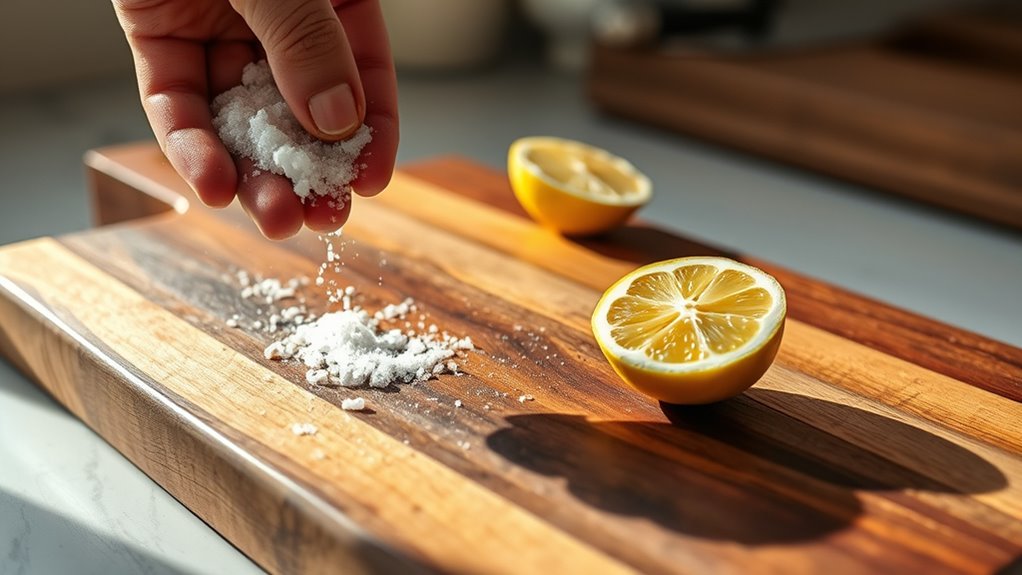
Avoid soaking your board or using harsh detergents, as these can damage the wood. For deeper cleaning, sprinkle coarse salt or baking soda on the surface, then scrub gently with a lemon half to deodorize and disinfect naturally. Rinse thoroughly with warm water afterward.
Always clean your cutting board right after use to reduce the risk of bacteria growth and keep your board looking and smelling fresh. Regular cleaning protects both your health and the board’s lifespan.
How to Dry Your Wood Cutting Board the Right Way

After cleaning your wood cutting board, make sure you dry it properly to keep it in great shape. Let it air dry standing upright to allow moisture to escape evenly.
Avoid leaving it in a damp area or stacking it flat, as excess moisture can cause warping or cracking.
Air Drying Techniques
When you finish washing your wood cutting board, you’ll want to let it air dry thoroughly to prevent warping and bacteria growth. Proper air drying keeps your board in top shape and extends its life. Here’s how to do it right:
- Stand the board upright on its edge to allow airflow on all sides.
- Place it in a well-ventilated area, away from direct sunlight or heat sources.
- Use a drying rack or dish rack designed for boards to keep it stable.
- Avoid stacking other items on or near the board while it dries to ensure it dries evenly.
Following these steps helps your board dry quickly and safely, maintaining its durability and hygiene.
Avoiding Excess Moisture
Proper air drying sets the stage for preventing excess moisture from lingering in your wood cutting board. After washing, stand your board upright or place it on a rack to allow airflow on all sides. Avoid stacking or laying it flat while wet, as trapped moisture can lead to warping or mold growth.
Use a clean towel to pat off excess water, but never soak or leave it submerged.
Here’s a quick guide to drying your board right:
| Drying Step | Why It Matters |
|---|---|
| Stand upright | Ensures even airflow |
| Pat dry | Removes surface moisture |
| Avoid soaking | Prevents wood swelling |
| Air dry fully | Stops mold & warping |
Follow these tips to keep your cutting board durable and hygienic.
How to Remove Stains and Odors From Wood Cutting Boards
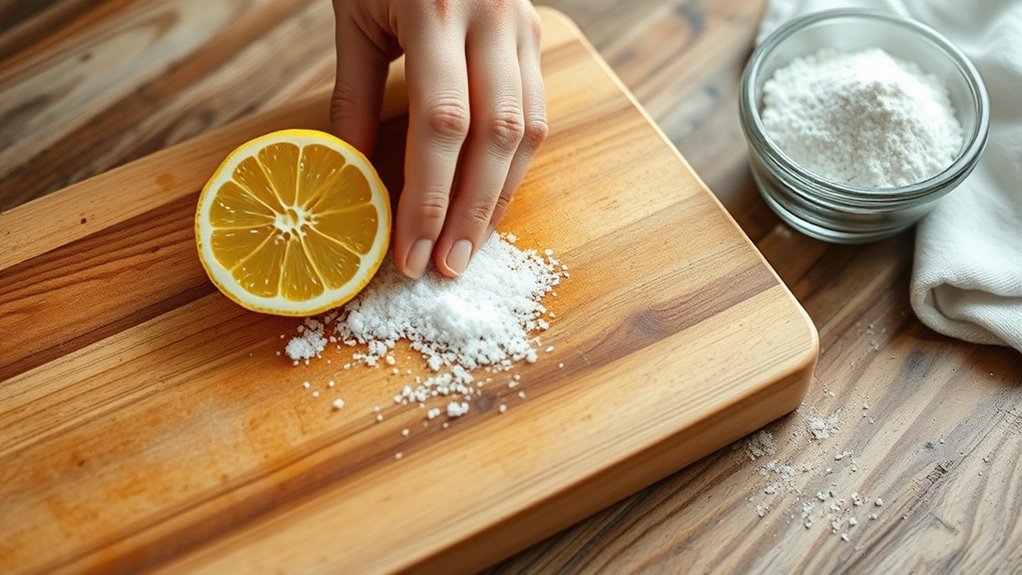
Although wood cutting boards are durable, they can absorb stains and odors from food, which might affect your cooking experience. To keep your board fresh and clean, try these steps:
Wood cutting boards are sturdy but can hold onto stains and smells; regular cleaning keeps them fresh and pleasant.
- Sprinkle coarse salt over the stained or smelly areas.
- Cut a lemon in half and rub it firmly on the salt-covered spots.
- Let the mixture sit for 5 minutes to lift stains and neutralize odors.
- Rinse the board with warm water and dry it thoroughly with a clean towel.
For tougher stains, repeat the process or use a baking soda paste. Avoid harsh chemicals, as they can damage the wood.
Regularly treating your cutting board this way keeps it looking and smelling great, making your food prep safer and more enjoyable.
When and How to Oil Your Wood Cutting Board
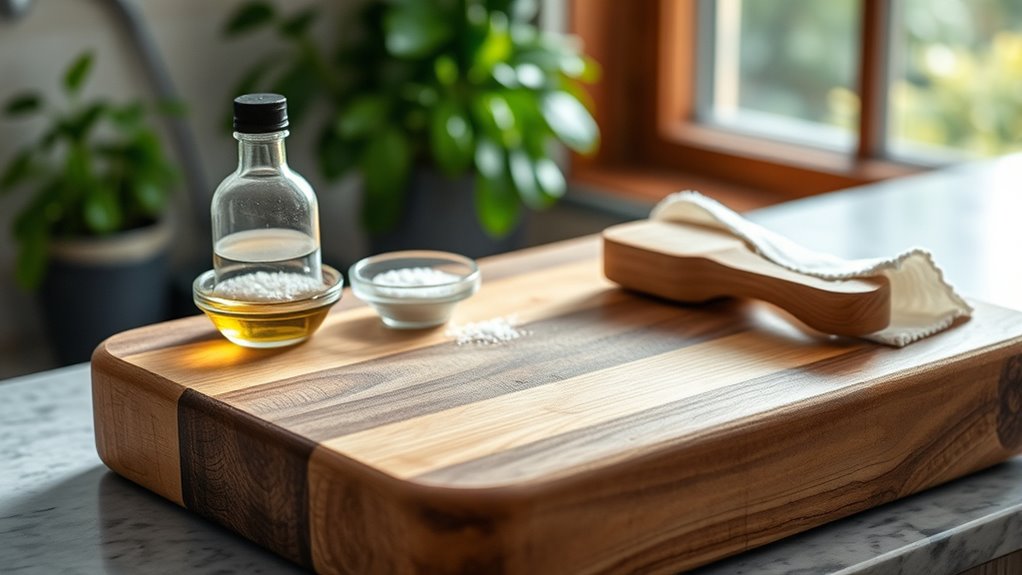
You should oil your wood cutting board when it starts to look dry or dull to keep it in good shape. Choosing the right oil, like food-safe mineral oil, is key to protecting the wood without harmful effects.
Apply the oil evenly and let it soak in to restore moisture and prevent cracking.
Best Timing To Oil
When should you oil your wood cutting board to keep it in top shape? Timing matters to prevent cracking and warping. Here’s when to oil:
- After initial purchase – Give your new board a full oiling before first use.
- When the board looks dry – If it feels rough or lighter in color, it’s time.
- After thorough cleaning – Once dry, oil seals and protects the wood.
- Regular schedule – Oil it once a month if you use it frequently.
Avoid oiling a wet or dirty board; always ensure it’s clean and dry first.
Choosing The Right Oil
Knowing the right time to oil your wood cutting board sets the stage for choosing the best oil to use. You want an oil that’s food-safe, odorless, and won’t go rancid. Mineral oil is a top choice because it’s non-toxic, tasteless, and easy to find.
Avoid vegetable oils like olive or canola, as they can spoil and leave your board sticky. Some people prefer specialized cutting board oils, which often combine mineral oil with beeswax to add extra protection. If you want a natural option, pure fractionated coconut oil works since it resists rancidity.
Whatever you pick, make sure it’s labeled food-grade. Using the right oil keeps your board hydrated, protects the wood, and extends its life without compromising food safety.
Proper Application Techniques
Although oiling your wood cutting board might seem straightforward, applying it correctly guarantees maximum protection and longevity. To get the best results, follow these simple steps:
- Clean and dry your board thoroughly before oiling to prevent trapping moisture.
- Apply oil generously using a clean, soft cloth or paper towel, covering every surface evenly.
- Let it soak for at least a few hours or overnight to allow deep absorption.
- Wipe off excess oil with a dry cloth to avoid sticky residue and ensure a smooth finish.
Repeat this process monthly or whenever the board looks dry. Proper application keeps your board hydrated, prevents cracking, and maintains a safe, food-friendly surface.
How to Prevent Cracks and Warping in Wood Cutting Boards
Because wood naturally expands and contracts with changes in moisture, you’ll need to take specific steps to keep your cutting board from cracking or warping. First, avoid soaking your board in water; instead, wash it quickly with mild soap and warm water. After cleaning, dry it thoroughly with a towel and let it air dry standing upright to promote even drying.
Regularly oil your board with food-safe mineral oil to maintain moisture balance in the wood. Don’t expose your board to extreme temperatures or direct sunlight, as this can cause uneven expansion. Finally, use both sides of the board to distribute wear evenly.
Following these tips will help you maintain a flat, crack-free cutting board for years to come.
How to Store Your Wood Cutting Board Properly
When you’re not using your wood cutting board, proper storage is key to preserving its shape and lifespan. To keep it in great condition, follow these tips:
- Store your board upright or on its edge to allow air circulation on all sides and prevent moisture buildup.
- Avoid stacking heavy items on top, which can cause warping or dents.
- Keep the board in a cool, dry place away from direct sunlight or heat sources to prevent drying and cracking.
- Use a breathable cloth or paper towel if you cover it, avoiding plastic wrap that traps moisture and promotes mold.
Daily Habits to Keep Your Wood Cutting Board in Top Shape
Proper storage sets the foundation for your wood cutting board’s longevity, but daily care keeps it performing at its best. After each use, wash your board with warm, soapy water—never soak it or put it in the dishwasher, as moisture can warp the wood. Dry it thoroughly with a clean towel and stand it upright to air dry completely.
Avoid cutting raw meat directly on the board to reduce contamination risks. Regularly oil your board with food-grade mineral oil or a specialized conditioner to prevent drying and cracking; doing this once a week or when the board looks dry works well. Finally, use a gentle scrub with coarse salt and lemon to remove odors and stains occasionally.
These daily habits will keep your wood cutting board durable and hygienic.
Frequently Asked Questions
Can Wood Cutting Boards Be Used for Raw Meat Safely?
You can use wood cutting boards for raw meat safely if you clean them thoroughly right after use. Avoid cross-contamination by using separate boards for meat and other foods, then dry them completely to prevent bacteria growth.
Are Wooden Cutting Boards Better Than Plastic for Knife Maintenance?
Yes, wooden cutting boards are generally better for your knife’s edge because they’re softer and absorb impact, reducing dulling. You’ll find your knives stay sharper longer compared to using harder plastic boards.
The softer surface of wood helps maintain the blade’s integrity over time. Plastic boards tend to be firmer and can cause more wear on the knife edge. This makes wooden boards a preferred choice for knife maintenance.
How Often Should I Replace My Wood Cutting Board?
You should replace your wood cutting board when deep grooves or cracks appear, like a worn-out pair of shoes losing support.
This usually happens every 3-5 years, depending on use and how well you maintain it.
Can Wood Cutting Boards Be Sanitized in a Dishwasher?
No, you shouldn’t put wood cutting boards in the dishwasher. The heat and water can warp and crack the wood.
Instead, hand wash them with mild soap and dry immediately to keep them in great shape.
What Types of Wood Are Best for Cutting Boards?
You’ll want hardwoods like maple, walnut, or cherry for cutting boards because they’re dense and durable. These woods resist knife marks and bacteria better, so your board will last longer and stay safer for food prep.
Conclusion
By following these tips, your wood cutting board will stay as strong as a fortress and as fresh as a mountain breeze. Imagine slicing through your favorite ingredients on a board that’s smooth, odor-free, and crack-resistant—like a trusty sidekick in your kitchen battles.
Keep up with cleaning, drying, oiling, and storage, and your board will serve you faithfully for years. This consistent care is essential for maintaining the durability and hygiene of your wood cutting board.
With proper maintenance, your wood cutting board will enhance your cooking experience and remain a reliable kitchen tool. Prioritize these wood cutting board care tips to enjoy a long-lasting and safe food preparation surface.