
Do You Need Special Cookware for Induction Cooktops?
Yes, you need special cookware for induction cooktops because these appliances require magnetic materials like cast iron or certain stainless steels to generate heat.
Induction cooktops work by creating a magnetic field that heats the cookware directly, making the type of cookware crucial for performance. If your pots and pans aren’t magnetic, they won’t work properly or heat evenly.
You can test this easily with a magnet to see if your cookware is compatible.
Using the right cookware ensures quick, efficient cooking and helps protect your investment.
Keep going to discover how to choose, test, and care for induction-compatible cookware for the best results.
Key Takeaways
- Induction cooktops require cookware made of magnetic materials like cast iron or specific stainless steels for proper heating.
- Non-magnetic materials such as aluminum, copper, or glass won’t work unless they have a magnetic base layer.
- A magnet test can quickly determine if cookware is compatible by checking if it sticks firmly to the base.
- Cookware must have a flat, magnetic base to ensure efficient heat transfer and optimal induction performance.
- Using incompatible cookware leads to poor heating, wasted energy, and potential frustration with induction cooktop use.
Do You Need Special Cookware for Induction?
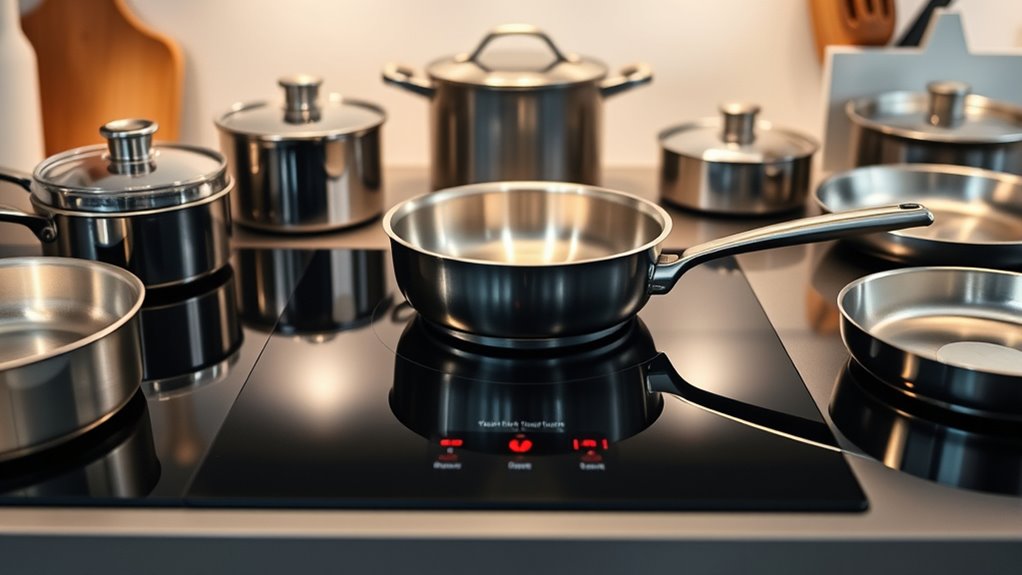
Although induction cooktops offer fast and efficient heating, you do need special cookware to use them effectively. Induction requires pots and pans made with magnetic materials like cast iron or certain types of stainless steel. If your cookware isn’t magnetic, the cooktop won’t detect it, and it won’t heat up.
You can easily test your existing pans by placing a magnet on the bottom—if it sticks firmly, your cookware will work. Non-magnetic materials like aluminum, copper, or glass won’t function directly on induction unless they have a magnetic layer on the base. So, to avoid frustration and wasted money, check your pots and pans before switching.
Investing in compatible cookware guarantees you get the speed and precision induction cooktops promise.
How Induction Cooktops Heat Your Pots and Pans
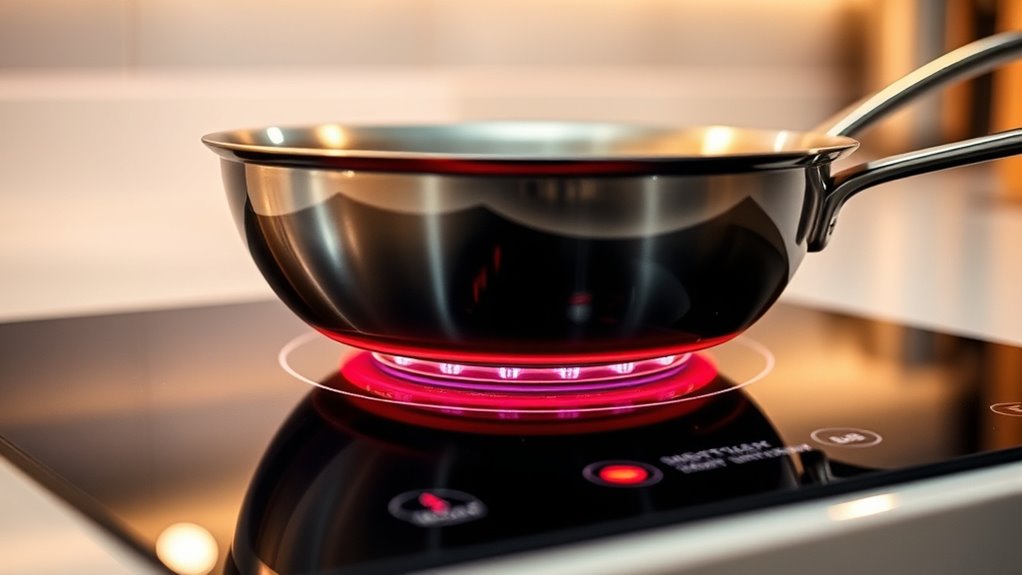
When you place a compatible pot or pan on an induction cooktop, the cooktop creates an electromagnetic field that directly heats the cookware instead of the burner itself. This process is efficient and fast because the heat is generated within the pot or pan, not transferred from an external source.
Here’s how it works:
1. The cooktop sends an alternating electric current through a coil beneath its surface, producing a magnetic field. 2. This magnetic field induces electric currents, called eddy currents, inside the metal of your cookware. 3. The resistance of the cookware to these currents generates heat, cooking your food quickly and evenly.
Because the heat forms directly in the cookware, the cooktop surface stays relatively cool, reducing energy waste and making cleanup easier.
What Makes Cookware Work on Induction Cooktops?
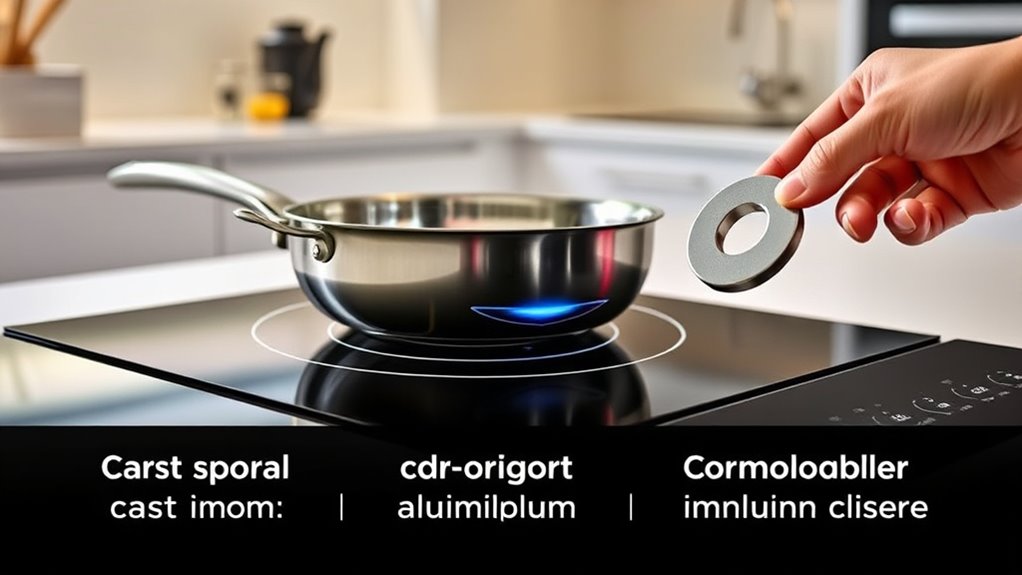
You need cookware with a magnetic base to make induction cooktops work properly. If your pot or pan isn’t compatible, it simply won’t heat up.
Let’s look at why the material and base design matter for induction cooking.
Magnetic Material Importance
Because induction cooktops use electromagnetic fields to generate heat, cookware must have magnetic properties to work properly. If your pots and pans aren’t magnetic, the cooktop won’t detect them, and no heat will be produced.
Here’s why magnetic material matters:
- Magnetic responsiveness: Materials like cast iron and some stainless steels have magnetic properties that allow the induction cooktop to create heat directly in the cookware.
- Efficient energy transfer: Magnetic cookware heats faster and uses energy more efficiently because the heat is generated within the pot or pan itself.
- Safety and control: Only magnetic cookware activates the cooktop, preventing accidental heating and ensuring precise temperature control.
Without magnetic material, your cookware simply won’t function with an induction cooktop.
Cookware Base Compatibility
Magnetic materials are only part of the equation for induction cookware compatibility; the base of your pots and pans plays a key role too. For induction to work efficiently, the base needs to be flat and made from or contain ferromagnetic materials like cast iron or certain stainless steels. A smooth, flat base ensures full contact with the cooktop surface, allowing the magnetic field to generate heat evenly.
If the base is warped, uneven, or made from non-magnetic materials like aluminum or copper without a magnetic layer, your cookware won’t heat properly on induction. So, when choosing cookware, look for a flat, magnetic base designed specifically for induction. This guarantees maximum heat transfer, better cooking performance, and prevents damage to your cooktop.
How to Test If Your Cookware Works on Induction
Several simple methods can help determine if your cookware is compatible with induction cooktops. First, try the magnet test: place a magnet on the bottom of your pot or pan. If it sticks firmly, your cookware should work on induction.
Second, check the manufacturer’s label or packaging for an induction-compatible symbol, usually a coil or the word “induction.” Third, if you have an induction cooktop handy, place the cookware on it and turn it on at a low setting. If the cooktop heats the pan, you’re good to go.
These quick tests save you from guesswork and guarantee your cookware performs efficiently on induction surfaces without needing any special tools.
Materials That Work (and Don’t) With Induction Cooktops
When choosing cookware for induction cooktops, it’s important to know which materials will heat efficiently and which won’t. Cookware made from magnetic materials like cast iron and most stainless steel work best because they interact with the cooktop’s magnetic field to generate heat.
On the other hand, cookware made from non-magnetic materials such as aluminum, copper, glass, and ceramic won’t heat on induction unless they have a magnetic base layer. Some stainless steel pans might not work if they’re made from non-magnetic grades, so always check.
If your cookware doesn’t respond to a magnet, it likely won’t work on induction. Knowing these materials helps you avoid frustration and guarantees you get the most from your induction cooktop.
When to Buy Special Cookware for Induction
You’ll need special cookware if your current pots and pans aren’t compatible with induction heat. It’s smart to check for magnetic properties before cooking to avoid frustration.
Consider upgrading when your existing cookware doesn’t heat evenly or work efficiently on your induction cooktop.
Cookware Compatibility Essentials
Although many pots and pans work on induction cooktops, you might need special cookware if yours lack magnetic properties. Induction relies on magnetic fields, so your cookware must be ferrous. To check compatibility, keep these essentials in mind:
- Material: Cast iron, magnetic stainless steel, and some enameled steel work well. Aluminum, copper, and glass usually don’t unless they have a magnetic base.
- Flat Bottom: Your cookware should have a flat, smooth bottom to ensure full contact with the cooktop, which improves heating efficiency.
- Size Compatibility: The cookware’s diameter should match the induction zone. Too small or too large pans reduce performance or won’t activate the burner.
When To Upgrade
Not all cookware that fits on your induction cooktop will perform well over time. You’ll want to upgrade when your current pots and pans don’t heat evenly, make strange noises, or show warping.
Also, if your cookware isn’t magnetic enough, your cooktop won’t recognize it properly.
Here’s a quick guide to when you should upgrade:
| Signs to Upgrade | Issue Identified | Why Upgrade? |
|---|---|---|
| Uneven Heating | Hot spots or cold spots | Ensures consistent cooking |
| Warped Base | Wobbly or unstable | Improves contact with cooktop |
| No Magnetic Response | Cooktop won’t activate | Necessary for induction use |
| Strange Sounds | Buzzing or humming | Indicates poor cookware fit |
Upgrade promptly to get the best performance and extend your cooktop’s life.
Budget Tips for Choosing Induction Cookware
When shopping for induction cookware on a budget, focus on essential features like magnetic compatibility and durable materials rather than brand names. You can save money by following these tips:
- Test for magnetic properties with a simple magnet; if it sticks well, the cookware works on induction.
- Choose stainless steel or cast iron, as they’re both affordable and efficient for heat transfer.
- Look for sets that balance quality and price, avoiding overly cheap options that may warp or degrade quickly.
How to Care for Your Induction Cookware for Long Life
Choosing the right induction cookware sets you up for great cooking, but how you care for them determines how long they last. Always hand wash your pots and pans with warm, soapy water to prevent damage from harsh dishwasher detergents. Avoid using abrasive scrubbers that can scratch the surface; a soft sponge works best.
Dry your cookware thoroughly to prevent rust, especially if it has any magnetic stainless steel parts. Use wooden or silicone utensils to protect the cooking surface from scratches. Avoid sudden temperature changes—let your cookware cool before washing to prevent warping.
Store your pots and pans carefully, stacking with protective layers if needed. By following these simple steps, you’ll keep your induction cookware performing well and looking great for years to come.
Frequently Asked Questions
Can Induction Cooktops Be Used Outdoors?
Yes, you can use induction cooktops outdoors, but you’ll need a power source and protection from weather.
Keep them dry and avoid extreme temperatures to guarantee they work safely and efficiently in your outdoor cooking setup.
Do Induction Cooktops Consume More Electricity?
Electricity use on induction cooktops doesn’t skyrocket; in fact, they’re more efficient than gas or electric coils. You’ll save energy since they heat pots directly, cutting down wasted heat and cooking time.
Are Induction Cooktops Safe for Children?
Yes, induction cooktops are safe for children because they only heat the cookware, not the cooktop surface. You’ll appreciate the cool surface and quick shut-off features, which reduce burn risks and accidents in your kitchen.
The cooktop remains cool to the touch, minimizing the chance of burns. Additionally, many models have child lock settings for extra safety. This makes them a great choice for families with young children.
Can Induction Cooktops Interfere With Medical Devices?
Yes, induction cooktops can interfere with some medical devices like pacemakers. You should consult your doctor before use and keep a safe distance from the cooktop to minimize any potential electromagnetic interference and guarantee your safety.
How Noisy Are Induction Cooktops During Cooking?
Induction cooktops hum like a gentle breeze, so you won’t find them noisy. You might hear a soft buzz or clicking, but it’s nothing distracting—just the cooktop doing its quiet, efficient job while you cook.
Conclusion
You might think you need special cookware for induction, but the truth could surprise you. Some of your current pots might already work perfectly—if only you know how to test them. Understanding what materials heat up on induction can save you money and hassle.
Before rushing to buy new gear, discover the simple tricks to make your existing cookware compatible. Ready to realize the full potential of your induction cooktop? The secret’s closer than you think.
By knowing which cookware works best with induction cooktops, you can avoid unnecessary purchases and enjoy efficient cooking. Embrace these tips to enhance your induction cooking experience with the right cookware.