Are Poly Cutting Boards Safe to Use?
You can confidently use poly cutting boards because they’re made from durable, non-porous high-density polyethylene, a material known for its safety in food preparation. These boards resist warping and bacteria buildup, making them a hygienic choice for your kitchen.
Their easy-to-clean nature, often being dishwasher-safe, adds to their convenience and reliability.
Poly cutting boards are also gentle on your knives, helping keep blades sharp longer and reducing wear. Just make sure to sanitize them regularly to maintain their safety.
Replace your poly board when deep grooves or cracks appear to avoid bacteria hiding spots that can compromise food safety.
If you want to know how to maintain and choose the best poly board for your kitchen, keep exploring these key points. Proper care ensures you get the most out of your cutting board while keeping your food prep safe and efficient.
Key Takeaways
- Poly cutting boards are made from non-porous, durable HDPE, which resists warping, cracking, and bacterial absorption, ensuring safe use. Their smooth surface limits bacteria hiding spots, and they are easy to clean with hot soapy water, bleach sanitizer, or dishwasher-safe methods.
- Compared to wood or bamboo, poly boards are easier to sanitize and gentler on knives, reducing blade dulling and contamination risks. Deep grooves or warping can harbor bacteria, so regular inspection and timely replacement are essential for maintaining safety.
- Poly boards are ideal for raw meats and acidic foods due to stain and odor resistance, enhancing hygiene during food preparation.
What Are Poly Cutting Boards Made Of
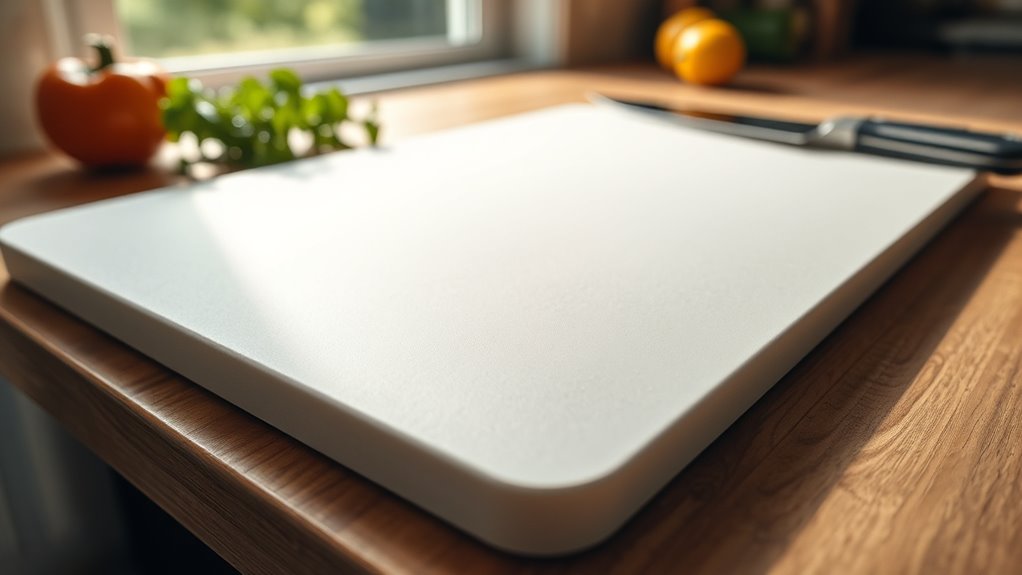
Poly cutting boards are made from high-density polyethylene (HDPE), a durable and non-porous plastic. When you use a poly board, you benefit from its toughness and resistance to deep cuts, which helps it last longer than many other materials. The non-porous nature means it doesn’t absorb liquids or odors, making it easier for you to clean.
Because it’s lightweight, you can handle and store it effortlessly in your kitchen. HDPE resists warping and cracking, so your cutting surface stays reliable even after frequent washing or heavy use. Plus, poly boards are often dishwasher-safe, adding convenience for your cleaning routine.
You get a practical board that holds up well under everyday kitchen tasks without compromising on hygiene or durability.
How Safe Are Poly Cutting Boards Against Bacteria?
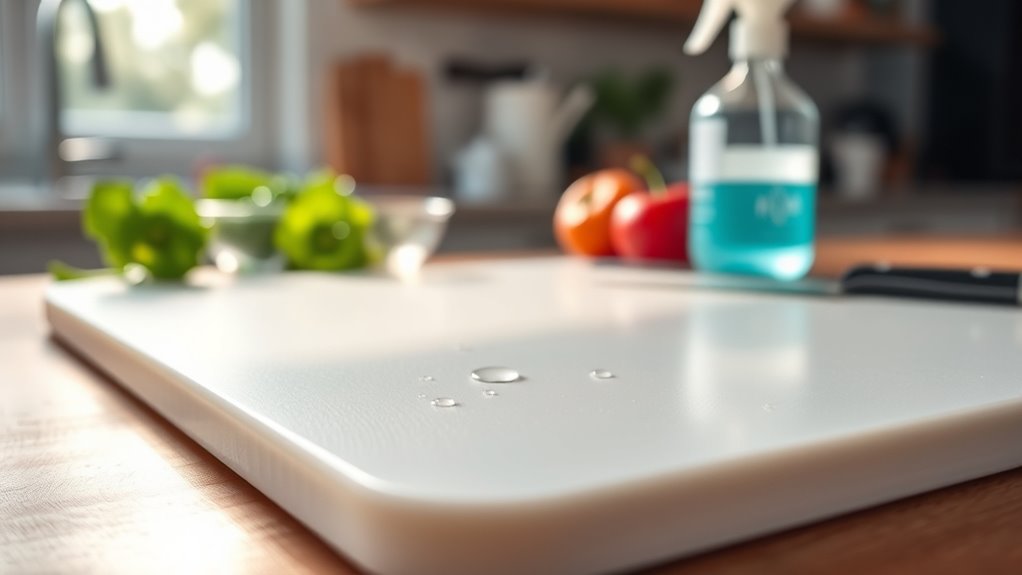
You’ll find poly cutting boards have features that resist bacteria better than some other materials. To keep them safe, you’ll need to follow proper cleaning and maintenance routines.
Let’s compare how they hold up against bacteria compared to wood and plastic boards.
Bacterial Resistance Features
Although bacteria can easily cling to many kitchen surfaces, cutting boards made from polyethylene offer notable resistance to bacterial growth. You’ll find that the dense, non-porous structure of poly boards prevents bacteria from embedding deep, unlike wood. This means fewer bacteria survive on the surface, making these boards safer for food prep.
The smooth surface also reduces the chances of bacteria hiding in scratches.
Here’s a quick look at bacterial resistance features of poly cutting boards:
| Feature | Benefit |
|---|---|
| Non-porous surface | Limits bacterial absorption |
| Smooth texture | Minimizes bacteria hiding spots |
| Durable material | Reduces deep scratches |
| Resistant to moisture | Prevents bacterial breeding |
This combination helps keep your kitchen safer during food prep.
Cleaning And Maintenance Tips
Keeping your cutting boards clean plays a big role in maintaining their bacterial resistance. You should wash your poly cutting board with hot, soapy water immediately after use to remove food residue and prevent bacteria buildup. Avoid soaking it for long periods, as this can damage the board.
For a deeper clean, sanitize your board regularly using a solution of one tablespoon of bleach mixed with one gallon of water. Rinse thoroughly afterward to remove any chemical residue. You can also run poly cutting boards through the dishwasher if they’re dishwasher-safe, as the high heat helps kill bacteria.
Always dry your board completely before storing it to prevent moisture-related bacterial growth. By sticking to these simple steps, you’ll keep your poly cutting board safe and hygienic for all your food prep.
Comparison With Other Materials
When comparing cutting board materials, poly boards stand out for their bacterial resistance and ease of cleaning. Unlike wood, polyboards don’t absorb moisture, which means bacteria have fewer places to hide. Compared to glass, polyboards are less likely to dull your knives and develop deep grooves where germs can thrive.
Bamboo has natural antibacterial properties but can still crack and harbor bacteria over time. Poly is also dishwasher-safe, making sanitation easier than with many other materials.
Here’s a quick comparison:
- Poly: Non-porous, dishwasher-safe, resists bacteria well
- Wood: Absorbs moisture but has natural antibacterial oils
- Glass: Non-porous but prone to knife damage and grooves
- Bamboo: Antibacterial but can crack and absorb moisture
- Composite: Durable but sometimes harder to clean thoroughly
You’ll find poly cutting boards offer a practical balance of safety and convenience.
Can Poly Cutting Boards Cause Knife Damage?
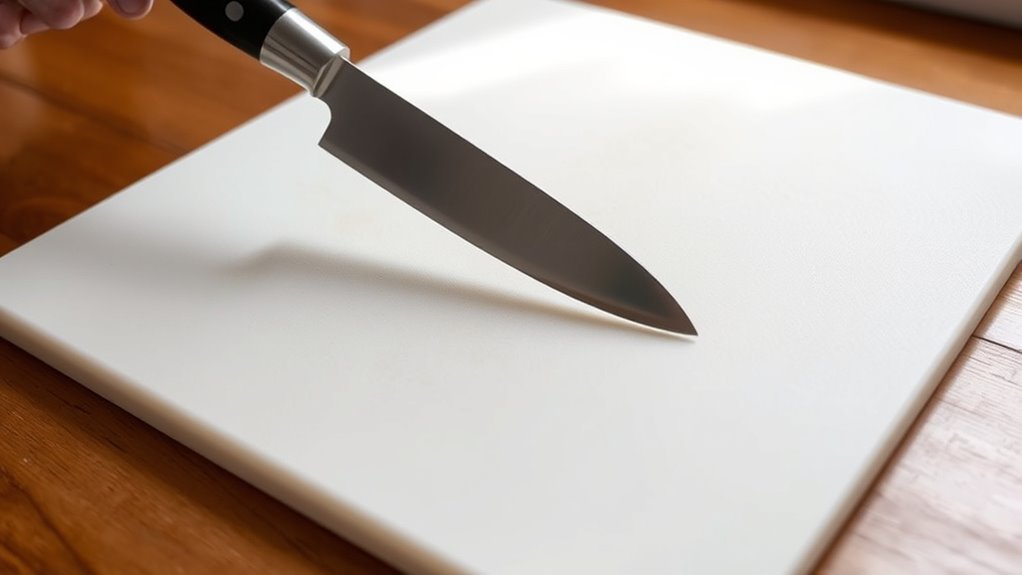
You might wonder if poly cutting boards wear down your knives faster. The board’s surface hardness plays a big role in how much stress your blade takes.
Plus, how you maintain both the board and your knives can impact their longevity.
Knife Edge Durability
Although poly cutting boards are known for their durability and ease of cleaning, many people wonder if they might dull or damage their knives. The good news is that poly boards are generally gentle on knife edges compared to harder surfaces like glass or stone. However, the way you use and maintain your board plays a big role in preserving your knife’s sharpness.
Keep these tips in mind to protect your knife edges on poly cutting boards:
- Avoid cutting with excessive force or twisting motions
- Use a sharp knife to reduce scraping and dulling
- Regularly clean the board to prevent buildup that can dull blades
- Replace your poly board if deep grooves or cuts appear
- Store knives properly to maintain their edge after use
With care, poly boards won’t harm your knives.
Surface Hardness Impact
Since poly cutting boards offer a balance between firmness and softness, they generally won’t cause significant knife damage. When you use a poly board, its surface hardness is just right to protect your blade edge without dulling it quickly. Poly boards are firm enough to resist deep cuts and grooves, which helps maintain a consistent cutting surface.
At the same time, they’re soft enough to cushion your knife’s edge, preventing premature wear. Unlike glass or ceramic boards that can chip or blunt your knives, poly boards provide a safer cutting experience. So, when you choose poly, you’re helping extend your knife’s life by minimizing edge damage caused by surface hardness.
This makes poly a practical option for everyday kitchen use.
Maintenance Effects On Blades
While poly cutting boards generally protect your knives, improper maintenance can still cause blade damage. If you don’t clean or store your poly board properly, it can develop deep grooves or warping, which may dull or nick your blades. To keep your knives sharp and your board safe, you need to pay attention to how you care for your poly cutting board.
Here’s what you should do:
- Regularly clean the board with warm, soapy water.
- Avoid using harsh abrasives that can scratch the surface.
- Sanitize with diluted bleach or vinegar to prevent bacteria buildup.
- Replace the board once it develops deep cuts or warping.
- Store the board flat and dry to maintain its shape.
Taking these steps helps protect both your knives and your board.
Why Durability Matters for Poly Cutting Boards
When you choose a poly cutting board, durability plays a crucial role in ensuring it withstands daily use without warping or cracking. You want a board that holds up well against repeated chopping, slicing, and dicing since a fragile board can quickly become unsafe or unusable. Durable poly boards resist deep grooves where bacteria might hide, making them safer for food prep over time.
Plus, a sturdy board won’t easily warp when exposed to moisture or heat, so it stays flat and stable during use—helping you work efficiently and safely. Investing in a durable poly cutting board means you get a reliable surface that lasts, protects your knives, and maintains a safe environment for preparing your meals.
Cleaning and Sanitizing Poly Cutting Boards
You need to clean your poly cutting boards thoroughly after each use to prevent bacteria buildup. Using the right sanitizing methods guarantees your boards stay safe for food prep.
Let’s explore simple steps to keep your cutting boards both clean and germ-free.
Proper Cleaning Techniques
Because poly cutting boards come into constant contact with raw food, proper cleaning techniques are essential to prevent cross-contamination and foodborne illnesses. You should clean your board immediately after use to remove any food particles and bacteria. Use hot, soapy water and a scrub brush or sponge to thoroughly clean the surface.
Rinse it well to eliminate soap residue, then dry it completely to avoid moisture buildup, which promotes bacteria growth. Avoid soaking your poly cutting board for long periods, as this can damage the material. Here are key steps to follow:
- Wash with hot, soapy water right after use
- Scrub all grooves and cuts thoroughly
- Rinse with clean water to remove soap
- Dry with a clean towel or air dry upright
- Avoid prolonged soaking to protect the board’s integrity
Effective Sanitizing Methods
Although proper cleaning removes most debris and bacteria, effectively sanitizing your poly cutting boards guarantees harmful pathogens are destroyed. You can sanitize by soaking the board in a solution of one tablespoon of unscented liquid chlorine bleach per gallon of water for a few minutes. After soaking, rinse thoroughly with clean water and air dry.
Alternatively, you can use a commercial kitchen sanitizer following the manufacturer’s instructions. Some poly boards are dishwasher safe; running them through a hot cycle also sanitizes effectively. Remember, regular sanitizing prevents cross-contamination and keeps your kitchen safe.
Avoid using harsh chemicals that can degrade the board or leave residues. By following these simple sanitizing methods, you assure your poly cutting boards stay hygienic and safe for everyday use.
Are Poly Cutting Boards Dishwasher Safe?
Poly cutting boards can usually go in the dishwasher without any issues, making cleanup quick and easy. You’ll appreciate how the high heat and strong water jets sanitize the surface thoroughly, eliminating bacteria and food particles. Just be sure to place the board securely to avoid warping or damage over time.
Keep in mind that frequent dishwasher cycles may cause some boards to show signs of wear sooner than if you hand wash them.
Here are some tips to keep your poly cutting board dishwasher safe:
- Use the top rack to minimize direct heat exposure
- Avoid overcrowding to ensure proper water flow
- Check manufacturer guidelines for heat tolerance
- Remove the board promptly after the cycle ends
- Inspect for cracks or warping regularly to maintain safety
How Do Poly Cutting Boards Compare to Wood and Bamboo?
When choosing between cutting boards, you’ll find that poly, wood, and bamboo each offer distinct advantages and drawbacks. Poly boards are non-porous and easier to sanitize, making them a popular choice in busy kitchens. Wood boards, especially hardwoods like maple, naturally resist bacteria due to their tight grain and self-healing properties but require more maintenance to avoid cracking or warping.
Bamboo boards are eco-friendly and harder than many woods, offering durability, though their hardness can dull knives faster. Unlike wood and bamboo, poly boards won’t absorb moisture or odors, but they can scar more easily from knife marks. Ultimately, your choice depends on how you prioritize hygiene, durability, maintenance, and environmental impact when selecting a cutting board.
Pros of Using Poly Cutting Boards
If you want a cutting board that’s easy to clean and maintain, you’ll appreciate the advantages poly boards offer. They resist moisture and warping, so you won’t have to worry about cracks or splits harboring bacteria. Poly boards are dishwasher-safe, making sanitation quick and effortless.
Their non-porous surface prevents absorption of odors and stains, keeping your kitchen fresh. Plus, they’re lightweight and easy to move around, making food prep more convenient.
Here are some pros of using poly cutting boards:
- Durable and long-lasting under heavy use
- Safe for dishwasher cleaning
- Non-porous surface resists bacteria and odors
- Resistant to moisture and warping
- Lightweight and easy to handle
These benefits make poly boards a practical choice for your kitchen.
Cons of Poly Cutting Boards
Although poly cutting boards offer many benefits, they come with some drawbacks you should consider. For starters, they can develop deep grooves from knife cuts, which may harbor bacteria if not cleaned properly. Unlike wooden boards, poly boards don’t have natural self-healing properties, meaning these grooves stay visible and can affect hygiene.
Additionally, some lower-quality poly boards may warp or crack over time, especially when exposed to high heat or harsh washing conditions. You might also find that poly boards can be slippery, making it harder to keep them stable while cutting. To conclude, although they’re dishwasher-safe, frequent washing at high temperatures can degrade the material faster, forcing you to replace them sooner than you might want.
What Foods Are Best on Poly Cutting Boards?
Because poly cutting boards resist stains and odors better than wood, they’re ideal for handling raw meats, poultry, and seafood. You’ll find they don’t absorb juices, which helps prevent cross-contamination.
Poly cutting boards resist stains and odors, making them perfect for safely handling raw meats and seafood.
Plus, they’re easy to sanitize thoroughly after use. Besides raw protein, poly boards work well for foods that can stain or leave strong smells.
Here are some of the best foods to cut on a poly cutting board:
- Raw chicken, beef, pork, and other meats
- Fresh fish and shellfish
- Onions, garlic, and other pungent vegetables
- Tomatoes and berries that can stain
- Citrus fruits that release acidic juices
Using poly boards for these foods keeps your kitchen safer and cleaner.
When to Replace Your Poly Cutting Board
Using your poly cutting board for raw meats, pungent vegetables, and acidic fruits means it takes a lot of wear and tear over time. You should replace your board once deep grooves or cuts develop, as these crevices harbor bacteria and become difficult to clean effectively.
If you notice discoloration or persistent odors that don’t fade after washing, it’s a clear sign your board is past its prime. Also, if the surface starts to warp or crack, it compromises stability and safety, so it’s time for a new one.
Regularly inspect your board and trust your judgment—keeping it in good condition helps maintain food safety and hygiene in your kitchen. Don’t wait too long; replacing your poly cutting board guarantees a safer cooking environment.
Choosing the Right Poly Cutting Board
When selecting a poly cutting board, you want to take into account factors like thickness, size, and texture to suit your kitchen tasks. Choosing the right board guarantees durability, safety, and convenience. Consider your cutting habits and kitchen space before making a decision.
Here are key points to help you pick the perfect poly cutting board:
- Thickness: Thicker boards resist warping and last longer.
- Size: Pick a size that fits your prep area and food types.
- Texture: Smooth surfaces are easier to clean; textured ones prevent slipping.
- Color-coding: Use different colors for meats, veggies, and bread to avoid cross-contamination.
- Non-slip edges: Boards with grips or feet stay stable during use.
Choosing wisely keeps your kitchen safe and efficient.
Frequently Asked Questions
Can Poly Cutting Boards Be Recycled After Use?
Yes, you can recycle poly cutting boards, but it depends on your local recycling facility. Check if they accept dense plastics like polyethylene.
If not, consider repurposing the board to reduce waste before disposal.
Do Poly Cutting Boards Release Harmful Chemicals When Heated?
Poly cutting boards don’t release harmful chemicals when heated because they’re designed for cold food prep, not cooking.
Are Poly Cutting Boards Safe for People With Allergies?
Yes, poly cutting boards are generally safe if you have allergies. They don’t absorb food particles or allergens easily, so you can clean them thoroughly and avoid cross-contamination.
Just make sure to sanitize regularly to stay safe.
How Do Poly Cutting Boards Affect the Taste of Food?
Poly cutting boards won’t affect your food’s taste because they’re non-porous and resist absorbing flavors or odors. You can confidently prep anything without worrying about weird tastes transferring to your meals.
Can Poly Cutting Boards Be Customized With Engravings or Logos?
You can customize poly cutting boards with engravings or logos, which coincidentally makes them perfect for gifts or branding.
Since they’re durable and non-porous, your design stays sharp and won’t fade over time.
Conclusion
When you slice through your poly cutting board, you’re not just cutting food—you’re cutting down bacteria, knife damage, and worry. Just like a reliable shield, it stands tough against wear and germs.
But remember, even the strongest shields need replacing over time. So, keep it clean, use it wisely, and swap it out when it’s worn.
That way, your poly board stays as safe and sharp as your kitchen skills. Using poly cutting boards is safe when properly maintained, ensuring hygiene and durability in your kitchen.