How to Pan Fry Grouper
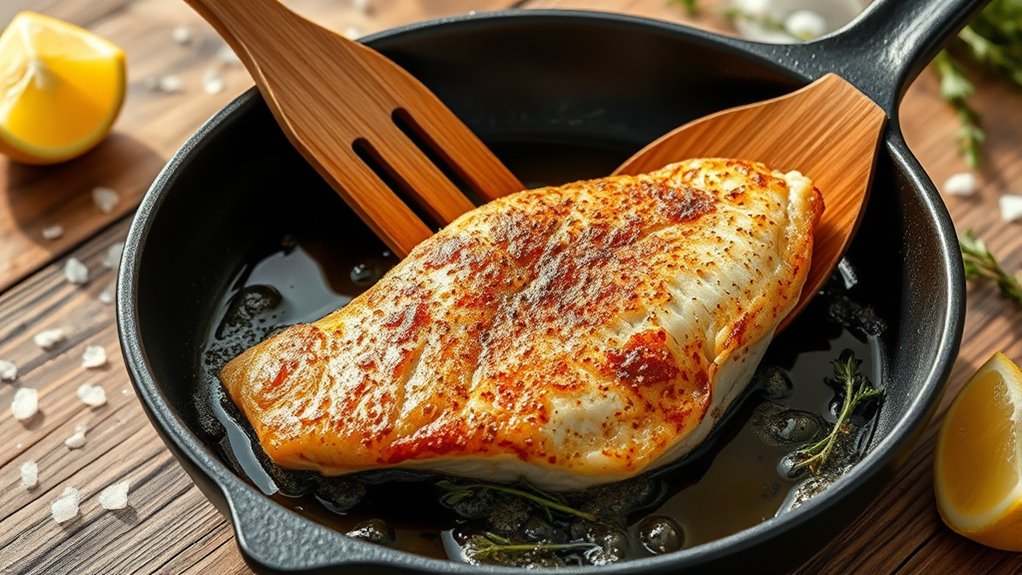
To pan fry grouper perfectly, start with fresh, firm fillets to ensure the best texture and flavor. Pat the fillets dry to remove excess moisture, which helps achieve a crispy crust.
Season simply with salt, pepper, and your favorite herbs to enhance the natural taste of the fish.
Heat a neutral oil like canola in the pan until shimmering. Place the fillets carefully without crowding to allow even cooking.
Cook undisturbed for 3-4 minutes per side until the fish turns golden and flakes easily.
Aim for an internal temperature of 145°F to ensure the grouper is safely cooked but still moist and flavorful.
This method delivers a deliciously crispy crust while keeping the inside tender.
Stick around to uncover tips for perfect crust and tasty sides.
Key Takeaways
- Choose fresh, firm grouper fillets, thawed and patted dry, seasoned with salt, pepper, and optional herbs or spices.
- Use a high smoke point oil like canola or avocado oil, heating until shimmering before adding the fish.
- Place fillets in a hot pan without overcrowding, cooking skin-side down first for 3-4 minutes until golden and crispy.
- Flip gently and cook the other side for 3-4 minutes until the flesh is opaque, flakes easily, and reaches 145°F.
- Serve immediately with light, fresh sides and a squeeze of lemon to enhance the mild, flaky flavor.
Picking the Best Grouper Fillets for Pan Frying

How do you choose the best grouper fillets for pan frying? First, look for fillets that are firm and moist, not slimy or dry. Fresh grouper should have a mild ocean scent—avoid any strong fishy odor.
Opt for fillets with a clean, white to off-white color; browning or dull spots mean it’s past its prime. Thickness matters too; thicker fillets cook evenly and stay juicy inside. If you’re buying frozen fillets, check for minimal ice crystals or freezer burn.
Also, consider the source—wild-caught grouper often has a better texture and flavor than farmed. By selecting fresh, firm, and properly stored fillets, you set yourself up for perfectly cooked, tender grouper that holds up well in the pan.
Seasoning Grouper to Enhance Its Natural Flavor
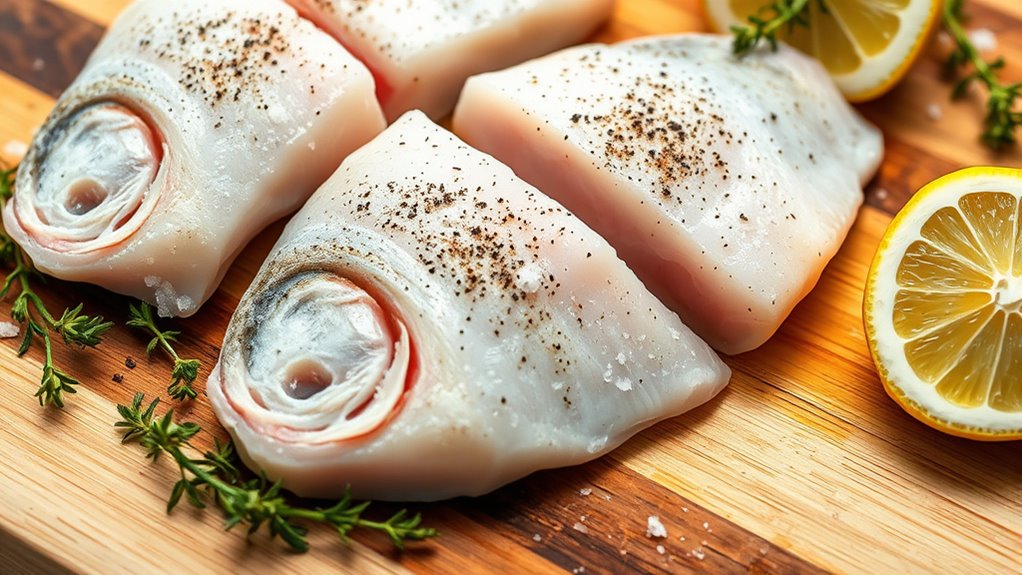
You’ll want to choose spices that complement grouper’s mild flavor without overpowering it. Balancing salt with fresh herbs can bring out the fish’s natural sweetness.
Let’s look at how to season your fillets perfectly before frying.
Choosing The Right Spices
Although grouper has a mild, slightly sweet flavor, choosing the right spices can elevate its natural taste without overpowering it. Start with simple, warm spices like paprika or smoked paprika, which add depth and a subtle smokiness. A pinch of cayenne or black pepper will give your fish a gentle kick without overwhelming its delicate flavor.
Ground cumin or coriander can introduce earthy, aromatic notes that complement grouper well. Avoid heavy or overly complex spice blends that might mask the fish’s natural sweetness. Instead, select a few spices that balance each other and enhance the fish’s texture and flavor.
Balancing Salt And Herbs
When seasoning grouper, striking the right balance between salt and herbs is key to enhancing its natural flavor without overpowering it. You want just enough salt to bring out the fish’s sweetness and a subtle touch of herbs to complement, not mask, the taste. Use fresh herbs sparingly and salt to taste, seasoning both sides evenly for a consistent flavor.
| Ingredient | Purpose | Recommended Amount |
|---|---|---|
| Salt | Enhances natural taste | 1/2 teaspoon per fillet |
| Thyme | Adds earthy notes | 1/4 teaspoon |
| Parsley | Provides freshness | 1/4 teaspoon |
| Lemon Zest | Brightens flavor | 1/4 teaspoon |
This balance ensures your grouper remains flavorful and fresh.
Selecting the Best Oil for Pan Frying Grouper
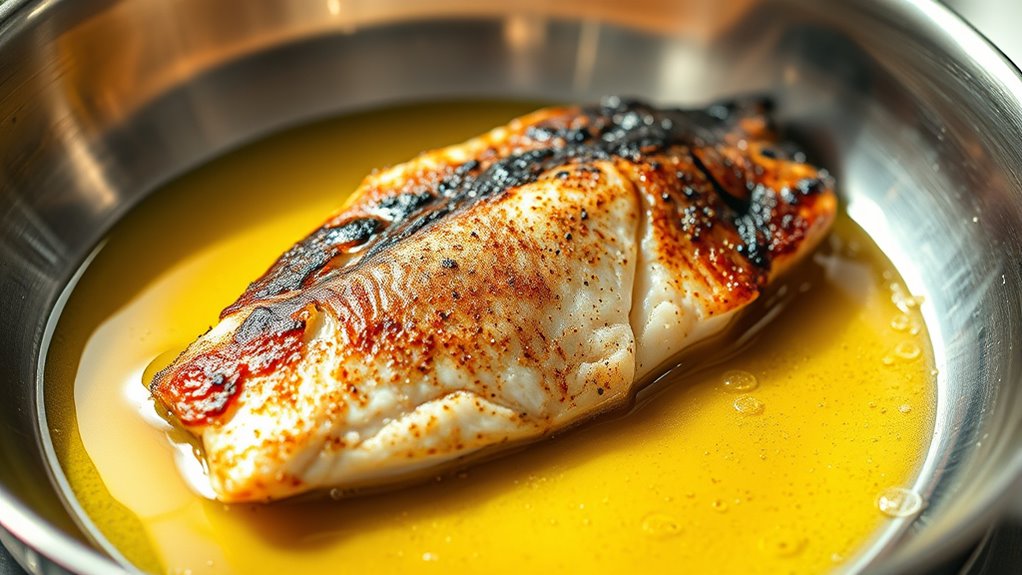
How do you choose the best oil for pan frying grouper to achieve a crispy, golden crust without overpowering its delicate flavor? Start by picking an oil with a high smoke point like canola, avocado, or grapeseed oil. These oils can handle the heat needed for frying without burning, which keeps the taste clean and prevents bitterness.
Avoid oils with strong flavors, such as extra virgin olive oil or sesame oil, as they can mask the natural sweetness of the grouper. Also, consider oils with neutral flavors to let the fish shine. Using the right oil ensures even cooking and a perfect crust.
Keep the oil at the right temperature—too hot and it’ll burn, too cool and the fish will absorb excess oil.
Preparing Grouper Fillets for Perfect Cooking
To get the best results, start by choosing fresh grouper fillets with firm flesh and a mild scent. Make sure to thaw frozen fillets slowly in the refrigerator to maintain texture and flavor.
Finally, season your fillets well to enhance their natural taste before cooking.
Selecting Fresh Grouper Fillets
Where should you look to find the freshest grouper fillets? Start at reputable fish markets or trusted grocery stores known for their seafood quality. Fresh grouper fillets should have a moist, translucent appearance without any discoloration or drying around the edges.
Avoid fillets with a strong fishy odor; fresh fish smells like the ocean—clean and mild. When selecting, press the flesh gently; it should spring back quickly, indicating freshness. Also, check the fillet’s texture—it should be firm, not mushy or slimy.
If possible, buy fillets that have been recently cut rather than pre-packaged ones, as they’re often fresher. Selecting quality fillets guarantees your pan-fried grouper will have the best flavor and texture, setting you up for a perfect cooking experience.
Proper Fillet Thawing Techniques
Although it might be tempting to thaw grouper fillets quickly, doing so improperly can compromise their texture and flavor. To maintain the fish’s quality, thaw your fillets slowly in the refrigerator for 8-12 hours. Place them on a plate or shallow dish to catch any drips.
If you need to thaw them faster, seal the fillets in a plastic bag and submerge them in cold water, changing the water every 30 minutes until thawed—this usually takes about 1-2 hours. Avoid using warm or hot water, as it can start cooking the fish unevenly. Never thaw grouper at room temperature since bacteria multiply quickly.
Proper thawing ensures your fillets stay firm and moist, setting you up for a perfectly pan-fried grouper.
Seasoning Tips For Flavor
Since grouper has a mild, slightly sweet flavor, seasoning it thoughtfully can elevate your dish without overpowering the fish. You want to enhance its natural taste with simple, fresh ingredients. Start by patting the fillets dry, then sprinkle salt, pepper, and a touch of garlic powder for balanced seasoning.
Adding a bit of lemon zest or paprika can bring brightness and warmth.
Here’s a quick seasoning guide to get you started:
| Seasoning | Flavor Profile | Usage Tip |
|---|---|---|
| Salt & Pepper | Basic, enhances | Apply evenly on both sides |
| Garlic Powder | Savory, aromatic | Use sparingly to avoid bite |
| Lemon Zest | Bright, citrusy | Add just before cooking |
These tips ensure your grouper tastes fresh and flavorful every time.
Step-by-Step Pan Frying Guide for Grouper
Before you start cooking, make sure your grouper fillets are patted dry and seasoned to your liking. Heat a non-stick skillet over medium-high heat and add enough oil to coat the bottom. Once the oil shimmers, carefully place the fillets in the pan, skin-side down if it has skin.
Cook without moving them for about 3-4 minutes, allowing a golden crust to form. Flip the fillets gently using a spatula and cook the other side for another 3-4 minutes. Avoid overcrowding the pan to guarantee even cooking.
Once done, remove the grouper from the heat and let it rest briefly before serving. This method locks in moisture and delivers a crisp, flavorful exterior every time.
How to Tell When Grouper Is Perfectly Cooked
When you cook grouper, knowing exactly when it’s done guarantees the best texture and flavor. You want the fish to be opaque and flake easily without drying out. Here’s how to tell if your grouper is perfectly cooked:
- The flesh turns from translucent to opaque white.
- It flakes easily when you test it with a fork.
- The internal temperature reaches 145°F (63°C).
- The edges may start to brown slightly but remain moist inside.
- The fish feels firm but still springs back when pressed gently.
Checking these signs helps you avoid undercooking or overcooking, ensuring your grouper stays juicy and tender every time. Keep a close eye and trust your senses for the best result.
Tips for a Crispy, Golden Crust When Pan Frying Grouper
To achieve a crispy, golden crust on your pan-fried grouper, you need to focus on a few key techniques that enhance texture and flavor. First, pat the fish dry with paper towels—moisture prevents browning. Next, season the grouper generously with salt and pepper, then lightly dredge it in flour or cornmeal for extra crunch.
Heat your pan over medium-high heat and add enough oil to coat the bottom evenly. Wait until the oil shimmers before adding the fish; this ensures immediate searing. Avoid overcrowding the pan, which lowers the temperature and causes sogginess.
Let the grouper cook undisturbed until the edges turn golden before flipping. These steps guarantee a beautifully crisp crust that locks in moisture and flavor.
Easy Side Dishes to Serve With Pan Fried Grouper
Achieving a crispy, golden crust on your pan-fried grouper sets the stage for a delicious meal, but pairing it with the right sides takes the experience further. You want sides that complement the mild, flaky fish without overpowering it. Fresh, vibrant flavors and simple preparations work best.
Consider dishes that add texture and balance while keeping things light.
Here are some easy side dishes to serve with pan-fried grouper:
- Garlic sautéed spinach for a nutrient boost
- Roasted baby potatoes with herbs for a crispy bite
- Tangy coleslaw to add crunch and freshness
- Steamed asparagus drizzled with lemon for brightness
- A simple quinoa salad with cucumber and cherry tomatoes to keep it healthy and colorful
These sides let your grouper shine while creating a satisfying plate.
Frequently Asked Questions
Can I Freeze Grouper Fillets Before Pan Frying?
Yes, you can freeze grouper fillets before pan frying. Just make sure to wrap them tightly to avoid freezer burn.
Thaw them properly in the fridge before cooking to keep the texture and flavor fresh.
How Long Can Cooked Grouper Be Stored in the Refrigerator?
You can store cooked grouper in the fridge for 3 to 4 days. Since 60% of leftovers get tossed, make sure to eat it timely to enjoy its fresh flavor and avoid waste.
Is It Safe to Eat Grouper Skin Pan Fried?
Yes, you can safely eat grouper skin when pan-fried. Just make sure it’s cooked until crispy to kill any bacteria and remove any sliminess.
This adds great texture and flavor to your dish.
What Are Common Substitutes for Grouper in Pan Frying Recipes?
You can substitute grouper with cod, snapper, or halibut in pan frying recipes. Notably, cod accounts for over 50% of whitefish consumption in the US, making it a popular and versatile alternative you’ll enjoy.
Snapper offers a slightly sweeter flavor and firm texture, making it another excellent choice. Halibut, with its mild taste and flaky texture, is also well-suited for pan frying.
Each of these substitutes provides a unique flavor profile while maintaining the integrity of your dish.
Can I Use Leftover Pan Fried Grouper in Other Dishes?
Yes, you can definitely use leftover pan-fried grouper in other dishes. Just flake it into salads, tacos, or pasta. It adds great flavor and texture, making your meals quicker and just as tasty.
Conclusion
Now that you’ve mastered the art of pan frying grouper, your kitchen will be filled with golden moments and crispy delights. With each perfectly cooked fillet, you’re not just serving a meal—you’re creating a small masterpiece that whispers of the sea.
Keep these tips close, and watch your simple dinner transform into a delightful celebration of flavor and texture. Pan frying grouper brings out the best in this flaky fish, delivering a crispy exterior and tender inside.
Enjoy the warmth and satisfaction of every bite, knowing you’ve prepared a truly delicious pan-fried grouper meal that everyone will love.