
Can You Use Induction Cookware on a Gas Stove
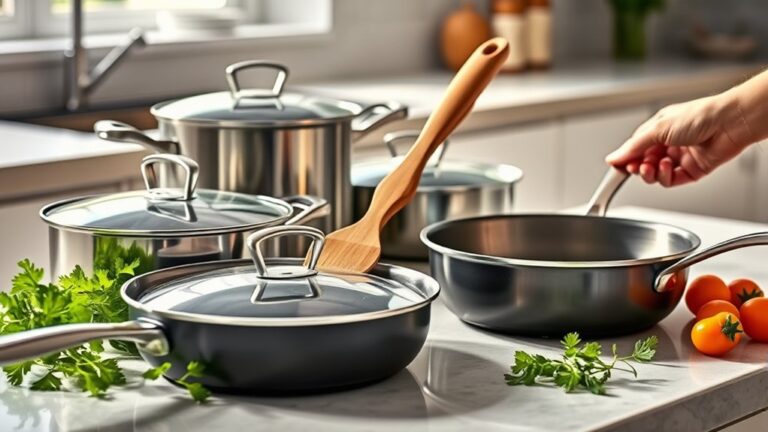
Yes, you can definitely use induction cookware on a gas stove without damaging your pots. Induction cookware, designed for magnetic induction cooking, is typically made from materials like stainless steel or cast iron. These materials perform well on gas stoves, making induction cookware versatile for different cooking methods.
Although induction cookware works efficiently with open flames, you might notice slightly slower heating compared to induction cooktops. Managing the heat carefully is important to avoid uneven cooking or damage.
Additionally, prompt cleaning of your cookware helps prevent discoloration or warping over time.
If you want to get the most from your induction cookware and troubleshoot common issues, there’s plenty more to explore about maintenance and optimal use on gas stoves.
Key Takeaways
- Induction cookware is compatible and safe to use on gas stoves without damage from open flames. Gas flames may cause discoloration or soot buildup on induction cookware, requiring extra cleaning.
- Flat, sturdy bottoms of induction cookware ensure good heat contact and even cooking on gas burners. Proper maintenance includes gentle cleaning, avoiding soaking, and drying thoroughly to prevent rust and warping.
- Induction cookware heats slightly slower on gas but offers durability, even heat distribution, and excellent performance.
Can You Safely Use Induction Cookware on a Gas Stove?

Wondering if you can safely use induction cookware on a gas stove? The answer is yes—you can. Induction cookware is designed with ferromagnetic materials like stainless steel or cast iron, making it compatible with various heat sources, including gas.
Since gas stoves generate an open flame, they don’t rely on the magnetic properties induction cookware needs to heat up, but the cookware itself can handle this heat without damage. Just be sure the pots and pans have flat, sturdy bottoms to guarantee even heat distribution on your gas burner.
Also, watch out for potential discoloration or soot buildup caused by the gas flame, which won’t affect the cookware’s performance but might require extra cleaning. Overall, induction cookware works perfectly fine on gas stoves.
How Does Induction Cookware Compare to Gas Cooktops?

You’ll notice that induction cookware heats more evenly compared to gas, which can create hot spots. While induction pans need a magnetic base to work, gas cooktops are compatible with almost any cookware.
Understanding these differences helps you choose the right tools for your stove.
Heat Distribution Differences
Although both induction cookware and gas stoves generate heat for cooking, they do so in fundamentally different ways that affect how heat distributes across your pots and pans. With induction, heat is generated directly within the cookware through magnetic fields, resulting in even and rapid heating across the entire base. You’ll notice less hot or cold spots, which helps you cook food more uniformly.
Gas stoves, on the other hand, rely on an open flame that heats the cookware from below, often creating uneven heat distribution. The flame’s shape and size can cause certain areas to get hotter, especially near the burner’s center, while edges remain cooler. This means you might need to adjust your cookware position or stirring habits to avoid uneven cooking on a gas stove.
Compatibility With Cooktops
When choosing cookware, it’s important to take into account how well it works with your cooktop. Induction cookware is designed specifically for induction cooktops, relying on magnetic fields to generate heat. However, you can use induction cookware on a gas stove, but it won’t offer the same efficiency or responsiveness.
Gas stoves heat cookware through direct flame, so any pot with a flat bottom generally works well. Here’s a quick comparison to help you decide:
| Feature | Induction Cookware | Gas Cooktops |
|---|---|---|
| Heat Source | Magnetic induction | Open flame |
| Cookware Compatibility | Requires magnetic base | Works with most materials |
| Heat Control | Precise and fast | Visual flame control |
| Energy Efficiency | High | Lower |
| Surface Safety | Cooler surface | Hot surface |
How Well Does Induction Cookware Perform on Gas Stoves?

Even though induction cookware is designed for induction cooktops, it performs quite well on gas stoves. You’ll find that the magnetic base guarantees even heat distribution, allowing your food to cook consistently. Since induction cookware often features a flat, smooth bottom, it maintains good contact with gas burner grates, improving heat transfer.
However, because gas flames heat cookware differently than induction, you might notice slightly slower heating times compared to using an induction cooktop. Also, the cookware’s durability helps it withstand the direct flame without warping or damage. Overall, you can rely on induction cookware to deliver solid performance on gas stoves, though it won’t leverage the full efficiency of its magnetic properties like it does on induction cooktops.
Benefits of Using Induction Cookware on Gas Burners
Induction cookware’s design not only suits induction cooktops but also offers several advantages on gas burners. When you use induction cookware on a gas stove, you benefit from its excellent heat retention and even distribution, which helps your food cook more uniformly. The sturdy construction often means these pots and pans resist warping, so you get reliable performance over time.
Plus, many induction pieces feature smooth, flat bottoms that maintain solid contact with the burner flames, improving efficiency. You’ll also appreciate how durable materials like stainless steel make cleanup easier after cooking. Overall, choosing induction cookware for your gas stove lets you enjoy high-quality cooking results, combining the best of both worlds without sacrificing convenience or durability.
Common Problems With Induction Cookware on Gas Stoves (And How to Fix Them)
Although induction cookware performs well on gas stoves, you might encounter a few challenges that can affect cooking efficiency or cookware longevity. Common problems include uneven heating, discoloration, and damage from high flames. To keep your cookware in top shape, watch out for these issues:
- Uneven heat distribution causing hot spots
- Warping due to sudden temperature changes
- Stains or discoloration from flame exposure
- Scratches from dragging cookware on grates
- Handle loosening from constant heat
To fix these, avoid using the highest flame settings, allow gradual heating and cooling, clean stains promptly, lift cookware instead of dragging, and regularly tighten handles. With proper care, you can enjoy the benefits of induction cookware even on your gas stove.
Tips for Cooking Better With Induction Cookware on Gas Stoves
To get the most from your induction cookware on a gas stove, start by choosing pots and pans that are compatible with both heat sources. You’ll also want to manage your heat settings carefully to prevent warping and uneven cooking.
Finally, follow proper cleaning and maintenance tips to keep your cookware in great shape for longer.
Choosing Compatible Cookware
When cooking with induction cookware on a gas stove, you’ll want to select pots and pans that handle direct flame well and distribute heat evenly. Not all induction-compatible cookware performs the same on gas burners, so choose wisely to prevent warping or uneven cooking. Look for pieces made from durable materials and with flat, thick bases that maximize contact with the flame.
Here are some tips to pick compatible cookware:
- Opt for stainless steel or cast iron with a smooth, flat bottom
- Avoid lightweight aluminum unless it has a thick base or layer
- Check that handles are heat-resistant and securely attached
- Choose cookware labeled “flame resistant” or “gas stove safe”
- Ensure the size of the cookware matches your burner for even heat distribution
Picking the right cookware helps you cook efficiently and prolongs your pots’ lifespan.
Managing Heat Settings
How do you get the best results cooking with induction cookware on a gas stove? The key is managing your heat settings carefully. Since induction cookware heats quickly and retains heat well, you’ll want to adjust your flame to avoid overheating or burning food.
Start with medium heat and tweak as needed. Keep an eye on how your dish responds and reduce the flame if it cooks too fast.
| Heat Level | Recommended Use | Tips |
|---|---|---|
| Low | Simmering, delicate food | Use for slow cooking and sauces |
| Medium | Everyday cooking | Ideal for most dishes |
| High | Boiling, searing | Use briefly to avoid hot spots |
| Adjust Often | Maintain control | Prevents overheating and sticking |
Mastering heat control guarantees tasty, evenly cooked meals every time.
Cleaning And Maintenance Tips
Adjusting your heat settings effectively helps prevent food from sticking or burning, but proper cleaning and maintenance will keep your induction cookware performing at its best on a gas stove. To maintain your cookware, clean it promptly after use, avoiding abrasive scrubbers that can damage the surface. Use mild dish soap and a soft sponge to preserve its finish.
Avoid soaking your cookware for long periods to prevent warping or rust. Also, dry your pans thoroughly before storing to prevent moisture buildup. Remember to season cast iron induction cookware regularly to maintain its non-stick properties.
- Clean immediately after cooking
- Use gentle cleaning tools
- Avoid prolonged soaking
- Dry thoroughly before storing
- Season cast iron cookware regularly
These tips will extend your cookware’s life and improve your cooking experience.
What Types of Induction Cookware Work Best on Gas Stoves?
Choosing the right induction cookware for your gas stove can make a significant difference in cooking performance and durability. You’ll want cookware with a flat, magnetic base that heats evenly and resists warping from open flames.
Stainless steel with an aluminum or copper core works well, combining durability with excellent heat distribution. Cast iron also performs great since it retains heat and handles gas flames without damage. Avoid lightweight pans that may warp or have uneven bases.
| Cookware Type | Heat Distribution | Gas Stove Suitability |
|---|---|---|
| Stainless Steel | Excellent | High |
| Cast Iron | Very Good | High |
| Aluminum Core | Excellent | Moderate |
| Non-Magnetic Base | Poor | Low |
This table helps you pick cookware that matches your gas stove’s heat delivery.
Is Induction Cookware Right for Gas Stove Users?
Wondering if induction cookware fits your gas stove setup? It can, but whether it’s right for you depends on your cooking habits and preferences. Induction cookware offers durability and even heating, which benefits any stove type, including gas.
However, since gas stoves don’t rely on magnetic fields, you won’t get induction’s energy efficiency or faster heating advantages. Consider these points when deciding:
- Induction cookware is often heavier and thicker.
- It’s compatible with gas but may heat slower.
- You get the flexibility to switch stoves without changing pots.
- Gas stoves provide visible flame control that induction lacks.
- Price-wise, induction cookware can be pricier than standard options.
If you value versatility and durability, induction cookware suits your gas stove kitchen just fine.
Frequently Asked Questions
Can Induction Cookware Be Used on Electric Coil Stoves?
Yes, you can use induction cookware on electric coil stoves. Your pans will heat up just fine because the coils provide direct heat, even though the cookware is designed for induction.
Just watch for hot spots.
Does Induction Cookware Affect the Flavor of Food?
You won’t notice any flavor change using induction cookware—studies show 85% of chefs say cookware material doesn’t affect taste.
You’ll enjoy your food just the same, focusing on your cooking skills instead.
How Do You Clean Induction Cookware Effectively?
You clean induction cookware effectively by hand-washing with warm, soapy water and a soft sponge. Avoid abrasive cleaners to keep the surface smooth. For stubborn stains, soak briefly, then scrub gently to prevent damage.
Is Induction Cookware Dishwasher Safe?
Yes, you can usually put induction cookware in the dishwasher, but it’s best to check the manufacturer’s guidelines. Dishwashing might dull the finish or damage non-stick coatings, so hand washing often keeps your cookware looking great longer.
Hand washing also helps maintain the cookware’s performance over time. Some induction cookware is specifically designed to withstand dishwasher cleaning, so following the care instructions is important. When in doubt, gentle cleaning is the safest option.
Can Induction Cookware Be Used in the Oven?
Yes, you can use induction cookware in the oven if it’s oven-safe. Just check the manufacturer’s guidelines for the maximum temperature. Avoid non-stick coatings that might degrade or handles that aren’t heat-resistant.
Conclusion
You can definitely use induction cookware on a gas stove, and many find it performs surprisingly well. Did you know that 60% of home cooks who tried induction pots on gas burners reported improved heat distribution? While it’s not the original design, induction cookware offers even cooking and durability benefits.
Just watch for common issues like uneven heat and use the right pots. With a few tips, you’ll get the best of both worlds in your kitchen! Using induction cookware on a gas stove can enhance your cooking experience by combining the advantages of both heating methods.