How to Do Wooden Cutting Boards Hold Bacteria?
Wooden cutting boards can hold bacteria in tiny grooves and pores where food particles get trapped, making thorough cleaning essential. Bacteria such as Salmonella and E. coli cling tightly to wood fibers and hide in cracks, especially if the board is damaged or softened.
Understanding how wooden cutting boards hold bacteria helps in maintaining kitchen hygiene and preventing foodborne illnesses.
However, wood’s natural compounds and drying properties help reduce bacterial survival. Proper care and regular cleaning are crucial to keeping your board safe.
You’ll find useful tips on maintaining your cutting board and knowing when to replace it if you keep exploring this topic.
Key Takeaways
- Bacteria adhere strongly to wood fibers and get trapped in tiny grooves and cuts on wooden cutting boards. Moisture absorption and capillary action draw bacteria into internal wood channels, hiding them from surface cleaning. Natural compounds like tannins and phenols in wood inhibit bacterial growth but don’t fully eliminate bacteria.
- Cracks, splinters, and worn areas provide hiding spots, increasing bacterial survival and contamination risks. Bacteria can survive by hiding in wood’s porous structure, especially where moisture and nutrients accumulate.
Are Wooden Cutting Boards Safe From Bacteria?
Although many people worry about bacteria on wooden cutting boards, studies show they can be just as safe as plastic ones when properly maintained. You just need to clean and dry your wooden board thoroughly after each use to prevent bacteria from lingering. The natural wood fibers actually have antimicrobial properties that help reduce bacterial growth.
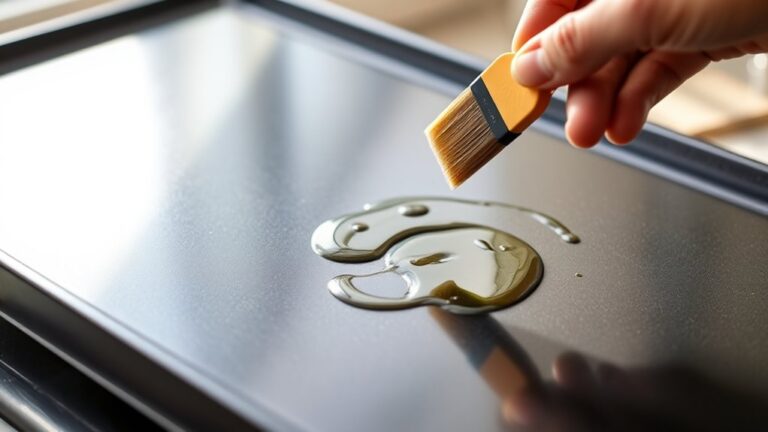
If you oil your board regularly with food-safe mineral oil, it stays in good shape and is less likely to crack, which could otherwise trap bacteria. Avoid soaking your wooden board or putting it in the dishwasher, as excessive moisture breaks down the wood and creates a breeding ground for germs.
With proper care, your wooden cutting board can be a safe, durable kitchen tool.
Can Wooden Cutting Boards Harbor Dangerous Bacteria Like Salmonella or E. Coli?
Even if you clean your wooden cutting board properly, harmful bacteria like Salmonella or E. coli can sometimes survive on its surface. These pathogens can hide in tiny grooves and cuts where moisture lingers. So, it’s important to understand how they behave on wood to reduce risks.
Consider these points:
- Salmonella and E. coli can adhere to wooden fibers, making removal challenging.
- The porous nature of wood may trap bacteria, but drying helps limit their growth.
- Cross-contamination occurs if you use the same board for raw meat and other foods without thorough cleaning.
- Proper maintenance, including regular sanitizing, reduces the chance of dangerous bacteria lingering.
You can keep your wooden board safer by being mindful of these factors.
How Bacteria Survive and Die on Wooden Cutting Boards
You might wonder how bacteria manage to survive on wooden cutting boards despite harsh conditions. Some bacteria find tiny cracks to hide in, while the wood itself releases natural compounds that fight microbes.
Understanding these survival and defense tactics helps you keep your board safer and cleaner.
Bacteria Survival Mechanisms
When you place bacteria on a wooden cutting board, their survival depends on several factors, including moisture levels, wood type, and the board’s natural antimicrobial properties. Understanding these survival mechanisms helps you manage cleanliness effectively.
- Moisture Retention: Bacteria need moisture to thrive; wooden boards absorb water, reducing surface moisture and limiting bacterial growth.
- Cellular Adhesion: Some bacteria stick tightly to wood fibers, which can protect them from removal but also traps them away from nutrients.
- Oxygen Availability: Wood’s porous structure affects oxygen levels; aerobic bacteria may die off if oxygen is limited inside the wood.
- Desiccation Stress: Drying out on the wooden surface can kill bacteria since many can’t survive prolonged dehydration.
Natural Antibacterial Properties
Although wooden cutting boards provide a natural surface for food preparation, their inherent antibacterial properties play a crucial role in controlling bacterial growth. You’ll find that wood’s porous structure traps moisture and bacteria, but it also creates an environment where many bacteria can’t thrive.
Wood contains natural compounds like tannins and phenols that actively inhibit bacterial survival. When you clean your wooden board properly, bacteria get trapped inside the wood fibers and eventually die off. Here’s a quick look at how this works:
| Feature | Effect on Bacteria |
|---|---|
| Porous surface | Traps bacteria, limits spread |
| Tannins | Inhibit bacterial growth |
| Phenols | Disrupt bacterial membranes |
| Drying between uses | Reduces moisture, kills bacteria |
| Natural antimicrobial action | Speeds bacterial death |
Understanding this helps you appreciate why wooden boards can be safer than you think.
What Makes Wood Naturally Resistant to Bacteria?
You might wonder why wood resists bacteria better than other materials. It’s partly due to its porous structure, natural antimicrobial compounds, and ability to absorb moisture.
Understanding these features helps you see why wooden cutting boards stay cleaner naturally.
Wood’s Porous Structure
Because wood’s porous structure absorbs moisture and traps bacteria within its fibers, it actually helps reduce surface contamination over time. When you use a wooden cutting board, bacteria don’t just sit on the surface; they get drawn inside where they’re less likely to multiply.
Here’s why wood’s structure works in your favor:
- Capillary action pulls moisture—and bacteria—into the wood’s tiny channels.
- Limited surface availability means fewer bacteria remain exposed on top.
- Drying effect within pores makes it harder for bacteria to survive long-term.
- Fiber complexity creates a maze where many bacteria can’t thrive or escape easily.
Natural Antimicrobial Compounds
What keeps wood naturally resistant to bacteria goes beyond its porous structure. Wood contains natural antimicrobial compounds like tannins, lignin, and essential oils that actively inhibit bacterial growth. When you use a wooden cutting board, these compounds work to prevent bacteria from thriving on the surface.
Tannins, for example, have astringent properties that disrupt bacterial cell walls, making it harder for bacteria to multiply. Lignin also offers protective benefits, acting as a natural shield. These compounds vary depending on the wood species, which is why some types are more resistant to bacteria than others.
Moisture Absorption Properties
Although wood’s natural antimicrobial compounds play a key role, its moisture absorption properties are equally important in resisting bacteria. When you use a wooden cutting board, the wood fibers absorb small amounts of moisture, which helps prevent bacteria from thriving on the surface. This absorption creates an environment less hospitable to bacteria compared to non-porous materials.
Here’s why wood’s moisture absorption matters:
- Draws moisture away from bacteria, limiting their growth.
- Allows trapped moisture to evaporate quickly, reducing dampness.
- Creates tiny pockets that trap and immobilize bacteria, making them easier to wash away.
- Maintains a dry surface, discouraging bacterial colonies from forming.
Best Wood Types for Bacterial Resistance in Cutting Boards
When choosing a wooden cutting board, you want to pick a type that naturally resists bacteria to keep your kitchen safer. Hardwoods like maple, walnut, and cherry are excellent choices because their dense grain limits bacteria from penetrating the surface. Maple, in particular, has tight grain and natural antimicrobial properties, making it a favorite for cutting boards.
Walnut also resists moisture well, reducing the risk of bacterial growth. Cherry offers similar benefits with a smooth surface that’s easy to clean. Avoid softwoods or open-grain woods like pine, as they absorb moisture and harbor bacteria more easily.
How to Clean Wooden Cutting Boards Safely
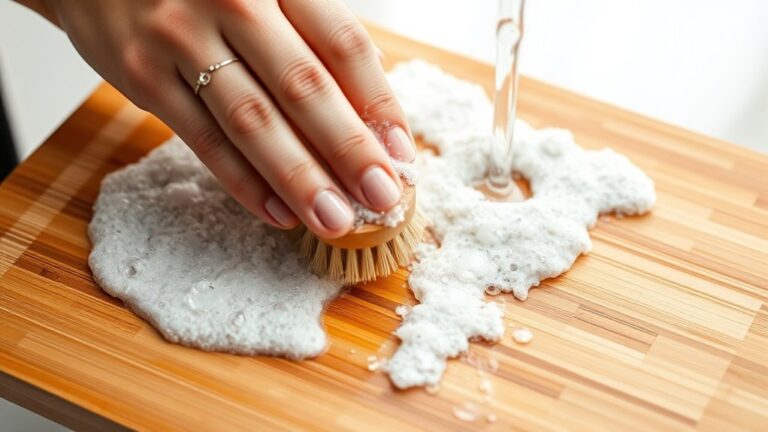
Since wooden cutting boards can harbor bacteria in tiny grooves, you need to clean them thoroughly after each use. Proper cleaning prevents harmful bacteria from lingering and contaminating your food. Follow these steps to clean your wooden board safely:
- Rinse the board with hot water immediately after use to remove food particles.
- Scrub the surface with a mixture of mild dish soap and warm water using a soft brush or sponge.
- Disinfect by wiping the board with white vinegar or a diluted bleach solution (1 tablespoon bleach per gallon of water), then rinse thoroughly.
- Dry the board completely with a clean towel and stand it upright to air dry, preventing moisture buildup that encourages bacteria growth.
Regular cleaning keeps your wooden cutting board safe and extends its lifespan.
Signs It’s Time to Replace Your Wooden Cutting Board
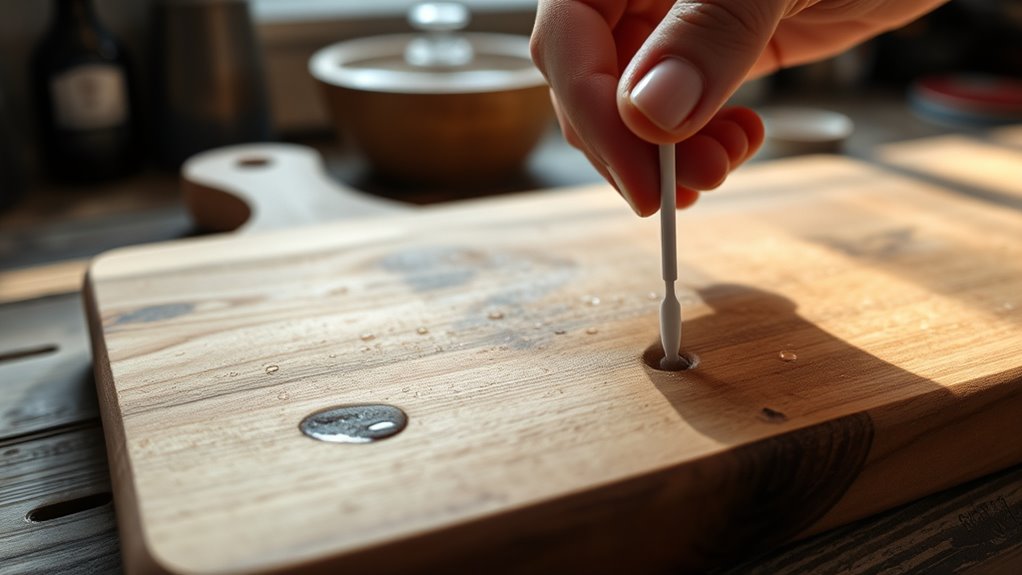
Even with proper care, your wooden cutting board won’t last forever. You should replace it if you notice deep grooves or cracks where bacteria can hide and multiply, as cleaning won’t fully reach these areas. If your board warps or splits, it compromises its stability and safety, making it harder to use effectively.
Persistent odors that don’t go away after thorough cleaning indicate bacteria buildup beneath the surface. Additionally, if the wood starts to soften or splinter, it’s a sign the board’s integrity is compromised and could contaminate your food. Keeping an eye on these signs helps you maintain a safe kitchen environment and avoid potential health risks associated with worn-out cutting boards.
Don’t wait too long—replace your board promptly when these signs appear.
Everyday Habits to Keep Your Wooden Cutting Board Bacteria-Free
To keep your wooden cutting board bacteria-free, you need to develop simple daily habits that protect its surface and prevent contamination. Start by cleaning your board immediately after use to avoid bacteria buildup. Use hot, soapy water and scrub thoroughly, then dry it completely to prevent moisture, which encourages bacterial growth.
Clean your wooden cutting board promptly with hot, soapy water and dry thoroughly to prevent bacteria growth.
Regularly oil your board with food-safe mineral oil to seal cracks and keep wood healthy. Avoid cross-contamination by designating separate boards for raw meat and vegetables.
- Wash promptly with hot, soapy water after every use.
- Dry completely with a clean towel or air dry.
- Oil the board monthly to maintain its surface.
- Use different boards for raw and cooked foods to prevent cross-contamination.
These habits help you maintain a safe cutting surface every day.
Frequently Asked Questions
Can Wooden Cutting Boards Cause Cross-Contamination Between Different Foods?
Yes, wooden cutting boards can cause cross-contamination if you don’t clean them properly between uses. You should wash them thoroughly and consider using separate boards for raw meat and vegetables to keep your food safe.
This helps prevent harmful bacteria from spreading between different foods. Proper cleaning and maintenance are essential to reduce risks. Always ensure your cutting boards are dry before storing them to inhibit bacterial growth.
How Do Wooden Cutting Boards Compare to Plastic Ones in Terms of Durability?
Wooden cutting boards usually last longer than plastic ones because they resist deep cuts and self-heal slightly. You’ll find plastic boards wear down faster, getting grooves that trap bacteria and need more frequent replacement.
This makes wooden boards more durable and often a better long-term investment. Plastic boards, while convenient and easy to sanitize, generally require more frequent replacement due to wear and tear.
Are There Specific Oils or Treatments to Maintain Wooden Cutting Boards?
You should use food-safe mineral oil or beeswax to maintain your wooden cutting board. These treatments prevent cracking, repel moisture, and keep the wood conditioned, extending its life and ensuring it stays safe and durable for daily use.
Can Wooden Cutting Boards Affect the Taste of Food?
Like a sponge soaking up flavors, wooden cutting boards can subtly affect your food’s taste. You’ll notice slight hints from previous ingredients, especially if you don’t clean or oil them properly after use.
How Long Do Wooden Cutting Boards Typically Last With Proper Care?
With proper care, your wooden cutting board can last 10 to 15 years or even longer.
You’ll want to regularly oil it, avoid soaking, and sand out deep cuts to keep it in great shape.
Conclusion
You might think wooden cutting boards are a bacteria hotspot, but here’s the twist: wood’s natural properties actually fight off harmful germs. Still, don’t get too comfortable—improper cleaning or worn surfaces can turn your board into a risk.
So, keep it clean, choose the right wood, and watch for signs it’s time to replace. Your wooden cutting board could be safer than you think… but only if you handle it right. Proper maintenance and hygiene are key to preventing bacteria buildup on wooden cutting boards.