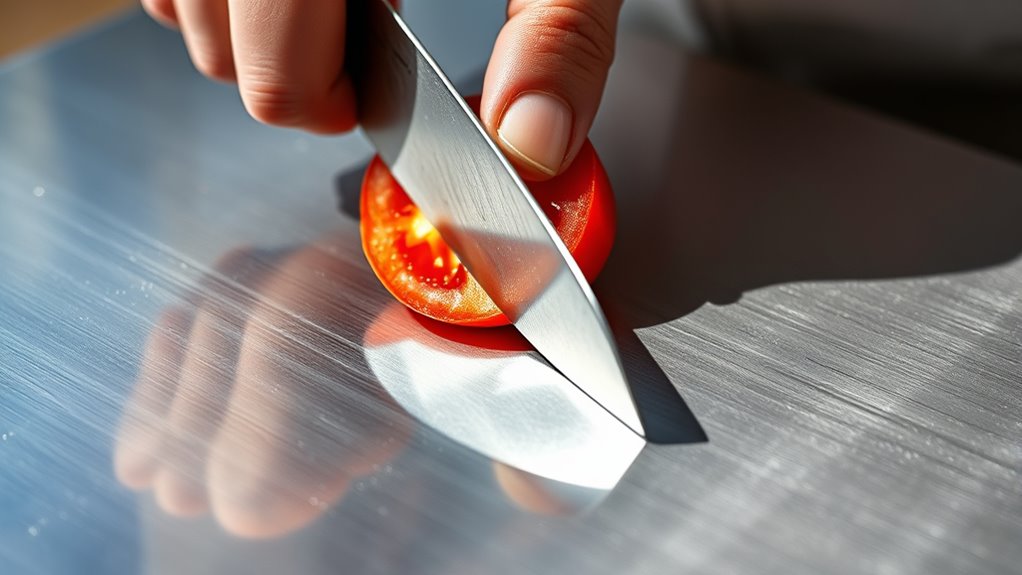
How Do Stainless Steel Cutting Boards Dull Knives?
You’ll dull your knives faster on stainless steel cutting boards because their hard, abrasive surface chips and grinds your blade edges quickly. Unlike softer wood or plastic boards that absorb impact and reduce friction, steel doesn’t give way, causing tiny edge fragments to break off and microscopic abrasions to form.
This makes stainless steel cutting boards a less ideal choice for maintaining sharp knives.
Using these boards means more frequent sharpening to keep your knives sharp. The constant grinding action wears down the blade’s edge prematurely, reducing its lifespan and cutting efficiency.
Keep going, and you’ll discover how to protect your blades and choose better surfaces for your knives.
Key Takeaways
- Stainless steel boards are extremely hard and abrasive, causing rapid wear and dulling of knife edges through increased friction. Knife blades repeatedly hit the hard steel surface, causing microscopic abrasions and chipping that degrade sharpness.
- The smooth, unyielding steel surface applies more impact stress on blades compared to softer cutting boards. Hard contact with stainless steel leads to tiny fragments breaking off the knife edge, accelerating dulling.
- Frequent cutting on steel surfaces necessitates more regular sharpening to maintain blade performance.
Why Stainless Steel Cutting Boards Dull Knives Faster
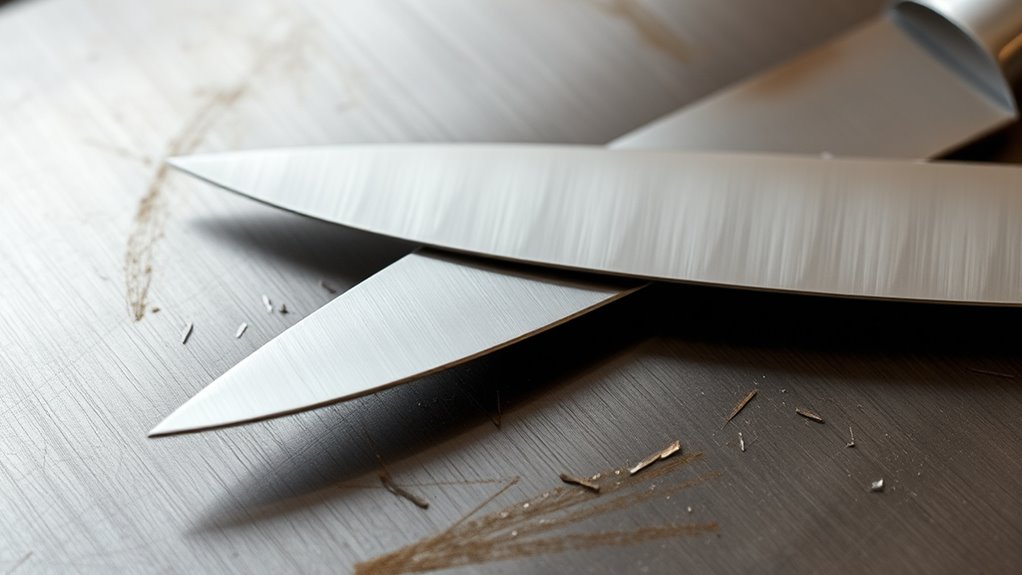
Although stainless steel cutting boards are durable and easy to clean, they dull your knives faster because their hard surface offers no give when you cut. When you slice or chop, your knife’s edge hits a solid barrier every time, causing it to wear down quickly. Unlike wood or plastic boards that absorb some pressure, stainless steel forces your blade to endure more friction and impact.
This constant resistance chips away at the sharpness. You’ll notice your knife needing more frequent sharpening, which shortens its lifespan. If you want your knives to stay sharp longer, you should avoid using stainless steel boards for routine chopping.
Instead, choose surfaces that are gentler on blades, helping you keep your knives in top condition.
How Stainless Steel Surfaces Wear Down Knife Edges
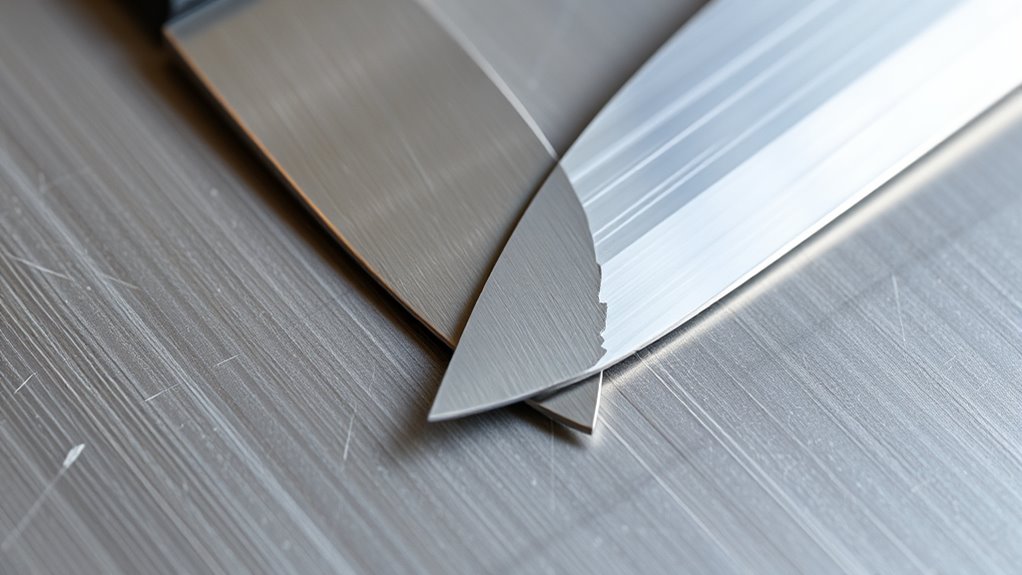
When you cut on stainless steel surfaces, the blade’s edge scrapes against an unyielding material that quickly wears it down. Unlike softer surfaces, stainless steel doesn’t give way, causing your knife’s fine edge to grind and chip over time.
Cutting on stainless steel wears down your knife’s edge faster due to its unyielding, hard surface.
The repeated friction gradually rounds off the sharp edge, reducing cutting efficiency.
Here’s how stainless steel wears down your knife edges:
- Microscopic abrasions: Tiny scratches form on the blade, dulling its precision edge.
- Edge chipping: Hard contact causes small fragments to break off the blade tip.
- Material hardness: Stainless steel’s high hardness level resists deformation, forcing the blade to dull instead.
Understanding this helps you realize why knives lose their sharpness faster on stainless steel surfaces.
Comparing Stainless Steel, Wood, and Plastic Cutting Boards
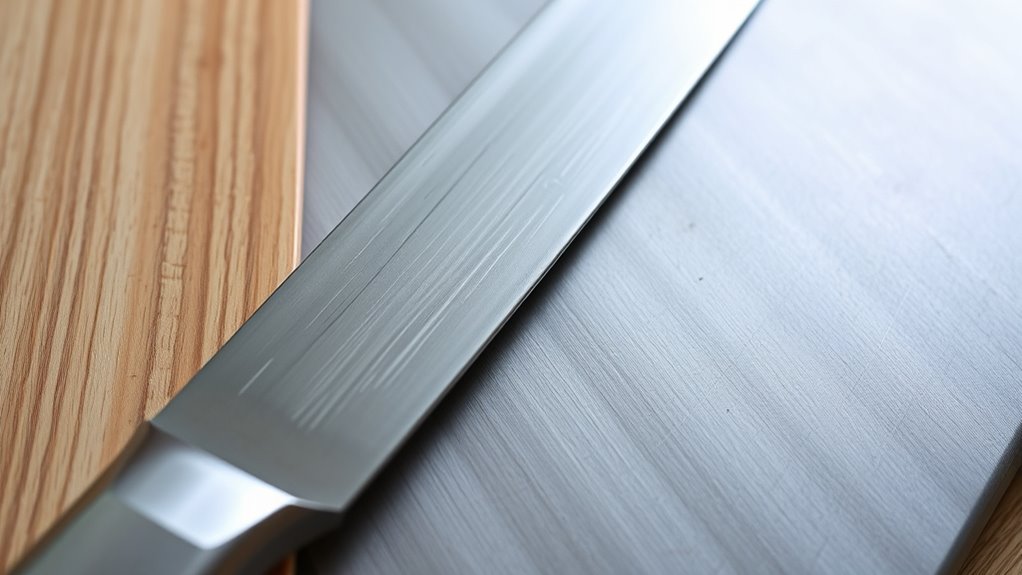
Since your choice of cutting board directly affects your knife’s lifespan and performance, it’s important to compare stainless steel, wood, and plastic options carefully. Stainless steel boards are durable and hygienic but are the hardest on your knives, causing them to dull faster due to their unforgiving surface.
Wood cutting boards provide a softer surface, which helps preserve your blade’s edge longer, plus they have natural antimicrobial properties. Plastic boards fall somewhere in between; they’re gentler than stainless steel but not as forgiving as wood. They’re easy to clean and affordable but can develop deep grooves that harbor bacteria.
When selecting the right board, balance durability, maintenance, and how much wear you’re willing to accept on your knives to keep them sharp and effective.
Why Your Knife’s Blade Material Matters on Stainless Steel Boards
Your choice of knife blade material plays a significant role in how well it holds up against stainless steel cutting boards. Different metals react differently when they meet the hard surface of stainless steel, affecting your blade’s sharpness and longevity. For example, some materials are tougher and resist dulling, while others are more prone to damage.
Choosing the right blade material is key to maintaining sharpness against tough stainless steel cutting boards.
Consider these factors when selecting a blade for use with stainless steel boards:
- Hardness: Harder steels can maintain an edge longer but might chip more easily against steel surfaces.
- Flexibility: Softer materials bend slightly, reducing chipping but dull faster.
- Coatings: Some blades have protective coatings that reduce friction and wear on hard surfaces.
Understanding these aspects helps you choose knives that endure when paired with stainless steel boards.
How to Spot If Your Knives Are Dulling Faster on Stainless Steel Cutting Boards
If you notice your knives losing their sharpness more quickly than usual, stainless steel cutting boards might be the culprit. To spot if your knives are dulling faster, pay attention to how smoothly your blade slices through food. If you find yourself pressing harder or tugging when cutting, that’s a clear sign.
Also, check for visible nicks or rough edges on the blade, which indicate accelerated wear. Another clue is a change in the sound your knife makes when cutting—duller blades produce a duller, less crisp noise.
If you compare the sharpness after using stainless steel boards versus other materials and see a faster decline, it confirms the issue. Keeping an eye on these signs helps you identify if your cutting surface affects your knives.
Maintaining Knife Sharpness on Stainless Steel Cutting Boards
You can keep your knives sharp on stainless steel cutting boards by using proper handling techniques that reduce unnecessary wear. Make sure to cut with controlled, smooth motions to minimize dulling.
Also, commit to regular sharpening to maintain a keen edge despite the tougher surface.
Proper Knife Handling Techniques
Although stainless steel cutting boards are notorious for dulling knives, adopting proper knife handling techniques can considerably slow down this process. You can extend your knife’s sharpness by adjusting how you use it on these hard surfaces.
Focus on controlling your cutting motions to minimize unnecessary blade contact with the board. Here are key techniques to keep in mind:
- Use a slicing motion rather than chopping straight down to reduce edge wear.
- Avoid twisting or prying with the knife, which stresses and dulls the blade more quickly.
- Hold the knife at a consistent angle to maintain even edge contact and prevent uneven dulling.
Regular Sharpening Practices
Since stainless steel cutting boards naturally wear down knife edges faster, regular sharpening becomes essential to keep your blades effective. You’ll want to sharpen your knives more frequently than you would with softer cutting surfaces. Use a quality sharpening stone, honing rod, or an electric sharpener to restore the blade’s edge.
Honing between sharpenings helps maintain alignment but doesn’t substitute the need for actual sharpening. Pay attention to your knife’s performance—if you notice it slipping or struggling to cut, it’s time for a touch-up. Establish a routine based on your usage; heavy users might sharpen monthly, while occasional cooks can do it every few months.
Staying proactive with sharpening ensures you maintain precision, safety, and efficiency when working on stainless steel cutting boards.
When to Sharpen Your Knives Using Stainless Steel Cutting Boards
Even if you handle your knives carefully on stainless steel cutting boards, the hard surface can gradually wear down their edges. You’ll want to sharpen your knives more frequently to maintain their performance. Keep an eye out for these signs to know when it’s time:
- You notice the blade struggles or slips during cutting tasks.
- The knife no longer slices cleanly and starts crushing or tearing food.
- Visual inspection reveals small nicks or dull spots along the edge.
Addressing these early helps you avoid frustrating cuts and preserves your knives’ lifespan. Sharpening promptly after these signs appear ensures your knives stay reliable, even with the tougher stainless steel surface. Don’t wait until the blade is completely dull, as it makes sharpening more difficult and less effective.
Best Practices to Extend Knife Life Despite Stainless Steel Boards
To keep your knives sharp when using stainless steel cutting boards, you need to sharpen them properly and regularly. You should also consider switching to softer cutting surfaces like wood or plastic when possible.
These steps help extend your knife’s life and maintain its performance.
Proper Knife Sharpening Techniques
Although stainless steel cutting boards can wear down your knives faster, you can preserve their sharpness by using proper sharpening techniques. Regular maintenance ensures your blades stay effective and safe to use, despite the tougher surface they face.
Focus on consistent sharpening intervals and the right tools to maintain the edge.
Here are some key sharpening tips:
- Use a whetstone or diamond sharpener to restore the blade’s edge gradually and evenly.
- Maintain the correct sharpening angle, typically 15-20 degrees, for maximum sharpness and blade longevity.
- Finish with a honing steel to realign the edge and remove microscopic burrs, keeping the knife’s performance sharp between full sharpenings.
Using Cutting Board Alternatives
When you want to protect your knives from dulling quickly, choosing the right cutting board is essential. While stainless steel boards look sleek and are easy to clean, they’re harsh on your blades. To extend your knife life, consider using alternatives like wooden or bamboo boards.
These materials offer a softer surface that reduces blade wear. You can also opt for high-density polyethylene boards, which balance durability and gentleness. If you must use a stainless steel board, place a silicone mat or a flexible plastic sheet on top to cushion your knife’s edge.
Rotating between different cutting surfaces helps, too, as it prevents excessive wear from any one material. By making these switches, you’ll keep your knives sharper longer without sacrificing hygiene or convenience.
Alternatives to Stainless Steel Cutting Boards That Protect Knives
If you want to keep your knives sharp longer, choosing the right cutting board is essential. Stainless steel boards may look sleek but can quickly wear down your blades. Instead, consider alternatives that protect your knives while still offering durability and hygiene.
Here are three great options to try:
- Wooden cutting boards: Soft yet sturdy, they absorb some impact, reducing blade dulling. Hardwoods like maple are especially knife-friendly.
- Bamboo cutting boards: Eco-friendly and harder than wood, bamboo offers a good balance between durability and gentleness on knives.
- Plastic cutting boards: Affordable and easy to sanitize, they’re softer than steel and gentle on edges, though they may show knife marks faster.
Choosing any of these can extend your knives’ lifespan without sacrificing performance or cleanliness.
Choosing the Right Cutting Board for Your Knives and Kitchen
Selecting the right cutting board goes beyond protecting your knives—it also impacts your kitchen’s hygiene, maintenance, and overall cooking experience. You want a board that’s gentle on your blades yet sturdy enough to handle daily use. Wood and bamboo boards absorb less impact, preserving sharp edges longer, while plastic boards offer easy cleaning and dishwasher safety but may wear faster.
Avoid stainless steel if you want to keep your knives sharp. Consider your cooking habits too: if you work with raw meat often, opt for non-porous materials to prevent bacteria buildup. Also, choose a size that fits your workspace and tasks comfortably.
Picking the right board guarantees your knives stay sharp and your kitchen stays safe and efficient.
Frequently Asked Questions
Can Stainless Steel Cutting Boards Be Sanitized More Easily Than Other Materials?
Yes, you can sanitize stainless steel cutting boards more easily than others because they’re non-porous and resist bacteria buildup. You’ll just need soap, water, and sometimes a disinfectant to keep them spotless and safe.
Are Stainless Steel Cutting Boards Safe for All Types of Food?
Yes, you can safely use stainless steel cutting boards for all types of food. They’re non-porous, resist bacteria, and won’t absorb odors or stains, making them hygienic and ideal for meats, vegetables, and fruits alike.
Do Stainless Steel Cutting Boards Resist Staining and Odors Better?
Like a fortress against spills, stainless steel cutting boards resist staining and odors better than wood or plastic.
You won’t have to worry about lingering smells or discoloration after prepping your favorite meals.
How Heavy Are Stainless Steel Cutting Boards Compared to Wood or Plastic?
Stainless steel cutting boards are usually heavier than plastic and wood ones. You’ll notice they feel solid and sturdy, which can be great for stability but might make them less convenient to move or store.
This added weight can be a consideration if you frequently need to carry or reposition your cutting board. However, the durability and stability often outweigh the inconvenience for many users.
In comparison, wood and plastic cutting boards tend to be lighter and easier to handle.
Can Stainless Steel Cutting Boards Be Used With Electric Knives?
When it comes to electric knives, you can use stainless steel cutting boards, but they’re not the best match. They might dull blades faster, so it’s better to stick with plastic or wood to keep knives sharp.
Conclusion
Using stainless steel cutting boards can dull your knives like sandpaper wears down wood—quickly and steadily. While they’re durable and easy to clean, the hard surface grinds against your blade’s edge, causing it to lose sharpness faster.
To keep your knives performing their best, consider switching to wood or plastic boards and sharpen your blades regularly. With the right care and choice of cutting surface, you’ll extend your knife’s life and maintain precision in your kitchen tasks. Choosing the proper cutting board material is essential to prevent dulling knives and ensure long-lasting sharpness.