How Long to Cook Meatballs in Oven
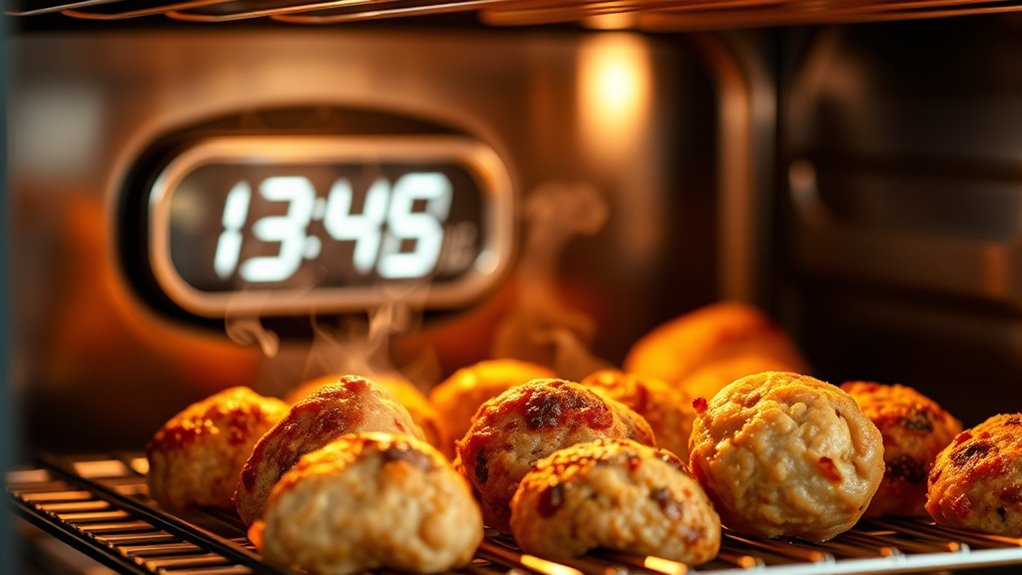
You’ll want to bake your meatballs in the oven at around 350-400°F, depending on their size and type. Cooking meatballs properly ensures they are juicy and flavorful, making the perfect addition to any meal.
Whether you’re preparing beef, pork, or poultry meatballs, the right oven temperature and timing are essential for great results.
Small meatballs take about 12-15 minutes, medium-sized ones around 18-20 minutes, and larger meatballs need closer to 25-30 minutes.
If your meatballs are frozen, add 10-15 extra minutes to the cooking time.
Use a meat thermometer to check for doneness—160°F for beef or pork, and 165°F for poultry.
Keep the meatballs evenly spaced on the baking sheet and turn them halfway through cooking for even browning.
There’s more to mastering perfect meatballs when you consider ingredients and cooking tips, so experiment to find your favorite method.
Key Takeaways
- Bake medium-sized meatballs (1.5 inch) at 350°F for 18-20 minutes until internal temperature reaches 160-165°F.
- Larger meatballs (2 inch) require 25-30 minutes at 350°F for thorough cooking.
- Turn meatballs halfway through baking to ensure even browning and cooking.
- Frozen meatballs need 25-30 minutes at 350°F, checking for 165°F internal temperature.
- Use a meat thermometer to verify doneness, removing when beef/pork reach 160°F and poultry 165°F.
How Long Does It Take to Cook Meatballs in the Oven?
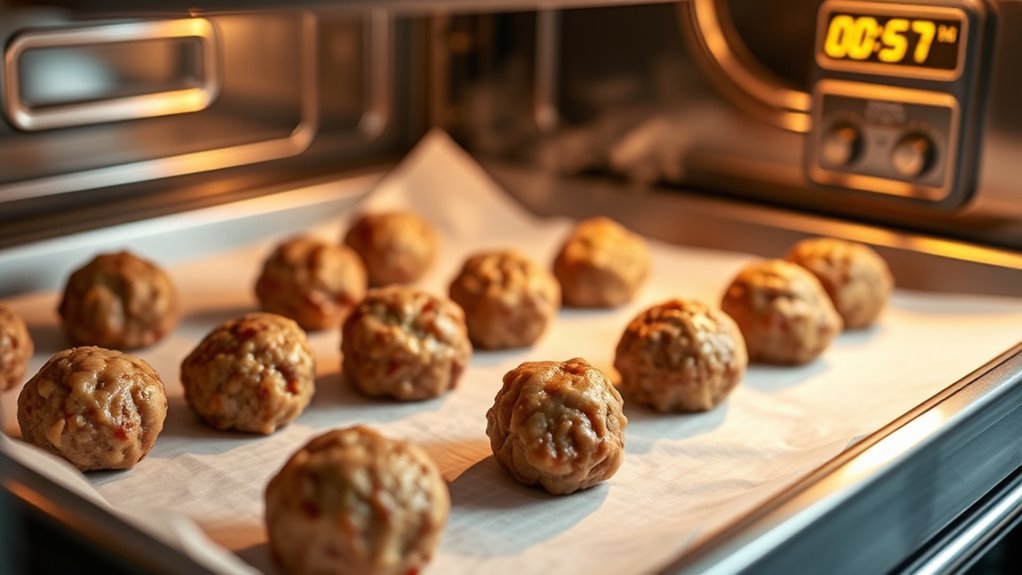
When you bake meatballs in the oven, they usually take about 18 to 22 minutes to cook through at 400°F (200°C). You’ll want to check that their internal temperature reaches 160°F (71°C) to verify they’re safe to eat. Using a meat thermometer helps you avoid undercooking or drying them out.
If you spread the meatballs evenly on a baking sheet, the heat will circulate better, cooking them consistently. You don’t need to flip them halfway, but doing so can help brown all sides evenly. Keep an eye on them toward the end of the baking time to prevent overcooking.
When done, the meatballs should feel firm yet juicy inside, ready to serve with your favorite sauce.
How Meatball Size Affects Cooking Time
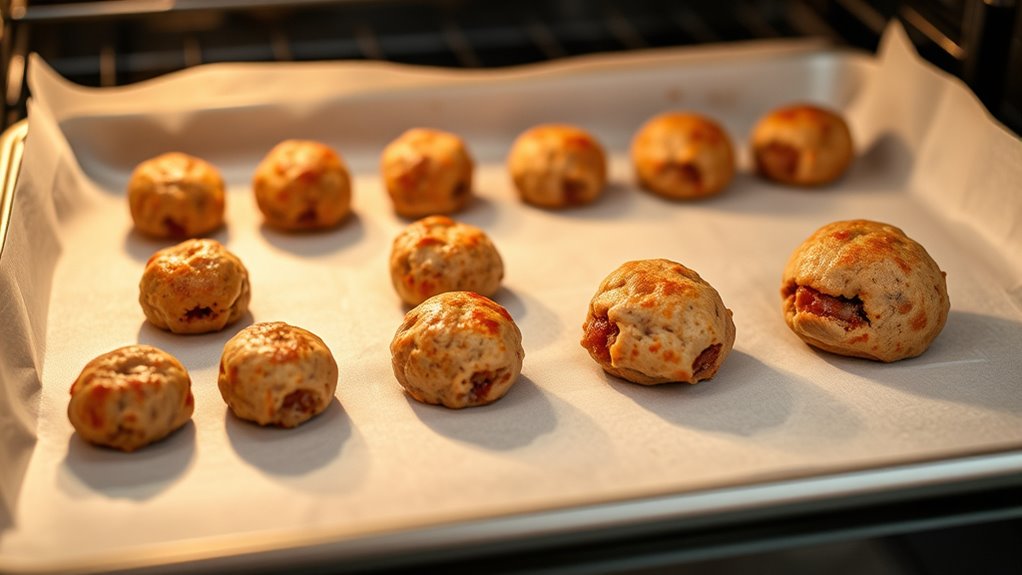
Since meatball size directly impacts how heat penetrates, you’ll need to adjust cooking times accordingly. Smaller meatballs cook faster because heat reaches the center quickly, while larger ones take longer to make sure they’re fully cooked inside. If you don’t adjust, you risk undercooked centers or dry outsides.
Here’s a quick guide to help you:
| Meatball Size | Approximate Oven Time (350°F/175°C) |
|---|---|
| 1 inch diameter | 12-15 minutes |
| 1.5 inch diameter | 18-20 minutes |
| 2 inch diameter | 25-30 minutes |
Use a meat thermometer to check for an internal temperature of 160°F (71°C) to confirm doneness, especially for larger meatballs.
How Different Types of Meat Affect Cooking Time
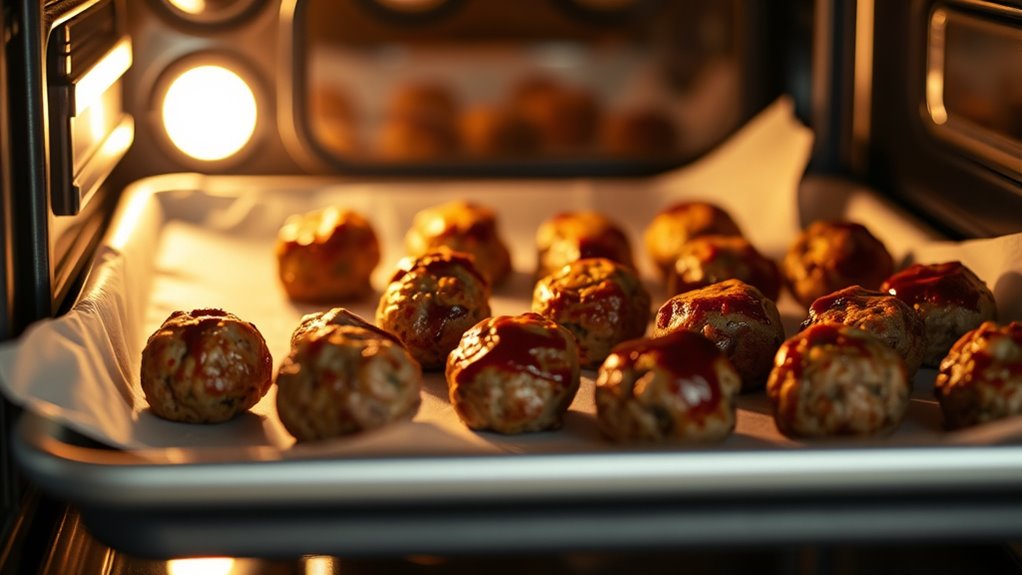
You’ll notice that cooking times change depending on the type of meat you use for your meatballs. Beef usually cooks faster than chicken, which needs a bit more time to reach a safe temperature.
Pork falls somewhere in between, so knowing these differences helps you get perfectly cooked meatballs every time.
Beef Meatball Cooking Time
Although cooking times vary by meat type, beef meatballs generally require careful attention to guarantee they’re cooked through without drying out. You’ll want to bake them at 375°F (190°C) for about 20-25 minutes, depending on their size. Using a meat thermometer helps; aim for an internal temperature of 160°F (71°C) for safety and juiciness.
Larger meatballs need more time, while smaller ones cook faster. Keep an eye on them to prevent overcooking.
| Meatball Size | Temperature | Cooking Time |
|---|---|---|
| Small (1″) | 375°F / 190°C | 15-18 minutes |
| Medium (1.5″) | 375°F / 190°C | 20-25 minutes |
| Large (2″) | 375°F / 190°C | 25-30 minutes |
Chicken Meatball Oven Duration
How long should you bake chicken meatballs compared to beef? Chicken meatballs generally need a bit less time because poultry cooks faster. You’ll want to bake chicken meatballs at 375°F (190°C) for about 20 to 25 minutes, or until they reach an internal temperature of 165°F (74°C).
Unlike beef, which can safely be cooked to a lower temperature, chicken requires thorough cooking to avoid any risk of foodborne illness. Keep in mind that ground chicken is leaner, so overcooking can dry out your meatballs. To keep them juicy, consider adding moisture-rich ingredients like grated onion or a splash of broth.
Using a meat thermometer is the best way to ensure your chicken meatballs are perfectly cooked without guessing.
Pork Meatball Heat Guide
Since pork has a slightly higher fat content than chicken, it influences both the cooking time and the texture of your meatballs. Pork meatballs tend to stay juicier and cook a bit faster due to the fat rendering. When baking pork meatballs, set your oven to 350°F (175°C) and cook them for about 20-25 minutes, or until they reach an internal temperature of 160°F (71°C).
Keep in mind that leaner pork blends might require a touch more time to avoid dryness. Using a meat thermometer ensures your meatballs are safely cooked without overcooking. Compared to beef or chicken, pork strikes a good balance, making your meatballs tender and flavorful with a slightly shorter cook time than beef but longer than chicken.
How Fillers and Binders Impact Cooking Time
When you add fillers and binders like breadcrumbs, eggs, or oats to your meatball mixture, they change how the meat cooks and holds together. These ingredients absorb moisture, which can slow down cooking slightly by increasing the overall density of the meatball. Eggs act as glue, helping the meatballs maintain their shape, so they cook evenly without falling apart.
Breadcrumbs and oats also create a softer texture, which may require a few extra minutes in the oven to ensure the center is fully cooked. Keep in mind, the more filler you use, the more moisture retention affects cooking time. To avoid undercooked meatballs, check the internal temperature with a meat thermometer, aiming for 160°F (71°C) for beef or pork blends mixed with fillers.
What Oven Temperature Is Best for Cooking Meatballs
Choosing the right oven temperature plays an essential role in cooking meatballs evenly and achieving a perfect texture. You’ll want to set your oven between 350°F and 400°F. At 350°F, meatballs cook gently, allowing flavors to meld while staying juicy inside.
If you prefer a quicker cook and a slightly crisper exterior, 400°F works well, but watch closely to prevent drying out. Temperatures below 350°F can result in longer cooking times and uneven cooking, while anything above 400°F risks burning the outside before the center cooks through.
Ultimately, 375°F is a sweet spot that balances cooking speed and texture, giving you tender, well-cooked meatballs with a nicely browned exterior. Adjust based on your oven’s quirks and meatball size.
How to Tell When Meatballs Are Done
Although cooking times provide a helpful guide, you’ll know your meatballs are done by checking their internal temperature and appearance. First, look for a firm texture that springs back when pressed gently.
Cooking times help, but the true test is a firm, springy texture when gently pressed.
Next, verify they have a consistent color throughout—no pink in the center. Finally, juices should run clear when you cut into one.
Here are key indicators to watch for:
- Firmness: Meatballs should hold their shape without feeling too soft or mushy.
- Color: Evenly browned on the outside with no raw spots inside.
- Clear juices: Any liquid released should be transparent, not bloody or pink.
Trust these signs to confidently serve perfectly cooked meatballs every time.
How to Use a Meat Thermometer to Check Meatballs
Since getting the perfect cook on your meatballs can be tricky, using a meat thermometer takes the guesswork out of the process. Insert the thermometer into the center of a meatball, avoiding contact with the pan.
You’ll know your meatballs are done when the thermometer reads the safe internal temperature.
Here’s a quick guide to help you:
| Meat Type | Safe Internal Temperature (°F) |
|---|---|
| Beef/Pork | 160 |
| Poultry (Chicken/Turkey) | 165 |
| Mixed Meats | 160 |
Check multiple meatballs to ensure consistent cooking. Once the thermometer hits the right temperature, your meatballs are safe to eat and perfectly cooked.
How to Prevent Meatballs From Drying Out in the Oven
Using a meat thermometer guarantees your meatballs reach the right temperature, but it doesn’t guarantee they’ll stay juicy. To keep them moist, you need to focus on preparation and cooking techniques. First, avoid overworking the meat mixture; handle it gently to maintain tenderness.
A meat thermometer ensures doneness, but gentle handling is key to juicy, tender meatballs.
Second, incorporate ingredients that add moisture, like soaked breadcrumbs or grated vegetables. Third, don’t overcook—remove the meatballs as soon as they hit 160°F (71°C) for beef or 165°F (74°C) for poultry. Here are three key tips to prevent drying out:
- Mix in moisture-retaining binders such as eggs and milk.
- Bake on a lightly greased or parchment-lined sheet to prevent sticking and moisture loss.
- Let meatballs rest briefly after baking to redistribute juices before serving.
These steps help you enjoy juicy, flavorful meatballs every time.
Best Oven Baking Methods for Juicy Meatballs
To get juicy meatballs, you’ll want to bake them at the right oven temperature and follow precise baking time guidelines. Using a moderate heat helps cook them evenly without drying out the inside.
Plus, simple tips like adding moisture or covering the meatballs can make a big difference in keeping them tender.
Ideal Oven Temperature
Although you might be tempted to crank the oven up high for faster cooking, assuring a moderate temperature around 375°F (190°C) ensures your meatballs cook evenly while staying juicy inside. This temperature balances thorough cooking with moisture retention, preventing dryness or burning.
When setting your oven, consider these tips:
- Preheat fully to stabilize temperature and avoid uneven cooking
- Use a middle rack position to promote consistent heat circulation
- Avoid opening the oven door frequently to maintain steady heat
Baking Time Guidelines
Since every oven varies slightly, you’ll want to monitor your meatballs closely to achieve the perfect bake. Generally, baking meatballs at 400°F takes about 18-20 minutes for 1.5-inch size, but smaller ones may need less time. Place them evenly on a baking sheet, leaving space to guarantee even heat circulation.
Turn the meatballs halfway through baking to promote uniform browning. Use a meat thermometer to check for doneness; the internal temperature should reach 160°F for beef or pork, and 165°F for poultry. Avoid overbaking, as it can dry them out.
Following these time guidelines while adjusting for your oven assures your meatballs come out cooked through and delicious every time.
Tips For Moisture Retention
While baking meatballs in the oven is convenient, keeping them juicy requires a few key techniques. To retain moisture, start by mixing in ingredients that naturally hold water, like breadcrumbs soaked in milk or grated onions.
Next, avoid overbaking; use a meat thermometer to pull them out at 160°F (71°C) for beef or pork, or 165°F (74°C) for poultry. Finally, consider covering the meatballs with foil during the first part of baking to trap steam and keep them tender.
Here are three essential tips:
- Use a high-fat meat blend or add a bit of olive oil for extra moisture
- Incorporate moisture-binding ingredients like eggs and soaked breadcrumbs
- Bake at a moderate temperature (around 350°F or 175°C) to prevent drying out
Following these steps helps you enjoy perfectly juicy meatballs every time.
How to Bake Meatballs Evenly on a Sheet Pan
When you want your meatballs to cook evenly on a sheet pan, spacing is key. Arrange each meatball so there’s at least an inch between them, allowing hot air to circulate properly. Crowding the pan traps steam, which can make the meatballs soggy instead of browned and crisp.
Use a rimmed baking sheet to catch any drippings and prevent burning. For even cooking, consider rotating the pan halfway through baking, especially if your oven has hot spots. Avoid stacking meatballs or placing them too close to the edges where heat may be uneven.
If you’re using parchment paper or a silicone mat, it will help prevent sticking. Following these simple steps guarantees your meatballs brown beautifully and cook evenly every time.
How to Adjust Cooking Time for Frozen Meatballs
If you’re cooking frozen meatballs, you’ll need to increase the baking time to guarantee they cook through. Keep your oven temperature steady, but plan for about 10 to 15 minutes longer than fresh meatballs.
Adjusting time rather than temperature helps keep them juicy without drying out.
Frozen Meatball Cooking Times
Since frozen meatballs take longer to cook than fresh ones, you’ll need to increase the oven time to guarantee they heat through properly. Typically, frozen meatballs require about 25 to 30 minutes at 350°F (175°C), compared to 15 to 20 minutes for fresh ones.
To assure even cooking, follow these tips:
- Arrange the meatballs in a single layer on a baking sheet to allow proper heat circulation.
- Use a meat thermometer to check that the internal temperature reaches 165°F (74°C).
- Avoid overcrowding the pan, which can cause uneven cooking and longer bake times.
Oven Temperature Adjustments
Although frozen meatballs need more time to cook than fresh ones, you can modify the oven temperature to speed up the process without sacrificing quality. Raising the temperature slightly helps cook them faster, but be cautious not to overdo it, or the meatballs may dry out.
Alternatively, lowering the temperature requires a longer cooking time but ensures even cooking throughout.
Use the table below to guide your adjustments:
| Oven Temperature (°F) | Cooking Time for Frozen Meatballs |
|---|---|
| 350 | 25-30 minutes |
| 375 | 20-25 minutes |
| 400 | 15-20 minutes |
Monitor the meatballs closely to avoid overcooking and ensure they reach an internal temperature of 165°F for safety.
How to Reheat Oven-Cooked Meatballs Without Drying Them Out
When you reheat oven-cooked meatballs, maintaining their moisture is key to keeping them tender and flavorful. To avoid drying them out, use gentle heat and add moisture during reheating.
Reheating oven-cooked meatballs gently with added moisture keeps them tender and full of flavor.
Here are three effective tips:
- Cover with foil: Wrap meatballs in foil to trap steam, preventing moisture loss.
- Add a splash of sauce or broth: This keeps the meatballs juicy while reheating.
- Reheat at a lower temperature: Use 300°F (150°C) and heat slowly for 10-15 minutes, ensuring even warming without drying.
Frequently Asked Questions
Can I Freeze Uncooked Meatballs Before Baking?
Yes, you can freeze uncooked meatballs before baking. Just shape them, place on a tray to freeze individually, then transfer to a bag.
When ready, bake them straight from the freezer, adding a few extra minutes.
What Sauces Pair Best With Oven-Baked Meatballs?
You’ll love marinara, barbecue, or creamy mushroom sauces with oven-baked meatballs. Don’t forget Swedish cream sauce or spicy buffalo sauce if you want to mix it up.
They all add great flavor and moisture.
How Do I Store Leftover Cooked Meatballs Safely?
Did you know 90% of foodborne illnesses come from improper storage? To keep leftover meatballs safe, cool them quickly, store in airtight containers, and refrigerate within two hours.
Eat within 3-4 days or freeze for longer.
Can I Use a Convection Oven to Cook Meatballs?
Yes, you can use a convection oven to cook meatballs. It cooks them faster and more evenly, so you’ll want to reduce the temperature by about 25°F and check them a bit earlier to avoid overcooking.
Are There Vegetarian Alternatives for Oven-Baked Meatballs?
Just like a modern twist on an ancient recipe, you’ll find vegetarian alternatives using ingredients like lentils, chickpeas, or mushrooms.
You can easily bake these plant-based meatballs for a delicious, guilt-free meal.
Conclusion
Remember, cooking meatballs is like tuning a guitar—you need just the right timing and temperature to hit the perfect note. For instance, a 1.5-inch meatball usually takes about 20 minutes at 400°F to cook through and stay juicy.
By adjusting size, meat type, and oven settings, you’ll master the balance between tender inside and crispy outside. Keep these tips in mind, and your meatballs will always sing with flavor and texture!
In conclusion, knowing how long to cook meatballs in the oven is key to achieving that perfect texture and taste. Whether you prefer smaller or larger meatballs, following these guidelines will ensure your meatballs are cooked evenly and delicious every time.