How Long Do You Fry Meatballs in a Pan
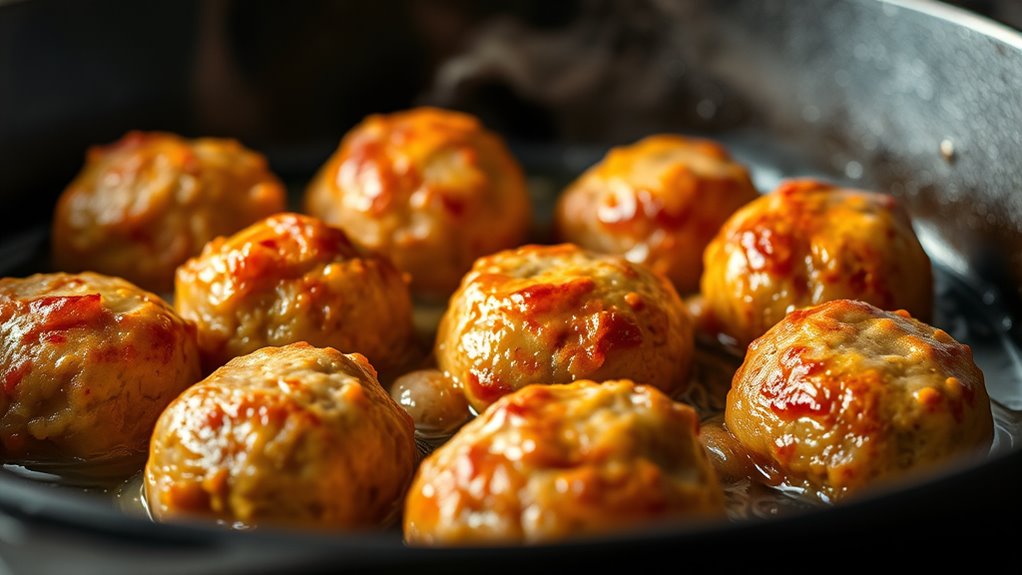
You’ll fry meatballs in a pan for 5 to 18 minutes, depending on their size and meat type. Small meatballs cook faster (5-7 minutes), while larger ones take longer (15-18 minutes). The key to perfect meatball frying is managing time and heat correctly.
Keep the heat medium to brown them evenly, and turn them gently to maintain shape. Check for a golden crust and no pink inside, or use a thermometer for safety.
Proper frying not only ensures thorough cooking but also seals in juiciness.
Want to master adjustments for juiciness and perfect cooking? There’s more to explore about how to fry meatballs in a pan to get that ideal texture and flavor every time.
Key Takeaways
- Fry small meatballs (~1 inch) for 5-7 minutes, medium (1.5-2 inches) for 10-12 minutes, and large (2.5+ inches) for 15-18 minutes.
- Cook ground poultry meatballs longer (12-15 minutes) to ensure safety and even browning.
- Use medium to medium-high heat depending on meat type, lowering heat for lean meats to avoid drying out.
- Turn meatballs regularly to brown evenly and add a splash of water with a cover to finish cooking through.
- Check doneness by ensuring a golden-brown exterior, clear juices, and internal temperature of 160°F (beef/pork) or 165°F (poultry).
How Long Should You Fry Meatballs in a Pan?
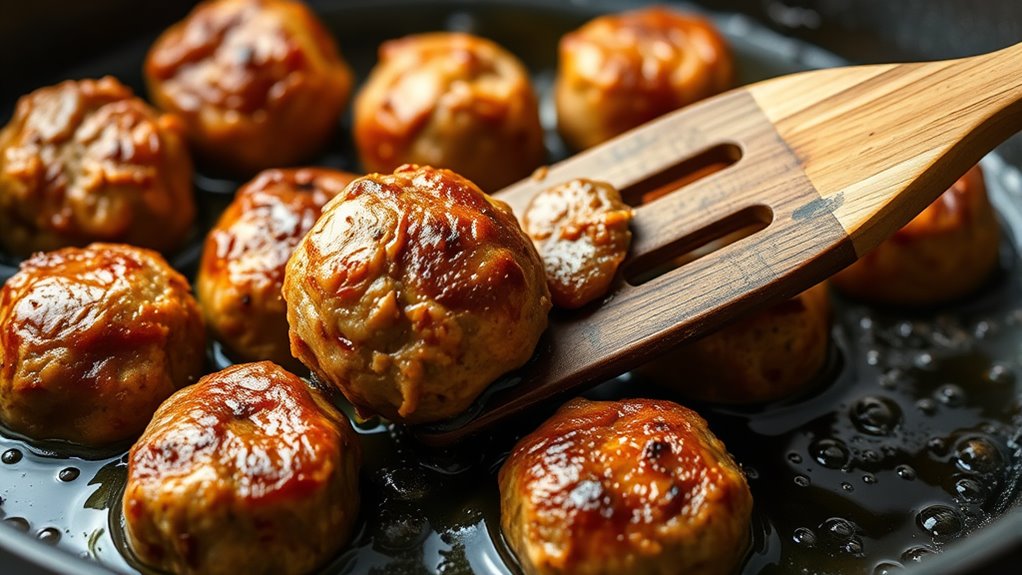
Although frying meatballs may seem straightforward, knowing how long to cook them in a pan is key to achieving a juicy interior and a crispy exterior. You’ll want to cook medium-sized meatballs for about 10 to 12 minutes over medium heat. Start by heating a bit of oil in the pan, then place the meatballs carefully to avoid splattering.
Turn them every few minutes to ensure even browning on all sides. If your meatballs are larger, add a couple of extra minutes to the cooking time. Keep the heat moderate; too high, and the outside will burn before the inside cooks through.
With this timing, you’ll get that perfect balance of texture and flavor without drying out your meatballs.
How Can You Tell When Meatballs Are Cooked Through?
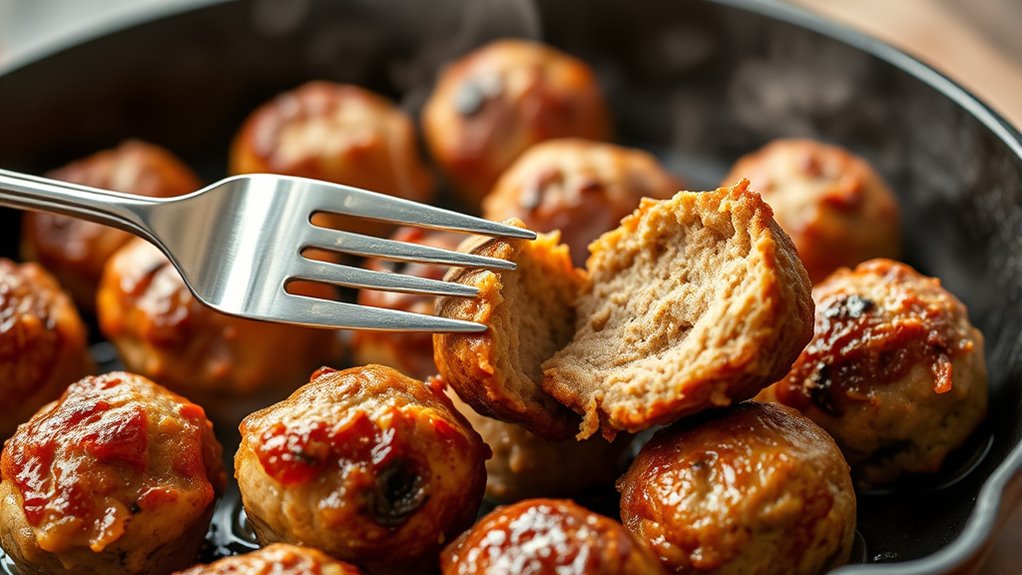
You can tell your meatballs are cooked through by checking their color and texture—look for a golden-brown exterior and no pink inside. Using a meat thermometer is the most reliable way; aim for an internal temperature of 160°F (71°C).
These tips help guarantee your meatballs are both safe and delicious.
Visual Cues
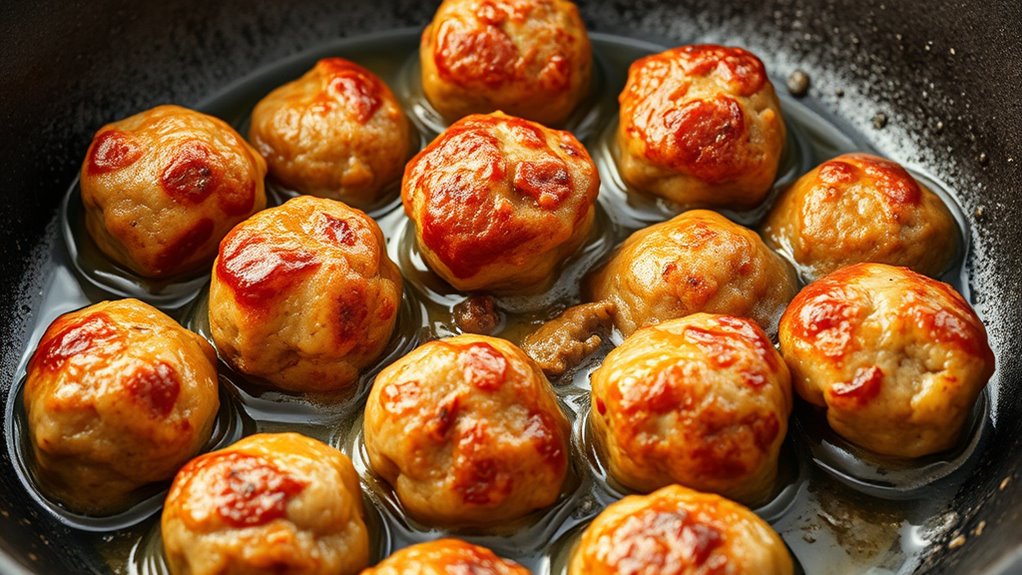
When frying meatballs, spotting the right visual cues can save you from undercooking or overcooking them. First, look for a uniform golden-brown crust on the outside—that’s a good sign your meatballs have seared properly. You’ll notice the edges firm up and lose their raw appearance.
Also, observe the size: cooked meatballs often shrink slightly as moisture cooks out. If they wobble excessively when you move them, they might still be raw inside. Another cue is juices; clear juices seeping out indicate they’re done, while pink or red juices mean they need more time.
Internal Temperature
Visual cues offer helpful hints, but the most reliable way to know if your meatballs are cooked through is by checking their internal temperature. Grab an instant-read thermometer and insert it into the center of a meatball without touching the pan. For beef or pork meatballs, aim for 160°F (71°C).
If you’re cooking poultry meatballs, they need to reach 165°F (74°C). Once the thermometer hits the right temperature, you can confidently remove the meatballs from the pan, knowing they’re safe to eat. Avoid guessing based solely on color or texture since these can be misleading.
Using a thermometer ensures your meatballs are juicy, perfectly cooked, and safe, eliminating any risk of undercooked meat. It’s a simple step that guarantees delicious results every time.
How Does Meatball Size and Type Affect Frying Time?
The size of your meatballs directly changes how long you need to fry them, with larger ones taking more time to cook through. The type of meat you choose also matters because beef, pork, or chicken all have different cooking requirements.
Plus, the temperature of your pan can speed up or slow down the frying process, so you’ll want to adjust accordingly.
Meatball Diameter Impact
Because meatballs come in various sizes and types, their frying times can differ considerably. When you fry meatballs, diameter plays a vital role in how long they need to cook. Here’s what to take into account:
- Smaller meatballs (around 1 inch) cook faster, usually in 5-7 minutes.
- Medium meatballs (1.5-2 inches) take about 10-12 minutes to fry thoroughly.
- Larger meatballs (2.5 inches or more) require 15-18 minutes to cook through.
- Thicker meatballs need more time for heat to penetrate the center.
- Even cooking is easier if you flip meatballs frequently, regardless of size.
Adjust your frying time based on diameter to make certain your meatballs are juicy inside and nicely browned outside.
Meat Type Variations
Although size influences frying time, the type of meat you use plays an equally important role in how long your meatballs need to cook. Lean meats like chicken or turkey cook faster because they have less fat and moisture, which means you’ll typically fry them for about 8 to 10 minutes.
Beef and pork, which contain more fat, usually require a few extra minutes—around 10 to 12—to cook through evenly without drying out. If you use a mix of meats, adjust your frying time closer to the meat that takes longest to cook.
Also, denser meats might need a bit more time, so always check the internal temperature or cut into one to confirm it’s fully cooked before serving.
Cooking Temperature Effects
When you adjust the cooking temperature, you directly influence how quickly your meatballs cook and how evenly they brown. Larger meatballs need a lower heat to cook through without burning the outside, while smaller ones can handle higher heat for a faster cook. The type of meat matters too—lean meats cook faster but can dry out, so you might want to lower the temperature slightly.
Here’s what to take into account:
- Bigger meatballs require gentler heat to cook evenly.
- Smaller meatballs cook quickly and brown faster at higher heat.
- Fatty meats handle higher temperatures better without drying.
- Lean meats need lower heat to stay juicy.
- Consistent medium heat helps avoid burning and undercooking.
Adjusting temperature based on size and meat type ensures perfect meatballs every time.
Which Cooking Oils Work Best for Frying Meatballs?
Choosing the right cooking oil makes a big difference in frying meatballs, as it affects both flavor and texture. You want an oil with a high smoke point to prevent burning and maintain a crispy exterior. Oils like canola, vegetable, and peanut are great choices because they handle heat well without overpowering the meatballs’ taste.
Olive oil adds a nice flavor, but stick to light or refined versions since extra virgin olive oil burns quickly. Avoid butter alone; it burns too fast, though mixing it with oil can work. Ultimately, pick an oil that withstands medium-high heat and complements your recipe.
This way, your meatballs cook evenly, develop a golden crust, and stay juicy inside.
How to Prepare Your Pan for Even Cooking and Decide if You Should Cover It
Selecting the right oil sets the stage, but preparing your pan properly guarantees your meatballs cook evenly and develop that perfect crust. Start with a clean, dry pan to avoid sticking. Preheat your pan over medium heat before adding oil to assure even temperature.
Choosing the right oil and properly heating your pan ensures evenly cooked meatballs with a perfect crust.
Once the oil shimmers, it’s ready for your meatballs.
Deciding whether to cover the pan depends on your goal. Covering traps steam, cooking meatballs through faster but may soften the crust. Leaving it uncovered promotes browning but requires more attention.
Keep these tips in mind:
- Use a heavy-bottomed pan for consistent heat
- Avoid overcrowding to allow even cooking
- Adjust heat to maintain a steady sizzle
- Turn meatballs regularly for uniform color
- Cover briefly if cooking thicker meatballs all the way through
How to Get a Golden-Brown Crust on Your Meatballs
To achieve a golden-brown crust on your meatballs, you need to maintain the right heat and avoid moving them too soon. Heat your pan over medium to medium-high heat and add enough oil to coat the surface. Once the oil shimmers, carefully place your meatballs in the pan, leaving space between them.
Resist the urge to move or turn them for at least 3 to 4 minutes. This allows the crust to form properly. When you see a deep golden color on the bottom, gently turn the meatballs using tongs or a spatula to brown the other sides.
Avoid overcrowding the pan, as this lowers the temperature and prevents even browning. Patience and proper heat control are key to getting that perfect crust.
How to Adjust Frying Time for Different Meatball Meats
You’ll need to adjust frying times based on the type of meat you’re using, since beef, pork, chicken, and turkey all cook at different rates. Keep an eye on the heat, lowering it for leaner meats to prevent drying out and raising it slightly for fattier ones to get that perfect crust.
Meat Types And Cooking Times
Because different meats cook at varying rates, adjusting your frying time guarantees perfectly cooked meatballs every time. Knowing the right cooking duration helps you avoid undercooked or dry results.
Here’s a quick guide on common meat types:
- Ground beef: Fry for about 10-12 minutes, turning often to brown evenly.
- Ground pork: Similar to beef, 10-12 minutes; make sure it’s fully cooked through.
- Ground chicken or turkey: Cook for 12-15 minutes, since poultry needs extra time to reach a safe temperature.
- Mixed meats: Adjust based on the slowest-cooking meat, usually 12-15 minutes.
- Vegetarian substitutes: Check package instructions; usually 8-10 minutes is enough.
Keep these times in mind, and you’ll nail the texture and doneness every time.
Adjusting Heat For Meatballs
Although different meats require specific frying times, adjusting your pan’s heat is just as essential for cooking meatballs evenly. If the heat is too high, the outside may burn while the inside stays raw. Too low, and the meatballs can become dry and tough.
Use medium heat for most meats, but modify it based on the type.
| Meat Type | Heat Adjustment |
|---|---|
| Beef | Medium-high for searing |
| Pork | Medium, avoid high heat |
| Chicken | Medium-low to cook through |
| Mixed (beef/pork) | Medium, monitor closely |
Keep an eye on color and firmness, and adjust heat as needed to ensure juicy, perfectly cooked meatballs every time.
How to Fix It When Meatballs Cook Too Fast or Too Slow
If your meatballs cook too fast or too slow, adjusting the heat is key to getting them just right. When they brown too quickly, the inside might stay raw; too slow, and they could dry out or fall apart. Here’s how to fix it:
- Lower the heat slightly if they’re browning too fast.
- Increase heat if they’re taking too long to cook through.
- Use a lid to trap heat for slower cooking without burning.
- Flip meatballs regularly to ensure even cooking.
- Test doneness by cutting one open before serving.
How to Keep Fried Meatballs Juicy and Flavorful
To keep fried meatballs juicy and flavorful, you need to focus on the right ingredients and cooking techniques. Start with a mix of meats, like beef and pork, to add moisture. Avoid overmixing the meat to keep them tender.
When frying, cook over medium heat to brown the outside without drying the inside. Adding a bit of moisture, like grated onion or breadcrumbs soaked in milk, helps lock in juiciness.
| Ingredient | Purpose | Tip |
|---|---|---|
| Ground beef/pork | Flavor & moisture | Mix, don’t overwork |
| Breadcrumbs | Retain moisture | Soak in milk before adding |
| Onion (grated) | Juiciness & taste | Add freshly grated |
| Medium heat | Even cooking | Brown outside, keep inside juicy |
| Olive oil/butter | Flavor & crispness | Use enough to avoid sticking |
Bonus Tips for Perfect Pan-Fried Meatballs Every Time
When frying meatballs, you’ll want to use a heavy-bottomed pan to guarantee even heat distribution and prevent burning. To get perfect pan-fried meatballs every time, keep these bonus tips in mind:
- Don’t overcrowd the pan; give each meatball space to brown evenly.
- Use medium heat to cook slowly, locking in juices without burning the outside.
- Turn meatballs gently with tongs or a spatula to maintain their shape.
- Add a splash of water and cover the pan briefly to steam and finish cooking inside.
- Let meatballs rest a few minutes after frying to redistribute juices for maximum tenderness.
Follow these tips, and you’ll enjoy beautifully browned, juicy meatballs with every batch you make.
Frequently Asked Questions
Can You Freeze Cooked Meatballs After Frying?
Yes, you can freeze cooked meatballs after frying. Just let them cool completely, then place them in an airtight container or freezer bag.
They’ll keep well for up to three months, making future meals easy and convenient.
What Side Dishes Pair Well With Fried Meatballs?
You’ll love pairing fried meatballs with mashed potatoes, garlic bread, or pasta. A fresh salad or steamed veggies also work well. These sides balance the rich flavors and make your meal satisfying and complete.
How Do You Reheat Fried Meatballs Without Drying Them Out?
You’ll want to treat your meatballs like treasured stories—gently revived.
Reheat them covered in a pan with a splash of water or broth,
letting steam embrace them, so they stay juicy and full of life.
Are There Vegetarian Alternatives Suitable for Pan-Frying?
You can use vegetarian alternatives like lentil, chickpea, or tofu meatballs for pan-frying. They hold together well and crisp up nicely.
Just make sure to oil the pan and cook them evenly on all sides.
Can You Use Frozen Meatballs Directly in the Pan?
Yes, you can cook frozen meatballs directly in the pan. Just don’t overcrowd it, cook on medium heat, and turn frequently to make certain of even cooking.
It’ll take a bit longer than fresh ones, though.
Conclusion
Frying meatballs is a delicate dance—you want them golden without rushing or lingering too long. Trust your instincts, and don’t worry if a few need a little extra time to find their perfect moment. With the right oil, heat, and care, you’ll create juicy, flavorful bites that impress every time.
Remember, patience is your secret ingredient, turning simple meatballs into something truly special on your plate. How long do you fry meatballs in a pan? The answer lies in attentive cooking and timing, ensuring each meatball is cooked through and perfectly browned.
Happy frying! Mastering how long to fry meatballs in a pan will bring you delicious results every time.