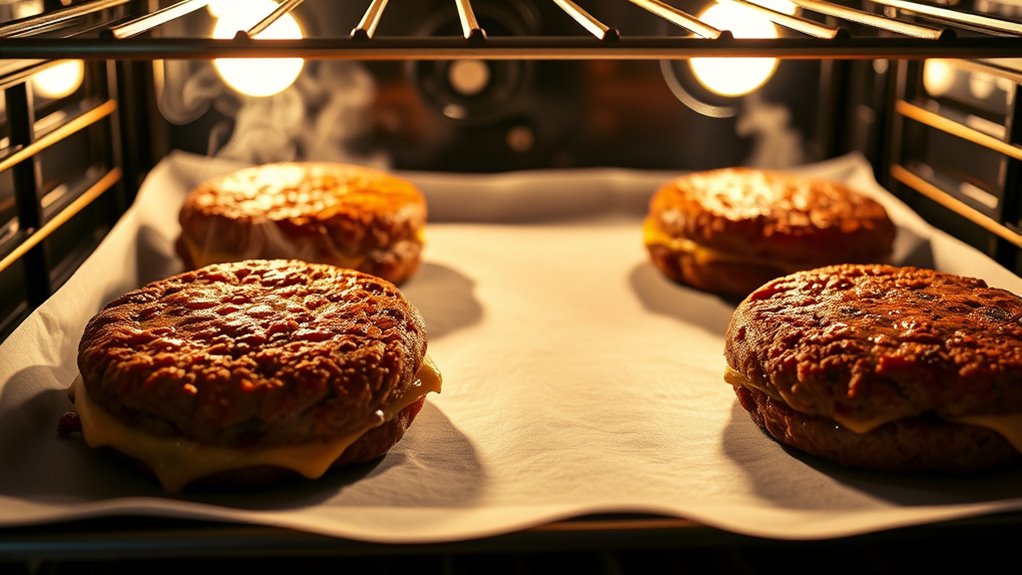
How Long to Cook Burgers in Oven
You should cook your burgers in the oven at 400°F (200°C) for about 15-18 minutes, flipping them halfway to guarantee even cooking. Oven-baked burgers are a convenient and delicious way to enjoy a classic meal without the need for a grill.
Aim for an internal temperature of 145°F (63°C) for medium doneness, using a meat thermometer for accuracy.
Thicker burgers need more time, while frozen ones require a lower temperature and longer cook. Add cheese near the end for melting.
Keep going to uncover tips for juicier, perfectly cooked burgers every time.
Key Takeaways
- Bake burgers at 400°F (200°C) for 15-18 minutes, flipping halfway to ensure even cooking and a medium doneness.
- Use a meat thermometer to check for an internal temperature of 145°F (63°C) for safe, medium-cooked burgers.
- Thicker patties require longer cooking times, while thinner patties cook faster and risk drying out.
- Frozen burgers need about 10-15 minutes longer at 375°F due to starting from a lower temperature.
- Add cheese 2 minutes before the end of cooking to allow proper melting without overcooking the burger.
How Long Should You Cook Burgers in the Oven for Medium Doneness?
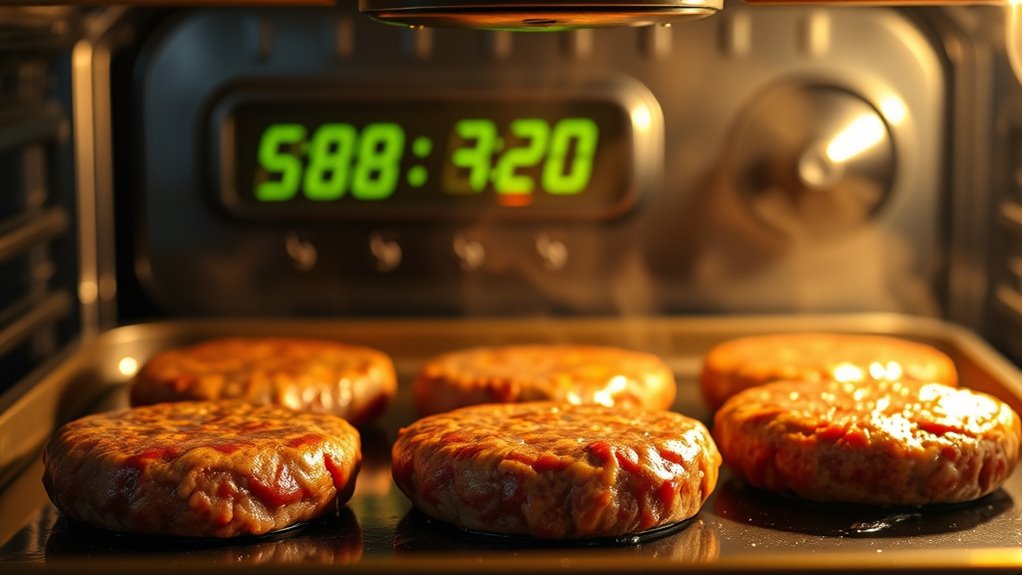
If you want your burgers cooked to medium doneness, you should bake them in a preheated oven at 400°F (200°C) for about 15 to 18 minutes. Place the patties on a baking sheet lined with foil or parchment paper for easy cleanup. Halfway through, flip the burgers to guarantee even cooking on both sides.
Use a meat thermometer to check the internal temperature; it should read around 145°F (63°C) for medium doneness. Avoid opening the oven door too often, as this can lower the temperature and affect cooking time. Once done, let the burgers rest for a few minutes to allow juices to redistribute.
This method delivers juicy, tender burgers with a perfect medium pink center.
What Oven Temperature Works Best for Baking Burgers?
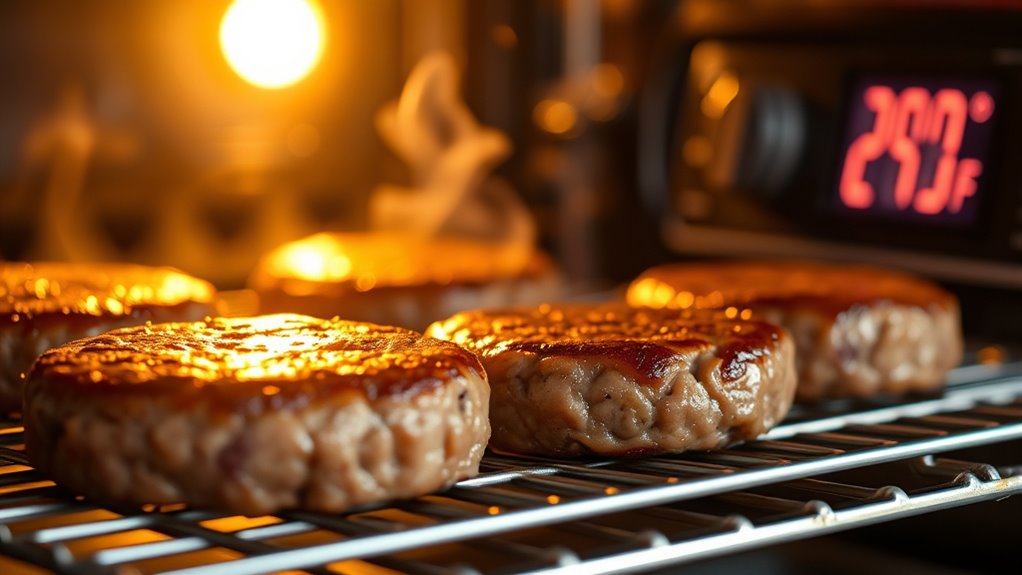
You’ll want to set your oven to the ideal temperature range to get juicy, well-cooked burgers. Too high, and the outside cooks too fast while the inside stays underdone; too low, and the burgers dry out.
Finding the right balance between heat and time is key to perfect texture and flavor.
Ideal Temperature Range
Although ovens vary, setting your temperature between 375°F and 400°F usually works best for baking burgers. This range heats the patties evenly without drying them out or causing excessive shrinkage. At 375°F, you’ll get a slower, more controlled cook that helps retain moisture,
while 400°F speeds things up slightly, giving you a nicely browned exterior. Avoid temperatures below 350°F, as they can leave burgers undercooked or take too long to finish. Temperatures above 425°F risk burning the outside before the inside cooks through.
Keep your oven rack in the middle position to ensure balanced heat circulation. By sticking within this ideal temperature range, you’ll consistently bake juicy, flavorful burgers without guesswork or overcooking.
Temperature Effects On Texture
When baking burgers, the oven temperature directly influences their texture, affecting juiciness, tenderness, and crust formation. Picking the right temperature guarantees your burger hits the perfect balance between a juicy inside and a flavorful crust outside.
Here’s what to expect at different temperatures:
- Low (300°F-325°F): Burgers stay tender but lack a crispy crust, sometimes feeling soft or underwhelming.
- Moderate (350°F-375°F): You get a juicy inside with a slight crust, creating a satisfying chew.
- High (400°F-425°F): Burgers develop a rich, browned crust, locking in juices while offering a pleasing texture contrast.
- Very High (450°F+): Crust forms quickly but risks drying the burger if left too long.
Aim for moderate to high heat to enjoy the best texture.
Balancing Heat And Time
Finding the right oven temperature means balancing heat and cooking time to achieve a juicy burger with a perfect crust. You want a temperature hot enough to sear the outside quickly, locking in moisture, but not so high that the burger dries out before cooking through. Around 400°F (204°C) works best for baking burgers.
This temp cooks the meat evenly while creating a browned exterior. At 400°F, plan on about 15-20 minutes total, flipping halfway for evenness. Lower temps take longer and risk overcooking, while higher temps might char the outside too fast.
How Does Burger Thickness Affect Oven Cooking Time?
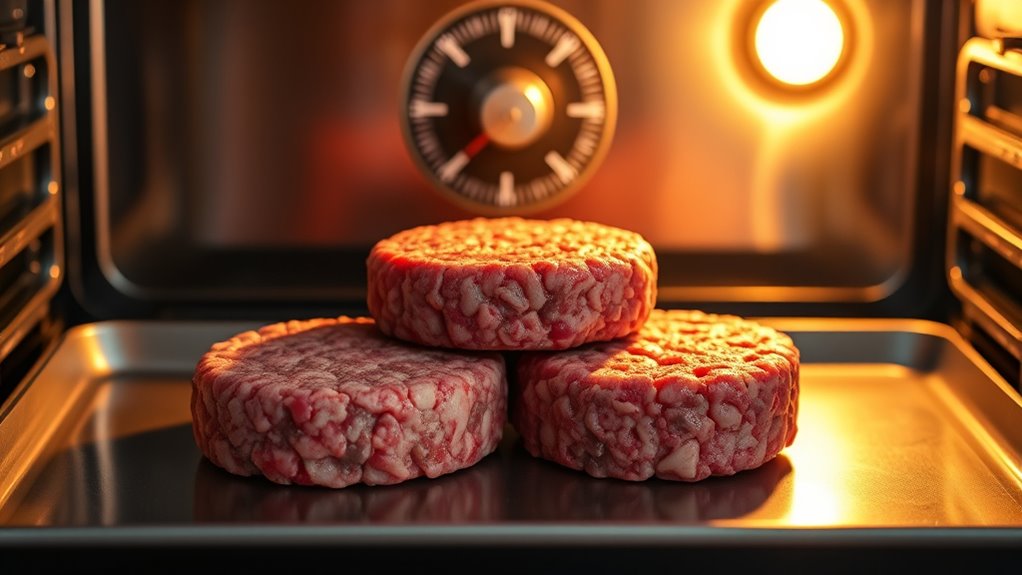
Since thicker burgers contain more mass, they naturally require longer cooking times to reach the desired internal temperature. When you’re cooking in the oven, thickness directly affects how heat penetrates the meat. A thicker patty means the heat takes more time to reach the center, while a thinner one cooks faster but risks drying out if overcooked.
Thicker burgers take longer to cook through, while thinner ones heat faster but can dry out quickly.
To nail the perfect oven-baked burger, consider these points:
- Thicker burgers stay juicier but demand patience.
- Thinner patties cook quickly but can become tough if rushed.
- Adjust cooking time based on thickness to avoid undercooked or overdone results.
- Use a meat thermometer for accuracy—don’t rely on guesswork.
Understanding thickness helps you control cooking time and get that perfect burger every time.
How to Know When Your Oven Burger Is Ready
Although cooking times provide a helpful guideline, you’ll know your oven burger is ready by checking its internal temperature and appearance. Use a meat thermometer to verify safety and doneness. The burger should also have a browned exterior and juices running clear.
Avoid cutting into the burger too early to preserve moisture.
| Internal Temperature | Appearance |
|---|---|
| 125°F (Rare) | Red center, very soft |
| 135°F (Medium Rare) | Pink center, slightly firm |
| 145°F (Medium) | Light pink center, firm edges |
| 160°F (Well Done) | No pink, fully browned |
| 165°F (Safe Temp) | Clear juices, firm texture |
Checking both temperature and appearance ensures your burger is perfectly cooked.
Best Cooking Techniques for Juicy Oven-Baked Burgers
When you want juicy oven-baked burgers, the key lies in controlling heat and moisture throughout the cooking process. You’ll want to avoid drying out your patties while still achieving a flavorful crust. Here are four techniques to help you nail it every time:
- Preheat your oven to a high temperature (around 425°F) to sear the outside quickly and lock in juices.
- Use a broiler pan or wire rack to elevate the burgers, allowing fat to drip away and heat to circulate evenly.
- Avoid pressing down on the patties during cooking; it squeezes out precious juices.
- Let the burgers rest for a few minutes after baking to let juices redistribute, keeping every bite tender and moist.
Follow these steps, and you’ll enjoy perfectly juicy oven-baked burgers every time.
How to Prepare Burger Patties Before Baking
Before baking, prepare your burger patties with care to guarantee even cooking and great flavor. Start by choosing ground beef with about 80% lean content for juiciness. Gently shape the meat into evenly sized patties, roughly ¾ inch thick, to ensure uniform cooking.
Press a slight indentation in the center of each patty with your thumb; this helps prevent puffing up during baking. Season both sides generously with salt and pepper or your favorite spices. Avoid overworking the meat, as it can make the burgers tough.
If you like, add mix-ins like minced onion or garlic but keep it minimal to maintain texture. Place the patties on a baking sheet lined with parchment or a wire rack for better heat circulation. Now you’re ready to bake perfect burgers every time.
Adjusting Oven Cooking Times for Frozen vs. Fresh Burgers
When cooking burgers in the oven, you’ll need to adjust the time depending on whether they’re fresh or frozen. Frozen patties usually require a longer cooking time and sometimes a slightly higher temperature to make certain they cook through.
Knowing these differences helps you get perfectly cooked burgers every time.
Cooking Time Differences
Although cooking times vary, you’ll need to adjust the oven settings depending on whether your burgers are fresh or frozen. Fresh burgers cook faster because they don’t need to thaw, so you’ll save time but must watch carefully to avoid overcooking. Frozen burgers require longer cooking times, ensuring they heat through completely and safely.
Here’s how the differences might affect your cooking:
- Fresh burgers typically take 15-20 minutes at 400°F.
- Frozen burgers usually need 20-25 minutes at the same temperature.
- You’ll often flip fresh burgers once; frozen may need flipping twice.
- Adjusting times prevents dry, tough patties or undercooked centers.
Temperature Adjustments Needed
Since frozen burgers start at a lower temperature, you’ll need to increase both the cooking time and sometimes slightly modify the oven temperature to guarantee they cook evenly without drying out. For frozen patties, set your oven around 375°F instead of 350°F to help them thaw and cook through more efficiently. Keep an eye on cooking times—typically, frozen burgers take about 10 to 15 minutes longer than fresh ones.
However, avoid cranking the heat too high, as that can dry out the meat’s exterior before the inside cooks properly. For fresh burgers, sticking to 350°F usually works well, cooking faster and more evenly. Adjusting temperature and time based on whether your burgers are frozen or fresh will ensure juicy results every time.
Tips for Adding Cheese and Toppings During Baking
If you want perfectly melted cheese and well-balanced toppings, adding them at the right moment during baking is key. Timing ensures your cheese melts just enough without burning, and toppings stay fresh and flavorful.
- Add cheese about 2 minutes before the burgers finish cooking to get that gooey, melty texture.
- Use sturdy toppings like sautéed onions or peppers during baking to let their flavors develop.
- Save delicate toppings such as lettuce, tomato, and pickles for after baking to keep them crisp.
- Avoid piling too many toppings before baking; it can make burgers soggy and affect cooking time.
Follow these tips, and your oven-baked burgers will be a perfect harmony of melted cheese and fresh toppings every time.
How to Keep Oven-Baked Burgers Moist and Flavorful
To keep your oven-baked burgers moist and flavorful, start by choosing the right meat with enough fat content. You’ll also want to add moisture-retaining ingredients like onions or breadcrumbs to lock in juiciness.
Finally, control the cooking temperature carefully to avoid drying out your burgers.
Choosing The Right Meat
Choosing the right meat plays a vital role in keeping your oven-baked burgers moist and flavorful. If you pick the wrong type, your burger could turn out dry and disappointing. Here’s what to consider:
- Fat Content: Aim for ground beef with 15-20% fat. It melts during cooking, adding juiciness.
- Freshness: Use fresh meat, not frozen, for better texture and flavor.
- Meat Blend: Experiment with blends like chuck and brisket for richer taste.
- Quality Grade: Opt for USDA Choice or higher for tenderness and flavor.
Using Moisture-Retaining Ingredients
The quality of your meat sets the stage, but adding moisture-retaining ingredients takes your oven-baked burgers to the next level. You can mix in finely chopped onions, grated zucchini, or soaked bread crumbs to lock in juiciness. These ingredients release moisture as the burgers cook, preventing dryness.
Don’t forget a splash of Worcestershire sauce or a bit of mustard to boost flavor while helping retain moisture. When mixing, handle the meat gently—overworking it can make your burgers tough. Also, avoid packing the patties too tightly; this allows juices to stay inside.
Proper Cooking Temperature Control
Although it might be tempting to crank up the heat for a faster cook, controlling your oven’s temperature is key to keeping burgers juicy and flavorful. High heat can dry out the meat, leaving you with tough, bland patties.
Instead, aim for a moderate temperature around 375°F (190°C) to cook evenly without sacrificing moisture. Here’s how you can master temperature control:
- Preheat your oven fully to avoid temperature fluctuations.
- Use an oven thermometer to ensure accuracy.
- Cook burgers on a wire rack to allow even heat circulation.
- Let burgers rest after cooking to redistribute juices.
Mistakes That Affect Burger Cooking Time
If you don’t pay attention to certain details, your burger’s cooking time can easily be thrown off. One common mistake is using patties that vary in thickness. Thicker burgers take longer to cook, while thinner ones cook faster.
Another error is not preheating the oven properly, which leads to uneven cooking. Overcrowding the baking tray also affects cooking time because it reduces heat circulation. Using frozen patties without thawing can markedly increase the time needed, resulting in uneven doneness.
Ultimately, ignoring the oven’s actual temperature by relying on faulty thermostats can cause undercooked or overcooked burgers. By avoiding these mistakes, you’ll achieve consistent cooking times and perfectly cooked burgers every time in your oven.
Frequently Asked Questions
Can I Cook Other Meats Like Chicken or Turkey Burgers in the Oven?
Yes, you can cook chicken or turkey burgers in the oven. Just make sure to cook them until they reach an internal temperature of 165°F (74°C) to guarantee they’re safe and juicy.
Adjust time accordingly.
What Type of Oven-Safe Tray Is Best for Baking Burgers?
You absolutely need a heavy-duty, non-stick, oven-safe tray—preferably stainless steel or cast iron—that can withstand volcanic heat. It guarantees even cooking, prevents sticking, and crisps your burgers to perfection without any mess or fuss.
Should I Flip Burgers Halfway Through Oven Cooking?
Yes, you should flip your burgers halfway through cooking. This helps them cook evenly, prevents sticking, and guarantees a juicy, well-browned crust on both sides.
Don’t skip flipping to get the best results!
How Long Do Oven-Baked Burgers Stay Safe to Eat Refrigerated?
You can safely keep oven-baked burgers in the fridge for 3 to 4 days.
Make sure to store them in an airtight container to maintain freshness and prevent bacteria growth, so they stay safe to eat.
Can I Use a Convection Oven to Cook Burgers Faster?
You can absolutely use a convection oven to cook burgers faster—the hot air swirls around, searing the patties evenly and locking in juices.
Just reduce the cooking time by about 20% for perfectly cooked burgers.
Conclusion
Cooking burgers in the oven is like tending a garden—you nurture them with the right heat and timing, watching them transform from raw to juicy perfection. As you adjust temperature, thickness, and toppings, you cultivate flavor and moisture, ensuring each burger blooms just right.
Remember, patience and care are your tools; with them, your oven-baked burgers will rise like a well-tended flower. By mastering how long to cook burgers in the oven, you guarantee a delicious result every time. This method helps you achieve perfectly cooked, juicy burgers that are ready to delight every bite with balanced, savory goodness.