How to Use Carote Cookware Safely in the Oven
To use Carote cookware safely in the oven, it is essential to follow specific guidelines to maintain its quality and performance. Carote cookware is designed for durability and excellent heat distribution, but using it within recommended temperature limits ensures longevity. Always keep the oven temperature below 450°F and check your model’s specific heat tolerance before cooking.
Remove any plastic or wooden parts from the cookware to prevent melting or damage. Verify that the cookware is clean and completely dry to avoid any unwanted reactions or warping. Avoid sudden temperature changes, such as moving the cookware directly from the refrigerator to a hot oven, to protect the material.
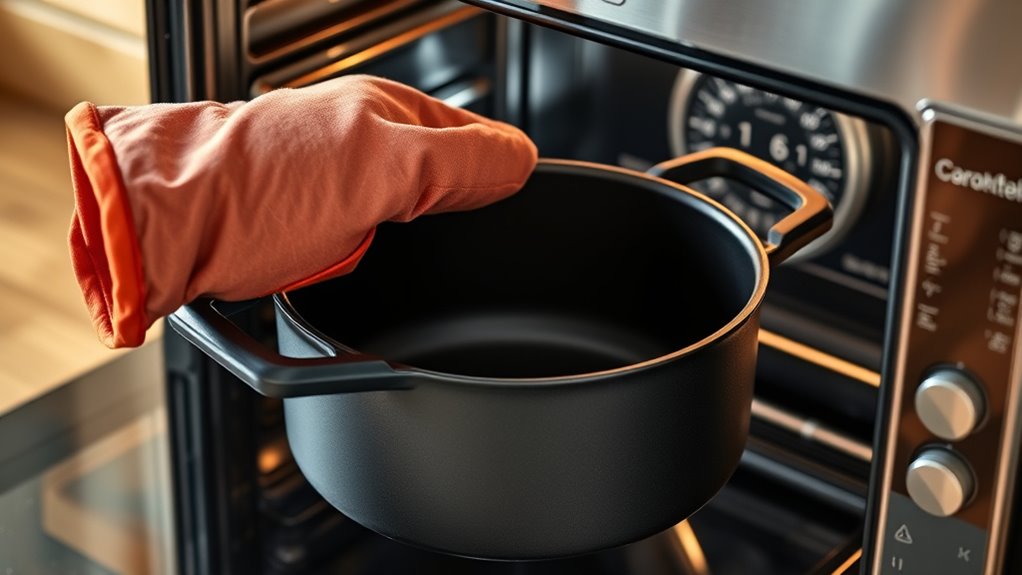
Use oven mitts when handling hot cookware to prevent burns. Place the cookware on a stable oven rack, away from direct heating elements for even cooking. Proper care and maintenance not only protect your Carote cookware but also improve your overall cooking results.
Keep going to discover more tips and best practices.
Key Takeaways
- Confirm the oven temperature does not exceed 450°F (232°C) to prevent coating damage and warping.
- Remove non-oven-safe parts like plastic or wooden handles before placing cookware in the oven.
- Apply a thin layer of cooking oil to promote even heating and prevent sticking.
- Use oven mitts or heat-resistant gloves when handling hot cookware to ensure safety.
- Avoid sudden temperature changes by preheating the oven and cooling cookware on a trivet before cleaning.
Know the Oven-Safe Temperature for Carote Cookware
Before you preheat your oven, you should know the maximum temperature Carote cookware can safely withstand. Most Carote pots and pans are oven-safe up to 450°F (232°C). Going beyond this limit risks damaging the non-stick coating and warping the cookware.
Always double-check your specific Carote piece, as some handles or lids may have lower temperature limits. If you’re unsure, consult the manufacturer’s guidelines or product manual. Remember, sudden temperature changes can also harm your cookware, so avoid moving it directly from the fridge to a hot oven.
How to Prepare Carote Cookware for Oven Use
Knowing the oven-safe temperature is just the start when using Carote cookware in the oven. Before you begin, make certain your cookware is clean and dry—any leftover moisture can cause uneven heating or damage. Remove any plastic or wooden handles if your model allows, as these aren’t oven-safe.
Check that the lid is oven-friendly; some glass lids have temperature limits. Apply a thin layer of cooking oil to the surface to prevent sticking and promote even heat distribution. Avoid using aerosol sprays, which can leave residue.
Finally, verify your cookware fits comfortably in your oven without touching the heating elements or oven walls. Taking these preparation steps helps protect your Carote cookware and ensures your meal cooks perfectly.
How to Safely Put Your Carote Cookware in the Oven
Before placing your Carote cookware in the oven, make sure you know its oven-safe temperature limit to avoid damage. Always prepare your cookware properly by preheating the oven and avoiding sudden temperature changes.
Handle your cookware carefully when removing it and clean it according to the manufacturer’s guidelines to maintain its quality.
Oven-Safe Temperature Limits
Although Carote cookware is designed to handle high heat, you need to be aware of its specific oven-safe temperature limits to avoid damage. Most Carote pieces can safely withstand temperatures up to 450°F (232°C). Exceeding this limit risks warping the nonstick coating or damaging the handles.
Always check your cookware’s manual or markings for exact temperature ratings, as some models may differ. Avoid sudden temperature changes like putting a hot pan directly into a cold oven, as this can stress the materials.
Preparing Cookware For Oven
To protect your Carote cookware and get the best results, you need to prepare it properly before placing it in the oven. First, verify the cookware is clean and completely dry to prevent any damage or uneven heating. Avoid sudden temperature changes—never put cold cookware directly into a hot oven, as this can cause warping.
Use oven mitts or heat-resistant gloves when handling your cookware to avoid burns. Remove any plastic or wooden parts that aren’t oven-safe, like lids or handles, to prevent melting or damage. Place your Carote cookware on a stable oven rack, ensuring it sits flat to allow even heat distribution.
Following these steps will help you use your Carote cookware safely and maintain its durability for many meals to come.
Handling And Maintenance Tips
When you put your Carote cookware in the oven, handle it with care to prevent damage and guarantee safety. Always use oven mitts or thick gloves to protect your hands from heat. Avoid sudden temperature changes, like placing hot cookware on a cold surface, to prevent warping or cracking.
After use, clean your cookware gently with non-abrasive sponges and mild detergent to maintain its finish.
Follow these handling and maintenance tips:
- Place cookware on a heat-resistant trivet post-oven use to cool down gradually.
- Avoid using metal utensils that can scratch the non-stick surface.
- Store cookware in a dry place with protective padding between pieces to prevent scratches.
These steps will help your Carote cookware last longer and perform safely.
Using Carote Cookware for Baking, Roasting, and Broiling
When using your Carote cookware for baking, roasting, or broiling, make sure you stay within the recommended oven temperature limits to avoid damage. Choose the right cooking technique based on your recipe and the cookware’s design.
After cooking, follow proper care steps to keep your cookware in great condition.
Oven Temperature Limits
How hot can you safely heat Carote cookware in the oven? Carote cookware is designed to handle high temperatures, but it’s essential to stay within recommended limits to maintain its quality and safety. For baking, roasting, and broiling, you should keep the temperature below 450°F (232°C).
Exceeding this can damage the non-stick surface and warp the pan.
Here are key temperature guidelines to remember:
- Baking: Stick to 350°F–400°F for even cooking without stressing the cookware.
- Roasting: Up to 425°F works well for meats and vegetables without risk.
- Broiling: Avoid direct broiler heat above 450°F to protect the pan’s coating.
Always check your specific model’s instructions for exact limits.
Suitable Cooking Techniques
Although Carote cookware is versatile, using it correctly for baking, roasting, and broiling guarantees the best results and longevity. When baking, use even heat and avoid sudden temperature changes.
For roasting, ensure your cookware is oven-safe at the required temperature, and use a rack if needed to promote air circulation. Broiling demands close attention; place Carote cookware on the top rack but avoid direct contact with heating elements to prevent damage.
| Technique | Tip |
|---|---|
| Baking | Preheat oven; avoid thermal shock |
| Roasting | Use moderate temperature; add rack |
| Broiling | Monitor closely; keep distance from heat |
| General | Avoid sudden temperature changes |
Following these tips helps you enjoy Carote cookware’s durability and performance.
Care After Use
Since proper care after use guarantees your Carote cookware stays in great shape, you’ll want to clean and store it correctly following baking, roasting, or broiling. First, let the cookware cool completely before washing to avoid warping.
Next, hand wash with warm, soapy water using a soft sponge to preserve the non-stick surface. Avoid abrasive cleaners or steel wool. Finally, dry your cookware thoroughly to prevent moisture damage and store it in a dry place.
Here’s a quick checklist:
- Cool down completely before cleaning.
- Wash gently with mild soap and a soft sponge.
- Dry fully and store in a dry, safe spot.
Following these steps will keep your Carote cookware performing beautifully for many meals to come.
Common Mistakes to Avoid With Carote Cookware
When you use Carote cookware in the oven, avoiding common mistakes can extend its lifespan and maintain its performance. First, don’t preheat an empty pan; this can warp the surface. Avoid sudden temperature changes, like placing hot cookware directly into cold water, as this damages the material.
Never use metal utensils, which can scratch the nonstick coating—opt for silicone or wooden tools instead. Also, don’t exceed the manufacturer’s recommended oven temperature, typically around 450°F, to prevent coating breakdown. Avoid stacking cookware while it’s still hot, which can cause dents or scratches.
Cleaning and Maintaining Carote Cookware After Oven Use
To keep your Carote cookware in top shape after using it in the oven, you should clean it promptly but gently. Avoid harsh scrubbing or abrasive cleaners that can damage the nonstick surface. Instead, follow these steps:
- Let the cookware cool before washing to prevent warping.
- Use warm water, mild dish soap, and a soft sponge to clean off food residue.
- Rinse thoroughly and dry immediately with a soft cloth to avoid water spots.
Regular maintenance also includes seasoning your cookware occasionally by rubbing a small amount of cooking oil on the surface after cleaning. This helps preserve the nonstick coating and keeps your Carote cookware performing well for years.
When to Replace Your Carote Cookware for Oven Safety
Although Carote cookware is designed for durability, you’ll need to substitute it if you notice significant damage or wear that compromises safety in the oven. Look out for cracks, warping, or severe scratches on non-stick surfaces, as these can affect heat distribution and release harmful particles.
If the handles become loose or damaged, it’s time to stop using the cookware to avoid accidents. Also, if the cookware no longer fits securely in your oven or shows signs of rust, replacement is necessary.
Regularly inspect your Carote cookware after cleaning and before each use to catch these issues early. Replacing damaged cookware ensures your safety and maintains cooking performance, preventing potential hazards while you enjoy your oven-cooked meals.
Tips for Getting the Best Results With Carote Cookware in the Oven
Keeping your Carote cookware in good condition sets the stage for excellent oven performance. To get the best results, you’ll want to follow a few simple tips that enhance cooking and preserve your cookware.
- Preheat your oven properly – Give your oven time to reach the right temperature before placing your Carote cookware inside. This ensures even cooking throughout your dish.
- Use oven mitts or gloves – Always protect your hands when handling hot Carote pots or pans to avoid burns.
- Avoid sudden temperature changes – Don’t transfer your cookware directly from the fridge to the oven or vice versa. Gradual temperature shifts prevent warping and extend cookware life.
Frequently Asked Questions
Can Carote Cookware Be Used on Stovetop and Then Transferred to the Oven?
Yes, you can use Carote cookware on the stovetop and then transfer it to the oven. Just make sure it’s oven-safe, avoid sudden temperature changes, and always use oven mitts to handle hot cookware safely.
Is It Safe to Use Metal Utensils With Carote Cookware in the Oven?
You shouldn’t use metal utensils with Carote cookware in the oven—it’s not like handling a sword in medieval times. Metal can scratch the nonstick surface, reducing its effectiveness and lifespan, so stick to silicone or wooden tools instead.
Does Carote Cookware Affect Cooking Times Compared to Other Brands?
Carote cookware generally doesn’t affect cooking times considerably compared to other brands. You’ll find it heats evenly and retains heat well, so your meals cook consistently.
Just monitor closely the first few times to adjust if needed.
Can Carote Cookware Be Used in a Microwave Oven?
Think of Carote cookware as a knight armored for heat—while it bravely faces oven flames, it can’t enter the microwave’s electric castle. You shouldn’t use it there; it’s simply not designed for microwaves.
Are There Any Specific Recipes Recommended for Carote Cookware in the Oven?
You’ll love making roasted vegetables, baked chicken, or casseroles in Carote cookware. These recipes take advantage of its even heat distribution, ensuring your dishes cook perfectly and develop great flavors every time.
Conclusion
Using your Carote cookware in the oven can be as smooth as butter if you follow the right steps. Know its temperature limits, prep it carefully, and avoid common pitfalls to keep your meals—and cookware—safe.
Treat it well by cleaning and maintaining it after each use, and replace it when needed. With a little care, your Carote cookware will be your trusty kitchen sidekick, helping you create delicious oven dishes every time.
By understanding how to use Carote cookware safely in the oven, you ensure both the longevity of your cookware and the quality of your meals. Proper usage and maintenance are key to enjoying your Carote cookware for years to come.