
Are Slow Cookers Dishwasher Safe and How to Clean Them
You can usually put your slow cooker’s removable stoneware insert and glass lid on the dishwasher’s top rack, as these parts are generally dishwasher safe. However, never place the base or any electrical components in the dishwasher.
Hand wash the base, rubber seals, and any decorative or sensitive components with warm soapy water to avoid damage. This careful cleaning helps maintain your slow cooker’s functionality and appearance.
Make sure all parts are completely dry before storage to prevent odors or mold from developing.
Follow these simple steps to keep your slow cooker in great shape and discover tips to extend its life and cleanliness.
Key Takeaways
- Most removable stoneware inserts and glass lids are dishwasher safe on the top rack, but always check the manufacturer’s guidelines first.
- Do not put the slow cooker base, electrical parts, rubber seals, or wooden components in the dishwasher to avoid damage.
- Hand wash outer housing, electrical parts, and rubber gaskets with warm soapy water and a soft cloth to preserve their condition.
- Soak stubborn stains in warm soapy water before gently scrubbing, then rinse and dry all parts thoroughly to prevent odors and mold.
- Store the ceramic insert and lid dry and separate from the base, keeping the lid slightly ajar to maintain freshness and prevent damage.
Slow Cooker Parts Safe for the Dishwasher

Although slow cookers have multiple components, not all of them are dishwasher safe. You’ll find that the removable stoneware insert and the glass lid usually are. These parts can withstand the dishwasher’s heat and detergent without damage, making cleanup easier for you.
Just place the stoneware insert and glass lid on the top rack to avoid intense heat exposure. Keep in mind to check your slow cooker’s manual because some brands might have specific instructions or warnings. Avoid putting the heating base or any electrical parts in the dishwasher since water can ruin the internal components.
Sticking to these guidelines guarantees your slow cooker parts stay in good shape and your cleaning routine stays hassle-free.
Hand Washing Slow Cooker Parts That Aren’t Dishwasher Safe

You’ll want to spot which slow cooker parts shouldn’t go in the dishwasher, like the lid or heating base. These pieces need gentle hand washing to avoid damage. Using warm soapy water and a soft cloth will keep them clean without risking wear.
Identifying Non-Dishwasher Components
Since slow cookers often have a mix of materials, you need to know which parts require hand washing to avoid damage. Typically, the outer housing contains electrical components and should never go in the dishwasher. The lid, especially if it has a rubber or silicone gasket, might not withstand dishwasher heat as it can warp or degrade.
Some slow cooker inserts are ceramic or stoneware and are usually dishwasher safe, but double-check your model’s instructions. Plastic knobs, handles, or decorative trims often don’t hold up well in the dishwasher, risking melting or discoloration. By identifying these non-dishwasher parts, you can protect your slow cooker’s functionality and appearance.
Always inspect your slow cooker carefully before deciding which parts to load into the dishwasher.
Proper Cleaning Techniques
Knowing which slow cooker parts can’t go in the dishwasher helps you focus on proper cleaning methods for them. Typically, the ceramic insert and the lid need hand washing to preserve their finish and seals. Start by letting the insert cool completely before handling.
Use warm, soapy water and a non-abrasive sponge to gently clean away food residue. Avoid harsh scrubbers that can damage the surface. For stubborn stains, soak the insert in warm soapy water for 15-20 minutes before scrubbing.
Rinse thoroughly to remove soap and dry with a soft cloth to prevent water spots. For lids with rubber seals, check for trapped food and clean carefully around the edges. Hand washing guarantees these parts stay in good condition longer.
Slow Cooker Parts to Avoid in the Dishwasher
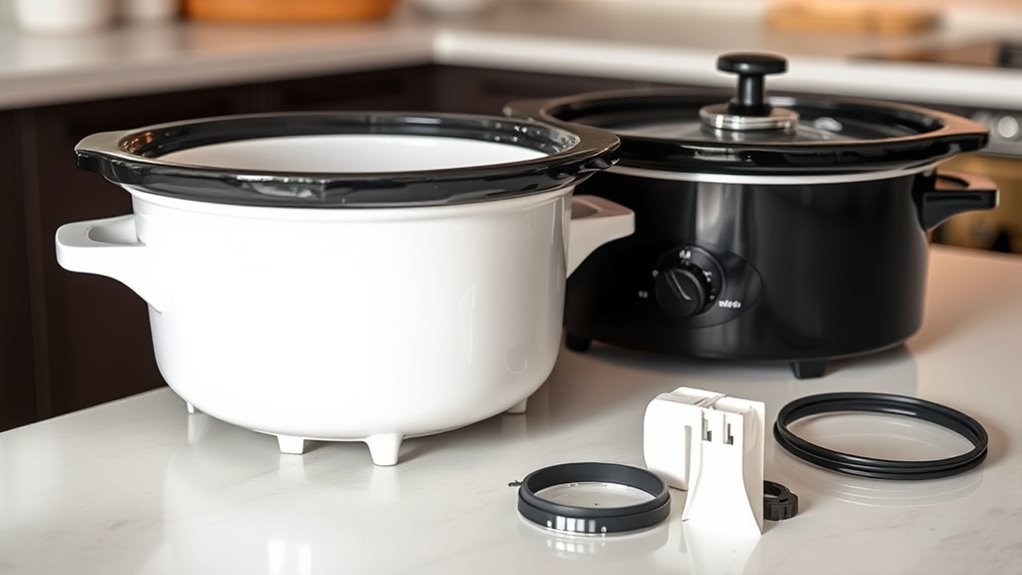
Although dishwashers offer convenience, certain slow cooker parts can get damaged if you toss them in without caution. Avoid putting the slow cooker’s electrical base in the dishwasher—it’s not designed to handle water or heat exposure. Doing so can ruin the wiring and controls.
Also, skip placing the heating element or any detachable cords in the dishwasher, as they’re sensitive to moisture and can malfunction. Some lids have rubber seals or silicone gaskets; these might degrade or warp over time in the dishwasher’s high heat.
If your slow cooker has wooden handles or decorative parts, avoid washing those in the dishwasher too, since they can crack or lose finish. To keep your slow cooker in great shape, always check the manufacturer’s guidelines before using your dishwasher.
Cleaning the Stoneware Insert and Lid by Hand
When you clean the stoneware insert and lid by hand, you’ll preserve their finish and extend their lifespan. Avoid harsh scrubbing tools that can scratch the surfaces. Instead, follow these steps:
- Soak the insert and lid in warm, soapy water for 15-20 minutes to loosen food residue.
- Use a soft sponge or cloth to gently scrub away any remaining stains or stuck-on bits.
- Rinse thoroughly with warm water to remove soap residue.
- Dry both pieces completely with a soft towel to prevent water spots and maintain the glaze.
How to Clean the Slow Cooker Base Safely
Before you start cleaning the slow cooker base, always unplug it to keep things safe. Never immerse the base in water or let moisture get inside.
Instead, wipe it down gently with a damp cloth to remove any spills or stains.
Unplug Before Cleaning
Since the slow cooker base contains electrical components, you should always unplug it before cleaning to avoid any risk of electric shock. This simple step guarantees your safety and protects the appliance from damage.
When you’re ready to clean, follow these steps:
- Unplug the slow cooker from the power outlet.
- Wait until the base cools down completely to prevent burns.
- Use a damp cloth or sponge with mild detergent to wipe the exterior.
- Dry the base thoroughly with a soft towel before plugging it back in.
Avoid Water Exposure
After unplugging and cooling down your slow cooker, you need to be careful to keep the base dry. The base contains electrical components that can be damaged by water. Never immerse it in water or place it under running water.
Avoid spilling liquids on the base while cleaning. If any spills occur, wipe them up immediately with a soft, dry cloth. Keeping the base dry protects its functionality and extends its lifespan.
When cleaning, focus on the removable stoneware and lid instead, as those parts are designed to handle moisture. Treat the base gently to prevent water damage, which can cause malfunctions or electrical hazards. By avoiding water exposure, you guarantee your slow cooker stays safe and works properly for many meals to come.
Use Damp Cloth
When you clean the slow cooker base, use a damp cloth to gently wipe away any dirt or spills without risking water damage. Avoid submerging the base or letting water seep into electrical components. Here’s how to do it effectively:
- Unplug the slow cooker and let the base cool completely.
- Lightly dampen a soft cloth with warm water; avoid soaking it.
- Wipe the exterior and control panel carefully, removing any stains or residue.
- Dry the base immediately with a clean, dry cloth to prevent moisture buildup.
This method keeps your slow cooker’s base safe and functional while maintaining its appearance. Remember, never use abrasive cleaners or immerse the base in water to avoid damaging internal parts.
Removing Tough Stains and Odors From Slow Cookers
Although slow cookers are designed for easy meal preparation, tough stains and lingering odors can build up over time, making cleaning a challenge. To tackle stubborn stains, fill the crock with warm water and add a few tablespoons of baking soda. Let it soak for a couple of hours or overnight, then scrub gently with a non-abrasive sponge.
For odors, mix equal parts water and white vinegar, fill the crock, and let it sit for an hour before rinsing thoroughly. You can also add lemon juice to the vinegar solution to boost freshness. Avoid harsh chemicals or abrasive tools that can damage the surface.
With these simple methods, you’ll keep your slow cooker looking clean and smelling fresh, ready for your next meal.
How Often to Deep Clean Your Slow Cooker
How often should you deep clean your slow cooker to keep it in top shape? Ideally, you should perform a thorough cleaning every few weeks, depending on how frequently you use it. Regular deep cleaning prevents buildup, removes lingering odors, and ensures your cooker operates efficiently.
Follow these tips:
- Deep clean after every 5-7 uses to maintain hygiene.
- If you cook strong-smelling or oily dishes, clean more often.
- Always check for stains or residue and address them promptly.
- Give the ceramic insert and lid a soak with warm, soapy water during deep cleans.
Sticking to this routine will keep your slow cooker fresh and ready for your next delicious meal.
Storing Your Slow Cooker to Keep It Clean
To keep your slow cooker clean and ready for use, you need to store it properly after each cleaning. Make sure the ceramic insert and lid are completely dry before putting them away to prevent mold and odors. Store your slow cooker in a cool, dry place away from direct sunlight and moisture.
If possible, keep the ceramic insert and lid separate from the base to avoid any accidental damage. Using a clean cloth or paper towel between the lid and insert can help protect both parts from scratches. Avoid stacking heavy items on top of your slow cooker to maintain its shape and functionality.
Proper storage not only keeps your slow cooker clean but also guarantees it’s ready whenever you want to whip up a meal.
Maintaining Your Slow Cooker for Long-Lasting Use
Since you want your slow cooker to last for years, regular maintenance is essential. Taking simple steps will keep it functioning smoothly and looking great. Here’s what you should do:
- Clean After Each Use – Wash the removable parts promptly to prevent stains and residue buildup.
- Inspect the Cord and Plug – Regularly check for damage or fraying to avoid electrical hazards.
- Avoid Abrasive Cleaners – Use gentle soaps and non-scratch sponges to protect the surface.
- Store Properly – Keep your slow cooker in a dry, cool place with the lid slightly ajar to prevent odors.
Frequently Asked Questions
Can I Use Slow Cooker Liners for Easier Cleanup?
Yes, you can use slow cooker liners to make cleanup easier. They fit inside your slow cooker, preventing food from sticking. Just place the liner in, cook as usual, then toss the liner when you’re done.
Is It Safe to Cook Acidic Foods in a Slow Cooker?
Yes, you can safely cook acidic foods in your slow cooker. Just avoid prolonged cooking of highly acidic ingredients to prevent potential damage to the ceramic insert and avoid metallic taste.
Use liners or non-reactive pots if concerned.
How Long Does a Slow Cooker Typically Last?
A slow cooker typically lasts about 5 to 10 years with proper care. You’ll extend its life by cleaning it regularly, avoiding harsh scrubbing, and storing it properly when not in use.
Regular maintenance helps keep it functioning efficiently and safely. Taking care of the ceramic insert is especially important to prevent cracks or damage. Proper storage also protects the electrical components from dust and moisture.
Can I Use My Slow Cooker Without the Stoneware Insert?
You shouldn’t use your slow cooker without the stoneware insert because it protects the heating element and distributes heat evenly. Running it without the insert can damage the appliance and cause uneven cooking or safety hazards.
Are There Any Foods to Avoid Cooking in a Slow Cooker?
You should avoid cooking delicate vegetables like spinach or broccoli, quick-cooking seafood, and dairy-heavy dishes in your slow cooker, as they can become mushy or curdle.
Stick to tougher meats and root vegetables for best results.
Conclusion
You might worry that hand washing takes too much time, but it actually keeps your slow cooker in great shape longer. While some parts are dishwasher safe, washing the stoneware insert and lid by hand prevents damage and keeps odors away.
Regular deep cleaning and proper storage guarantee your slow cooker stays fresh and ready. With just a little care, you’ll enjoy delicious meals without any hassle or wear on your appliance.
By following these cleaning tips, you ensure your slow cooker remains efficient and extends its lifespan. Proper maintenance is key to keeping your slow cooker dishwasher safe and in top condition.