Can You Recycle Cookware
Yes, you can recycle most metal cookware, including aluminum, stainless steel, and cast iron. Proper recycling of cookware helps reduce waste and supports environmental sustainability.
Start by cleaning the cookware thoroughly to remove any food residue.
Next, remove non-metal parts such as handles or lids before recycling.
Avoid placing cookware with non-stick coatings or plastic components in metal recycling bins, as these materials can contaminate the process.
Do not break or cut cookware unless your local recycling facility specifically allows it.
Always check with your local center to find out what types of cookware they accept and how to prepare them properly.
Keep exploring to discover more tips and alternatives for handling old cookware sustainably and responsibly.
Key Takeaways
- Metal cookware like aluminum, stainless steel, and cast iron is generally recyclable at scrap yards or recycling centers.
- Non-metal parts and non-stick coatings often prevent cookware from being accepted in curbside recycling programs.
- Thoroughly clean cookware and remove any non-metal components before recycling to avoid contamination.
- Verify local recycling guidelines to confirm which cookware materials and items are accepted.
- Donate or upcycle damaged or non-recyclable cookware as sustainable alternatives to disposal.
Can You Recycle Cookware? What You Need to Know
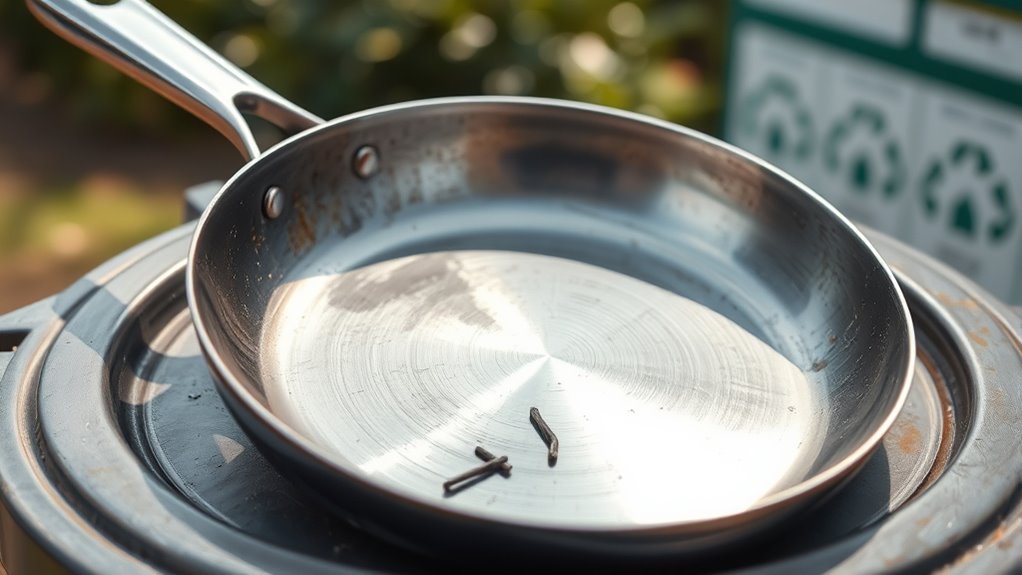
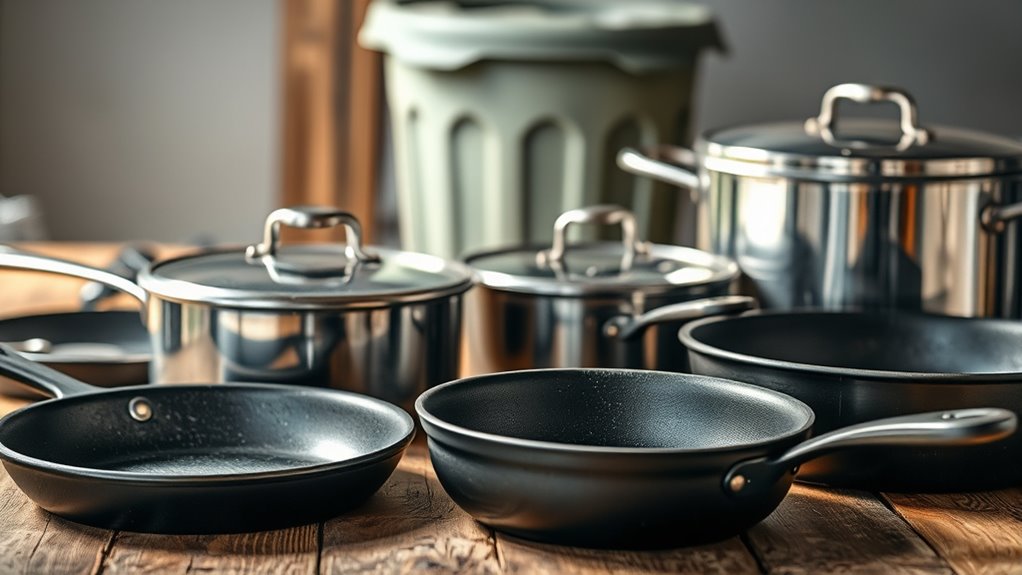
Wondering whether you can recycle your old cookware? The answer isn’t a simple yes or no. While some recycling programs accept certain types of cookware, many don’t because these items often combine different materials, like metal, plastic, and nonstick coatings, which complicate processing.
Before tossing your pans in the recycling bin, check your local guidelines to see if they accept cookware. If they don’t, consider donating usable pieces or repurposing them at home. You should also know that bulky items might require drop-off at special facilities rather than curbside pickup.
Which Cookware Materials Are Accepted for Recycling

You’ll want to know which cookware materials your local recycling center accepts before you get started. Metals like aluminum and stainless steel are usually recyclable, but some materials, like non-stick coatings or ceramic, might not be.
Preparing your cookware properly can make the recycling process smoother and more effective.
Common Recyclable Metals
Which metals in your old cookware can actually be recycled? Common recyclable metals include aluminum, stainless steel, and cast iron. Aluminum pans are widely accepted because they can be melted down and reused without losing quality.
Stainless steel cookware also recycles well due to its durability and high demand in scrap metal markets. Cast iron skillets and pots are another great option since they’re 100% recyclable and retain their metal integrity. When recycling these metals, make sure to clean off any food residue and remove non-metal parts like plastic handles or glass lids.
Non-Recyclable Cookware Materials
While many metals from your old cookware can be recycled, not all materials are accepted by recycling programs. Cookware made from non-metal materials like ceramic, glass, and certain plastics typically can’t be recycled through curbside collection. Non-stick coatings, such as Teflon, also complicate recycling because they contain chemicals that recycling facilities often reject.
Additionally, cookware with mixed materials—like plastic handles attached to metal pots—can be hard to process unless you separate the parts. Cast iron, stainless steel, and aluminum usually recycle well, but if your cookware contains silicone, rubber, or enamel finishes, recycling centers might not accept them. Always check with your local recycling facility to understand which cookware materials they accept to avoid contamination and ensure your items are properly recycled.
Preparing Cookware For Recycling
Before recycling your cookware, it’s important to identify the materials accepted by your local facility. Most places take metal cookware, such as stainless steel, cast iron, and aluminum, since these can be melted down and reused. Non-stick pans with a metal base might be accepted, but check first because coatings can complicate recycling.
Ceramic, glass, and plastic handles often need to be removed, as they aren’t recyclable with metals. Make certain to clean your cookware thoroughly, removing food residue and grease. Disassemble any parts you can, like detachable handles or lids, to separate materials.
How to Prepare Cookware for Recycling
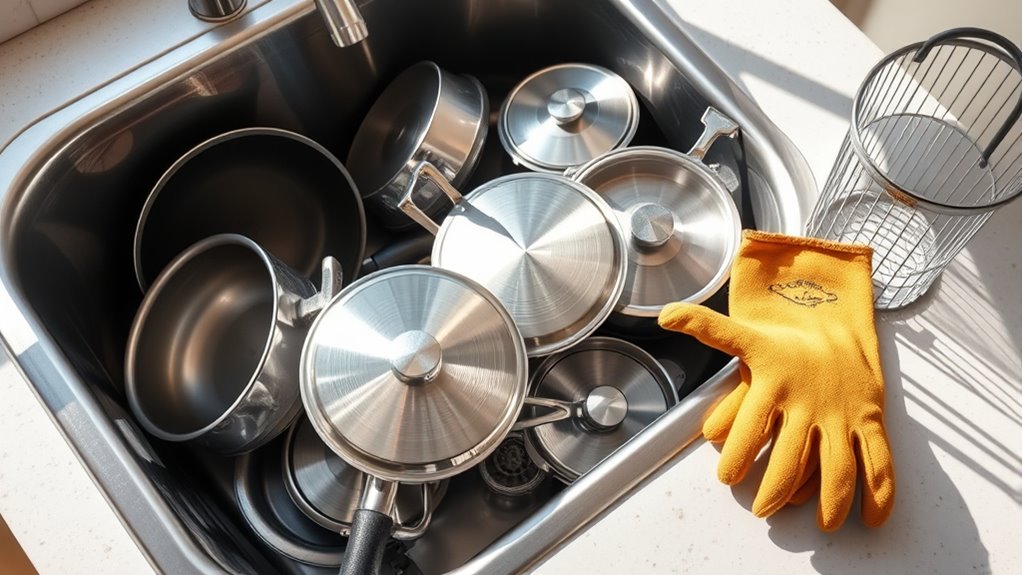
Once you decide to recycle your cookware, you’ll need to clean it thoroughly and remove any non-metal parts like handles or lids. Scrub off food residue and grease to avoid contamination and guarantee the metal can be processed properly. Use a sponge and mild detergent, then dry the cookware completely.
Next, look for screws or rivets holding plastic or wooden handles and remove them with a screwdriver or pliers. If handles are glued or welded, check if your local recycling center accepts such items or if you need to dispose of them separately.
Finally, sort the cookware by metal type if possible—aluminum, stainless steel, or cast iron—to make recycling more efficient. Proper preparation helps recycling centers handle your cookware effectively.
Which Cookware Items Do Recycling Centers Accept?
Although recycling centers have varying policies, most will accept common cookware items made from metals like aluminum, stainless steel, and cast iron. When you’re ready to recycle, focus on these frequently accepted items:
- Aluminum pans and baking sheets – Lightweight and widely recyclable, these are often accepted without much hassle.
- Cast iron skillets and Dutch ovens – Durable and valuable for scrap metal, recycling centers usually welcome these heavy-duty items.
- Stainless steel pots and pans – Because stainless steel is highly recyclable, centers typically accept these with open arms.
Before dropping off, make sure the cookware is clean and free of non-metal parts like plastic handles. Checking your local recycling center’s guidelines will save you time and ensure your cookware gets properly recycled.
What to Do With Cookware That Can’T Be Recycled
If your cookware can’t be recycled, consider donating it if it’s still in good shape. You can also upcycle old pieces into planters, storage containers, or unique decor.
These options help reduce waste and give your cookware a second life.
Donate Usable Cookware
When cookware can’t be recycled, donating it gives your items a second life while helping others. Instead of tossing usable pots and pans, you can make a positive impact by passing them on to those in need.
Here’s how to do it effectively:
- Check Condition: Verify your cookware is clean, undamaged, and safe to use before donating.
- Find Local Charities: Look for shelters, community centers, or thrift stores that accept kitchen items.
- Organize a Donation Drive: Gather cookware from friends or neighbors to maximize your donation’s reach.
Upcycle Old Cookware
Donating usable cookware helps extend its life, but what happens to items that are too worn or damaged to pass on? Instead of tossing them, try upcycling. You can transform old pots, pans, and lids into practical or decorative items around your home.
For example, turn an old skillet into a rustic wall clock by adding clock hands and numbers. Use smaller pots as planters for herbs or succulents—just drill drainage holes first. You can also repurpose lids as serving trays or trivets.
Even broken utensils can become garden markers or hooks. Upcycling lets you keep cookware out of landfills while adding unique, functional pieces to your space. So, before you discard worn cookware, consider how you might give it a creative second life.
Eco-Friendly Alternatives for Disposing of Old Cookware
Although it might seem easier to toss old cookware in the trash, there are several eco-friendly alternatives that help reduce waste and protect the environment. You can take simple steps to dispose of your cookware responsibly and make a positive impact.
Here are three options to contemplate:
- Donate or Sell: If your cookware is still usable, donate it to charity shops, community centers, or sell it online. Someone else might find it useful.
- Recycle Properly: Check with your local recycling center to see if they accept metal cookware. Separate materials like glass or plastic handles before dropping them off.
- Scrap Metal Yards: Many scrap yards accept metal cookware and recycle it efficiently, turning old pots and pans into new products.
Common Mistakes to Avoid When Recycling Cookware
Recycling cookware can be straightforward, but you can easily make mistakes that hinder the process or harm the environment. First, don’t toss cookware with non-recyclable parts like plastic handles or non-stick coatings into metal recycling bins. These materials can contaminate the batch.
Avoid leaving food residue on pots and pans; it complicates recycling and attracts pests. Also, don’t assume all cookware is recyclable—some materials, like certain ceramics or glass cookware, won’t go through standard metal recycling. Avoid breaking or cutting cookware into pieces unless your recycler specifically asks for it, as this can be unsafe and inefficient.
Finally, don’t forget to check your local recycling guidelines before dropping off cookware. Following these tips guarantees your efforts make a real environmental impact.
How to Find Local Cookware Recycling Programs
Wondering where to take your old pots and pans for recycling? Finding local cookware recycling programs is easier than you think. Start by:
- Checking your city or county’s waste management website. They often list accepted materials and drop-off locations.
- Calling local scrap metal yards. Many accept cookware since it contains valuable metals like aluminum and stainless steel.
- Visiting community recycling events. These occasional events frequently collect household items, including cookware.
Frequently Asked Questions
Can Damaged Non-Stick Pans Release Harmful Chemicals During Recycling?
Yes, damaged non-stick pans can release harmful chemicals if not handled properly during recycling. You should check with local facilities since they often have special processes to safely recycle or dispose of these pans without releasing toxins.
Proper handling is crucial to prevent the release of toxic substances.
Always follow recycling guidelines specific to non-stick materials to ensure safety.
Are There Any Safety Concerns When Handling Old Cookware for Recycling?
Yes, you should wear gloves and avoid inhaling dust when handling old cookware, especially if it’s damaged or coated. Some materials can release harmful particles, so handle with care to protect your skin and lungs.
Always work in a well-ventilated area to minimize exposure to any dust or fumes. Take extra precautions if you suspect the cookware contains hazardous coatings like Teflon or lead-based paint.
Proper disposal methods are important to prevent environmental contamination and health risks. When in doubt, consult local recycling guidelines for safe handling and recycling of old cookware.
How Does Recycling Cookware Benefit the Environment Compared to Disposal?
You help reduce landfill waste and conserve natural resources by recycling cookware. It cuts down on energy use and pollution from manufacturing new items, making a positive impact on the environment compared to simply throwing old cookware away.
Recycling cookware ensures materials are reused, minimizing the need for extracting raw resources. This process lowers greenhouse gas emissions and reduces pollution associated with production. Overall, it supports a more sustainable and eco-friendly approach to managing old kitchen items.
Can Cookware With Mixed Materials Be Recycled at All?
If you have a pan with a metal base and plastic handle, recycling it as is is tough. You’ll usually need to separate materials first, since mixed cookware often isn’t accepted by standard recycling programs.
What Are Some Signs That Cookware Is No Longer Safe to Use?
You’ll know cookware isn’t safe when you see warped bottoms, peeling non-stick coating, rust, cracks, or persistent burnt residue.
If it smells off or heats unevenly, it’s time to replace it for your safety.
Conclusion
You can recycle cookware, but it takes a bit of effort. Imagine you’re clearing out your kitchen and find an old cast-iron skillet—you clean it up and drop it at a local scrap metal center that accepts cast iron. Simple steps like this keep materials out of landfills.
Just remember to check what your recycling center takes, prep your items properly, and explore eco-friendly options for the cookware that can’t be recycled. It’s worth it! Recycling cookware helps reduce waste, conserve resources, and supports sustainable living.