How You Can Make Pesto in a Blender
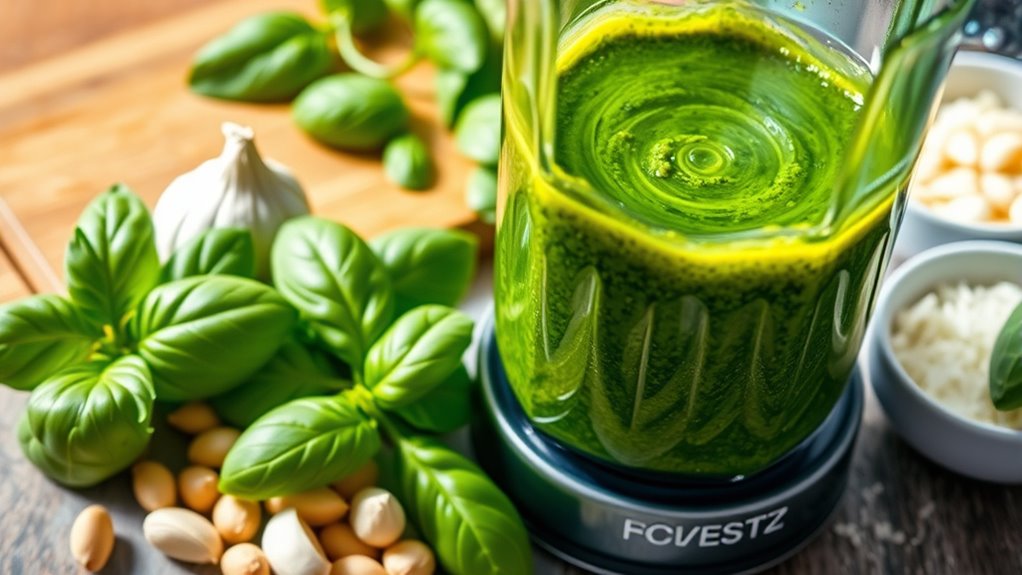
You can make fresh pesto in a blender by combining washed and dried basil, toasted pine nuts, crushed garlic, grated Parmesan, olive oil, and salt.
Using a blender makes the process quick and easy, ensuring a smooth and flavorful pesto every time. This simple method brings out the vibrant taste of fresh basil while blending all ingredients evenly.
Add ingredients gradually and pulse to avoid overheating while scraping the sides often.
Customize your pesto with different nuts or cheeses for unique flavors that suit your taste.
Store it airtight with a thin olive oil layer to keep it fresh and preserve its bright color.
Use your homemade pesto on pasta, sandwiches, or soups for a delicious boost.
Keep exploring to discover creative twists and handy tips that make your pesto experience even better.
Key Takeaways
- Use fresh basil, garlic, pine nuts, Parmesan cheese, olive oil, and salt as the basic pesto ingredients for blending.
- Add ingredients in order: greens, nuts, garlic, cheese, then olive oil, using short pulses to avoid overheating.
- Lightly toast pine nuts and finely grate Parmesan for enhanced flavor and smoother blending.
- Gradually pour olive oil while blending to achieve desired pesto consistency.
- Scrape down blender sides frequently and blend until smooth but still slightly textured.
What Ingredients Do You Need for Blender Pesto
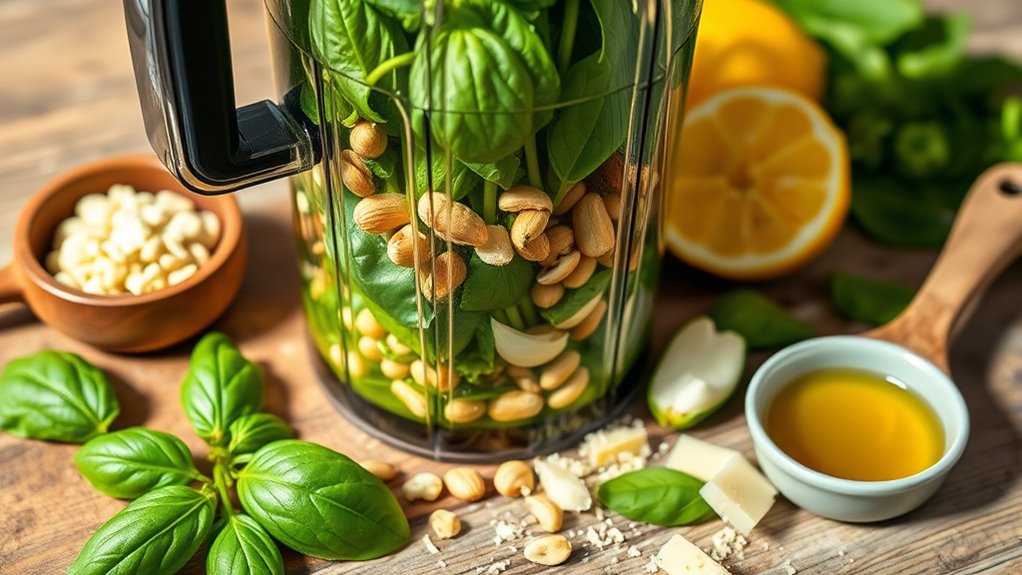
Before you start blending, gather fresh basil leaves, garlic cloves, pine nuts, Parmesan cheese, olive oil, and a pinch of salt—these key ingredients will give your pesto its classic flavor. Fresh basil is essential for that vibrant, herbal taste you want. Garlic adds just the right kick, while pine nuts bring a subtle nuttiness and creamy texture.
Parmesan cheese delivers a salty, savory depth that ties everything together. Olive oil is the binder, ensuring a smooth, rich consistency. A pinch of salt helps enhance all these flavors without overpowering them.
You can stick to these essentials, but if you want, experiment later with alternatives like walnuts or pecans. For now, focus on getting these ingredients ready to blend into a perfect pesto base.
How to Prep Ingredients for the Best Flavor
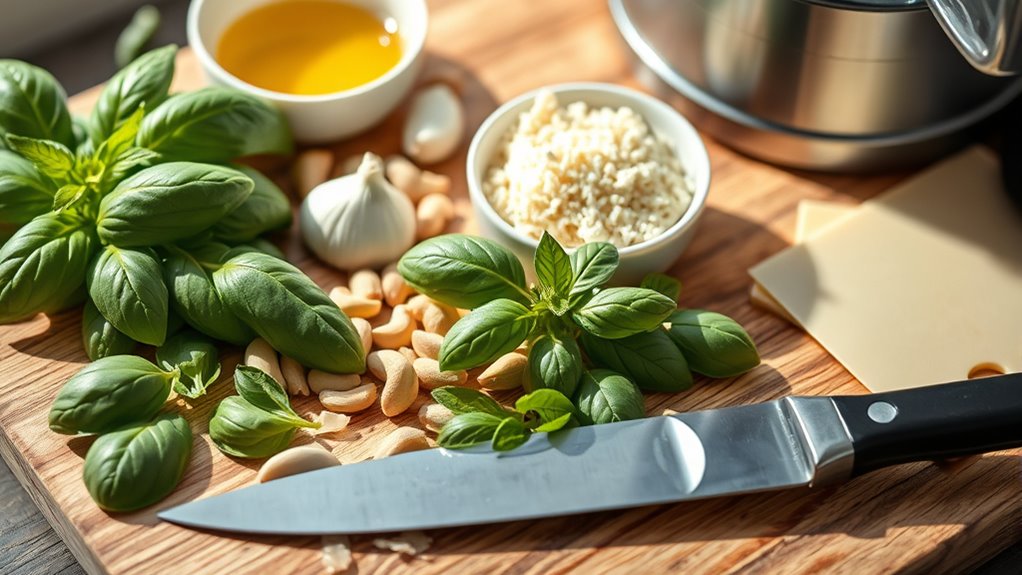
Although the ingredients for pesto are simple, how you prepare them makes all the difference in flavor. Start by washing your basil leaves gently to remove any dirt but avoid soaking them, as excess water can dilute the taste. Pat them dry thoroughly with a kitchen towel or use a salad spinner.
Next, toast your pine nuts lightly in a dry pan until they’re golden to bring out their nutty aroma. Peel and crush fresh garlic cloves to release their pungency, but don’t overdo it—too much garlic can overpower the pesto. Finally, grate your Parmesan cheese finely for a smooth blend.
Taking these small steps guarantees each ingredient shines, giving your pesto a vibrant, balanced flavor.
How to Make Pesto Quickly in a Blender
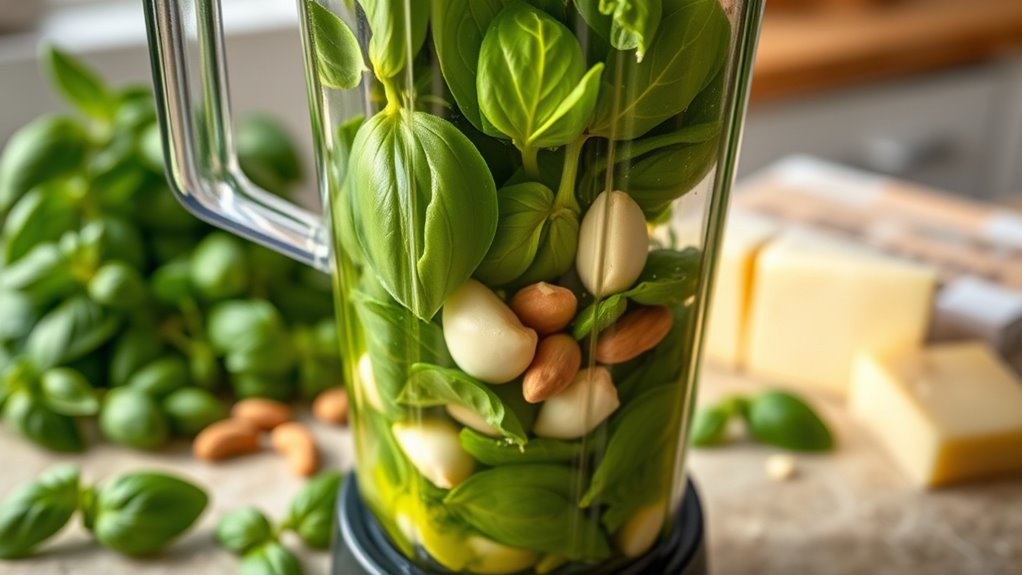
With your ingredients prepped to bring out their best flavors, you’re ready to whip up your pesto in a blender. Start by adding your basil leaves, garlic, and nuts into the blender jar. Pour in olive oil gradually to help everything blend smoothly.
Pulse the blender in short bursts to avoid overheating and over-processing the mixture. Stop and scrape down the sides to ensure an even blend. Here’s a quick approach to keep it efficient:
- Add ingredients in order: leafy greens, nuts, garlic, cheese, then oil
- Use the pulse function to control texture
- Stop frequently to scrape sides
- Add oil slowly for smooth consistency
This method gets you vibrant, fresh pesto in just minutes.
Which Nuts Work Best in Blender Pesto?
When choosing nuts for your blender pesto, you want to take into account both texture and flavor. Some nuts blend smoother, while others add a bit of crunch or earthiness.
Let’s compare how different nuts affect the taste and consistency of your pesto.
Nut Texture Compatibility
Because nuts vary in oil content and hardness, some blend more smoothly than others in your pesto. When you’re making pesto in a blender, choosing nuts that break down easily helps you get that creamy, even texture without overworking your blender. Harder nuts can leave your pesto grainy or uneven if not processed long enough.
Here’s how common nuts stack up for texture compatibility:
- Pine nuts: Soft, oily, and blend into a silky smooth paste quickly.
- Cashews: Creamy and soft, they create a rich, smooth pesto.
- Walnuts: Slightly coarser but still blend well with enough pulsing.
- Almonds: Harder and drier, they may require extra blending and can add graininess.
Pick nuts based on how smooth you want your pesto to be.
Flavor Profiles Comparison
Texture plays a big role in pesto, but flavor is what really defines your sauce. When choosing nuts for your blender pesto, consider how each nut’s taste complements the basil and garlic. Pine nuts offer a buttery, slightly sweet flavor that’s classic and mild.
Walnuts bring a deeper, earthier tone with a touch of bitterness, adding complexity. Almonds provide a sweet, nutty flavor that’s subtle but distinct, while cashews create a creamy, rich pesto with a hint of sweetness. Hazelnuts introduce a bold, toasty note that works well if you want a more pronounced nutty punch.
Experiment with these options to find the balance you like. Your pesto’s personality changes with each nut, so pick one that matches your taste and the dish you’re serving.
Picking the Best Cheese for Blender Pesto
Although choosing the right cheese might seem straightforward, it can dramatically impact your pesto’s flavor and consistency. You want a cheese that melts smoothly in the blender without overpowering the fresh basil and garlic. Parmesan is the classic choice, offering a salty, nutty taste.
Pecorino Romano brings a sharper, tangier flavor. If you prefer a milder option, Asiago works well, adding creaminess. Avoid cheeses with high moisture like fresh mozzarella, which can make your pesto watery.
Consider these cheese options for your blender pesto:
- Parmesan: nutty, salty, and traditional
- Pecorino Romano: sharp and tangy
- Asiago: creamy and mild
- Grana Padano: slightly sweet, less salty than Parmesan
Pick what suits your taste and enjoy your perfect pesto!
Best Herb Alternatives to Basil for Blender Pesto
When you want to switch things up or can’t find fresh basil, several herbs make excellent substitutes in blender pesto. Try using fresh spinach for a mild, slightly sweet flavor that blends smoothly. Arugula adds a peppery kick, giving your pesto a bold twist.
Cilantro brings a bright, citrusy note perfect for adventurous palates. Parsley offers a fresh, clean taste that complements most dishes well. If you prefer a more earthy flavor, try kale or mint for a invigorating aroma.
Each herb changes the pesto’s character, so pick based on your meal and taste preference. Don’t forget to wash your herbs thoroughly before blending to keep your pesto fresh and vibrant every time.
Easy Ways to Adjust Pesto Texture and Consistency
You can easily change your pesto’s texture by adjusting the blender speed settings—higher speeds create a smoother sauce, while lower speeds keep it chunkier. Experimenting with ingredient ratios also helps you find the perfect consistency, like adding more oil for a thinner sauce or extra nuts for thickness.
Keep tweaking these two factors until your pesto feels just right.
Blender Speed Settings
Since the blender speed directly influences your pesto’s texture, adjusting it lets you control how smooth or chunky your sauce turns out. Starting at a low speed breaks down ingredients gently, preserving some texture. Increasing to medium speed blends everything more evenly without over-processing.
High speed creates a silky, smooth pesto but can generate heat, affecting flavor. To get the texture you want, try these simple tips:
- Use low speed for a chunky, rustic texture
- Blend on medium for balanced consistency
- Opt for high speed for ultra-smooth pesto
- Pulse at any speed to maintain small bits
Ingredient Ratios Adjustment
Although blender speed affects texture, adjusting ingredient ratios offers another powerful way to control your pesto’s consistency. If you want a thicker pesto, add more nuts and cheese—they provide body and richness. For a thinner, more sauce-like texture, increase the olive oil or add a splash of water or lemon juice.
Keep in mind that fresh basil leaves contribute bulk, so using slightly fewer leaves can prevent your pesto from becoming too dense. Taste as you go, balancing flavors while adjusting amounts. Remember, small changes make a big difference—you can always add more liquid but can’t take it out once blended.
Experimenting with ingredient ratios lets you create the perfect pesto texture tailored to your preference every time.
How to Store Homemade Blender Pesto for Maximum Freshness
To keep your homemade blender pesto fresh and vibrant, proper storage is essential. You want to minimize air exposure and prevent oxidation, which dulls the flavor and color. Here’s how to store your pesto effectively:
- Transfer pesto to an airtight container, filling it close to the top to limit air.
- Pour a thin layer of olive oil on the surface to seal out air and preserve color.
- Store the container in the refrigerator; it will stay fresh for up to a week.
- For longer storage, freeze pesto in ice cube trays, then transfer cubes to a freezer bag for convenient portions.
Creative Ways to Use Your Blender Pesto
You can easily transform your blender pesto into a variety of tasty dishes. Try mixing it into pasta for fresh, flavorful meals or spread it on sandwiches and toast for a quick boost.
You can even stir it into soups to add a vibrant, herby twist.
Pesto Pasta Variations
How can you elevate a simple pasta dish using your homemade blender pesto? Just toss the pesto with your favorite pasta, but don’t stop there. You can turn an everyday meal into something exciting with a few creative twists.
Here are some pesto pasta variations to try:
- Mix in sautéed cherry tomatoes and spinach for freshness and color.
- Add toasted pine nuts or walnuts for an extra crunch.
- Stir in cooked shrimp or grilled chicken to boost protein.
- Finish with a sprinkle of Parmesan and a drizzle of lemon juice for brightness.
These tweaks let you customize your pesto pasta easily, making each meal unique and flavorful without extra fuss. Your blender pesto becomes a versatile base for countless delicious dishes.
Pesto as a Spread
Where else can your homemade blender pesto shine beyond pasta? Try spreading it on toast for a quick, flavorful snack or breakfast. It transforms ordinary bread into a vibrant base for avocado slices, fresh tomatoes, or poached eggs.
You can also use pesto as a sandwich spread to add a herby punch to deli meats or grilled veggies. For a party, spread pesto on crackers or crostini and top with cheese or roasted peppers for an easy appetizer. Don’t forget grilled sandwiches—pesto adds moisture and intense flavor when layered with melted cheese or meats.
Using your blender pesto as a spread is a simple way to elevate everyday meals without extra effort.
Pesto-Infused Soups
Although pesto is often linked with pasta and spreads, it can also elevate soups in unexpected ways. Adding a spoonful of your blender-made pesto to soups brightens flavors and adds a crisp, herbaceous kick. You can swirl it into creamy soups or use it as a garnish for a pop of color and taste.
Try these ideas to get creative:
- Stir pesto into tomato soup for a vibrant twist.
- Blend pesto with vegetable broth for a quick, aromatic base.
- Top minestrone with a dollop of pesto to enhance its richness.
- Drizzle pesto over chilled cucumber or gazpacho soups for invigorating zest.
Using pesto this way transforms simple soups into gourmet experiences effortlessly.
How to Clean Your Blender After Making Pesto
Since pesto can leave behind oily residues and small bits of basil, you’ll want to clean your blender promptly to prevent any lingering smells or stains. First, rinse the blender jar with warm water immediately after use to remove loose bits. Then, add a drop of dish soap and fill the jar halfway with warm water.
Secure the lid and blend on high for 30 seconds to loosen stuck-on pesto. Dump out the soapy water and rinse thoroughly. If any stubborn stains or odors remain, blend a mixture of water and a tablespoon of lemon juice or vinegar, then rinse again.
Finally, wipe the base with a damp cloth, but avoid submerging it. This quick cleaning routine keeps your blender fresh and ready for your next pesto batch.
Troubleshooting Common Blender Pesto Problems
If your pesto isn’t blending smoothly or lacks the vibrant green color you expected, don’t worry—you can usually fix these common issues quickly. First, consider your blender settings; pulse instead of running continuously to avoid overheating and dulling the color.
Next, make sure you add enough oil or liquid to help the ingredients move freely. Also, check the freshness of your basil—older leaves turn brown and affect the taste and color.
Finally, avoid overprocessing, as it can release bitterness from the herbs.
Here are quick fixes to troubleshoot:
- Pulse the blender for better texture
- Add more olive oil or a splash of water
- Use fresh, bright green basil leaves
- Stop blending as soon as pesto is smooth and vibrant
These tips will get your pesto just right!
Frequently Asked Questions
Can I Freeze Blender Pesto for Long-Term Storage?
Yes, you can freeze pesto for long-term storage. Just portion it into ice cube trays or airtight containers, then thaw as needed.
This keeps the flavor fresh and makes it easy to use later.
Is Blender Pesto Suitable for People With Nut Allergies?
You shouldn’t assume blender pesto is safe if you have nut allergies, as traditional recipes often include pine nuts. However, you can easily swap nuts for seeds like sunflower or pumpkin to avoid allergic reactions.
How Long Does Homemade Pesto Last in the Refrigerator?
You can keep homemade pesto in the refrigerator for about 5 to 7 days.
To maintain freshness, store it in an airtight container and drizzle a thin layer of olive oil on top to prevent browning.
Can I Use Frozen Herbs to Make Pesto in a Blender?
If you’re like Sarah, who whipped up pesto using frozen basil last winter, you’ll find it works just fine.
Frozen herbs might be a bit softer but blend well, giving you fresh flavor without the hassle.
What Are Some Low-Fat Alternatives to Traditional Pesto Ingredients?
You can swap out olive oil for vegetable broth or water, use nutritional yeast instead of Parmesan, and replace pine nuts with sunflower seeds or pumpkin seeds to keep your pesto low-fat without sacrificing flavor or texture.
Conclusion
Now that you’ve mastered making pesto in your blender, you’re basically a kitchen superhero—saving dinner one delicious sauce at a time! With just a few simple ingredients and quick steps, you can whip up vibrant pesto that elevates any meal.
Remember, the right nuts and cheese make all the difference, and storing it properly keeps that fresh flavor lasting. Keep experimenting and enjoy every bite of your homemade pesto masterpiece! Making pesto in a blender is an easy and efficient way to create this classic sauce, perfect for adding a burst of flavor to your dishes.