Does Carbon Steel Skillet Work on an Induction
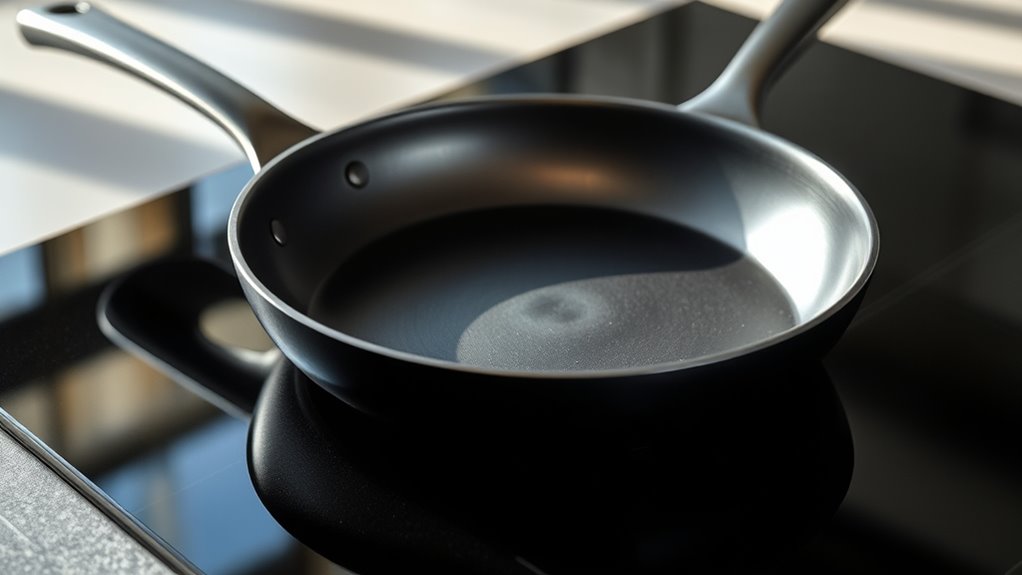
Yes, your carbon steel skillet works great on induction cooktops thanks to its magnetic properties. These properties guarantee quick, even heating and precise temperature control, making it an ideal choice for induction cooking.
Carbon steel skillets heat evenly without hot spots and respond instantly to your adjustments.
Just check if a magnet sticks firmly to the skillet’s bottom to confirm compatibility with your induction cooktop.
With proper seasoning and care, you’ll enjoy durable, efficient cooking for years to come.
Keep exploring to discover how to maintain and optimize your skillet’s performance.
Key Takeaways
- Carbon steel skillets work efficiently on induction cooktops due to their strong magnetic iron content.
- They heat quickly and evenly, providing consistent cooking without hot spots on induction surfaces.
- The flat bottom design ensures good contact with the induction cooktop for optimal heat transfer.
- Compatibility can be verified by checking if a magnet sticks firmly to the skillet’s bottom.
- Proper seasoning and maintenance enhance performance and prevent issues like rust and uneven heating.
Do Carbon Steel Skillets Work on Induction Cooktops?

How well do carbon steel skillets perform on induction cooktops? When you use a carbon steel skillet, you’ll find it heats up quickly and evenly on induction surfaces. This means your food cooks consistently without hot spots.
You’ll notice the skillet responds instantly when you adjust the temperature, giving you precise control over your cooking. The skillet’s flat bottom ensures good contact with the cooktop, which improves heat transfer. Plus, carbon steel skillets are durable and can handle high heat, making them ideal for searing and frying.
You might also appreciate how lightweight they are compared to cast iron, so handling them feels easier. Overall, carbon steel skillets work effectively on induction cooktops, delivering great cooking performance every time.
Why Carbon Steel Skillets Are Compatible With Induction

You’ll find that carbon steel skillets work great on induction cooktops because their magnetic properties allow the cookware to heat quickly and evenly. This efficient heat conductivity means your food cooks faster and more consistently.
Plus, carbon steel’s durability guarantees your skillet performs well over time with regular use.
Magnetic Properties of Carbon Steel
Because carbon steel contains iron, it naturally exhibits strong magnetic properties that make it ideal for induction cooking. When you place a carbon steel skillet on an induction cooktop, the magnetic field generated by the cooktop interacts directly with the iron in the skillet. This interaction causes electric currents to flow within the skillet’s metal, producing heat efficiently and evenly.
Unlike non-magnetic materials like aluminum or copper, carbon steel responds quickly to the induction process, ensuring your skillet heats up promptly. So, if you’re wondering whether your carbon steel skillet will work on an induction stove, you can be confident it will. Its magnetic nature guarantees compatibility, making it a reliable choice for induction cooking without any modifications.
Heat Conductivity on Induction
Although induction cooktops rely on magnetic fields to generate heat, the way heat spreads through your cookware matters just as much. Carbon steel skillets conduct heat efficiently, ensuring quick and even cooking. When the induction cooktop activates, the magnetic field creates an electric current in the skillet’s steel, producing heat directly in the pan.
This heat then distributes rapidly across the skillet’s surface. Because carbon steel has excellent thermal conductivity, you won’t experience hot spots or uneven cooking. This means your food cooks uniformly, giving you better control over temperature and results.
Durability and Performance Benefits
When you choose a carbon steel skillet for your induction cooktop, you’re investing in durability and reliable performance that stand the test of time. Carbon steel is incredibly strong and resists warping, so your skillet stays flat and stable on the induction surface. This means consistent contact and efficient heating every time you cook.
Plus, carbon steel develops a natural non-stick patina with use, improving cooking performance without synthetic coatings. Its magnetic properties make it fully compatible with induction technology, ensuring quick and even heat distribution. You’ll also appreciate how lightweight yet tough these skillets are, making them easy to handle while lasting for years.
How to Test If Your Carbon Steel Skillet Works on Induction

To see if your carbon steel skillet works on induction, start by checking if a magnet sticks to its bottom. You can also place the skillet on your induction cooktop and see if it heats up quickly.
Finally, confirm the material type to verify it’s true carbon steel, which is induction-friendly.
Check Magnetic Compatibility
How can you quickly find out if your carbon steel skillet works on an induction cooktop? The key is checking its magnetic compatibility. Induction cooktops need cookware with ferromagnetic properties to generate heat.
You can test this easily with a simple magnet.
Here’s what to expect when you test your cookware:
| Magnet Attraction | Induction Compatibility |
|---|---|
| Strong | Works perfectly |
| Moderate | May work, but inefficiently |
| Weak | Likely won’t work |
| None | Not compatible |
| Fluctuating | Unreliable performance |
If your magnet sticks firmly to the bottom of the skillet, it confirms the steel’s magnetic nature. This guarantees your carbon steel skillet will heat up on induction cooktops efficiently.
Use Induction Cooktop Test
After confirming your carbon steel skillet’s magnetic compatibility, the next step is to test it directly on your induction cooktop. Place the skillet on the induction burner and turn the cooktop on to a low or medium setting. If the skillet heats up quickly and the cooktop recognizes the pan, you’ll see the display activate or hear a slight hum.
This means your skillet works perfectly with induction cooking. If nothing happens, or the cooktop shows an error or fails to heat the pan, your skillet might not be suitable for induction use. Always verify the skillet’s bottom is flat and clean for proper contact.
This simple test helps you verify your carbon steel skillet’s functionality on induction before cooking.
Identify Skillet Material Type
Wondering if your carbon steel skillet is truly compatible with induction cooking? The key is identifying the skillet’s material type since induction requires magnetic metals. Here’s how to quickly test your skillet:
- Grab a magnet—if it sticks firmly, your skillet is induction-ready.
- Check the skillet’s bottom for manufacturer markings indicating carbon steel.
- Look for a smooth, flat base; uneven surfaces may not work well on induction.
- If unsure, try heating the skillet on an induction cooktop at low power; it should heat quickly without flickering.
Benefits of Using Carbon Steel Skillets on Induction Stoves
Because carbon steel skillets heat up quickly and maintain consistent temperatures, they work exceptionally well on induction stoves. You’ll appreciate their rapid response to temperature changes, which gives you precise control over cooking. Carbon steel’s magnetic properties make it highly compatible with induction technology, ensuring efficient energy use.
Plus, these skillets are durable and lightweight, making them easy to handle without sacrificing performance.
| Benefit | Why It Matters |
|---|---|
| Fast Heating | Saves time and energy |
| Temperature Control | Helps cook food evenly |
| Compatibility | Works perfectly with induction’s magnetism |
| Durability | Long-lasting cookware investment |
Using carbon steel on induction lets you cook smarter and enjoy better results every time.
Common Issues You Might Face Cooking With Carbon Steel on Induction
While carbon steel skillets work well on induction stoves, you might encounter a few common issues that can affect your cooking experience. Knowing these can help you prepare and avoid frustration.
- Uneven Heating – Your skillet might heat unevenly at first, causing hot spots that can burn food.
- Noise – You could hear a buzzing or humming sound when the skillet is on the induction stove, which can be annoying.
- Slow Heating Start – It may take a little longer for the skillet to reach the desired temperature compared to other cookware.
- Magnetism Variability – If the skillet’s base isn’t perfectly magnetic, it might not work efficiently, leading to inconsistent cooking.
Being aware of these issues helps you adapt and enjoy cooking with carbon steel on induction.
Maintaining and Seasoning Carbon Steel for Induction
Dealing with uneven heating or magnetism issues means you’ll want to pay close attention to how you maintain and season your carbon steel skillet for induction cooking. Start by thoroughly drying your skillet after each wash to prevent rust. Avoid soaking it in water and always hand wash with mild soap or just hot water.
To season, heat the skillet, apply a thin layer of high-smoke-point oil, then bake it in your oven or on the induction cooktop until it forms a smooth, black patina. This seasoning layer improves heat distribution and enhances magnetism contact. Regularly re-season your skillet to keep this protective coating intact, ensuring it performs efficiently on induction surfaces while preventing rust and sticking issues.
Tips for Best Performance of Carbon Steel on Induction
To get the best performance from your carbon steel skillet on an induction cooktop, you should focus on proper usage and care techniques that maximize heat efficiency and longevity.
Here’s how to make your cooking experience smoother and more enjoyable:
- Preheat Gradually – Avoid sudden high heat to prevent warping and ensure even cooking.
- Use Medium Heat – Carbon steel heats quickly; medium settings prevent food from sticking or burning.
- Keep It Seasoned – Regularly oil your skillet to maintain its non-stick surface and protect against rust.
- Avoid Dragging – Lift your skillet instead of sliding it on the induction surface to prevent scratches.
Following these tips will help you harness the full power of your carbon steel skillet on induction, making every meal a delight.
Additional Resources or FAQs
Wondering how to get the most out of your carbon steel skillet on induction? You’re not alone. Many users have questions about seasoning, maintenance, and cooking techniques specific to induction cooktops.
To deepen your understanding, check out manufacturer websites and cooking forums where experienced cooks share tips and troubleshooting advice. FAQs often cover topics like skillet compatibility, how to prevent warping, and ideal heat settings.
You can also find video tutorials demonstrating seasoning and cleaning methods tailored for induction use. If you encounter specific issues, don’t hesitate to consult your induction cooktop’s manual or reach out to customer support.
These additional resources will help you maximize your skillet’s performance and longevity on your induction stove.
Frequently Asked Questions
Can Carbon Steel Skillets Be Used on Gas Stoves?
Yes, you can use carbon steel skillets on gas stoves. They heat quickly and evenly, giving you great control. Just be careful with high heat to avoid warping,
and always season them properly for best results.
Are Carbon Steel Skillets Dishwasher Safe?
You shouldn’t put your carbon steel skillet in the dishwasher—it can ruin its seasoning. In fact, 90% of seasoned pans lose their non-stick layer when exposed to harsh detergents and high heat in dishwashers.
Always hand wash!
How Heavy Is a Typical Carbon Steel Skillet?
A typical carbon steel skillet weighs between 2 to 4 pounds, depending on size. You’ll find larger skillets heavier, but they’re still lighter than cast iron, making them easier for you to handle and maneuver.
Do Carbon Steel Skillets Rust Easily?
Yes, carbon steel skillets can rust easily if you don’t dry them properly or leave them wet. You’ll want to season yours regularly and store it in a dry place to keep rust at bay.
Can You Cook Acidic Foods in Carbon Steel Pans?
You can cook acidic foods in carbon steel pans, but be careful—acid can strip the seasoning and cause rust.
If your pan’s well-seasoned, a quick clean and re-seasoning after acidic dishes keeps it happy and long-lasting.
Conclusion
You’ll be glad to know that over 90% of carbon steel skillets work perfectly on induction cooktops, thanks to their magnetic properties. If you’ve got one, testing it is simple—just use a magnet!
With proper seasoning and care, your skillet will deliver excellent heat retention and quick heating on induction. So, give it a try and enjoy the benefits of carbon steel cooking right on your induction stove.
In conclusion, a carbon steel skillet is an excellent choice for induction cooking, combining durability, heat efficiency, and versatility to enhance your culinary experience.