
How Do You Spell Utensils
You spell utensils U-T-E-N-S-I-L-S, starting with “uten” like “utility” and ending with “sils.”
The word utensils refers to tools or instruments used for eating, cooking, or other tasks. It’s easy to mix up vowels or add letters, but remembering the Latin root tied to usefulness helps.
Pronounce it “yoo-TEN-sils,” breaking it into parts.
If you often confuse it with words like “essentials” or “tentacles,” knowing the exact spelling and usage makes a big difference.
Keep exploring to master when and how to use utensils correctly.
Key Takeaways
- The correct spelling is “utensils,” starting with “uten” and ending with “sils.”
- Pronounce it as “yoo-TEN-sils,” emphasizing the middle syllable to aid spelling.
- Common misspellings include “utencils,” “utensills,” and “utensals” due to vowel swaps or extra letters.
- Use spell checkers, online dictionaries, and grammar tools to verify the correct spelling.
- Remember the mnemonic “Unusual Tools Enter Nice Spots In Large Sets” to reinforce correct spelling.
How Do You Spell “Utensils” Correctly?
How do you spell “utensils” correctly? You spell it U-T-E-N-S-I-L-S. It’s a straightforward word but can trip you up if you’re not careful.
Remember, it starts with “uten,” just like “utility,” and ends with “sils,” not “sells” or “cils.” The middle letters “ens” are important to include. When you write it down, focus on the “sil” part near the end, which sounds like “sill.”
Knowing the correct spelling helps you avoid mix-ups, especially in cooking or dining contexts. So, next time you jot down a grocery list or write about kitchen tools, trust this spelling—utensils—with an “s” at the end, because it’s a plural noun referring to multiple items.
Common “Utensils” Misspellings and Why They Happen
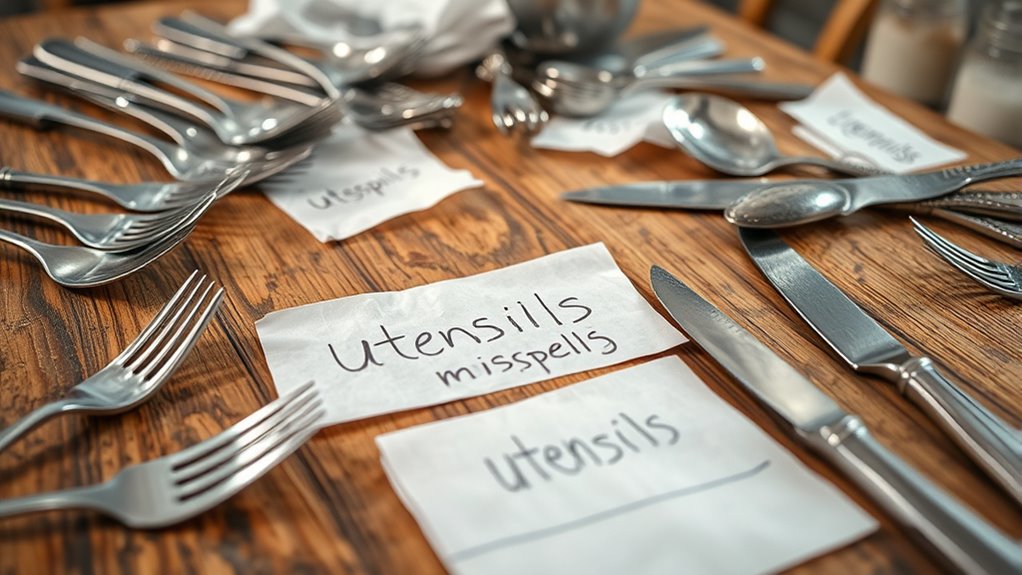
Although “utensils” is a simple word, many people still misspell it because of its tricky letter combinations. You might find yourself confused by the silent letters and unfamiliar sequence.
Here are three common reasons why mistakes happen:
- Mixing up vowels – People often write “utencils” or “utansils,” swapping vowels because the pronunciation can be unclear.
- Adding or dropping letters – You might see “utensils” misspelled as “utensils” with an extra letter like “utensills” or missing one, such as “utensls.”
- Confusing suffixes – Some confuse the ending “-ils” with “-als,” leading to “utensals.”
Knowing these common pitfalls helps you recognize and avoid errors when spelling “utensils.”
Pronunciation and Spelling Tips for “Utensils”

Since spelling “utensils” can trip you up, focusing on its pronunciation can make it easier to remember. Say it aloud: “yoo-TEN-sils.” Notice how the middle syllable “TEN” is emphasized.
Breaking the word into three parts—“u-ten-sils”—helps you visualize the correct sequence of letters. Remember, it starts with a “u,” not an “o,” and ends with “-sils,” not “-sals” or “-zils.” To avoid confusion, write the word slowly, pronouncing each part clearly.
Repetition is key; try spelling it aloud several times while writing. Also, note the silent “s” sound at the end is soft, not harsh. By linking pronunciation with spelling, you’ll find “utensils” easier to recall and write correctly.
Why People Confuse “Utensils” With Similar Words
You might mix up “utensils” with similar-sounding words or spell it incorrectly because of its uncommon letter combination. Common mistakes often come from confusing it with words like “intense” or “essential.”
Understanding these tricky spots can help you spell “utensils” with confidence.
Commonly Confused Spellings
When you see the word “utensils,” it’s easy to mix it up with similar-sounding or similarly spelled words like “intensils” or “utensil” without the final “s.” These confusions often happen because the word isn’t used daily by everyone, and its pronunciation can lead to guessing the spelling incorrectly.
Here are common spelling errors you might encounter:
- Dropping the final “s,” turning “utensils” into “utensil,” which changes the meaning from plural to singular.
- Adding an unnecessary “n,” resulting in “intensils,” a non-word that sounds close.
- Swapping vowels, like writing “utencils” instead of “utensils,” because the “e” and “i” can sound similar.
Knowing these pitfalls helps you spell “utensils” correctly every time.
Similar Sounding Words
Why do so many people confuse “utensils” with similar-sounding words? It’s often because words like “essentials” or “tentacles” share similar sounds or syllable patterns, making it easy to mix them up when you hear them.
Plus, if you’re learning English or just hearing the word in passing, your brain might link “utensils” with familiar terms that sound alike. Here’s a quick look at some words that cause confusion:
| Word | Reason for Confusion |
|---|---|
| Essentials | Similar ending sound |
| Tentacles | Similar rhythm and syllables |
| Utensil | Singular form of utensils |
| Unstoppable | Similar start sound |
| Utmost | Similar beginning sound |
Knowing these can help you stay clear when spelling or using “utensils.”
Remembering the Correct Spelling of “Utensils”
You might mix up letters when spelling “utensils,” especially with its tricky middle section. Paying attention to how you say the word can guide you in placing the letters correctly. Using simple memory tricks can also help you remember the exact order.
Common Spelling Mistakes
Although “utensils” might seem straightforward, many people struggle with its spelling due to the tricky combination of vowels and consonants. You might find yourself mixing up letters or dropping one altogether.
Here are three common mistakes to watch out for:
- Swapping vowels: Writing “utensils” as “utansils” or “utinsils” by confusing the order of ‘e’ and ‘i’.
- Omitting letters: Leaving out the ‘t’ or the ‘l’, resulting in “uensils” or “utenssils”.
- Adding extra letters: Doubling consonants unnecessarily, like “utensills” or “utensills”.
Keep these errors in mind and double-check your spelling to avoid these pitfalls. With a little attention, you’ll spell “utensils” correctly every time.
Pronunciation Helps Spelling
Misspelling “utensils” often happens because the word’s pronunciation can be tricky to connect with its spelling. To remember it correctly, focus on how it sounds: “yoo-TEN-sils.” Break it down into syllables—“u-ten-sils.”
Notice the middle syllable “ten” is spelled just like the number ten. This helps anchor the spelling in your mind. The beginning sounds like “you,” but it’s spelled with a “u” and not “you.”
The ending, “sils,” might confuse you, but it’s a simple combination of “s” and “ils.” When you say the word slowly, you’re more likely to recall each part’s spelling. So, pay attention to pronunciation—it’s your best guide to spelling “utensils” right every time.
Mnemonic Devices Tips
Since spelling “utensils” can be tricky, mnemonic devices can make it easier to remember. You can use simple tricks to lock the spelling in your mind. Try these three tips:
- Break it down – Think “U-ten-sils” to separate the word into manageable parts.
- Create a sentence – Use the first letter of each part: “Unusual Tools Enter Nice Spots In Large Sets.”
- Visualize the word – Picture kitchen utensils arranged to form the word, helping your brain connect the letters.
Using “Utensils” in Sentences to Reinforce Spelling
When you use the word “utensils” in sentences, you’ll strengthen your ability to spell it correctly. Try writing simple sentences like, “I packed my utensils for the picnic,” or “She washed the utensils after dinner.” Repeating the word in different contexts helps your brain remember the correct letter order.
You can also write short stories or descriptions involving utensils, such as cooking scenes or table settings. The more you engage with the word actively, the easier it becomes to recall its spelling. Additionally, saying the sentences aloud reinforces the connection between how the word sounds and how it’s spelled.
Practice regularly, and soon spelling “utensils” will feel natural and effortless every time you write or type it.
The Origin and Meaning of “Utensils”
Although you might use “utensils” every day, understanding where the word comes from can make it easier to remember how to spell it. The term “utensils” originates from the Latin word “utensilia,” which means “things for use.” This root reflects the practical nature of utensils as tools designed to help you complete tasks.
Knowing that “utensils” comes from Latin for “things for use” helps make spelling and meaning clear.
Here are three key points to remember about the origin and meaning of “utensils”:
- It comes from Latin, emphasizing usefulness.
- It refers broadly to tools, not just kitchen gadgets.
- The spelling reflects its Latin roots, with the “utens-” prefix linked to utility.
Knowing this background makes spelling “utensils” less confusing and connects the word to its functional purpose.
Easy Tools to Check Your “Utensils” Spelling
How can you quickly make sure you’ve spelled “utensils” correctly? Start by using your device’s built-in spell checker—it usually highlights misspelled words instantly. If you’re unsure, typing “utensils” into online dictionaries like Merriam-Webster or Oxford can verify the spelling and provide definitions.
You can also rely on writing tools such as Grammarly or Hemingway Editor; they not only check spelling but improve overall writing quality. For a quick check, simply search “how to spell utensils” in your favorite search engine, which often displays the correct spelling at the top. These easy tools save time and prevent errors, so you can write confidently without second-guessing this common kitchen term.
Using these resources guarantees your spelling stays accurate every time.
When to Use “Utensils” vs. Other Kitchen Terms
Now that you know how to check the spelling of “utensils,” it’s helpful to understand when to use this term instead of other kitchen-related words. You’ll want to choose “utensils” when referring to tools used for eating, cooking, or serving food.
Here’s how to decide:
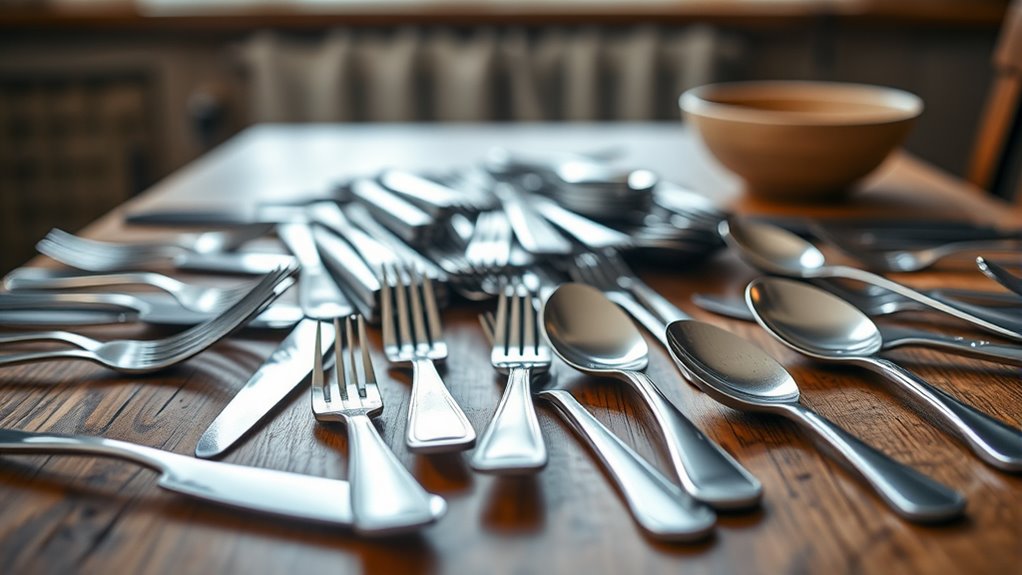
- Use “utensils” for items like forks, spoons, knives, and spatulas.
- Choose “cutlery” if you’re specifically talking about knives, forks, and spoons used for eating.
- Opt for “cookware” or “bakeware” when discussing pots, pans, and baking trays, which aren’t utensils but essential kitchen tools.
Frequently Asked Questions
What Are the Most Common Types of Kitchen Utensils?
You’ll find the most common kitchen utensils include spoons, forks, knives, spatulas, whisks, tongs, peelers, and measuring cups. These tools help you prepare, cook, and serve food efficiently every day.
How Do You Properly Clean and Maintain Utensils?
You clean utensils by washing them with warm, soapy water right after use. Dry them thoroughly to prevent rust. Sharpen knives regularly.
Store all utensils properly to keep them in good condition and extend their lifespan.
What Materials Are Utensils Typically Made From?
You might think utensils are just metal, but they’re typically made from stainless steel, plastic, wood, or silicone. Each material serves a purpose, so you’ll want to choose based on durability, heat resistance, and style.
Can Utensils Be Used for Non-Kitchen Purposes?
Yes, you can use utensils for non-kitchen purposes like crafting, gardening, or even as makeshift tools. They’re versatile, so don’t hesitate to repurpose them creatively beyond cooking and eating tasks.
Using utensils in different ways can add a unique touch to your projects. For example, spoons can be turned into decorative hooks, and forks can be bent to create garden markers.
This adaptability makes utensils practical beyond their traditional roles. Explore their potential and give old utensils a new life in various creative endeavors.
Where Is the Best Place to Buy Quality Utensils?
When it comes to quality utensils, you can’t judge a book by its cover—check specialty kitchen stores or trusted online retailers like Williams Sonoma or Sur La Table. They offer durable, well-crafted tools you’ll love using every day.
Conclusion
Now that you know how to spell “utensils” correctly, why let simple mistakes hold you back? You’ve seen common errors, pronunciation tips, and even how to use the word in sentences.
With a little practice and the right tools, you’ll never confuse it again. So, next time you’re talking about kitchen tools, you can confidently spell “utensils” without hesitation.
Ready to impress with your spelling skills? Remember, mastering the spelling of utensils helps you communicate clearly and professionally every time.