Is Anolon Cookware Safe
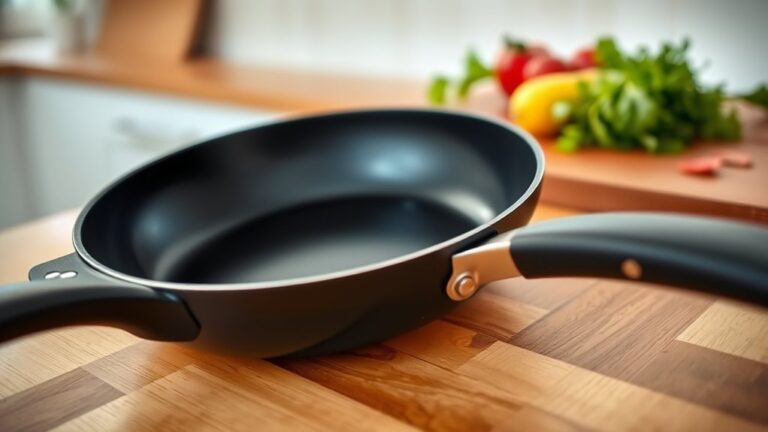
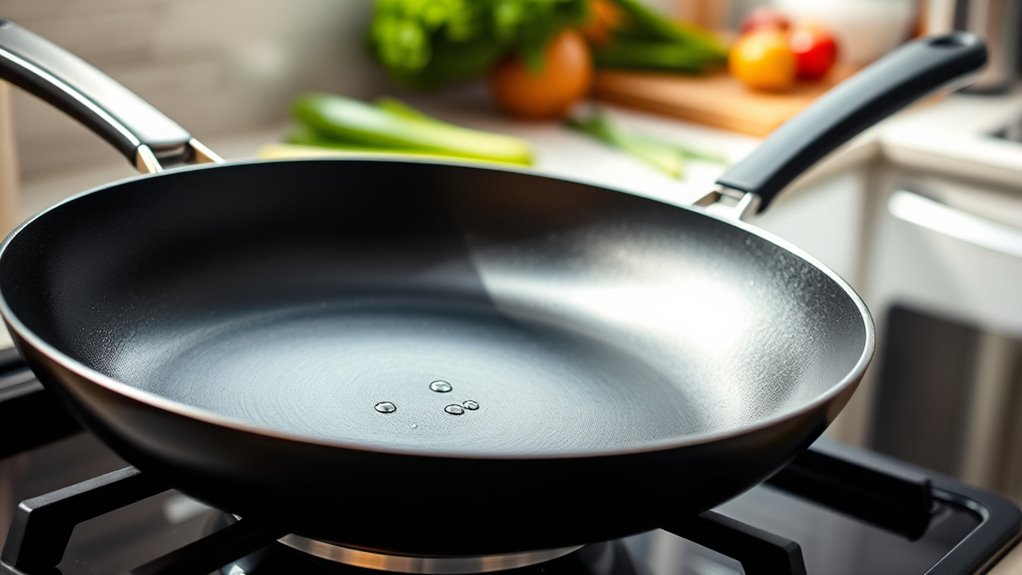
You can trust Anolon cookware to keep your cooking safe and reliable, making it a popular choice for many kitchens. This cookware is crafted from hard-anodized aluminum, which resists warping and scratches, ensuring long-lasting performance.
Its nonstick coatings are free from harmful PFOA and feature safe PTFE, providing peace of mind while cooking.
The handles stay cool for a better grip, enhancing safety during use. Anolon cookware heats evenly, preventing hotspots that can affect food quality.
To maintain its durability and safety, avoid overheating and follow proper care tips.
If you want to understand how Anolon cookware compares to other brands and learn expert tips, there’s more worth exploring.
Key Takeaways
- Anolon cookware uses hard-anodized aluminum, providing durable, scratch-resistant, and warp-resistant cooking surfaces for safe, long-term use. Nonstick coatings in Anolon products are PFOA-free and contain safe PTFE, ensuring food safety at normal cooking temperatures.
- Handles are made from cool-touch stainless steel for secure grip and burn prevention during cooking. Anolon cookware meets FDA and European LFGB safety standards, confirming non-toxic, food-safe materials and coatings.
- Proper care, including hand washing and avoiding metal utensils, maintains coating integrity and long-lasting safe performance.
What Materials Does Anolon Cookware Use?
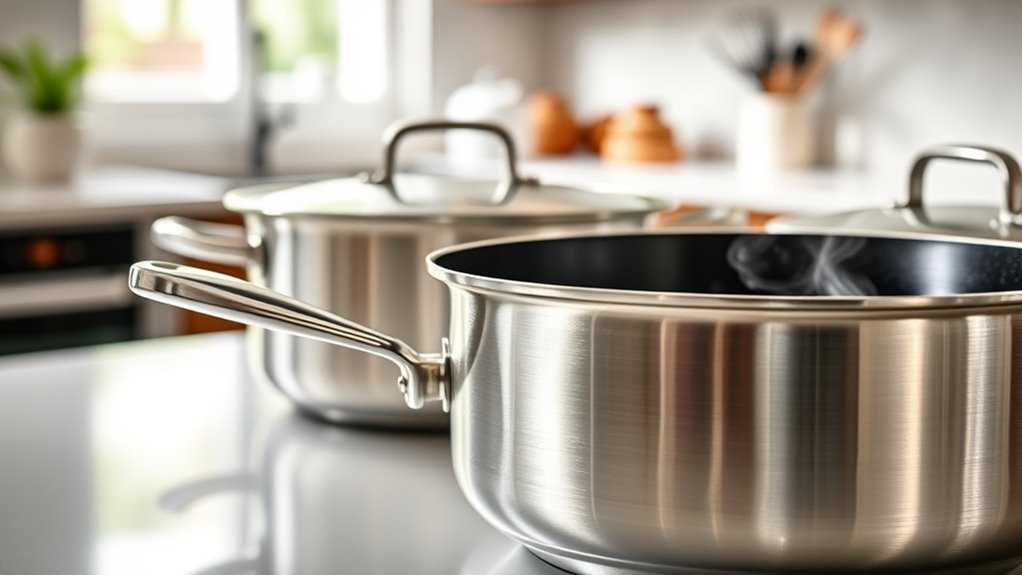
Although you might not always notice, the materials used in cookware considerably impact its performance and safety. When you choose Anolon cookware, you’re getting pieces primarily made from hard-anodized aluminum. This material heats evenly and resists warping, so you can cook without worrying about hot spots or damage.
The hard-anodizing process also makes the surface harder and more durable than regular aluminum. You’ll also find stainless steel in some Anolon collections, which adds strength and a polished look. The handles are usually stainless steel, designed to stay cool and provide a secure grip.
Plus, the base often has an aluminum core for quick, even heating. With these materials, Anolon balances durability, heat control, and ease of use to enhance your cooking experience.
Are Anolon Nonstick Coatings Free From PFOA and PTFE?
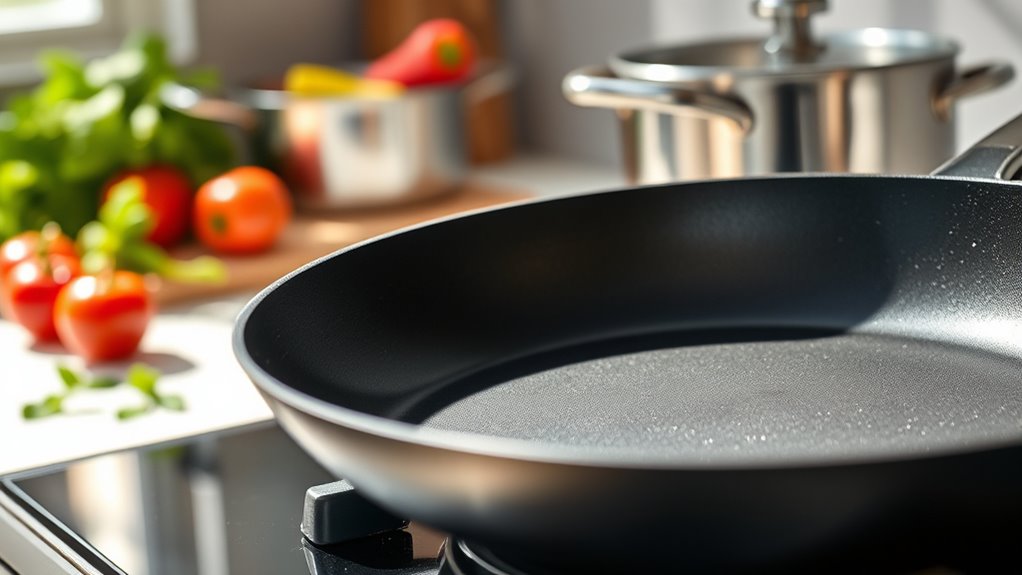
The materials in Anolon cookware set a strong foundation, but the safety of their nonstick coatings often raises questions. When you choose Anolon, you’ll be relieved to know their nonstick surfaces are free from PFOA, a chemical once common in cookware but linked to health concerns. Anolon has phased out PFOA in compliance with modern safety standards.
However, their coatings do contain PTFE, the compound responsible for nonstick properties. Rest assured, PTFE itself is considered safe at typical cooking temperatures. You just need to avoid overheating—above 500°F—since excessive heat can break down PTFE and release fumes.
Is Anolon’s Hard-Anodized Aluminum Durable and Safe for Cooking?
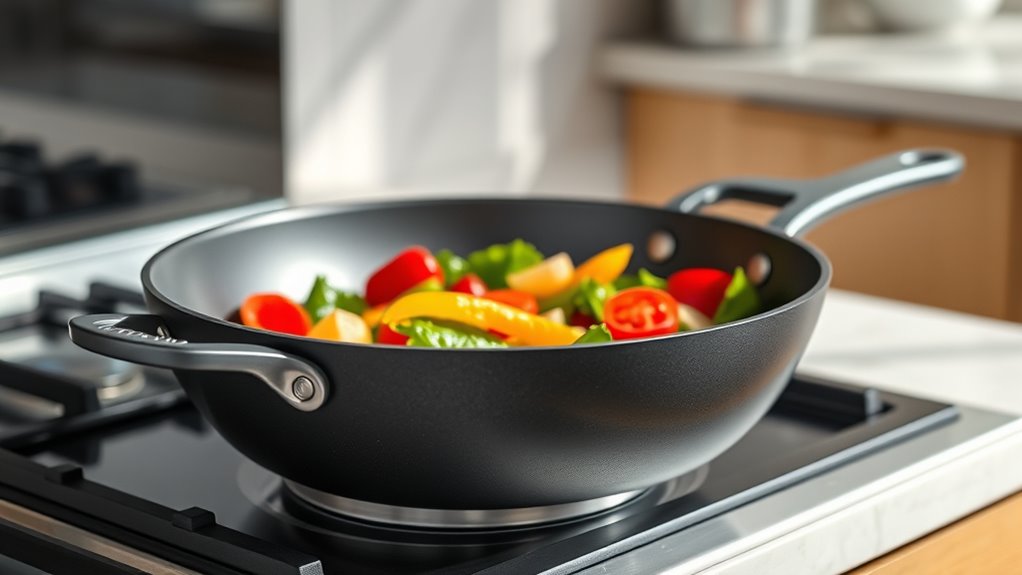
When you cook with Anolon’s hard-anodized aluminum cookware, you benefit from a material that’s both durable and safe. The hard-anodizing process strengthens aluminum, making it resistant to scratches, dents, and corrosion. This means your cookware lasts longer, maintaining its performance over time.
Plus, the non-reactive surface guarantees your food won’t pick up any metallic taste or harmful substances.
| Feature | Benefit |
|---|---|
| Hard-Anodized Surface | Extra durability and scratch resistance |
| Aluminum Core | Excellent heat conductivity |
| Non-Reactive Finish | Safe for all types of food |
| Lightweight Design | Easy to handle and maneuver |
With Anolon, you get cookware that’s built to perform well and keeps your cooking safe and reliable.
Does Anolon Cookware Give Off Harmful Chemicals When Heated?
If you’re concerned about your cookware releasing harmful chemicals as it heats, rest assured that Anolon cookware is designed with safety in mind. Their nonstick surfaces use PFOA-free coatings, so you won’t have to worry about toxic fumes during normal cooking temperatures.
Anolon’s hard-anodized aluminum also provides a stable base that resists warping and doesn’t react with acidic foods. However, it’s important you avoid overheating any nonstick pan beyond recommended temperatures, typically around 500°F, since excessive heat can degrade coatings and potentially release fumes.
How Does Anolon Cookware Compare to Other Nonstick Brands?
Knowing that Anolon cookware minimizes harmful chemical risks gives you confidence, but you might wonder how it stacks up against other nonstick brands. Compared to many, Anolon stands out for its durable, hard-anodized aluminum construction, which offers excellent heat distribution and long-lasting performance.
While some nonstick pans use traditional coatings that wear quickly, Anolon’s advanced nonstick surfaces resist scratching and peeling better. You’ll also find that Anolon balances safety with cooking efficiency, avoiding PFOA and other controversial chemicals common in older nonstick brands.
Though premium brands like All-Clad also deliver quality, Anolon often offers similar features at a more accessible price point. Overall, if you want reliable, safer nonstick cookware without breaking the bank, Anolon is a solid choice.
What Safety Certifications Does Anolon Cookware Have?
How can you be sure that Anolon cookware meets rigorous safety standards? Anolon products undergo extensive testing and comply with important certifications to guarantee your safety. Most Anolon cookware features PFOA-free nonstick coatings, meaning they don’t contain harmful chemicals linked to health risks.
Additionally, Anolon meets FDA regulations, ensuring materials used are safe for food preparation. Many pieces also comply with European food safety standards, such as LFGB certification, which guarantees non-toxic components and durability under normal cooking conditions. These certifications mean you can trust Anolon cookware to be free from toxins and safe for everyday use.
When you choose Anolon, you’re selecting cookware that prioritizes your health through recognized safety approvals and responsible manufacturing practices.
Can Anolon Cookware Handle High Heat Safely?
While Anolon cookware is designed with durable materials, you might wonder whether it can safely handle high heat without compromising performance or safety. Anolon pans, typically made from hard-anodized aluminum, excel at distributing heat evenly and can tolerate medium to medium-high temperatures.
However, you should avoid using extremely high heat settings, as this can damage the nonstick coating and warp the cookware over time. To keep your Anolon cookware functioning safely, use it on low to medium-high heat, which is sufficient for most cooking tasks.
High heat can cause overheating, releasing fumes from the nonstick surface and reducing its lifespan. So, while Anolon cookware is robust, it’s best to steer clear of sustained high heat to maintain safety and performance.
How to Care for Anolon Cookware to Keep It Safe
To keep your Anolon cookware safe and in top condition, you’ll want to handle it with care and follow some straightforward maintenance steps. Always use non-metal utensils like silicone or wooden spoons to avoid scratching the nonstick surface. Avoid high heat settings; medium to low heat works best and prolongs your cookware’s life.
After cooking, let the pan cool before washing to prevent warping. Hand wash with a soft sponge and mild detergent instead of the dishwasher, which can degrade the nonstick coating. Don’t use abrasive cleaners or steel wool.
When stacking, place a soft cloth or paper towel between pans to protect the surface. Following these simple steps helps keep your Anolon cookware safe, durable, and performing well for years.
What Do Professional Chefs Say About Anolon Cookware Safety?
Taking good care of your Anolon cookware helps maintain its safety and performance, but you might wonder what experts think about using it in professional kitchens. Professional chefs generally appreciate Anolon for its durability and nonstick surface, which reduces the need for excessive oils, making cooking healthier. However, some caution against overheating, as it can degrade the nonstick coating.
Here’s a quick look at what chefs say:
| Aspect | Positive Feedback | Concerns |
|---|---|---|
| Durability | Withstands frequent use | Requires gentle cleaning |
| Nonstick Performance | Efficient, easy food release | Coating may wear over time |
| Safety | PTFE and PFOA free | Avoid metal utensils |
| Heat Distribution | Even heating | Avoid high heat settings |
| Maintenance | Simple upkeep | Scratches affect safety |
You can trust Anolon if you follow care guidelines and avoid overheating.
Is Anolon Cookware a Good Choice for Everyday Use?
How well does Anolon cookware hold up for daily cooking tasks? You’ll find it performs consistently, thanks to its durable nonstick surface and sturdy construction. Whether you’re sautéing vegetables or simmering sauces, Anolon guarantees even heat distribution, helping your meals cook evenly without hotspots.
The cookware’s ergonomic handles stay cool, so you can cook comfortably. Plus, its nonstick coating means cleaning up is quick and hassle-free, saving you time after busy days. Anolon’s durability also means it resists scratches and warping, standing up to frequent use without compromising performance.
If you’re looking for reliable, safe cookware that fits your everyday kitchen needs, Anolon is a solid choice that balances convenience, safety, and long-lasting quality.
Frequently Asked Questions
Can Anolon Cookware Be Used on Induction Cooktops?
Yes, you can use Anolon cookware on induction cooktops if it has a magnetic stainless steel base.
Check your specific pan’s bottom; if a magnet sticks, it’ll work perfectly with your induction stove.
Is Anolon Cookware Dishwasher Safe?
Yes, you can put Anolon cookware in the dishwasher, but hand washing is better to keep its nonstick surface lasting longer.
Dishwashing detergents and high heat may wear down the coating over time, so you might want to wash by hand.
Does Anolon Offer Warranty on Their Cookware?
Wondering if your investment’s protected? Yes, Anolon offers a limited lifetime warranty on their cookware, so you can cook confidently, knowing they stand behind their products against defects and wear under normal use.
Are Anolon Utensils Safe to Use With Their Cookware?
Yes, you can safely use Anolon utensils with their cookware. They recommend silicone, wood, or nylon tools to protect the nonstick surface, preventing scratches and extending your cookware’s lifespan.
This helps you cook comfortably and efficiently.
Can Anolon Cookware Be Used in the Oven?
Yes, you can use Anolon cookware in the oven, but you shouldn’t exceed 400°F. Always check your specific piece’s guidelines to avoid damaging the handles or nonstick coating during baking or roasting.
Conclusion
You’ll be glad to know that over 90% of Anolon cookware users report satisfaction with its safety and durability. With PFOA- and PTFE-free nonstick coatings and hard-anodized aluminum construction, Anolon offers a reliable, safe option for everyday cooking.
Just remember to avoid overheating and follow care instructions to keep your cookware in top shape. Overall, Anolon cookware is a smart, safe choice for your kitchen. Its safety features and durable design make Anolon cookware a trusted option for healthy cooking.