A Food Handler Uses Two Different Cutting Boards
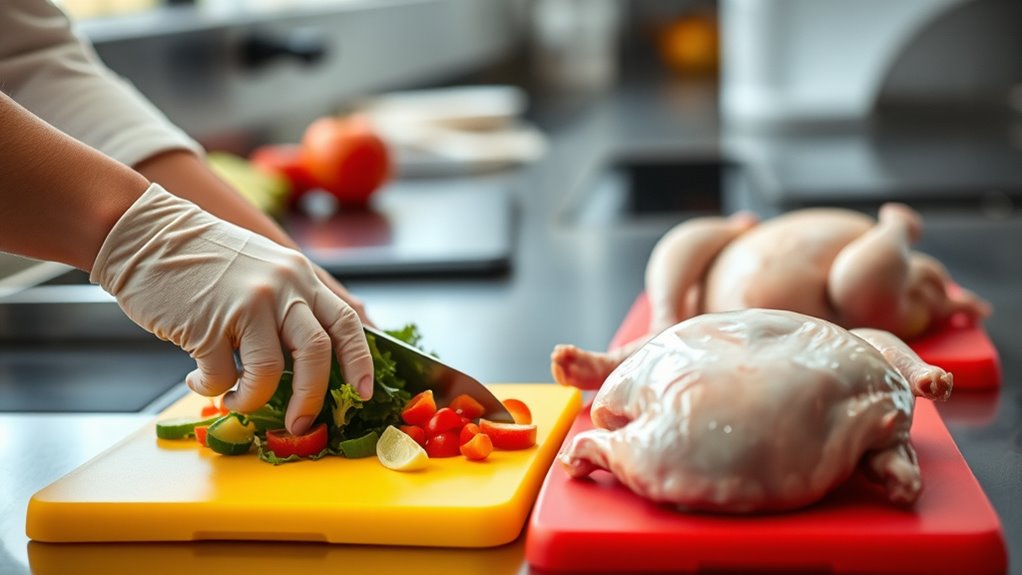
You use two different cutting boards to keep raw and ready-to-eat foods separate, a crucial practice in food safety that prevents harmful bacteria like Salmonella from spreading. Using separate boards reduces the risk of cross-contamination, which is essential for protecting your customers and maintaining a hygienic kitchen environment.
Color-coded cutting boards not only help you stay organized but also speed up meal preparation by clearly distinguishing food types.
Remember to clean and sanitize each board properly after use to maintain high hygiene standards. Replace boards that are worn or damaged to avoid bacterial buildup.
If you want to sharpen your food safety skills and streamline your kitchen, there’s more useful info ahead.
Key Takeaways
- Using two cutting boards prevents cross-contamination between raw meats and other foods like vegetables or ready-to-eat items.
- Separate boards reduce bacteria transfer, lowering risks of foodborne illnesses such as Salmonella and E. coli.
- Color-coded boards improve clarity and ensure correct usage for different food types, enhancing kitchen safety.
- Proper cleaning and sanitizing each board after use maintains hygiene and prevents bacterial growth.
- Organizing and regularly inspecting cutting boards for wear ensures safe food handling and operational efficiency.
Why Separate Cutting Boards Matter

Because cross-contamination can cause serious foodborne illnesses, you should always use separate cutting boards for different types of food. When you use one board for raw meat and another for vegetables, you prevent harmful bacteria from spreading. This simple step keeps your food safe and reduces the risk of making yourself or others sick.
You don’t want bacteria from raw chicken or beef to end up on your salad or fruit. Using dedicated boards for specific food groups helps maintain hygiene and guarantees better food safety. It’s an easy habit to form that protects everyone eating your meals.
How Cross-Contamination Happens Without Separate Boards
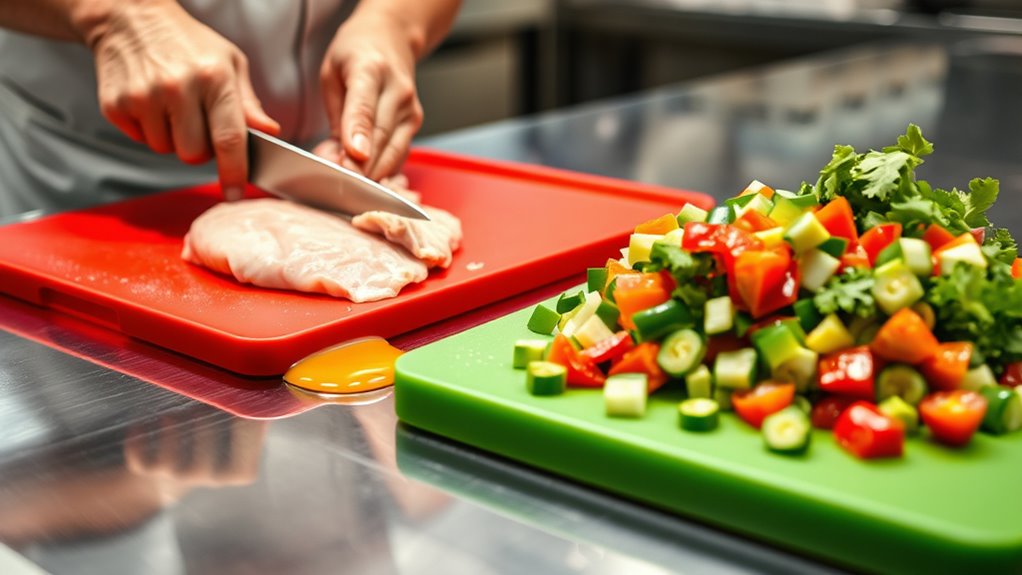
If you use the same cutting board for raw meat and veggies, bacteria can easily transfer between them. This cross-contamination is a common source of foodborne illness.
You can reduce this risk by always keeping boards separate.
Bacteria Transfer Risks
How does using the same cutting board for different foods increase the risk of bacteria transfer? When you cut raw meat and then slice vegetables on the same board without properly cleaning it, harmful bacteria from the meat can stick to the board’s surface. These bacteria easily move onto your vegetables, which you might eat raw.
Since the bacteria aren’t visible, you won’t notice the contamination. This cross-contamination happens quickly and can cause serious health risks. Even washing the board with just water often isn’t enough to remove all bacteria.
Foodborne Illness Sources
Understanding the risks of bacteria transfer highlights why cross-contamination is a common cause of foodborne illness when you don’t use separate cutting boards. When you cut raw meat on one board and then use the same board for fresh vegetables without cleaning it properly, harmful bacteria like Salmonella or E. coli can spread. These pathogens can survive on the board’s surface, contaminating foods that won’t be cooked further, increasing your risk of illness.
Even small amounts of leftover juice or particles can transfer bacteria. Using separate boards for raw and ready-to-eat foods helps prevent this dangerous mix. By doing so, you reduce the chances of foodborne illnesses, keeping your meals safer for you and everyone you serve.
Foods That Need Dedicated Cutting Boards
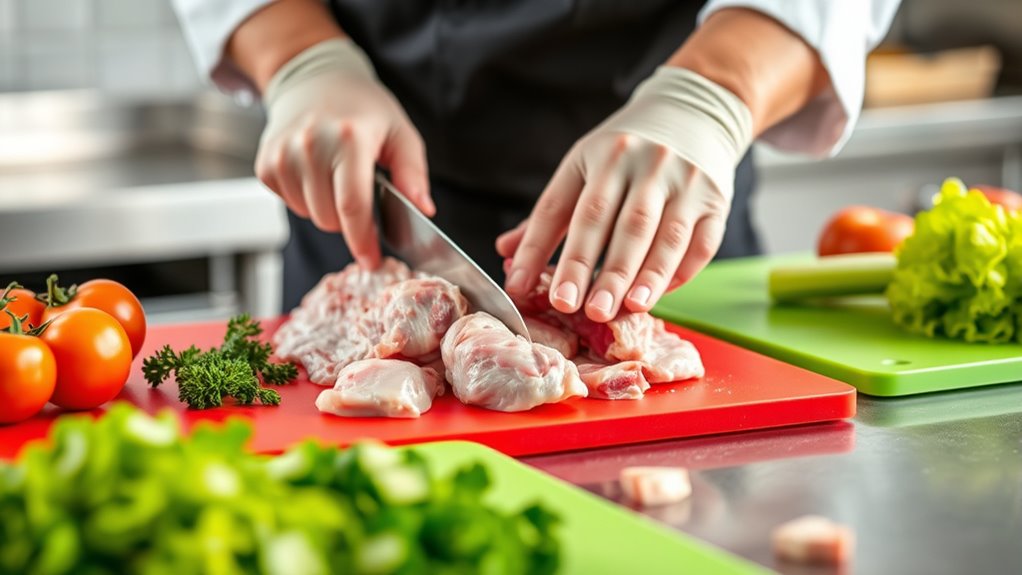
Because cross-contamination poses serious health risks, you need to use dedicated cutting boards for different types of foods. Raw meats, poultry, and seafood carry harmful bacteria that can easily transfer to other foods if you don’t separate them. Use one board exclusively for these items.
Similarly, fruits and vegetables should have their own cutting board to prevent contamination from raw proteins. You’ll also want a separate board for ready-to-eat foods like bread or cheese. This practice helps keep your food safe by reducing the chance of bacteria spreading.
Choosing Cutting Board Materials
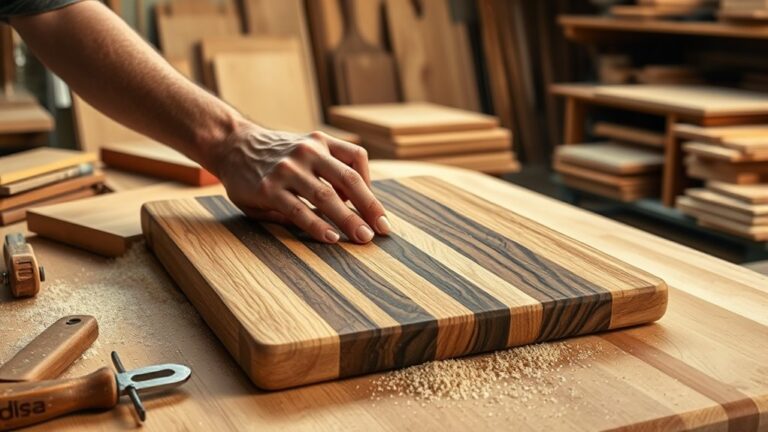
When selecting cutting boards, you’ll want to evaluate the material since it affects durability, maintenance, and food safety. Plastic boards are popular because they’re lightweight, dishwasher-safe, and resist bacteria when properly maintained. However, they can develop deep grooves that harbor germs.
Wooden boards, like maple or bamboo, are durable and naturally antimicrobial but require hand washing and regular oiling to prevent cracking. You should avoid glass or ceramic boards as they can dull knives quickly and may chip. Consider how often you’ll use the board and your cleaning routine.
Choosing the right material helps keep your kitchen safe and efficient, so pick boards that match your food prep needs and cleaning habits without compromising hygiene or longevity.
Color-Coding Cutting Boards to Avoid Mix-Ups
Although using different cutting boards is essential, color-coding them can make it even easier to avoid cross-contamination. By assigning specific colors to certain food types—like red for raw meat, green for vegetables, and yellow for poultry—you instantly reduce the risk of mixing harmful bacteria.
When you grab a cutting board, the color will remind you what it’s meant for, so you won’t accidentally use the same board for raw chicken and fresh salad. It’s a simple visual cue that helps keep your kitchen safe and organized.
Plus, if you work with others, color-coding creates clear communication, so everyone knows which board to use without confusion. This small step goes a long way in maintaining proper hygiene and food safety.
Cleaning Cutting Boards Properly
Using color-coded cutting boards helps prevent cross-contamination, but keeping those boards clean is just as important. You need to wash your cutting boards thoroughly after each use to avoid harmful bacteria lingering. Don’t just rinse; scrub with hot, soapy water, then rinse again to remove all residue.
Sanitizing after washing adds an extra layer of safety, especially when handling raw meats.
Follow these steps to clean your cutting boards properly:
- Scrub with hot, soapy water immediately after use.
- Rinse thoroughly to remove soap and debris.
- Sanitize with a bleach solution or food-safe sanitizer.
- Air dry completely before storing to prevent bacteria growth.
Taking these steps shows you care about food safety and your loved ones’ health.
When to Replace Cutting Boards
You should replace your cutting boards when they show deep grooves or cracks that can harbor bacteria. Keep in mind how often you use them—boards used daily may need replacing more frequently.
Staying on top of these signs helps keep your food prep safe and hygienic.
Signs Of Wear
When cutting boards develop deep grooves, cracks, or excessive wear, it’s time to replace them. These damages harbor bacteria, making your food unsafe. Don’t wait until it’s too late; watch for these signs:
- Visible deep cuts – They trap germs that even thorough washing can’t remove.
- Warping or cracking – This weakens the board and creates unsafe surfaces.
- Persistent odors – Smells that won’t go away mean bacteria have settled in.
- Discoloration and stains – These can indicate mold or bacterial buildup under the surface.
Frequency Of Replacement
Although cutting boards can last a long time with proper care, knowing when to replace them is essential for food safety. You should replace your cutting boards once deep grooves, cracks, or excessive wear develop, as these imperfections harbor bacteria that are tough to clean. Plastic boards typically need replacing every 1 to 2 years, especially if you use them heavily.
Wooden boards can last longer but inspect them regularly for damage or warping. If you notice any persistent odors or stains that don’t wash away, it’s a sign to get a new board. Don’t wait for visible damage alone—if your board feels rough or worn, it’s safer to replace it to avoid cross-contamination and keep your food prep sanitary.
Organizing Your Kitchen for Cutting Boards
Since cross-contamination is a major concern, organizing your kitchen to keep cutting boards accessible yet separate is essential. You want a system that’s practical and keeps you safe. Start by designating specific spots for each board—meat, vegetables, and bread should never share a space.
This avoids confusion and speeds up your prep work. Here’s how to get started:
- Store boards vertically in a drying rack for easy grab-and-go.
- Label each board clearly with color-coded stickers or markers.
- Keep boards near their prep zones to limit unnecessary movement.
- Regularly inspect and replace worn boards to maintain hygiene.
How to Train Food Handlers to Use Cutting Boards
You need to train food handlers on the importance of color coding to keep different foods separate. Teach them proper cleaning techniques to guarantee cutting boards stay safe and sanitary.
Emphasize strategies to prevent cross-contamination, protecting both food quality and customer health.
Importance Of Color Coding
Why does color coding matter when training food handlers to use cutting boards? It helps prevent cross-contamination, protects your customers, and keeps your kitchen safe. When you assign specific colors to different food types, everyone instantly knows which board to use.
This simple step builds trust and reduces mistakes.
Here’s why you should embrace color coding:
- Protects health – Stops harmful bacteria from spreading between foods.
- Boosts efficiency – Saves time by eliminating confusion during busy shifts.
- Builds confidence – Staff feel secure knowing they’re following clear safety rules.
- Simplifies training – Makes onboarding quicker and more effective for new team members.
Proper Cleaning Techniques
Although using the right cutting board is essential, proper cleaning techniques guarantee those boards stay safe and sanitary. You need to wash cutting boards thoroughly after each use with hot, soapy water. Scrub all surfaces to remove food particles and bacteria.
Rinse well and sanitize using a food-safe sanitizer or a diluted bleach solution. Make sure to let the boards air dry completely before storing them; moisture encourages bacteria growth. For wooden boards, avoid soaking or putting them in the dishwasher, as this can cause warping and cracking.
Instead, oil them regularly to maintain their condition. Training food handlers in these cleaning steps ensures cutting boards remain hygienic and reduces the risk of foodborne illnesses in your kitchen.
Cross-Contamination Prevention Strategies
Maintaining clean cutting boards is only part of the solution; preventing cross-contamination requires teaching food handlers how to use different boards correctly. You need to make sure they understand why using separate boards for raw meat and vegetables matters. Without clear guidance, mistakes happen, risking foodborne illnesses.
Here’s how you can train them effectively:
- Explain the risks: Show how bacteria spread between foods.
- Color-code boards: Assign specific boards to certain food types.
- Demonstrate proper use: Model cutting techniques and board assignments.
- Reinforce with reminders: Use signs or labels near workstations.
Common Cutting Board Mistakes to Avoid
When you use cutting boards improperly, you increase the risk of cross-contamination and foodborne illnesses. One common mistake is using the same board for raw meat and vegetables without washing it thoroughly in between. Don’t rely solely on a quick rinse; always sanitize the board to kill harmful bacteria.
Another error is ignoring board condition—deep grooves and cracks can harbor germs, so replace worn boards promptly. Also, avoid using wooden boards for raw meat, as they’re harder to sanitize. Failing to use separate boards for different food types increases contamination risks.
Ultimately, don’t forget to clean your boards immediately after use to prevent bacterial growth. By steering clear of these mistakes, you’ll keep your food safe and your kitchen hygienic.
How Separate Boards Speed Up Food Prep
Using separate cutting boards for different food types lets you move through meal prep faster and with less stress. When you designate one board for raw meats and another for veggies, you avoid the tedious cleaning in between tasks. This simple switch keeps your workflow smooth and efficient.
Here’s how separate boards speed up your prep:
- Reduce cross-contamination risk so you don’t have to double-check everything.
- Cut down cleaning time since you only wash boards after completing related tasks.
- Stay organized with clear zones, making it easier to focus on each ingredient.
- Boost confidence that your food is safe, letting you concentrate on cooking rather than worry.
Cutting Boards in Professional vs. Home Kitchens
Although both professional and home kitchens rely on cutting boards to prep food safely, the types and practices often differ. In professional kitchens, you’ll find color-coded boards to prevent cross-contamination, with strict rules on which board handles meat, vegetables, or seafood. These boards are usually made from durable materials like polyethylene, designed to withstand heavy use and frequent sanitizing.
At home, you might use wooden or plastic boards more interchangeably, often without strict separation. You probably don’t follow color codes, but using at least two boards—one for raw meats and another for produce—can improve safety. Professionals clean and replace boards regularly to avoid bacteria buildup, a habit you should adopt to keep your kitchen safe and efficient.
Frequently Asked Questions
Can I Use One Cutting Board if I Clean It Thoroughly Between Uses?
You can use one cutting board if you clean it thoroughly between uses, but it’s safer to use separate boards for raw meat and other foods to prevent cross-contamination and keep your food safe from harmful bacteria.
Are Bamboo Cutting Boards Safer Than Plastic Ones?
Choosing between bamboo and plastic cutting boards isn’t about safety alone; bamboo’s natural antimicrobial properties give you an edge, but only if you care for it well.
You’ll want to clean both thoroughly to keep germs away.
How Do I Prevent My Cutting Boards From Warping or Cracking?
You can prevent your cutting boards from warping or cracking by hand-washing them with mild soap, drying them immediately, and avoiding soaking.
Regularly oil wooden boards with food-safe mineral oil to maintain moisture and durability.
Is It Necessary to Sanitize Cutting Boards With Bleach?
Yes, you should sanitize cutting boards with bleach because studies show bleach kills 99.9% of bacteria. Just dilute it properly and rinse well to keep your boards safe and prevent harmful cross-contamination in your kitchen.
Can Cutting Boards Harbor Bacteria Even After Washing?
Yes, cutting boards can still harbor bacteria after washing if not properly sanitized. You should scrub them thoroughly and use a sanitizing solution or dishwasher to kill harmful germs and prevent cross-contamination in your kitchen.
Conclusion
You know, using separate cutting boards isn’t just a modern kitchen rule—it’s like wielding Excalibur against cross-contamination. By choosing the right boards, color-coding them, and training yourself or your team properly, you’ll keep food safe and prep faster.
Avoid common mistakes, and you’ll see how this simple switch transforms your cooking, whether you’re in a bustling restaurant or your cozy home kitchen. So, grab those boards and chop smart!
Using two different cutting boards is essential for food safety and preventing cross-contamination. Embrace this practice to protect your meals and ensure hygienic food handling every time.