Are Slow Cookers Toxic
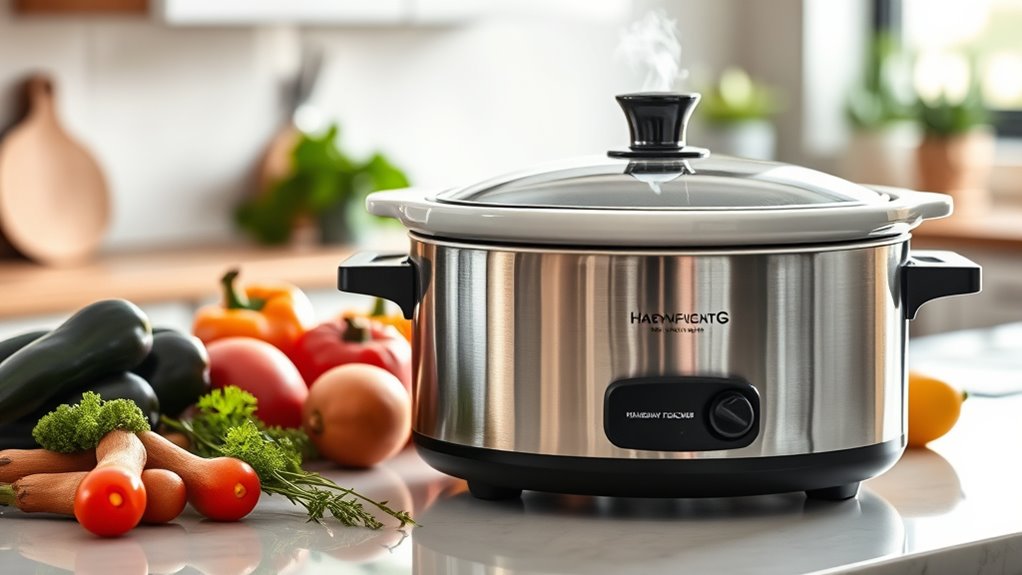
You’re not likely to face toxicity when using slow cookers if you pick ones with certified, toxin-free materials like lead-free ceramic or BPA-free plastic. Slow cookers are designed for safe, low-temperature cooking, which reduces the risk of harmful chemical release.
Choosing quality products ensures your meals remain free from contaminants.
Avoid inserts with damaged or cracked surfaces, and steer clear of non-stick coatings that can break down, especially with acidic foods.
Proper cleaning with mild detergents and gentle care helps keep your slow cooker safe.
Keeping these tips in mind guarantees safer cooking, and you can explore how specific materials and care impact safety even more.
Key Takeaways
- Slow cookers with ceramic or glass inserts are generally non-toxic and safe for cooking when properly maintained.
- Poor-quality or cracked ceramic inserts may leach harmful chemicals like lead or cadmium into food.
- Non-stick coatings can degrade and release toxins, especially when cooking acidic foods or if the surface is damaged.
- Certified slow cookers meeting FDA, Prop 65, or ISO 9001 standards minimize chemical exposure risks.
- Regular cleaning with mild detergents and avoiding abrasive scrubbers preserves surface integrity and reduces contamination risks.
Are Slow Cookers Safe or Toxic?
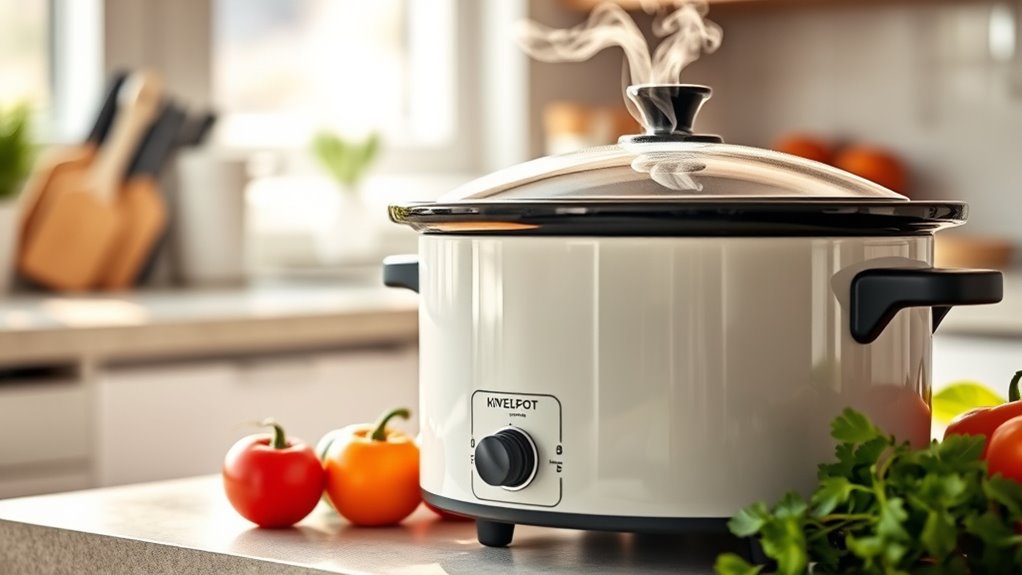
Although some people worry about potential chemicals leaching from slow cookers, you can rest assured that modern slow cookers are generally safe to use. Manufacturers design these appliances to meet strict safety standards, minimizing any health risks. When you use a slow cooker correctly—avoiding sudden temperature changes and not using damaged parts—you reduce any chance of harmful substances contaminating your food.
Most concerns arise from outdated or poorly made models, but reputable brands follow regulations that protect you. Additionally, slow cooking at low temperatures helps preserve nutrients while preventing the formation of harmful compounds.
What Materials Are Slow Cookers Made Of?
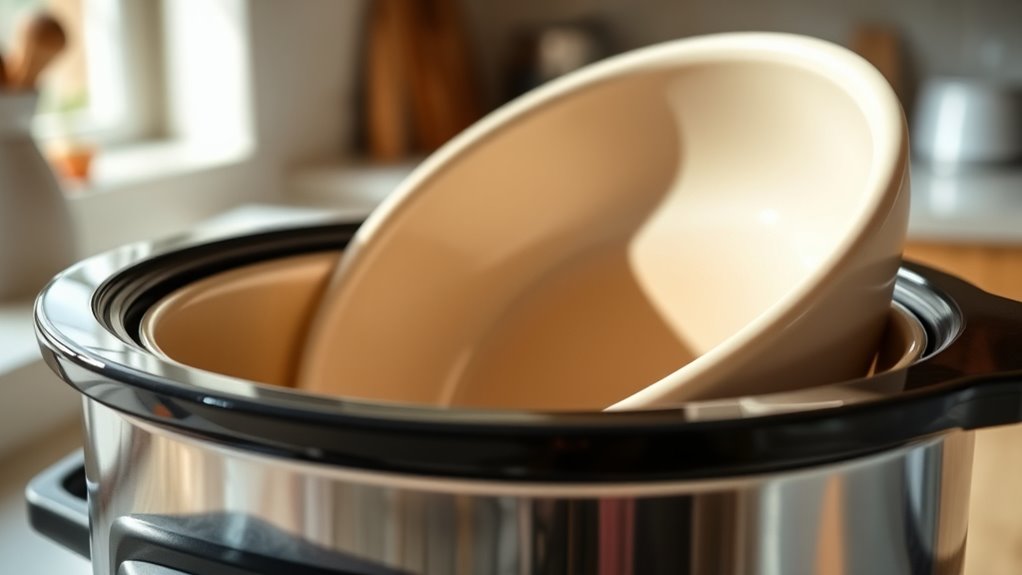
When you choose a slow cooker, knowing what materials it’s made of can help you understand its safety and performance. Most slow cookers consist of three main parts: the outer casing, the insert, and the heating element. Each plays a role in how your cooker functions and whether it’s safe to use.
Here are the common materials you’ll find:
- Outer Casing: Usually made of metal or plastic, designed to insulate and protect the electrical components.
- Insert: Often ceramic, stoneware, or metal, this is the part that holds your food.
- Heating Element: Typically metal, embedded under the casing or around the insert, providing consistent heat.
Understanding these components helps you pick a slow cooker that fits your needs and safety concerns.
Are Ceramic and Stoneware Slow Cooker Inserts Toxin-Free?
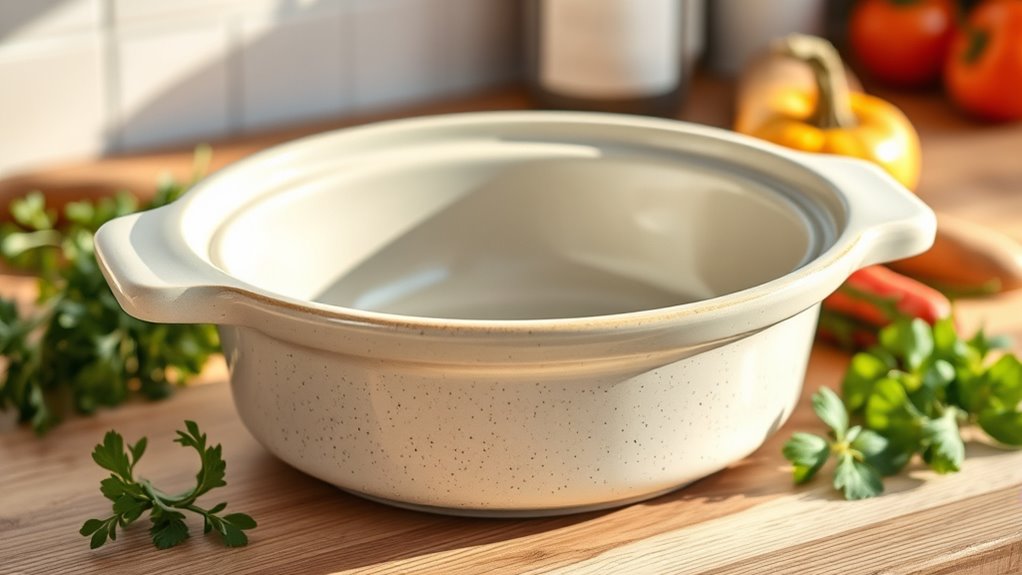
You might wonder if ceramic and stoneware slow cooker inserts are truly toxin-free. It’s important to evaluate the materials used, any potential chemical risks, and whether they meet safety certifications and standards.
Let’s take a closer look at what keeps these inserts safe for your cooking.
Materials Used In Inserts
Since slow cooker inserts come in various materials, knowing whether ceramic and stoneware options are toxin-free is essential for your health and safety. You want to choose inserts that won’t leach harmful chemicals into your food during cooking. Ceramic and stoneware inserts are popular because they’re naturally non-reactive and generally free of toxins when properly glazed.
Here are common materials used for slow cooker inserts:
- Ceramic and Stoneware: Non-porous, heat-retentive, and typically toxin-free if certified lead and cadmium-free.
- Metal (usually aluminum or stainless steel): Durable but may require non-stick coatings, which vary in safety.
- Glass: Rare but completely non-toxic and easy to clean.
Always check for manufacturer safety certifications to guarantee your insert is safe for everyday use.
Potential Chemical Risks
Although ceramic and stoneware slow cooker inserts are often marketed as safe and toxin-free, it’s important to understand that not all products are created equal. Some ceramic coatings contain lead or cadmium, which can leach into your food, especially if the glaze is cracked or worn. If you use a slow cooker regularly, you’ll want to avoid inserts with questionable glazing or low-quality finishes.
Additionally, poorly manufactured stoneware may absorb moisture or chemicals, affecting food safety. To minimize potential chemical risks, inspect your insert for chips or cracks and consider the brand’s reputation. By staying informed and choosing carefully, you can enjoy your slow cooker without worrying about hidden toxins in your ceramic or stoneware inserts.
Safety Certifications And Standards
When you choose a ceramic or stoneware slow cooker insert, checking for safety certifications can help guarantee it’s free from harmful toxins. These certifications verify the materials used meet strict health and safety standards, so you’re not exposed to chemicals like lead or cadmium.
Look for products that have been tested and approved by recognized organizations to give you peace of mind.
Here are key certifications and standards to check:
- FDA Compliance: Ensures materials are safe for food contact.
- Prop 65 Warning Compliance: Indicates the product doesn’t contain harmful levels of toxic substances.
- ISO 9001 Certification: Confirms quality management processes in manufacturing.
Can Slow Cookers Release Harmful Chemicals?
If you’re concerned about chemicals leaching from your slow cooker, it’s important to understand how these appliances are made. Most slow cookers use ceramic or stoneware inserts, which are generally safe and inert, meaning they don’t release harmful chemicals during cooking. The outer parts are typically metal or plastic, but these don’t come into direct contact with food.
However, if your slow cooker’s insert has a damaged glaze or coating, there’s a slight chance of chemical exposure, especially if it contains lead or cadmium, though reputable brands avoid these materials. To stay safe, always use slow cookers from trusted manufacturers and avoid using scratched or cracked inserts. Proper maintenance and choosing high-quality products minimize any risk of harmful chemical release during cooking.
How Do Cooking Time and Temperature Affect Slow Cooker Safety?
Understanding the materials your slow cooker is made from helps reduce chemical risks, but how you use it also plays a big role in safety. Cooking time and temperature directly impact not only food safety but also the potential for chemical leaching or material degradation.
Knowing your slow cooker’s materials and usage helps minimize chemical risks and ensures safer cooking.
To keep your slow cooking safe:
- Use recommended temperature settings; high heat kills bacteria faster and reduces foodborne illness risks.
- Avoid overcooking; prolonged exposure to heat can wear down non-stick coatings or sealants.
- Start with hot ingredients or preheat to minimize time food spends in the “danger zone” (40°F–140°F), where bacteria thrive.
What Do Experts Say About Slow Cooker Safety?
You might wonder if slow cookers pose any health risks, but experts say they’re generally safe when used properly. They highlight that slow cookers meet strict material safety standards to prevent harmful chemical exposure.
Understanding these points helps you use your slow cooker with confidence.
Health Risks Explained
How safe are slow cookers when it comes to your health? Experts generally agree that slow cookers are safe if used properly. They operate at low temperatures that kill harmful bacteria, reducing foodborne illness risk.
However, some health risks can arise if you don’t follow guidelines.
Here’s what you should keep in mind:
- Avoid undercooking by ensuring food reaches appropriate internal temperatures.
- Don’t leave perishable items at room temperature before cooking, which can promote bacterial growth.
- Use the slow cooker as intended; avoid sudden temperature changes that could cause cracks or leaching.
Material Safety Standards
While proper use helps prevent health risks, the materials used in slow cookers also play a big role in safety. Experts emphasize that quality slow cookers use food-grade, non-toxic materials like ceramic or porcelain for the inner pot, which resist leaching harmful chemicals. The outer casing typically features heat-resistant plastic or stainless steel, both deemed safe.
Regulatory bodies such as the FDA and NSF International set strict standards to ensure manufacturers avoid toxic substances like lead or cadmium in slow cooker components. When you buy a certified slow cooker, you’re less likely to encounter safety issues. To stay safe, always check product labels and certifications.
Avoid cheap models with unclear material information, as they might not meet these essential safety standards.
How to Choose a Non-Toxic Slow Cooker
Wondering what makes a slow cooker truly safe to use? It starts with the materials and design. You want to pick one that avoids harmful chemicals and guarantees your food stays healthy.
Focus on these key points when choosing:
Focus on key features like material safety and trusted certifications when selecting your slow cooker.
- Ceramic or stoneware inserts: These materials don’t leach toxins and handle heat evenly.
- BPA-free plastic components: If the slow cooker has plastic parts, make sure they’re BPA-free to avoid chemical contamination.
- Reputable brands with safety certifications: Look for products tested against food safety standards to assure non-toxicity.
Tips to Avoid Toxic Chemical Exposure When Using a Slow Cooker
To minimize your exposure to toxic chemicals when using a slow cooker, you should handle and maintain it properly. Always choose slow cookers with ceramic or glass inserts instead of non-stick coatings that may release harmful substances. Avoid cooking acidic foods in non-stick pots, as they can degrade the coating.
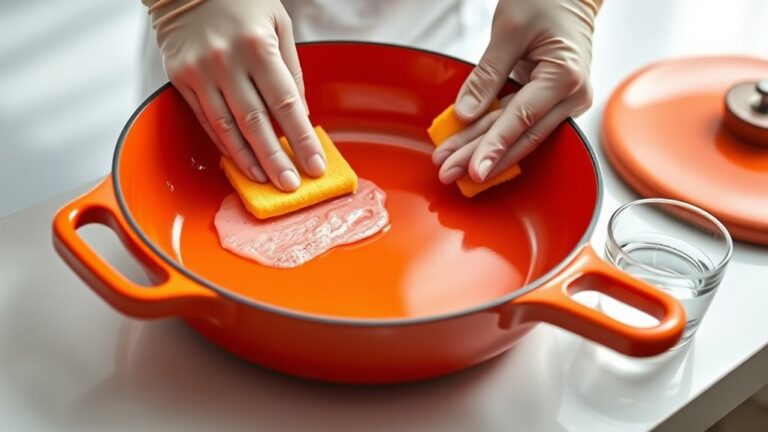
Clean your slow cooker thoroughly after each use, using mild detergents and avoiding abrasive scrubbers that can damage surfaces.
| Tip | Reason |
|---|---|
| Use ceramic or glass pots | Avoid toxic non-stick chemical release |
| Avoid acidic foods | Prevent coating breakdown |
| Clean gently | Preserve pot surface integrity |
| Check for cracks | Prevent chemical leaching |
Following these tips helps reduce potential chemical exposure and ensures safer slow cooker use.
Frequently Asked Questions
Can Slow Cookers Be Used for Non-Food Items?
Yes, you can use slow cookers for non-food items like making homemade candles or heating wax, but be sure to clean thoroughly afterward to avoid contamination.
Always avoid using it for anything toxic or flammable.
Do Slow Cookers Affect Food Taste or Texture?
You’ll notice slow cookers tenderize meat and blend flavors deeply, enhancing taste. However, they can sometimes make vegetables mushy or dilute spices if cooked too long. Adjust timing and seasoning to suit your preference.
Are Slow Cookers Energy Efficient Compared to Other Appliances?
You’ll save about 70% energy using a slow cooker compared to an oven. Slow cookers use low, steady heat, so they’re much more energy efficient and perfect for cooking meals without driving up your electricity bill.
Can Slow Cookers Be Used for Meal Prepping?
Yes, you can definitely use slow cookers for meal prepping. They let you cook large batches effortlessly, saving time and energy.
You’ll have ready-made meals to reheat, making busy days much easier and healthier.
How Do Slow Cookers Compare to Pressure Cookers in Safety?
Slow cookers simmer safety like a gentle river, while pressure cookers burst like a spring storm.
You’ll find slow cookers more forgiving, but pressure cookers are safe when you respect their power and follow instructions carefully.
Conclusion
You don’t have to fear your slow cooker turning into a chemical factory! With the right choices—like picking ceramic or stoneware inserts and avoiding plastics—you’re basically a slow cooking superhero.
Just keep an eye on cooking times and temperatures, and you’ll dodge any sneaky toxins. So, go ahead, slow cook like a pro without worrying you’re poisoning your dinner.
Your slow cooker is way safer than a mad scientist’s lab! By using safe materials and proper cooking methods, you can enjoy delicious meals without concern about slow cooker safety or toxicity.