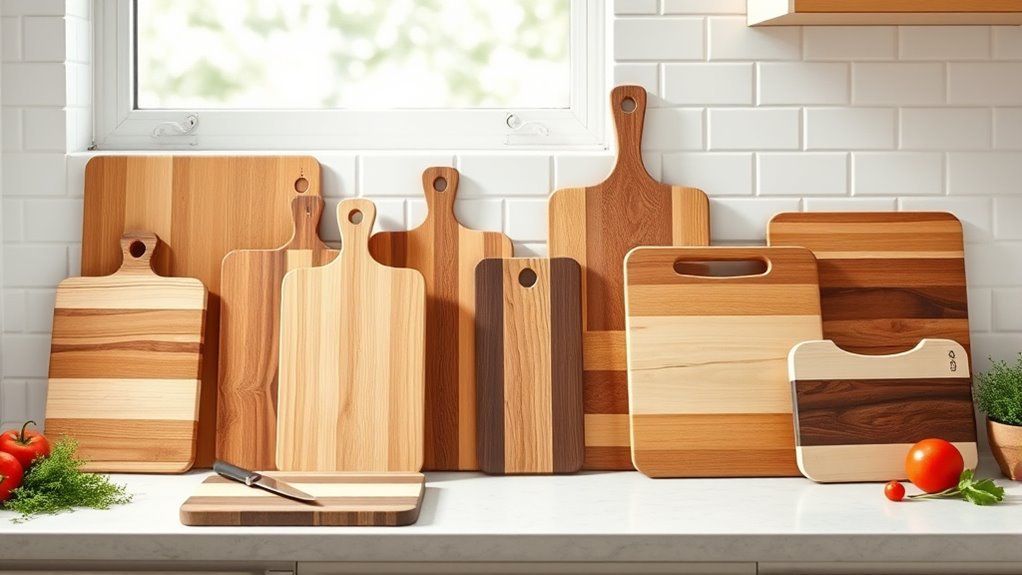
10 Safe Cutting Boards for Your Kitchen
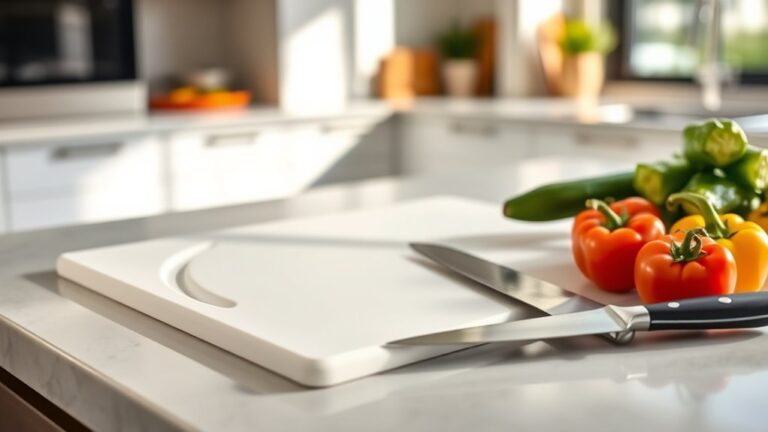
You need cutting boards that protect your knives, resist bacteria, and are easy to clean. Choosing the right cutting boards is essential for a safe and efficient kitchen.
Opt for hardwoods like maple or walnut for durability, bamboo for eco-friendly antibacterial properties, or plastic for easy sanitation and color-coding.
Avoid deep grooves that hide germs, and choose boards with juice grooves to prevent spills.
Glass is hygienic but dulls knives faster.
Keep your kitchen safe and efficient—explore more tips to match your prep style and budget.
Key Takeaways
- Choose cutting boards made from non-porous materials like plastic or composite to prevent bacteria buildup and ensure easy cleaning.
- Use color-coded boards to avoid cross-contamination between meat, seafood, fruits, and vegetables.
- Opt for hardwood boards like maple or bamboo for durability, knife-friendliness, and natural antibacterial properties.
- Select boards with juice grooves and rounded edges to contain liquids and enhance safety during use.
- Prioritize dishwasher-safe or easy-to-sanitize boards for maintaining hygiene and odor resistance in the kitchen.
Key Factors for Safe and Durable Cutting Boards
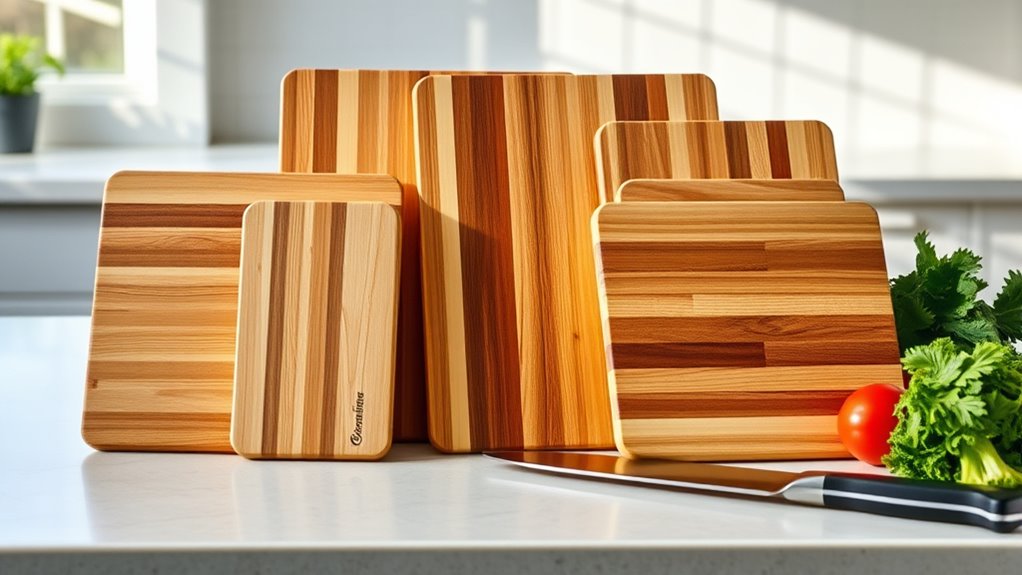
When choosing a cutting board, you’ll want to prioritize materials that resist deep grooves and bacteria buildup to guarantee safety and longevity. Look for boards made from hardwoods like maple or walnut, as they’re dense enough to prevent knife marks that harbor germs. Avoid soft woods that scar easily.
Also, consider the board’s thickness; a thicker board offers stability and durability during heavy use. Non-porous surfaces are essential since they don’t absorb juices, reducing cross-contamination risks. You should also check for boards with rounded edges to prevent chipping.
Finally, easy maintenance matters—a board that you can clean thoroughly without damage will last longer and keep your kitchen hygienic. Prioritizing these factors helps you pick a cutting board that’s both safe and durable.
Best Plastic Cutting Boards for Hygiene and Knife Care
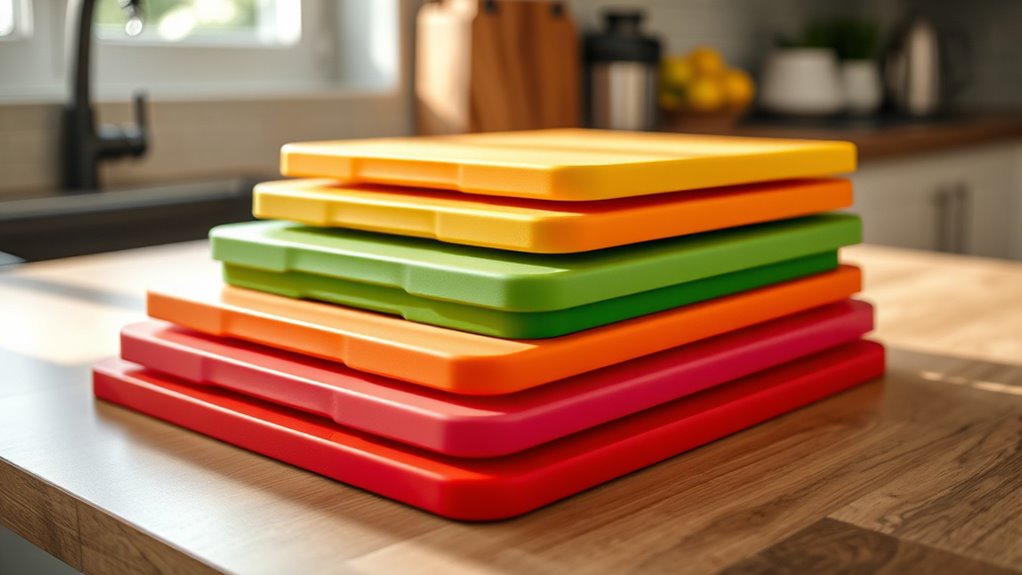
Although plastic cutting boards don’t have the natural beauty of wood, they excel in hygiene and knife care. You’ll find they’re non-porous, so bacteria won’t seep into the surface, making them easier to sanitize.
Plus, their smooth texture is gentle on your knives, preserving sharp edges longer. When picking the best plastic cutting board, focus on:
- Material quality – Choose high-density polyethylene (HDPE) for durability and easy cleaning.
- Maintenance – Look for boards dishwasher-safe for thorough sanitation.
- Design features – Opt for boards with juice grooves to prevent spills and color-coding to avoid cross-contamination.
Top Bamboo Cutting Boards: Eco-Friendly and Antibacterial Options

Since bamboo grows quickly and requires fewer resources than traditional hardwoods, you’ll find bamboo cutting boards offer an eco-friendly choice without sacrificing durability. When you choose bamboo, you’re selecting a material that’s naturally antibacterial, helping reduce the risk of cross-contamination in your kitchen. Bamboo boards resist moisture, preventing warping and cracking, so they last longer with proper care.
They’re also lightweight and gentle on your knives, preserving their sharpness. Look for bamboo cutting boards with smooth finishes and sturdy construction to guarantee easy cleaning and safe food prep. By opting for bamboo, you’re supporting sustainability while maintaining a hygienic workspace.
It’s a smart, eco-conscious investment that blends functionality with environmental responsibility perfectly.
Safe and Durable Wooden Cutting Boards to Consider
When choosing wooden cutting boards, you’ll want to focus on hardwoods like maple or walnut for their durability and safety. Proper maintenance, such as regular oiling and hand washing, keeps your board in great shape and prevents cracking.
These boards not only last longer but also resist bacteria better than softer woods.
Types of Wooden Boards
If you’re looking for a cutting board that combines durability with safety, wooden boards are a top choice. You’ll find several types, each with unique benefits. Here are three popular options:
- Maple: Known for its hardness and tight grain, maple resists deep cuts and bacteria, making it hygienic and long-lasting.
- Bamboo: Technically a grass, bamboo is eco-friendly and harder than many hardwoods, providing a sturdy surface that’s less prone to warping.
- Walnut: A softer wood with a smooth surface, walnut offers excellent knife protection and an attractive dark finish, perfect for both function and style.
Choosing the right wooden board depends on your kitchen needs, but any of these options give you a safe, durable workspace.
Maintenance and Care
To keep your wooden cutting board safe and durable, you’ll need to give it proper care regularly. After each use, wash it with warm, soapy water—never soak it or put it in the dishwasher, as excess moisture can cause warping and cracking. Dry it thoroughly with a clean towel and let it air dry standing upright.
Every few weeks, apply food-grade mineral oil or a specialized cutting board conditioner to keep the wood hydrated and prevent splitting. Avoid using harsh chemicals or abrasive scrubbers that can damage the surface. If your board starts to develop deep cuts or stains, sanding it lightly and reapplying oil can restore its smooth finish.
With consistent maintenance, your wooden cutting board will remain safe, sturdy, and ready for years of kitchen use.
Benefits of Hardwood
Hardwood cutting boards offer unmatched durability and safety, making them a smart choice for your kitchen. When you choose hardwood, you get a board that resists deep cuts, reducing bacteria buildup and ensuring a cleaner surface.
Plus, hardwood is gentle on your knives, helping them stay sharp longer. Here are three key benefits you’ll appreciate:
- Longevity: Hardwood boards withstand heavy use without warping or cracking.
- Natural Antibacterial Properties: Woods like maple have closed grains that inhibit bacterial growth.
- Knife-Friendly Surface: The firm yet forgiving texture preserves your blades’ edges better than plastic or glass.
Glass Cutting Boards: Are They Safe for Your Knives?
Although glass cutting boards look sleek and are easy to clean, you might wonder if they’re gentle on your knives. The truth is, glass is very hard and unforgiving. When you cut on glass, your knife’s edge can dull much faster than on wood or plastic boards.
This means you’ll need to sharpen your knives more often, which can be inconvenient and wear down the blades over time. However, glass boards are non-porous and resist bacteria, making them hygienic and simple to sanitize. They’re also dishwasher safe, saving you effort in cleanup.
If you prioritize knife longevity, though, glass might not be the best choice. But if you value easy maintenance and aesthetics, glass cutting boards can be a practical addition to your kitchen—just be ready to sharpen your knives regularly.
Why Composite Cutting Boards Work Great in Busy Kitchens
You need a cutting board that can handle constant use without dulling your knives, and composite boards fit the bill perfectly. They’re tough enough to last but gentle enough to keep your blades sharp.
Plus, they’re easy to clean and resist bacteria, making them ideal for a busy kitchen.
Durable And Knife-Friendly
When you need a cutting board that can handle constant use without dulling your knives, composite boards are an excellent choice. They strike the perfect balance between durability and being gentle on your blades.
Here’s why you’ll appreciate them in your busy kitchen:
- Durability: Composite boards resist deep cuts and scratches, so they last longer even with heavy chopping.
- Knife-Friendly Surface: Their slightly softer texture prevents your knives from dulling quickly, saving you sharpening time.
- Stability: These boards maintain their shape and firmness, giving you a safe, steady surface to work on.
Hygienic And Easy Maintenance
Because composite cutting boards resist staining and warping, they stay hygienic with minimal effort. You can quickly wash them with warm, soapy water without worrying about cracks where bacteria hide. Unlike wooden boards, composite surfaces don’t absorb moisture, reducing the risk of mold and odors.
When you’re in a busy kitchen, this ease of cleaning saves you time and keeps your workspace safe. Many composite boards are also dishwasher-safe, letting you sanitize them thoroughly after heavy use. Plus, their nonporous texture prevents cross-contamination, so switching between raw meat and veggies is safer.
You won’t have to scrub or oil these boards regularly, making maintenance straightforward. If you want a cutting board that’s both practical and hygienic, composite materials are an excellent choice for your kitchen.
Choosing Safe Cutting Boards for Meat and Seafood
Although many cutting boards serve multiple purposes, selecting one specifically designed for meat and seafood helps prevent cross-contamination and guarantees food safety.
When choosing your board, focus on these essential factors:
- Material: Opt for non-porous materials like plastic or composite boards that resist bacteria and are dishwasher-safe.
- Color-Coding: Use color-coded boards (often red) to clearly designate meat and seafood, reducing the risk of mixing with other foods.
- Durability: Pick a board that withstands heavy chopping and doesn’t develop deep grooves where bacteria can hide.
Best Cutting Boards for Fruits and Vegetables
Selecting the right cutting board for fruits and vegetables helps keep your kitchen hygienic and your produce fresh. You’ll want boards made from non-porous materials like plastic or bamboo, which resist staining and won’t absorb juices that cause bacteria growth. These materials also prevent cross-contamination since they’re easy to clean.
Opt for medium-sized boards with a smooth surface to avoid bruising delicate fruits and veggies during cutting. Some boards even feature juice grooves to catch excess liquid, keeping your workspace tidy. Avoid wooden boards with deep grooves, as they can harbor bacteria.
Cutting Boards That Are Easy to Clean and Resist Odors
When you choose cutting boards that are easy to clean and resist odors, you simplify your kitchen routine and keep smells from lingering in your prep area. Opt for materials that won’t trap bacteria or hold onto strong food scents.
Choosing easy-to-clean, odor-resistant cutting boards keeps your kitchen fresh and simplifies meal prep.
Here are three key features to look for:
- Non-porous surface: Materials like plastic, tempered glass, or certain composite boards don’t absorb liquids or odors, making cleanup quick and thorough.
- Dishwasher safe: Boards that can go in the dishwasher ensure deep cleaning, eliminating hidden bacteria and smells without extra effort.
- Odor-resistant coating: Some boards have antimicrobial or odor-resistant finishes that prevent lingering smells from garlic, onion, or fish.
Prioritizing these qualities helps you maintain a hygienic, fresh-smelling kitchen effortlessly.
Budget-Friendly Cutting Boards That Don’t Sacrifice Safety
Finding cutting boards that fit your budget doesn’t mean you have to compromise on safety or hygiene. You can find affordable options made from materials like BPA-free plastic or sustainably sourced bamboo, both easy to clean and resistant to bacteria.
Look for cutting boards with non-porous surfaces that won’t absorb juices or odors, reducing contamination risks. Many budget-friendly boards are dishwasher safe, making sanitation simple. Avoid cheap boards that warp or crack easily, as they harbor bacteria in crevices.
Instead, choose well-reviewed products with smooth finishes and sturdy construction. With a bit of research, you’ll get a reliable cutting board that protects your health and lasts long without breaking the bank. Safety and affordability can go hand in hand in your kitchen.
Frequently Asked Questions
How Often Should I Replace My Cutting Board?
You should replace your cutting board when it has deep grooves, cracks, or persistent stains that don’t come off after cleaning.
Typically, this means every 1-2 years, but inspect it regularly to keep your kitchen safe and hygienic.
Can Cutting Boards Cause Cross-Contamination?
Cutting boards can cause cross-contamination like a busy highway spreads traffic. You should always clean them thoroughly and use separate boards for raw meats and vegetables to keep harmful bacteria from mixing and making you sick.
Are Colored Cutting Boards Necessary for Food Safety?
You don’t have to use colored cutting boards, but they help prevent cross-contamination by designating boards for specific foods. Using them consistently reduces risks and keeps your kitchen safer while making food prep more organized and efficient.
How Do I Properly Sanitize a Cutting Board?
You sanitize a cutting board by washing it with hot, soapy water right after use. Then, rinse it well and either air dry or use a clean towel.
For extra safety, disinfect with diluted bleach or vinegar.
Can Cutting Boards Be Used in the Dishwasher?
Yes, you can put plastic cutting boards in the dishwasher, but wooden ones shouldn’t go in because water and heat can warp or crack them.
You’ll want to hand wash wooden boards to keep them in good shape.
Conclusion
Choosing the right cutting board is like picking the perfect dance partner for your kitchen—you want one that’s safe, durable, and easy to clean. Whether you lean toward plastic, bamboo, or wood, each type has its strengths to keep your food fresh and your knives sharp.
By considering hygiene, material, and maintenance, you can slice with confidence and keep your cooking space both safe and stylish. Your kitchen deserves nothing less!
When selecting from the best safe cutting boards, focus on factors like hygiene, durability, and ease of cleaning to ensure food safety. A quality cutting board not only protects your knives but also contributes to a healthier cooking environment. Choose wisely for a safer, more efficient kitchen experience.