What Is the Safest Cookware
You want cookware that won’t leach harmful chemicals, resist damage, and is easy to clean. Choosing the safest cookware involves considering materials that are durable, non-reactive, and compatible with your cooking style.
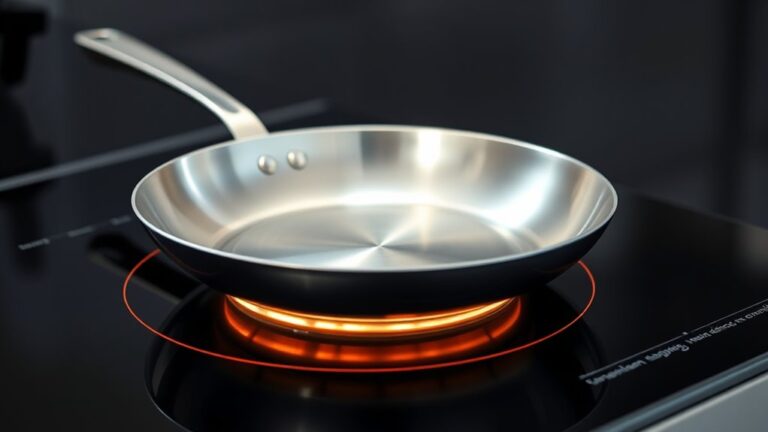
Stainless steel is a top choice because it’s durable, non-reactive, and handles high heat well.
Cast iron adds iron to your food but needs regular seasoning.
Nonstick pans can be safe if used below 500°F and replaced when worn.
Choosing inert materials like glass or ceramic is also smart.
Keep using proper care and cooking methods to maximize safety—and there’s more to take into account for the best fit.
Key Takeaways
- Stainless steel is safe, durable, non-reactive, and resists rust, corrosion, and scratching, making it a top cookware choice.
- Cast iron is safe when well-seasoned, adds dietary iron, but requires regular maintenance and is heavy to handle.
- Ceramic and glass cookware are inert, do not leach chemicals, and are excellent for non-toxic cooking and storage.
- Avoid overheating non-stick pans above 500°F to prevent toxic fumes and replace damaged coatings promptly.
- Proper care, including gentle cleaning, avoiding sudden temperature changes, and correct storage, ensures cookware safety and longevity.
What Makes Cookware Safe? Defining Key Criteria
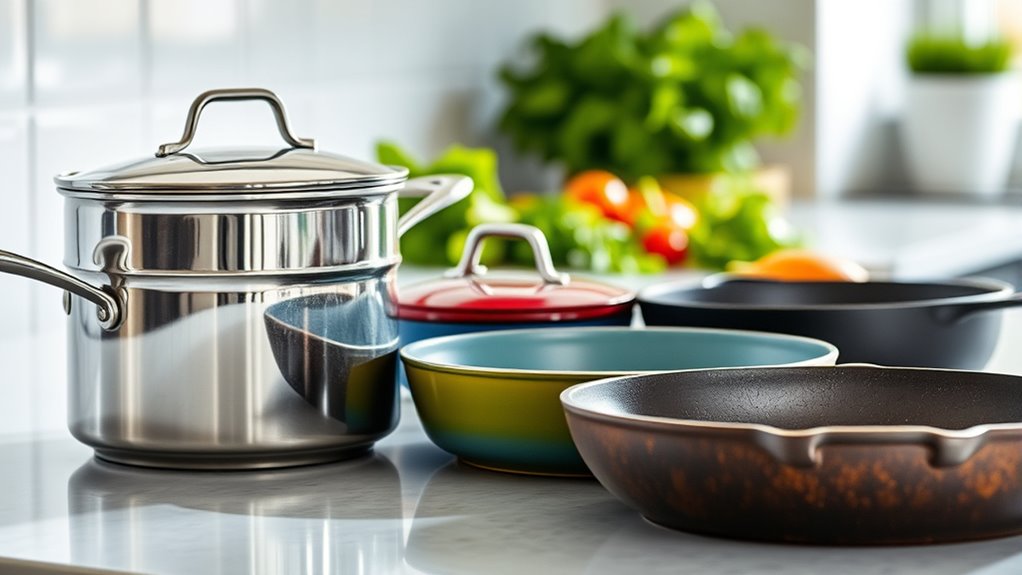
Although many factors influence cookware safety, you should focus on a few key criteria to make the best choice. First, consider whether the cookware releases harmful chemicals or toxins when heated. You want materials that won’t leach substances into your food.
Next, durability matters—safe cookware should resist warping, scratching, and peeling, which can expose unsafe layers. Non-reactivity is vital; the cookware shouldn’t react with acidic or alkaline ingredients, maintaining food purity. Also, check if it’s easy to clean, as buildup can harbor bacteria.
Finally, make sure it fits your cooking style and heat source, ensuring even heat distribution to prevent burning or uneven cooking. By prioritizing these factors, you’ll confidently select cookware that’s safe and reliable for daily use.
How Cookware Materials Affect Your Health
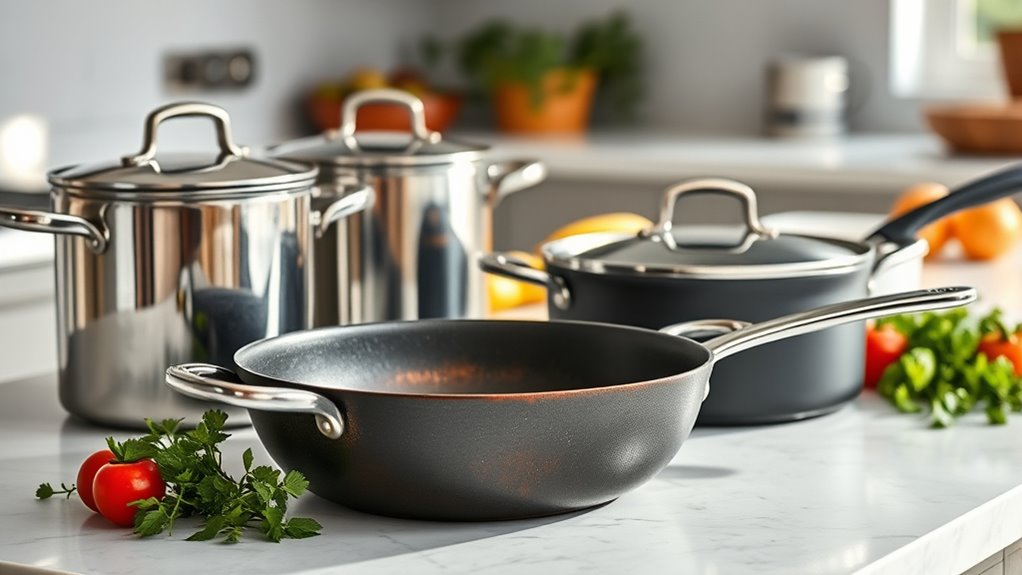
Since the materials used in cookware directly interact with your food, they play an essential role in your health. You want to avoid cookware that can leach harmful chemicals or metals into your meals, especially when cooking acidic or high-temperature dishes. For instance, some non-stick coatings may release toxins when overheated, while certain metals like aluminum can migrate into food if the surface is damaged.
On the other hand, inert materials such as glass or ceramic don’t react with food, making them safer choices. Choosing cookware made from safe materials helps minimize exposure to potential contaminants and supports your well-being. Always consider how the cookware’s material interacts with heat and food to make the healthiest choice for your kitchen.
Is Stainless Steel the Safest Cookware?
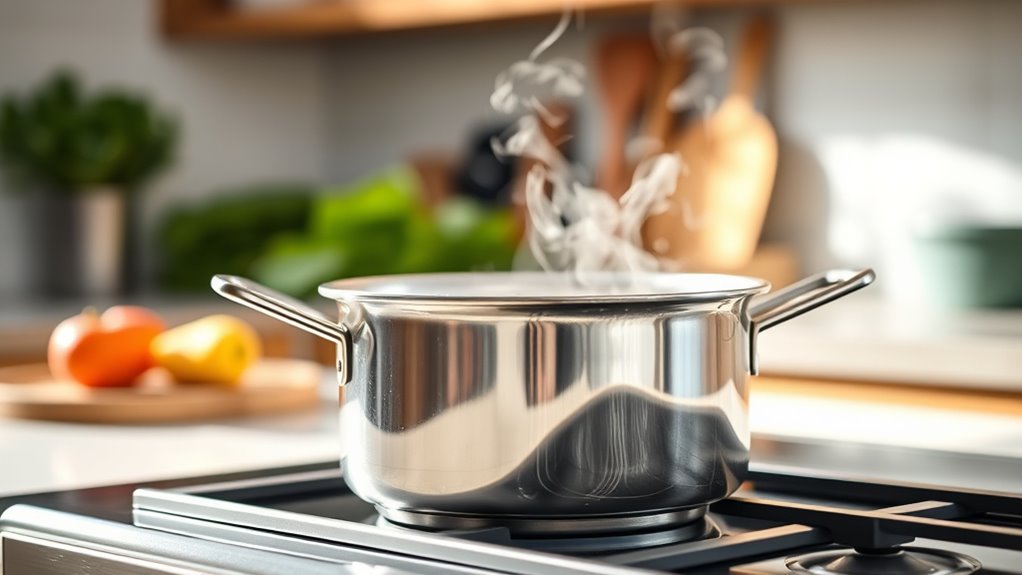
Why do so many home cooks and chefs trust stainless steel cookware? It’s because it offers a great balance of safety, durability, and performance. When you choose stainless steel, you’re picking a material that rarely reacts with food, so you avoid harmful chemical leaching.
Here’s why stainless steel stands out:
- Non-reactive surface keeps food flavors pure.
- Resistant to rust, corrosion, and scratching.
- Durable enough to handle high heat without warping.
- Easy to clean and doesn’t require special care.
While no cookware is perfect, stainless steel’s combination of safety and longevity makes it a reliable choice for everyday cooking you can trust.
Cast Iron Cookware: Pros and Cons for Health
Stainless steel offers many health benefits, but cast iron cookware brings its own unique advantages and drawbacks you should consider. When you cook with cast iron, small amounts of iron leach into your food, which can boost your intake if you’re iron deficient. However, too much iron might be a concern if you have certain health conditions.
Cast iron is naturally nonstick when seasoned properly, reducing the need for added fats, but it requires regular maintenance to prevent rust.
| Pros | Cons |
|---|---|
| Adds dietary iron | Can leach excess iron |
| Durable and long-lasting | Heavy and cumbersome |
| Natural nonstick surface | Needs seasoning and upkeep |
| Chemical-free | Not ideal for acidic foods |
| Even heat distribution | Can rust if not dried properly |
Are Nonstick Pans Safe for Everyday Use?
When you choose nonstick pans, it’s important to know what materials coat them and how they affect your health. Some coatings are safer than others, but overheating any nonstick pan can release harmful fumes.
Let’s explore the benefits and risks so you can decide if they’re right for your daily cooking.
Nonstick Coating Materials
How safe are nonstick pans for your daily cooking? It depends largely on the coating material. You’ll find several types, each with unique properties:
- PTFE (Teflon) – Popular for its slick surface, but avoid high heat to prevent fumes.
- Ceramic – Made from inorganic materials, it offers a safer, chemical-free alternative.
- Anodized Aluminum – Not technically nonstick but has a durable, smooth surface that resists sticking.
- Silicone-Based Coatings – Less common but provide flexible, non-toxic options for baking trays.
Knowing these materials helps you choose pans that align with your safety and cooking needs. Always check manufacturer guidelines for use and care to extend your cookware’s life and maintain its safety.
Health Risks and Benefits
Although nonstick pans offer convenience, you might wonder if they pose any health risks with daily use. Modern nonstick coatings, like those made from PTFE, are generally safe when you use them properly. However, overheating these pans above 500°F can release harmful fumes, so avoid high-heat cooking.
Also, scratched or damaged coatings may leach chemicals into your food, so replace pans when they show wear. On the benefit side, nonstick pans require less oil, helping you cook healthier meals with less fat. If you maintain your pans well—using moderate heat and non-metal utensils—you can enjoy their benefits without significant health risks.
Ultimately, understanding proper use helps you keep your cooking safe and convenient every day.
How Safe Is Ceramic Cookware?
Since ceramic cookware often boasts a non-toxic, non-stick surface, many people trust it as a safer alternative to traditional non-stick pans. You’ll find ceramic pots and pans free from harmful chemicals like PTFE and PFOA, which can release toxic fumes when overheated. However, the safety of ceramic cookware depends on its quality and how you use it.
Here are four key points to take into account:
- Ceramic coatings are generally free of toxic chemicals, making them safer for cooking.
- Over time, ceramic surfaces can chip or wear down, potentially reducing their non-stick properties.
- Avoid using metal utensils to prevent scratching the ceramic coating.
- Always follow manufacturer guidelines on temperature limits to keep the cookware safe and durable.
Using ceramic cookware wisely ensures you minimize health risks.
Glass and Enamel Cookware: What You Should Know
You’ll find glass cookware offers great heat resistance and doesn’t leach chemicals into your food. Enamel coatings are generally safe but need gentle care to avoid chipping and damage.
Knowing how to maintain both can help you cook safely and extend their lifespan.
Benefits of Glass Cookware
Why choose glass cookware for your kitchen? Glass offers several practical benefits that make it a safe and smart choice. First, it’s non-reactive, so it won’t leach chemicals or alter your food’s flavor.
Second, it’s easy to clean since food doesn’t stick to smooth glass surfaces. Third, glass cookware is microwave and oven-safe, giving you versatile cooking options. Fourth, its transparency lets you monitor your food without lifting lids, helping you avoid overcooking.
Plus, glass is free from harmful metals like aluminum or copper, which some people prefer to avoid. While glass cookware can be fragile, its safety and convenience make it a solid option for everyday cooking. You get peace of mind and reliable performance in one package.
Enamel Coating Safety
Although enamel-coated cookware combines durability with an attractive finish, you might wonder how safe its coating really is. Enamel is fundamentally a glass layer fused to metal at high temperatures, creating a non-reactive, smooth surface. This means it won’t leach harmful chemicals into your food, making it a safe choice for everyday cooking.
You don’t have to worry about toxins like PFOA or PTFE, which are concerns in some non-stick coatings. However, enamel can chip if handled roughly, exposing the metal beneath and potentially causing rust or contamination. As long as the enamel remains intact, your cookware stays safe and non-toxic.
Care and Maintenance Tips
How can you keep your glass and enamel cookware in top condition? Follow these simple tips to extend their lifespan and maintain safety:
- Avoid sudden temperature changes – Don’t expose hot cookware to cold water; this can cause cracking or chipping.
- Use gentle cleaning methods – Clean with mild dish soap and a soft sponge to prevent scratching the surface.
- Avoid metal utensils – Opt for wooden, silicone, or plastic tools to protect the enamel or glass finish.
- Store carefully – Place a cloth or paper towel between stacked cookware to prevent chips and scratches.
How to Avoid Toxic Chemicals in Cookware
When choosing cookware, you need to be aware of the chemicals that can leach into your food during cooking. Avoid non-stick pans with scratched or damaged coatings, as they can release harmful substances.
Opt for ceramic, stainless steel, or cast iron for safer options. Also, steer clear of cookware with lead or cadmium in glazes.
| Cookware Type | Potential Harmful Chemicals | How to Avoid |
|---|---|---|
| Non-stick (PTFE) | PFOA, PTFE fumes | Avoid overheating, replace if scratched |
| Aluminum | Aluminum leaching | Use anodized or coated aluminum |
| Ceramic | Lead, cadmium (in glaze) | Choose certified lead-free products |
| Cast Iron | None (season properly) | Maintain seasoning, avoid acidic foods |
| Stainless Steel | Nickel, chromium (rare) | Use high-quality grades (18/8 or 304) |
Identifying Cookware That Won’t Leach Harmful Metals
Since cookware can sometimes release harmful metals into your food, you should choose materials known for their stability and safety. To identify cookware that won’t leach harmful metals, focus on these options:
Choosing stable, safe cookware materials helps prevent harmful metals from leaching into your food.
- Stainless Steel – Durable and non-reactive, it rarely releases metals, especially high-quality grades.
- Cast Iron – Adds minimal iron, which is generally safe and sometimes beneficial.
- Ceramic-Coated Cookware – Provides a non-metal surface that prevents metal leaching when the coating is intact.
- Glass and Porcelain – Completely inert, so they don’t leach metals or chemicals.
Avoid cheap or worn-out cookware, as damaged surfaces can increase metal leaching. Choosing these materials helps keep your cooking safe and your meals healthy.
Why Heat and Cooking Styles Matter for Safety
You’ll want to pay close attention to heat levels because high temperatures can release harmful substances from some cookware. The way you cook—whether you’re frying, boiling, or simmering—also affects safety.
Understanding how heat and cooking styles interact helps you choose the safest options for your meals.
Heat Levels And Risks
Because different cooking styles require varying heat levels, understanding how heat affects cookware safety is essential. When you crank up the heat, some cookware can release harmful chemicals or warp, compromising safety and performance. Here’s what you need to keep in mind:
- Nonstick pans can release toxic fumes if overheated above 500°F (260°C).
- Aluminum cookware may leach metals at very high temperatures, especially if scratched.
- Cast iron handles high heat well but needs proper seasoning to avoid rust and food sticking.
- Stainless steel is durable and safe at high heat but can cause food to stick if not preheated correctly.
Cooking Methods Impact Safety
Three common cooking methods—sautéing, boiling, and frying—impact cookware safety in different ways. When you sauté, you use medium to high heat, which means your cookware must handle quick temperature changes without releasing harmful chemicals. Nonstick pans can degrade if overheated during sautéing, so keep the heat moderate.
Boiling uses steady, lower heat, making it safer for most cookware, including stainless steel and cast iron, since it minimizes chemical breakdown. Frying, especially deep-frying, exposes cookware to very high temperatures, increasing the risk of toxic fumes if the surface coating isn’t heat-resistant. To stay safe, choose cookware that matches your cooking style and avoid exceeding recommended temperatures.
Being mindful of how you cook helps protect both your health and your cookware’s longevity.
How to Care for Your Cookware to Keep It Safe
Although choosing safe cookware is essential, maintaining it properly guarantees it stays safe and effective over time. You want to avoid damage that could release harmful substances or reduce cooking quality.
Here’s how to care for your cookware:
- Clean gently: Use non-abrasive sponges and mild detergents to prevent surface scratches.
- Avoid overheating: Keep heat at recommended levels to preserve coatings and prevent warping.
- Store carefully: Stack pans with protective layers like cloths or paper towels to avoid scratches.
- Season cast iron: Regularly oil your cast iron to maintain its non-stick surface and prevent rust.
Best Cookware Choices for Families and Frequent Cooks
When you cook often or for a family, choosing durable, versatile cookware makes all the difference. You need pots and pans that handle frequent use without warping or wearing out. Safe materials like stainless steel, cast iron, and ceramic-coated options provide reliability and non-toxic cooking surfaces.
They’re easy to maintain and distribute heat evenly, so your meals turn out great every time.
| Cookware Type | Benefits |
|---|---|
| Stainless Steel | Durable, non-reactive, easy care |
| Cast Iron | Long-lasting, excellent heat retention |
| Ceramic-Coated | Non-stick, chemical-free surface |
Picking any of these means you’re investing in safety and performance, keeping family meals healthy and hassle-free.
Frequently Asked Questions
How Does Cookware Safety Impact Cooking Flavor and Food Texture?
Your cookware’s safety directly affects flavor and texture by preventing harmful chemicals from leaching into food. You’ll enjoy purer tastes and better textures when using non-toxic, durable materials that evenly distribute heat during cooking.
Can Cookware Safety Vary With Different Cuisines or Recipes?
Yes, cookware safety can vary with different cuisines or recipes. For example, 70% of chefs avoid non-stick pans with high-heat dishes because toxic fumes can form, so you should choose materials that suit your cooking style safely.
Selecting the right cookware depends on the heat level and ingredients used. Some materials handle acidic foods better, while others are ideal for slow cooking. Understanding these differences helps ensure both safety and flavor.
What Are the Environmental Impacts of Producing Safe Cookware?
You’ll find that producing safe cookware often involves mining metals and using energy-intensive processes, which can harm the environment. Choosing cookware made from recycled materials or sustainable sources helps reduce this impact considerably.
How Do Price and Brand Influence Cookware Safety?
You’ll find that higher-priced cookware from reputable brands often uses safer, non-toxic materials and undergoes rigorous testing. However, don’t assume all expensive brands guarantee safety; always check product certifications and customer reviews before buying.
Are There Any Safety Certifications to Look for When Buying Cookware?
Yes, you should look for certifications like FDA approval, NSF certification, and PFOA-free labels. These guarantee the cookware meets safety standards and doesn’t release harmful chemicals while cooking, keeping your meals healthier and safer.
Conclusion
Choosing the safest cookware is like picking Excalibur—your trusted tool in the kitchen battle. By understanding materials, avoiding harmful metals, and caring for your pans, you’re arming yourself for healthier meals every day.
Whether you lean toward stainless steel’s durability or cast iron’s timeless strength, remember that how you cook matters just as much as what you cook with.
Equip yourself wisely, and your cookware will serve you safely for years to come. Prioritizing non-toxic, durable materials ensures you invest in the safest cookware options for a healthier kitchen and better cooking experience.