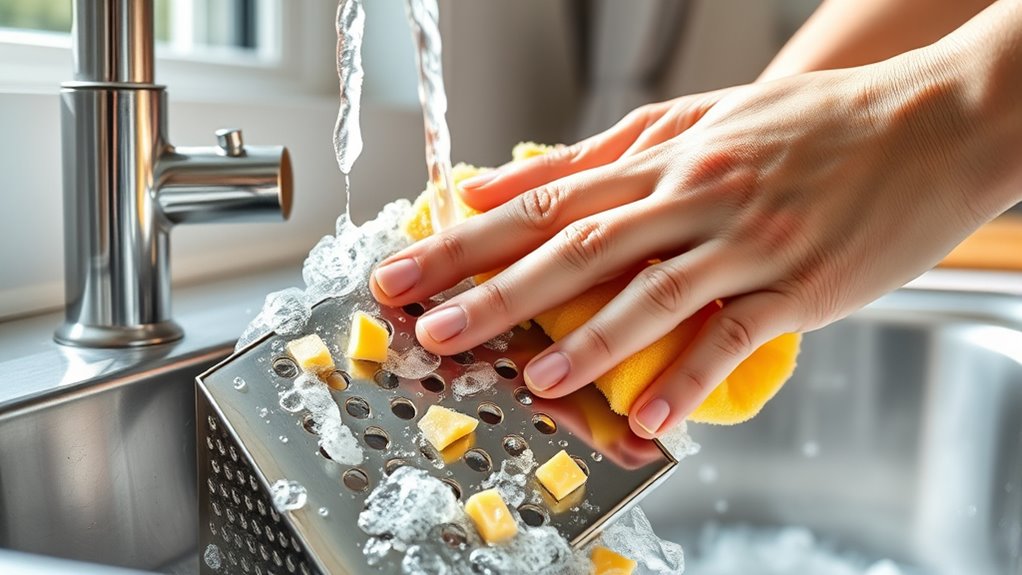
How Do You Clean a Cheese Grater in 7 Easy Steps?
You clean your cheese grater in 7 easy steps by rinsing it immediately after use to stop cheese from sticking. This simple method helps maintain the grater’s sharpness and prevents buildup. Proper cleaning also ensures hygiene and extends the life of your kitchen tool.
Next, soak it in warm, soapy water for 10-15 minutes to loosen residue. Use a firm brush to remove stuck bits, then gently scrub with a sponge, paying special attention to edges and the handle.
Dry it thoroughly to avoid rust, then store it upright in a dry spot with a protective cover.
Keep following for more helpful tips.
Key Takeaways
- Rinse the grater immediately under warm running water to prevent cheese from drying and sticking.
- Soak the grater in warm, soapy water for 10-15 minutes to loosen stuck-on cheese.
- Use a firm nylon brush to scrub against the grain and remove trapped cheese residue.
- Gently scrub with a soft sponge following the blade direction and use a toothbrush for tight spots.
- Rinse thoroughly, dry completely with a towel, and store upright in a dry, well-ventilated place.
Rinse Your Cheese Grater Immediately After Use

Although it might seem like a small step, rinsing your cheese grater immediately after use prevents cheese from drying and sticking to the blades. Once you finish grating, hold the grater under warm running water. Use your fingers or a brush to quickly remove any cheese bits trapped on the surface.
Doing this right away saves you from scrubbing hardened cheese later, which can be tough and time-consuming. You’ll find cleaning much easier, and your grater will stay sharp longer without buildup dulling the edges. Plus, rinsing promptly reduces odors and keeps your kitchen hygienic.
Soak Your Grater in Warm, Soapy Water to Loosen Cheese
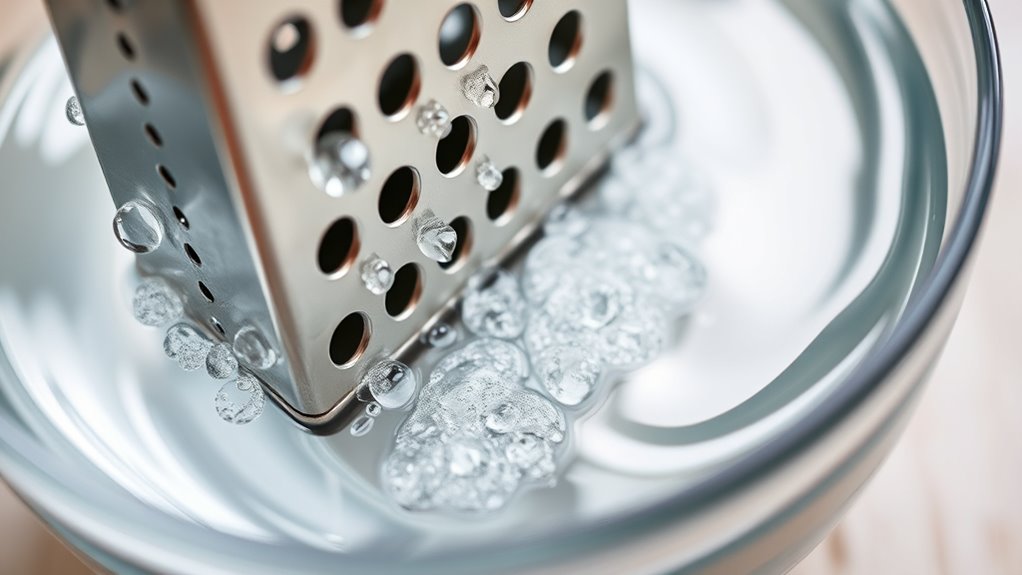
You’ll want to soak your grater in warm, soapy water to help loosen any stuck-on cheese. Using a mild dish soap works best without leaving a residue.
Let it soak for about 10 to 15 minutes to make scrubbing much easier.
Benefits of Warm Water
One simple step can make cleaning your cheese grater much easier: soaking it in warm, soapy water. Warm water helps soften the cheese stuck in the tiny holes, loosening it for easier removal. It also prevents the cheese from hardening further, which can happen if you wait too long to clean.
When the cheese softens, you won’t need to scrub as hard, reducing the risk of damaging the grater or hurting your hands. Additionally, warm water helps dissolve any residual oils or fats, making the grater feel cleaner and less greasy.
Choosing the Right Soap
How do you pick the best soap to clean your cheese grater effectively? You want a dish soap that cuts through grease and lifts cheese residue without leaving a slippery film. Look for a grease-fighting formula labeled “degreaser” or “heavy duty.”
Avoid soaps with added moisturizers or lotions—they can make the grater slippery and harder to handle. Also, choose a scent you like since you’ll be working closely with the soap. When you soak your grater in warm, soapy water, the right soap helps loosen cheesy bits, making scrubbing easier and more thorough.
Using a reliable dish soap ensures your grater comes out clean, safe, and ready for your next culinary task.
Ideal Soaking Duration
Although soaking time can vary depending on how much cheese is stuck to your grater, letting it sit in warm, soapy water for about 10 to 15 minutes usually does the trick. This duration softens hardened cheese, making it easier to remove without scrubbing aggressively.
If your grater is especially clogged, you can extend soaking up to 30 minutes, but avoid longer to prevent rust.
To soak effectively:
- Fill your sink or a basin with warm water and add a few drops of dish soap.
- Submerge the grater fully, ensuring all sides are covered.
- Let it soak undisturbed for the ideal time before scrubbing gently.
Following this routine saves time and keeps your grater in good shape.
Brush Stuck Cheese Off Your Grater
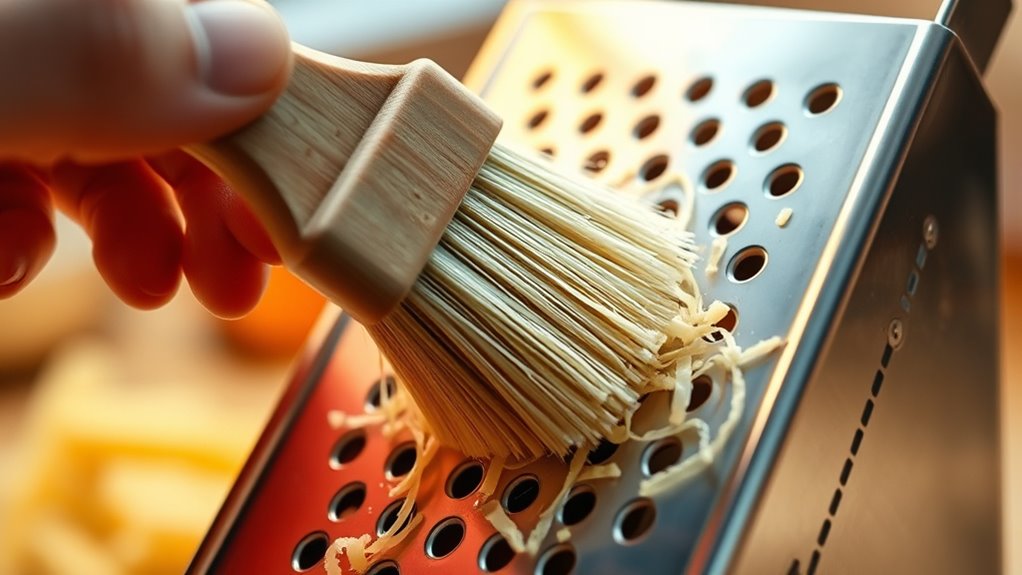
You’ll want to pick the right brush—something firm but gentle enough to avoid damage. Always brush against the grain of the grater to loosen stuck cheese effectively.
Make sure to remove all cheese residue to keep your grater clean and ready for the next use.
Choose The Right Brush
Since cheese often clings tightly to the grater’s surface, choosing the right brush makes all the difference in removing stuck bits efficiently. You want a brush that can reach into the tiny holes and crevices without damaging the grater. Here’s what to look for:
- Nylon bristles: These are firm enough to dislodge cheese but gentle on metal surfaces, preventing scratches.
- Small size: A compact brush fits perfectly into the grater’s grooves, making it easier to clean hard-to-reach spots.
- Long handle: This gives you better control and keeps your fingers safe from sharp edges while scrubbing.
Picking the right brush not only speeds up cleaning but also helps maintain your grater’s sharpness and longevity.
Brush Against The Grain
When cleaning your cheese grater, brush against the grain to effectively remove stuck cheese from the surface. Move your brush in the opposite direction of the grater’s grooves, as this helps dislodge any bits trapped within the holes. Don’t press too hard; gentle, steady strokes work best to avoid damaging the grater or your brush.
Focus on each side of the grater, paying close attention to the sharp edges where cheese tends to cling. You’ll notice the bristles catching and pulling away cheese particles you might miss using other methods. After brushing, tap the grater gently to shake loose any remaining debris.
This technique makes the next cleaning steps easier and ensures your grater stays sharp and functional longer.
Remove Cheese Residue Completely
After brushing against the grain to loosen cheese bits, it’s time to remove any stubborn residue clinging to your grater. You want to get every last piece off to keep your grater clean and ready for next use.
Here’s how you can easily brush stuck cheese off your grater:
- Use a stiff-bristled brush: Run it over the grater’s surface, focusing on areas where cheese clumps remain.
- Rinse with warm water: Warm water helps soften any lingering cheese, making it easier to remove.
- Repeat if necessary: Don’t hesitate to brush and rinse again until you see no residue left.
Gently Scrub Your Cheese Grater With a Sponge
Although the cheese grater might seem tough to clean, you can easily remove stuck-on bits by gently scrubbing it with a sponge. Start by wetting the grater with warm water to loosen any remaining cheese. Then, take a soft sponge—preferably one with a non-abrasive side—and carefully scrub along the grater’s surface, following the direction of the blades.
Avoid pressing too hard to prevent dulling the grater or injuring yourself. Focus on the flat surfaces where cheese tends to cling, using gentle circular motions to dislodge residue. Rinse the sponge frequently to keep it clean and effective.
This simple step guarantees your grater stays hygienic and ready for your next use without damaging its sharp edges.
Scrub the Handle and Edges to Remove Residue
Once you’ve tackled the grater’s surface, turn your attention to the handle and edges, where residue often hides. These areas can collect bits of cheese or zest, so it’s important to clean them thoroughly to prevent buildup and maintain hygiene.
Here’s how to scrub the handle and edges effectively:
- Use a small brush or an old toothbrush to reach tight spots along the edges and around the handle.
- Apply a little dish soap directly to the brush, then scrub gently but firmly to lift any stuck-on residue.
- Rinse thoroughly under warm running water to wash away loosened particles and soap.
Dry the Grater Completely to Avoid Rusting
Because moisture can cause rust to form quickly, you’ll want to dry your cheese grater thoroughly right after washing. Use a clean towel or paper towel to wipe every surface, paying special attention to the grating holes and edges where water tends to linger. Air drying can help, but make sure the grater is placed in a well-ventilated area.
Avoid stacking or covering it while wet to prevent trapped moisture.
| Drying Method | Tips |
|---|---|
| Towel Drying | Use a lint-free towel for best results |
| Air Drying | Place in an upright position |
| Compressed Air | Blow out water from holes |
| Sunlight Exposure | Use indirect sunlight to avoid damage |
| Quick Inspection | Check for moisture before storing |
Store Your Cheese Grater Properly Between Uses
To keep your cheese grater in good condition, you’ll want to store it properly between uses. Proper storage prevents damage, keeps it clean, and ensures it’s ready when you need it next.
Follow these tips to store your grater effectively:
- Choose a dry place: Moisture can cause rust, so store your grater in a dry cabinet or drawer.
- Use a protective cover: If your grater came with a cover, always use it to protect the blades and your fingers.
- Keep it upright or hang it: Store the grater upright or hang it on a hook to avoid dulling the blades and keep it accessible.
Frequently Asked Questions
Can I Put My Cheese Grater in the Dishwasher?
Yes, you can put most cheese graters in the dishwasher, but be sure to check the manufacturer’s instructions first. Some graters may rust or dull, so hand washing might be better to keep it sharp and lasting longer.
How Often Should I Replace My Cheese Grater?
You should replace your cheese grater when it becomes dull, rusty, or damaged. If it no longer grates efficiently or feels unsafe, it’s time for a new one.
Regular care extends its life.
Are There Any Natural Cleaners Safe for Cheese Graters?
When push comes to shove, you can use lemon juice and baking soda as natural cleaners for your cheese grater. They’ll break down residue safely, leaving your grater fresh without harsh chemicals, so you won’t have to worry.
Can I Use a Cheese Grater for Other Foods?
Yes, you can use a cheese grater for other foods like vegetables, chocolate, and nuts. Just be sure to clean it thoroughly between uses to avoid flavor mixing and keep it sharp for the best results.
What Materials Are Cheese Graters Usually Made Of?
Oh, because who wouldn’t want to slice their fingers? Cheese graters are usually made of stainless steel for sharpness and durability, sometimes with plastic or wood handles so you can hold on without losing skin—or your sanity.
Conclusion
Now that you know how to clean your cheese grater in seven easy steps, you’ll keep it sharp and rust-free longer. Did you know that 70% of kitchen tools aren’t cleaned thoroughly, leading to bacteria buildup? By rinsing immediately, soaking, scrubbing, and drying your grater properly, you’re not just maintaining its quality—you’re protecting your health too.
Follow these simple steps, and you’ll enjoy fresh, flavorful cheese every time without the hassle. Proper cheese grater cleaning ensures your kitchen tools remain safe and efficient. Incorporate these tips into your routine for the best cheese grater maintenance and hygiene.