How to Pan Fry Meatballs
To pan fry meatballs perfectly, start by shaping them evenly to ensure consistent cooking. Use a heavy-bottomed pan and choose a high-smoke-point oil like canola or vegetable oil for the best results. Preheating the pan to medium-high heat is essential before adding the oil.
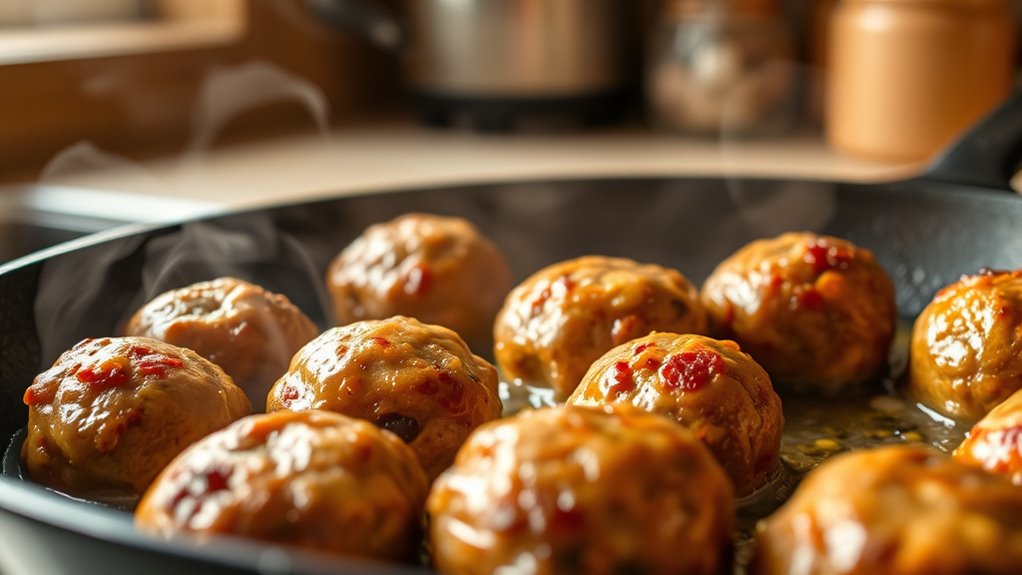
Once the oil shimmers, carefully place the meatballs in the pan, leaving enough space between each to avoid overcrowding. Let them sear undisturbed to develop a crispy crust, which locks in the juices.
Flip the meatballs to brown all sides evenly, but avoid flipping too often to maintain their texture.
This method helps achieve flavorful, juicy meatballs with a delicious crust. For additional tips on seasoning, mixing, and customizing your meatballs, keep exploring for great results and enhanced flavors.
Key Takeaways
- Preheat a heavy-bottomed pan over medium-high heat and add oil with a high smoke point for optimal searing.
- Shape meatballs uniformly, gently roll, and avoid overcrowding the pan to ensure even cooking and browning.
- Cook meatballs without frequent flipping, allowing a crispy golden crust to form while locking in moisture.
- Use a mix of ground meat, soaked breadcrumbs, eggs, and seasonings for juicy, flavorful meatballs.
- After frying, toss meatballs in your preferred sauce and garnish with fresh herbs or grated cheese for extra flavor.
Why Pan Frying Works for Meatballs

Although baking or simmering are common methods, pan frying works for meatballs because it creates a crispy, golden crust while keeping the inside juicy. When you pan fry, the direct heat quickly seals the meat’s exterior, locking in moisture.
This contrast between the crunchy outside and tender inside gives your meatballs a satisfying texture you won’t get from other cooking methods. Plus, pan frying lets you control the cooking process closely—you can easily adjust the heat or flip the meatballs for even browning.
The rendered fat in the pan also adds flavor and helps prevent sticking. So, when you want meatballs with that perfect balance of crispness and juiciness, pan frying is a smart choice that delivers great results every time.
Best Ingredients for Pan Fried Meatballs

When choosing ingredients for pan fried meatballs, you want a blend that balances flavor, moisture, and texture. Start with ground meat—beef, pork, or a mix—each brings its own richness. Adding breadcrumbs soaked in milk or broth keeps the meatballs tender.
Don’t skip eggs; they bind everything together perfectly. Fresh herbs like parsley or basil add a bright note, while garlic and onion powder boost savory depth. Season well with salt and pepper to enhance all flavors.
For extra moisture and flavor, a splash of Worcestershire sauce or grated Parmesan works wonders. Keep your ingredients simple but complementary to ensure your meatballs cook evenly and taste fantastic straight from the pan. Avoid heavy fillers that might weigh down the texture.
Mixing Ingredients for Juicy Pan Fried Meatballs

When mixing ingredients for juicy pan fried meatballs, start by choosing the right meat with enough fat to keep them tender. You’ll want to balance moisture by adding ingredients like breadcrumbs or eggs to bind everything without drying the mixture out.
Getting this balance right guarantees your meatballs stay flavorful and juicy as they cook.
Choosing The Right Meat
Why does the type of meat you choose matter so much for pan-fried meatballs? Because it shapes the flavor, texture, and juiciness. Lean meats can dry out, while fattier cuts offer richness and tenderness.
Mixing meats lets you control the balance and create mouthwatering results.
Here’s a quick guide to help you pick:
| Meat Type | Flavor Impact | Texture Result |
|---|---|---|
| Beef | Robust, hearty | Firm but tender |
| Pork | Slightly sweet | Moist, smooth |
| Veal | Mild, delicate | Soft, light |
| Lamb | Strong, gamey | Juicy, rich |
Choosing the right meat is your first step to unforgettable pan-fried meatballs. Don’t rush it!
Balancing Moisture And Binders
Although choosing the right meat sets the foundation, balancing moisture and binders guarantees your meatballs stay juicy and hold together during pan frying. You’ll want to mix ingredients carefully to avoid dry or crumbly meatballs.
Here’s how to get it right:
- Add moisture – Incorporate ingredients like eggs, milk, or soaked breadcrumbs. These keep meatballs tender and juicy.
- Use binders – Eggs are essential as they glue the mixture together. Breadcrumbs or oats also help maintain structure without making meatballs dense.
- Don’t overmix – Combine ingredients gently until just blended. Overmixing toughens the meat and squeezes out moisture.
Shaping Pan Fried Meatballs for Even Cooking
To cook your meatballs evenly, make sure they’re all the same size. Compact them well, so they hold together and cook consistently throughout. This way, you’ll avoid undercooked centers or burnt outsides.
Uniform Size Importance
When you shape your meatballs to be the same size, they cook evenly and finish at the same time. This simple step guarantees you avoid undercooked centers or burnt outsides.
To get uniform meatballs every time, follow these tips:
- Use a scoop or spoon to portion your mixture consistently.
- Roll each meatball gently between your palms for smooth, even shapes.
- Place shaped meatballs on a tray without crowding to maintain their form before cooking.
Compactness for Consistency
Since unevenly packed meatballs can fall apart or cook unevenly, you need to shape them with just the right amount of compactness. Press the meat mixture firmly enough to hold its shape, but don’t overwork it, or the meatballs will turn dense and tough. Use your hands to gently squeeze and roll each portion, ensuring it’s cohesive without being overly compressed.
This balance keeps the inside tender while allowing the outside to brown nicely. If the meatball feels loose or crumbly, add a bit more binder like breadcrumbs or egg next time. Aim for a smooth, uniform surface so heat distributes evenly during cooking.
Choosing the Right Pan and Oil
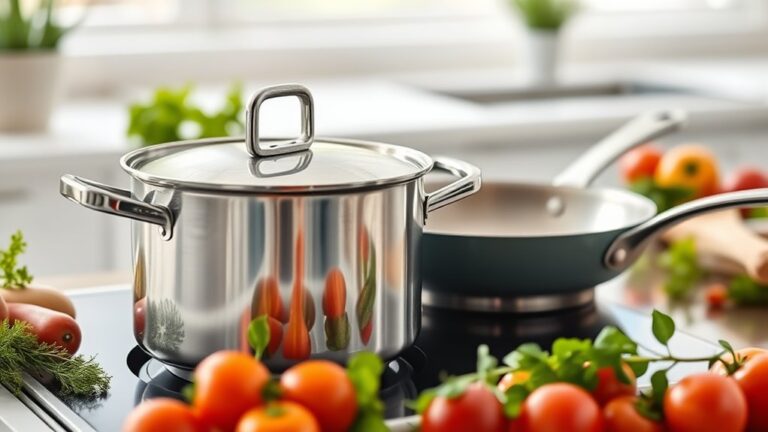
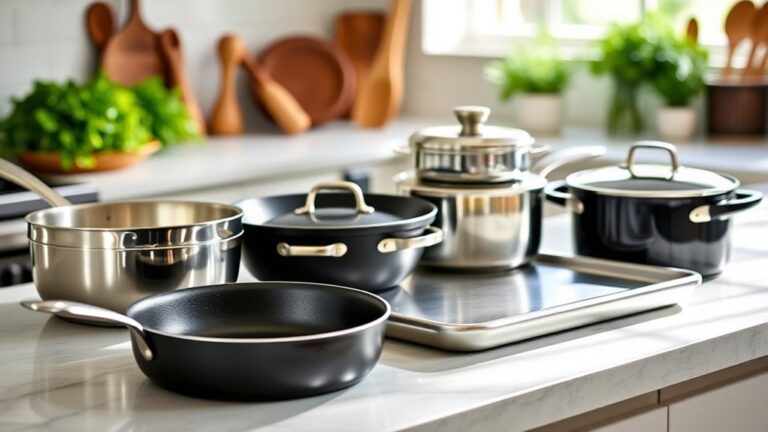
How do you pick the best pan and oil for frying meatballs? Start by choosing a pan that heats evenly and retains heat well. A heavy-bottomed skillet, like cast iron or stainless steel, works perfectly.
Next, select an oil with a high smoke point to avoid burning and imparting bitterness.
Here’s what you need to remember:
- Use a heavy skillet for even cooking and a good sear.
- Pick oils like canola, vegetable, or peanut oil—they handle heat without smoking.
- Avoid olive oil or butter alone since they burn quickly, but you can mix butter with oil for flavor.
With the right pan and oil, your meatballs will cook evenly and develop a delicious crust.
Heating the Pan for a Perfect Sear
After selecting the right pan and oil, your next step is heating the pan properly to achieve a perfect sear on your meatballs. Start by placing the pan over medium-high heat and give it a few minutes to warm thoroughly. To test if it’s ready, flick a few drops of water onto the surface—if they dance and evaporate quickly, the pan is hot enough.
Add your oil next; it should shimmer but not smoke. Avoid overheating, as this can burn the oil and ruin the meatballs’ flavor. A well-heated pan creates that golden crust by sealing in juices, so don’t rush this step.
Once your pan and oil reach the right temperature, you’re set to start cooking your meatballs to perfection.
Step-by-Step Pan Frying Method
When your pan and oil are properly heated, you can start placing the meatballs carefully in the pan. Avoid overcrowding to guarantee even cooking and a good sear.
Follow these steps for best results:
- Space them out: Leave enough room between each meatball so they don’t stick together. This helps them brown evenly on all sides.
- Turn gently: Use tongs or a spatula to turn the meatballs every few minutes. This prevents burning and promotes uniform cooking.
- Maintain heat: Keep the pan at medium to medium-high heat, adjusting as needed to avoid smoking or undercooking.
Checking Meatball Doneness
Although the cooking time varies depending on the size and type of meatballs, you can tell they’re done when the outside is nicely browned and the inside reaches a safe temperature. Use a meat thermometer to verify the internal temperature—ground beef, pork, or lamb meatballs should hit 160°F (71°C), while poultry meatballs need 165°F (74°C). Insert the thermometer into the center, avoiding contact with the pan.
If you don’t have a thermometer, cut one meatball in half to check that it’s no longer pink inside and the juices run clear. Make sure the texture is firm but still moist. Checking doneness carefully ensures your meatballs are safe to eat and perfectly juicy every time.
Avoiding Common Frying Mistakes
Ensuring your meatballs are cooked through is just one part of perfecting your pan-frying technique. To avoid common frying mistakes, follow these key tips:
Perfectly cooked meatballs start with mastering pan-frying and avoiding common mistakes.
- Don’t overcrowd the pan. Give each meatball enough space to brown evenly; overcrowding traps steam and prevents a crispy crust.
- Avoid flipping too often. Let the meatballs sear on one side before turning to develop a golden-brown exterior.
- Use the right heat. Medium to medium-high heat works best—too low and they’ll be soggy; too high and they might burn outside while staying raw inside.
Adding Flavor Before and After Frying
You’ll want to season your meatballs well before frying to build a solid flavor base. After cooking, adding sauces can elevate the taste even more.
Don’t forget garnishes—they add a fresh, vibrant touch that completes the dish.
Seasoning Meatballs Before Frying
Before frying meatballs, seasoning them properly is key to locking in flavor and enhancing their taste. You want every bite to be delicious, so start by mixing your ground meat with spices and herbs evenly.
Here’s how to do it right:
- Use salt and pepper: These basics bring out the natural flavors of the meat.
- Add aromatics: Minced garlic, onion powder, or fresh herbs like parsley add depth.
- Incorporate a binder with flavor: Use breadcrumbs soaked in milk or a splash of Worcestershire sauce for moisture and an extra umami kick.
Sauces To Add After
Seasoning your meatballs sets a strong flavor foundation, but the right sauce can elevate them even further. After frying, toss your meatballs in a sauce that complements their taste. Classic marinara adds a bright, tangy kick, perfect for Italian-style dishes.
If you want something richer, try a creamy mushroom or Alfredo sauce. For a spicy twist, toss them in a sriracha glaze or a sweet chili sauce. When adding sauce, lower the heat and simmer briefly to let flavors meld without drying out the meatballs.
Avoid overpowering sauces that mask the flavoring you worked hard to achieve. By carefully choosing and adding your sauce after frying, you ensure each bite bursts with balanced, enhanced flavor that keeps everyone coming back for more.
Garnishes For Extra Flavor
Although the meatballs carry much of the flavor, adding garnishes both before and after frying can boost their taste and texture. Before frying, try coating them lightly with crushed garlic or fresh herbs like rosemary to infuse subtle aromas.
After frying, you can elevate them further with vibrant garnishes.
Here are three garnish ideas to try:
- Chopped Fresh Parsley or Basil – Adds freshness and a pop of color.
- Grated Parmesan Cheese – Brings a savory, salty kick that melts slightly on warm meatballs.
- Toasted Pine Nuts or Crushed Red Pepper Flakes – Pine nuts add crunch and richness; red pepper flakes introduce a gentle heat.
These simple touches transform your pan-fried meatballs into a more flavorful, textured dish you’ll love.
Adapting Pan Fried Meatballs for Various Diets
When you want to enjoy pan fried meatballs but need to accommodate specific dietary preferences or restrictions, you can easily tweak the ingredients and cooking methods. For example, choose plant-based protein for a vegetarian option or gluten-free breadcrumbs if you’re avoiding gluten.
Adjust the fat content to fit low-fat diets or swap in alternative binders like flaxseed for egg allergies.
| Diet Type | Ingredient Swap | Cooking Tip |
|---|---|---|
| Vegetarian | Plant-based protein (tofu) | Use non-stick pan for less oil |
| Gluten-Free | Gluten-free breadcrumbs | Ensure seasoning is gluten-free |
| Low-Fat | Lean meat or turkey | Drain excess fat after frying |
| Egg-Free | Flaxseed or chia seed binder | Press gently to hold shape |
Serving and Storing Meatballs
Once your meatballs are cooked to perfection, serving them promptly guarantees they retain their juiciness and flavor. Here’s how to serve and store your meatballs effectively:
Serving meatballs immediately ensures they stay juicy and flavorful every time.
- Serve hot with your favorite sauce or sides like pasta, rice, or salad to complement their taste.
- If you’re not eating them right away, keep meatballs warm in a covered dish or low oven to maintain moisture.
- To store leftovers, cool meatballs to room temperature, then refrigerate in an airtight container for up to 3 days.
For longer storage, freeze them for up to 3 months.
When reheating, gently warm meatballs in a skillet or microwave to avoid drying them out.
Following these steps guarantees your meatballs stay delicious, whether fresh or saved for later.
Frequently Asked Questions
Can I Freeze Pan Fried Meatballs for Later Use?
Yes, you can freeze pan-fried meatballs for later. Just let them cool completely, then place them in an airtight container or freezer bag.
When ready, thaw overnight in the fridge and reheat before serving.
How Long Do Pan Fried Meatballs Stay Fresh in the Fridge?
You can keep pan-fried meatballs fresh in the fridge for about 3 to 4 days. Make sure you store them in an airtight container to maintain their flavor and prevent them from drying out.
What Side Dishes Pair Best With Pan Fried Meatballs?
You’ll love pairing pan fried meatballs with mashed potatoes, garlic bread, or a fresh green salad. Roasted veggies or pasta tossed in marinara also complement them perfectly, giving you a balanced, satisfying meal every time.
Can I Use Pre-Made Meatball Mix for Pan Frying?
Absolutely, you can use pre-made meatball mix for pan frying. It saves time and still tastes great. Just make sure to shape them evenly and cook over medium heat
so they brown nicely without burning.
Are Pan Fried Meatballs Healthier Than Baked Meatballs?
Pan-fried meatballs usually have more fat because you cook them in oil, while baked ones drain excess fat. So, if you want a healthier option, you’d probably choose baked over pan-fried meatballs.
Conclusion
Pan frying meatballs is your ticket to a juicy, golden masterpiece—think of it as your kitchen’s secret weapon, like a chef’s magic wand. With the right ingredients, careful shaping, and a hot pan, you’re set to create flavors that sing. Just avoid common pitfalls, and you’ll have perfectly cooked meatballs every time.
So, channel your inner culinary hero and enjoy the delicious rewards of this simple, satisfying technique! By mastering how to pan fry meatballs, you ensure a crispy outside and tender inside that will impress anyone at your table. Embrace this method to elevate your cooking and make every meal memorable.