
How to Cook Bratwurst in a Frying Pan
To cook bratwurst in a frying pan, start by selecting fresh bratwurst sausages with natural casings and bring them to room temperature. Using fresh bratwurst ensures the best flavor and texture.
Heat a tablespoon of oil over medium heat to prepare your pan for cooking.
Add the bratwurst to the pan without overcrowding, allowing proper browning on all sides. Cook the sausages slowly, turning occasionally to achieve an even golden crust.
Aim for an internal temperature of 160°F to ensure they are fully cooked and safe to eat.
Once cooked, let the bratwurst rest for a few minutes before serving to retain their juiciness.
This simple frying pan method delivers delicious, tender bratwurst every time. Keep going to uncover tips for perfect flavor, storage, and reheating.
Key Takeaways
- Preheat a tablespoon of oil or butter in a frying pan over medium heat before adding bratwurst.
- Cook bratwurst slowly, turning occasionally to brown evenly and render fat without burning.
- Prick the casing slightly to prevent bursting and ensure even cooking inside.
- Avoid overcrowding the pan by spacing sausages or cooking in batches.
- Use a meat thermometer to confirm an internal temperature of 160°F (71°C) before serving.
Choose the Best Bratwurst for Pan-Frying

Where should you begin when cooking bratwurst in a frying pan? Start by selecting the right bratwurst. You want fresh, high-quality sausages with a good balance of meat and fat to guarantee juiciness.
Look for bratwurst made from pork, veal, or a blend, as these cook well in a pan. Avoid overly lean options—they tend to dry out quickly. Also, check the casing; natural casings usually crisp better than synthetic ones.
If possible, choose bratwurst with minimal additives or fillers for the best flavor. Fresh bratwurst, rather than pre-cooked or frozen, often delivers superior texture and taste when pan-fried. Picking the right bratwurst sets the foundation for delicious results, so take your time choosing before you start cooking.
Preparing Bratwurst: Thawing and Seasoning Tips

Once you’ve selected quality bratwurst, the next step is to prepare them properly before cooking. If your bratwurst is frozen, thaw it in the refrigerator overnight to maintain texture and flavor. Avoid thawing at room temperature to prevent bacterial growth.
When ready, pat the sausages dry with paper towels to ensure even browning. Although bratwurst often comes pre-seasoned, you can add a little extra flavor if you like. Lightly brush the sausages with olive oil, then sprinkle with freshly ground black pepper or your favorite herbs, such as thyme or sage.
Avoid heavy seasoning, which can overpower the bratwurst’s natural taste. Proper thawing and subtle seasoning set the stage for a delicious pan-fried bratwurst.
How to Cook Bratwurst in a Pan

Although bratwurst can be cooked in various ways, frying them in a pan is one of the quickest and most flavorful methods. Start by heating a tablespoon of oil or butter over medium heat. Place the bratwurst in the pan, making sure they’re evenly spaced and not crowded.
Cook them slowly, turning occasionally to brown all sides evenly. This helps render the fat and develops a crispy, golden exterior. Avoid high heat, which can burn the outside while leaving the inside undercooked.
If your bratwurst are thick, you can cover the pan for a few minutes to help them cook through more evenly. Keep an eye on them, and adjust the heat as needed to maintain a steady sizzle without smoking.
How to Tell When Your Bratwurst Is Done
As you cook your bratwurst in the pan, knowing when they’re done guarantees they’re safe to eat and perfectly juicy. First, check the internal temperature with a meat thermometer—it should read 160°F (71°C) for pork or veal bratwurst. If you don’t have a thermometer, pierce the bratwurst with a fork or knife; the juices should run clear, not pink.
The sausage should feel firm but not hard when you press it gently. Avoid cutting the bratwurst too early, as this can release juices and dry it out. When you see a nicely browned exterior and the bratwurst feels springy, you’re likely good to go.
Trust these signs, and your bratwurst will be cooked just right.
Tips for Crispy, Juicy Bratwurst
To achieve bratwurst that’s crispy on the outside yet juicy inside, start by heating your pan over medium heat and adding a small amount of oil or butter. Place the bratwurst in the pan without overcrowding it to guarantee even browning. Let them cook undisturbed for a few minutes until you see a golden crust forming.
Turn them regularly to brown all sides evenly. To keep the inside juicy, lower the heat slightly after browning and cover the pan for a few minutes; this helps cook the meat through without drying it out.
Finally, let the bratwurst rest briefly before serving to allow juices to redistribute. These steps help you get that perfect balance of crispiness and juiciness every time.
Common Bratwurst Cooking Mistakes
You’ll want to avoid overcrowding the pan, or your bratwurst won’t brown properly. Don’t cook them on too high heat, or the outside will burn before the inside cooks through.
Also, skipping important pre-cook steps can lead to uneven results.
Overcrowding The Pan
When you overcrowd the pan, the bratwurst won’t brown evenly and will likely steam instead of sear. This mistake can leave your sausages soggy and less flavorful.
To avoid this, follow these simple steps:
- Cook bratwurst in batches if needed, giving each piece enough space.
- Use a large enough pan or skillet to accommodate your bratwurst comfortably.
- Leave at least half an inch of space between each sausage for proper heat circulation.
- Avoid flipping too often; let each side develop a golden crust before turning.
Cooking On Too High
Although high heat might seem like a quick way to cook bratwurst, it often leads to burnt outsides and undercooked centers. When you crank the heat too high, the sausage’s exterior chars before the inside cooks through, leaving you with unevenly cooked bratwurst. You want to avoid this by setting your pan to medium or medium-low heat.
This lets the bratwurst cook evenly, ensuring the inside reaches a safe temperature without sacrificing a nicely browned exterior. Cooking on too high heat also risks causing the casing to burst, releasing juices and drying out the sausage. So, be patient and keep your heat controlled—you’ll get juicy, perfectly cooked bratwurst every time without rushing or burning them.
Skipping Pre-Cook Steps
Controlling the heat sets the stage for perfectly cooked bratwurst, but there’s more to preparing them than just temperature. Skipping essential pre-cook steps can leave you with unevenly cooked or bland sausages.
Here’s what you shouldn’t skip:
- Pricking the casing: Don’t poke holes randomly; a few small pricks let steam escape, preventing bursting.
- Bringing to room temperature: Cold bratwurst cooks unevenly. Let them rest out of the fridge for 20 minutes.
- Patting dry: Moisture on the surface causes splattering and prevents proper browning.
- Preheating the pan: Starting with a cold pan means the bratwurst cooks inconsistently and sticks.
Follow these steps to ensure your bratwurst cooks evenly, tastes juicy, and looks appetizing every time.
Best Sides to Serve With Pan-Fried Bratwurst
When you’re serving pan-fried bratwurst, picking the right sides can really elevate your meal. You can go with classic German dishes, fresh and light options, or hearty comfort foods depending on what you’re in the mood for.
Let’s explore some tasty choices that pair perfectly with bratwurst.
Classic German Side Dishes
Serving pan-fried bratwurst with classic German side dishes enhances the meal’s authentic flavor and texture. These sides balance the richness of the sausage perfectly. Try these four staples:
- Sauerkraut – Its tangy, fermented taste cuts through the bratwurst’s savory richness.
- Potato Salad – A creamy or vinegar-based German potato salad adds a comforting, hearty touch.
- Spätzle – These soft egg noodles soak up juices wonderfully, adding a soft, chewy contrast.
- Pretzels – Soft, salty pretzels provide a satisfying chew and complement the brat’s bold flavors.
Including these traditional sides, you’ll capture the true spirit of a German meal and elevate your pan-fried bratwurst experience.
Fresh and Light Options
While classic German sides bring hearty comfort to your bratwurst, lighter options can brighten the meal and invigorate your palate. Think crisp salads, tangy slaws, or simple steamed veggies. These choices add color, crunch, and a clean finish that balances the richness of pan-fried bratwurst.
Here are some revitalizing ideas to inspire you:
| Side Dish | Description |
|---|---|
| Cucumber Dill Salad | Cool, crisp, with a hint of dill |
| Apple Slaw | Sweet, tangy, and invigorating |
| Steamed Asparagus | Light, tender, and slightly nutty |
Hearty Comfort Food Choices
If you crave a meal that feels like a warm embrace, hearty comfort foods perfectly complement your pan-fried bratwurst. These sides add richness and satisfy that craving for something filling.
Here are four great options to serve alongside:
- Creamy Mashed Potatoes – Smooth and buttery, they soak up the bratwurst’s juices perfectly.
- Sauerkraut – Tangy and slightly sour, it balances the richness with a classic German touch.
- Roasted Brussels Sprouts – Crispy edges and a caramelized flavor add a hearty vegetable side.
- Soft Pretzel Rolls – Warm and chewy, they’re perfect for making bratwurst sandwiches or dipping in mustard.
These sides bring comfort and depth to your meal, making every bite satisfying and complete.
How to Store and Reheat Leftover Bratwurst
When you’ve enjoyed your bratwurst but have some leftovers, proper storage is key to keeping them fresh and tasty. Wrap the bratwurst tightly in plastic wrap or aluminum foil, or place them in an airtight container. Store them in the refrigerator within two hours of cooking.
Leftover bratwurst should be eaten within 3 to 4 days for the best flavor and safety.
To reheat, avoid drying them out by using gentle heat. Warm them in a skillet over medium-low heat for about 5 minutes, turning occasionally until heated through. Alternatively, microwave them on medium power in short bursts, checking often.
If frozen, thaw bratwurst overnight in the fridge before reheating. Proper storage and reheating keep your bratwurst delicious and safe to enjoy again.
Frequently Asked Questions
Can I Use Frozen Bratwurst Directly in the Pan?
You can cook frozen bratwurst directly in the pan, but you’ll need to cook them slowly on low heat to guarantee they cook evenly without burning.
Turning often helps prevent sticking and uneven cooking.
What Type of Pan Is Best for Cooking Bratwurst?
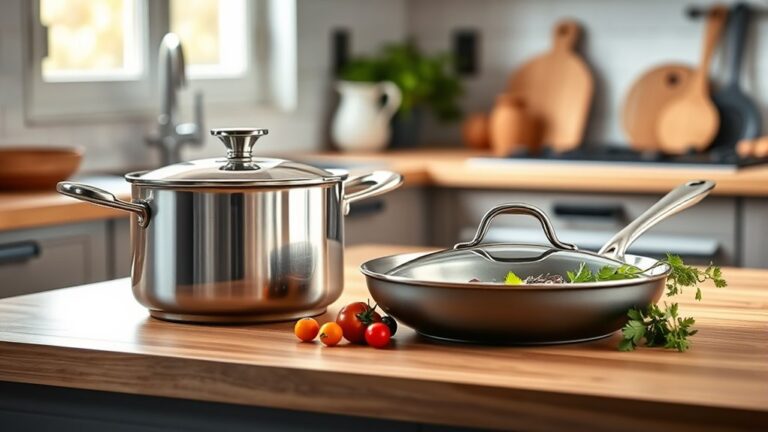
You’ll want a heavy-bottomed skillet, like cast iron or stainless steel, for even heat distribution. Non-stick pans work too, but cast iron gives you a better sear and helps cook bratwurst evenly without sticking.
How Long Can Cooked Bratwurst Be Safely Left Out?
You shouldn’t leave cooked bratwurst out for more than two hours at room temperature. Bacteria grow quickly, so refrigerate leftovers promptly to keep them safe and tasty for later enjoyment.
Are There Any Health Concerns With Pan-Frying Bratwurst?
Yes, you should watch the temperature to avoid undercooking, which risks bacteria. Also, don’t let oil smoke or burn, as that can produce harmful compounds.
Use moderate heat and cook bratwurst thoroughly for safety.
Can Bratwurst Be Cooked With Other Meats in the Same Pan?
You can cook bratwurst with other meats in the same pan, but keep in mind that 70% of flavor comes from proper searing. Just avoid overcrowding to guarantee even cooking and prevent steaming.
Conclusion
Now that you know how to perfect pan-fried bratwurst, you’re ready to impress at your next meal. Did you know that over 20 million pounds of bratwurst are consumed in the U.S. each year? That’s a lot of juicy, flavorful sausages!
With the right technique, you’ll enjoy crispy, juicy bratwurst every time. Just remember to avoid common mistakes, and don’t forget those tasty sides.
Happy cooking! Mastering how to cook bratwurst in a frying pan ensures delicious results and makes your meals memorable.