Can You Use Cast Iron Cookware on Glass Top Stoves
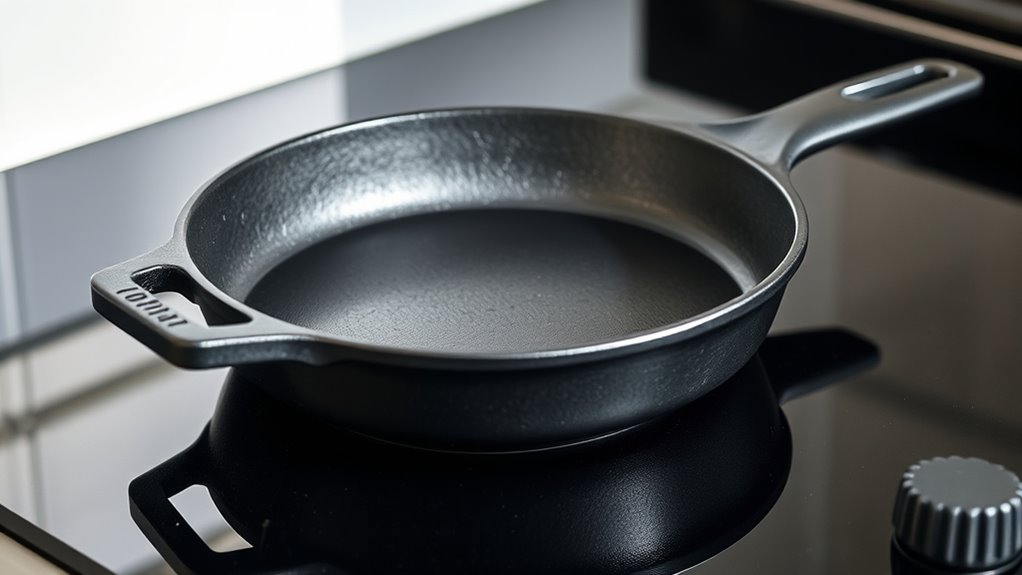
You can use cast iron cookware on glass top stoves, but it requires careful handling to prevent damage. Cast iron is known for its durability and excellent heat retention, making it a popular choice in many kitchens.
However, when used on glass top stoves, special precautions are necessary to avoid scratches, cracks, or thermal shock. Always lift the pans instead of sliding them across the stove surface.
Make sure the bottom of the cast iron cookware is smooth and clean before placing it on the glass top. Avoid dropping the cookware or placing hot cast iron on a cold glass surface, as sudden temperature changes can cause damage.
With proper care and protective measures, cast iron can be a durable and efficient option without harming your stove. Taking these steps ensures both your cookware and glass top stove stay safe and effective for years to come.
Key Takeaways
- Cast iron can be used on glass top stoves if handled carefully to avoid scratches or cracks.
- Always lift cast iron cookware instead of sliding it to prevent damage to the glass surface.
- Ensure the bottom of the cast iron is smooth, clean, and free of rough edges before cooking.
- Use silicone or cork trivets when placing cast iron on the stove to protect the glass surface.
- Avoid abrupt temperature changes and clean the stove gently after use to maintain both cookware and stove.
Is Cast Iron Safe on Glass Top Stoves?
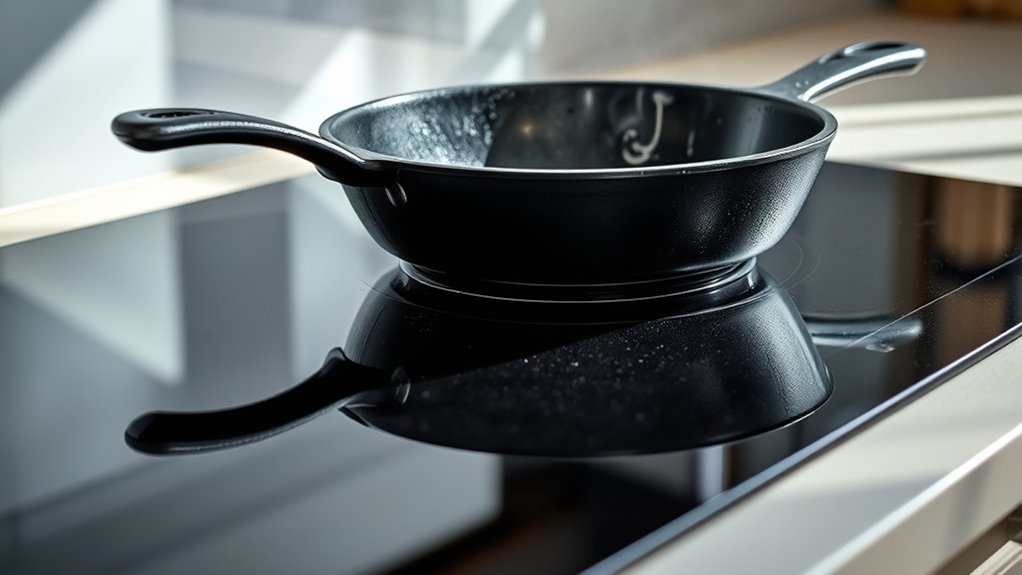
When you use cast iron on a glass top stove, you need to be careful because it can cause scratches or cracks if handled improperly. Cast iron cookware is heavy and has a rough surface, which makes it risky for delicate glass surfaces. However, if you place the pan gently and avoid dragging it, you can minimize damage.
You should also ensure the bottom of the cast iron is smooth and clean before use. While cast iron is generally safe to use, the risk lies in how you handle it. Always lift your cookware instead of sliding it, and avoid dropping it on the stove.
Following these precautions helps protect your glass top stove while still allowing you to enjoy the benefits of cast iron cooking.
How Cast Iron Cookware Impacts Glass Top Stoves
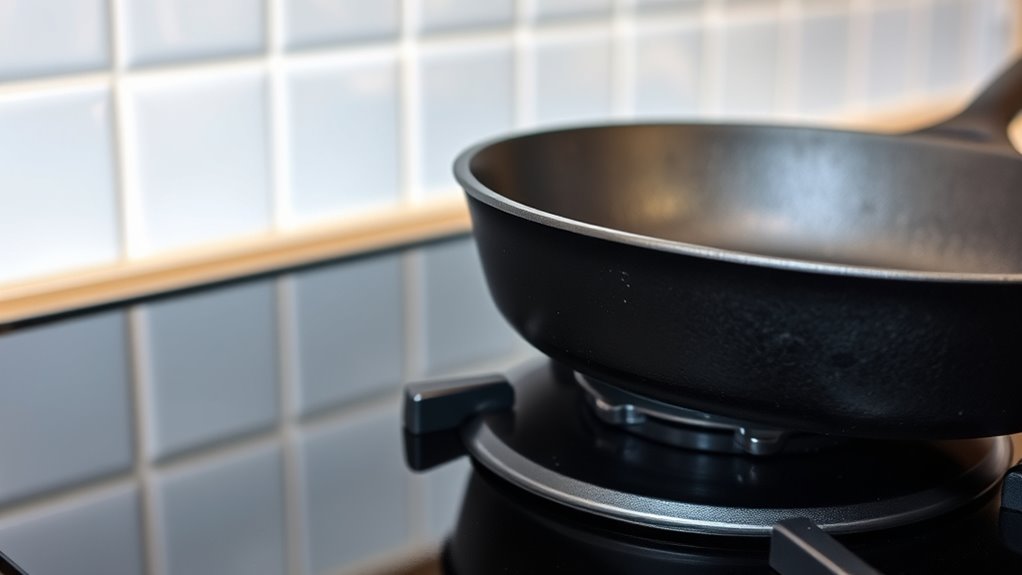
How does cast iron cookware affect your glass top stove over time? Cast iron’s weight and rough surface can lead to scratches and even cracks if you’re not careful. However, its excellent heat retention means your stove heats evenly, reducing hotspots.
You’ll want to lift, not slide, your cast iron pots to minimize surface damage. The table below summarizes common impacts:
| Impact Type | Cause | Effect on Glass Top Stove |
|---|---|---|
| Scratches | Rough, uneven bottom | Visible surface marks |
| Cracks | Heavy weight + impact | Potential permanent damage |
| Heat Distribution | Cast iron’s heat spread | Even cooking, less stress on glass |
| Staining | Residue from cookware | Discoloration if not cleaned well |
| Cleaning Effort | Cast iron residue | Requires gentle cleaning to avoid damage |
Handle your cast iron with care to protect your stove while enjoying its benefits.
When to Avoid Using Cast Iron on Glass Cooktops
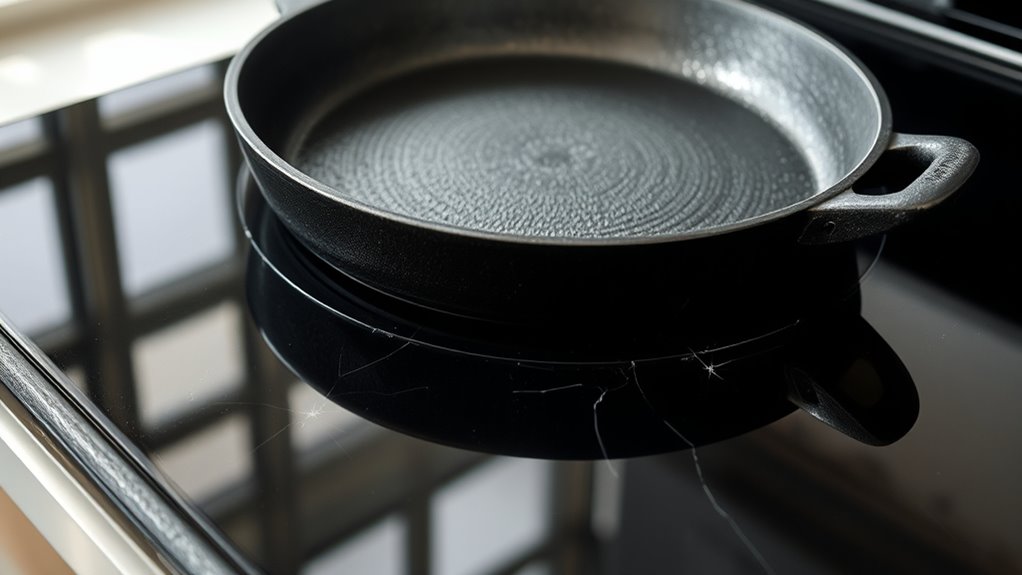
Although cast iron offers great cooking performance, you should avoid using it on glass cooktops in certain situations to prevent damage. For example, don’t slide or drag your cast iron pan across the glass surface, as the heavy weight can cause scratches or even cracks. Avoid placing a rough or chipped cast iron skillet on the cooktop, since imperfections on the cookware’s bottom can scratch the glass.
Also, never set a very hot cast iron pan on a cold glass surface abruptly; the sudden temperature change risks thermal shock, which may crack the cooktop. If your cast iron cookware is excessively heavy, consider using it cautiously or opt for lighter alternatives to protect your glass stove. Being mindful of these conditions helps keep your cooktop safe and functional.
Preventing Scratches From Cast Iron on Glass Stoves
To prevent scratches from cast iron on your glass stove, you need to handle the cookware carefully and take simple protective measures. Always lift your cast iron pans instead of sliding them across the surface. Sliding can easily cause abrasions or chips.
Use a silicone or cork trivet between the pan and the stove when setting it down to add a protective barrier. Keep the stove clean and free of debris, as small particles can act like sandpaper under heavy cookware. Avoid dragging heavy cast iron pots, and consider using cookware with smooth, flat bottoms for better stability.
Cleaning Glass Cooktops After Using Cast Iron
After cooking with cast iron, you’ll want to remove any residue promptly to keep your glass cooktop spotless. Using the right tools can help prevent scratches while cleaning effectively.
Let’s explore the best ways to clean without damaging your stove’s surface.
Removing Cast Iron Residue
When you notice cast iron residue on your glass cooktop, it’s important to address it promptly to prevent permanent stains or scratches. Start by letting the cooktop cool completely.
Then, use a soft cloth or sponge with warm, soapy water to gently clean the area. For stubborn residue, a glass cooktop scraper or a specialized cleaner designed for glass surfaces works best. Avoid abrasive pads that can damage the surface.
| Step | Action |
|---|---|
| Cool Down | Wait until cooktop is fully cool |
| Gentle Cleaning | Use soft cloth with soapy water |
| Tough Residue | Use scraper or specialized cleaner |
Following these steps helps keep your glass cooktop spotless without risking damage from cast iron residue.
Preventing Scratches Effectively
Although cast iron cookware offers excellent heat retention, you’ll want to clean your glass cooktop carefully after using it to prevent scratches. Cast iron’s rough surface and heavy weight can easily mar the smooth glass if not handled and cleaned properly.
To protect your cooktop, follow these simple steps:
- Always lift cast iron cookware instead of sliding it across the surface.
- Allow the cooktop to cool completely before cleaning.
- Use a soft cloth or non-abrasive sponge with a mild cleaner.
- Avoid harsh scrubbing pads or abrasive cleaners that can damage the glass.
- Wipe spills immediately to prevent residue build-up and potential scratches.
Best Cleaning Tools
Since cast iron cookware can leave stubborn residue or marks on your glass stove, choosing the right cleaning tools is essential to restore its shine without causing damage. Start with a soft microfiber cloth or sponge to gently wipe away loose debris. For tougher spots, use a non-abrasive scraper designed specifically for glass cooktops.
Avoid metal scrubbers or harsh scouring pads, as they can scratch the surface. A ceramic-safe cleaner or a mixture of baking soda and water works well to lift stains without harming your stove. After applying the cleaner, let it sit briefly, then wipe with a damp cloth.
Finish by buffing the surface with a dry microfiber cloth to bring out the shine. With these tools, you’ll keep your glass stove spotless after using cast iron.
How to Protect Your Glass Stove From Cast Iron Damage
To keep your glass stove safe from cast iron damage, start by using protective stove guards to create a buffer. Always lift your cast iron cookware instead of sliding it to avoid scratches.
Also, clean your stove surface regularly to prevent buildup that can cause wear over time.
Use Protective Stove Guards
When you place cast iron cookware directly on your glass stove, the heavy weight and rough texture can easily cause scratches or cracks. To protect your stove, consider using protective stove guards. These guards act as a barrier, preventing direct contact between the cast iron and the glass surface.
They’re easy to install and remove, offering a practical solution without compromising your cooking experience.
Here’s what you should look for in stove guards:
- Heat-resistant materials to withstand high temperatures
- Non-slip surfaces for stability
- Lightweight but durable construction
- Easy to clean and maintain
- Compatibility with your stove’s size and burners
Using stove guards helps preserve your glass top’s appearance and extends its lifespan.
Lift Instead Of Slide
Although cast iron cookware is incredibly durable, dragging it across your glass stove can quickly cause scratches or cracks. To protect your stove, always lift your cast iron pots and pans instead of sliding them. Even a small scrape can damage the surface, leading to costly repairs or replacements.
When you move your cookware, take a moment to pick it up carefully, ensuring it doesn’t scrape against the glass. This simple habit considerably reduces the risk of surface damage. If you need to reposition a heavy skillet, consider using both hands to lift it steadily.
Regular Stove Surface Cleaning
Lifting your cast iron cookware carefully helps prevent scratches, but regular cleaning plays a big role in keeping your glass stove surface flawless. You’ll want to remove spills and residue promptly to avoid stains or permanent marks. Use gentle tools and the right cleaning agents to protect the glass finish.
Here’s how to keep your stove top pristine:
- Wipe the surface with a soft, damp cloth after each use
- Clean stubborn spots with a non-abrasive cleaner designed for glass stoves
- Avoid steel wool or harsh scrubbers that can scratch the surface
- Use a razor blade scraper carefully to remove burnt-on food without damaging glass
- Dry thoroughly to prevent streaks or water spots
Comparing Cast Iron to Other Cookware for Glass Top Stoves
If you want to protect your glass stove top while cooking, choosing the right cookware is essential. Cast iron is durable and retains heat well but can be heavy and scratch the surface if not handled carefully.
Other materials like stainless steel, aluminum, and nonstick pans offer different benefits and risks.
| Cookware Type | Pros | Cons |
|---|---|---|
| Cast Iron | Excellent heat retention | Heavy, may scratch surface |
| Stainless Steel | Durable, smooth base | Heat spots, can be heavy |
| Aluminum | Lightweight, good heat | May warp, less durable |
| Nonstick | Easy to clean | Coating can scratch |
Choosing cookware with a smooth, flat base and lifting instead of sliding helps keep your glass top scratch-free.
Should You Invest in Cast Iron If You Have a Glass Top Stove?
When you contemplate investing in cast iron cookware for your glass top stove, you’ll want to weigh its benefits against potential risks. Cast iron offers excellent heat retention and durability, but its heavy weight and rough base can scratch your stove’s surface. If you decide to buy cast iron, handle it carefully to avoid damage.
Cast iron delivers durability and heat retention but requires careful handling to protect your glass top stove.
Here are key points to consider:
- Cast iron heats evenly, enhancing cooking performance
- Its weight increases the risk of cracking the glass if dropped
- Rough bottoms can cause scratches during movement
- Proper maintenance extends cookware life but requires effort
- Using protective pads or avoiding sliding reduces surface damage
Ultimately, if you’re cautious, cast iron can be a valuable addition to your glass top stove’s cookware collection.
Frequently Asked Questions
Can Cast Iron Cookware Be Used on Induction Glass Top Stoves?
Yes, you can use cast iron cookware on induction glass top stoves. Just be careful not to drag it, as cast iron is heavy and can scratch the surface.
Lift it to protect your stove’s glass top.
Does Seasoning Cast Iron Cookware Affect Glass Cooktop Performance?
Oh sure, your glass top stove just *adores* that oily, sticky seasoning on cast iron—said no one ever.
Actually, seasoning won’t affect performance, but please don’t treat your cooktop like a medieval battlefield!
How Do You Safely Lift Cast Iron Cookware on a Glass Stove?
You safely lift cast iron cookware on a glass stove by gripping it firmly with both hands or using sturdy oven mitts. Avoid dragging or sliding it to prevent scratches, and lift straight up to protect the glass surface.
This careful handling helps maintain the integrity of both the cookware and the stove. Always ensure your grip is secure before lifting.
Taking these precautions reduces the risk of accidents and damage.
Can Cast Iron Lids Damage Glass Top Stoves?
Worried about scratches when placing a cast iron lid on your glass stove? Yes, those lids can damage the surface if dropped or slid roughly.
You should always lift carefully and avoid dragging to keep it pristine.
Are There Specific Brands of Cast Iron Recommended for Glass Stoves?
You’ll find brands like Le Creuset and Lodge offer smooth-bottomed cast iron ideal for glass stoves. They minimize scratching risks, so you can cook confidently without worrying about damaging your delicate cooktop surface.
Conclusion
You might think cast iron and glass top stoves don’t mix, but guess what? With a little care, they actually get along just fine. Just like you wouldn’t drag heavy furniture across your floor, don’t slide your cast iron pots on the glass.
If you’re mindful about handling and cleaning, your glass stove will stay scratch-free—and your cast iron will keep delivering that unbeatable heat. Turns out, they make quite the unexpected team! Using cast iron cookware on glass top stoves is definitely possible with the right precautions.