Is Teflon Still Used in Cookware Now?
Yes, Teflon is still widely used in cookware today because it offers excellent non-stick performance and affordability. Its ability to prevent food from sticking makes cooking and cleaning easier, which is why many people continue to prefer Teflon-coated pans.
Many brands now use improved, PFOA-free formulations to reduce health risks, making Teflon safer than before. You’ll want to handle pans carefully, avoiding overheating and damage to keep cooking safe.
While alternatives like ceramic and cast iron grow in popularity, Teflon remains a common choice you’ll often see. Keep exploring to understand all your options and safety tips.
Key Takeaways
- Teflon remains widely used in cookware due to its effective non-stick properties and affordability.
- Modern Teflon coatings are often PFOA-free, meeting current safety standards.
- Many reputable brands continue to offer Teflon cookware with improved, safer formulations.
- Alternatives like ceramic and cast iron are growing but Teflon still dominates due to performance and cost.
- Proper care and usage are essential to minimize health risks associated with Teflon cookware.
What Is Teflon and How Does It Make Cookware Non-Stick?
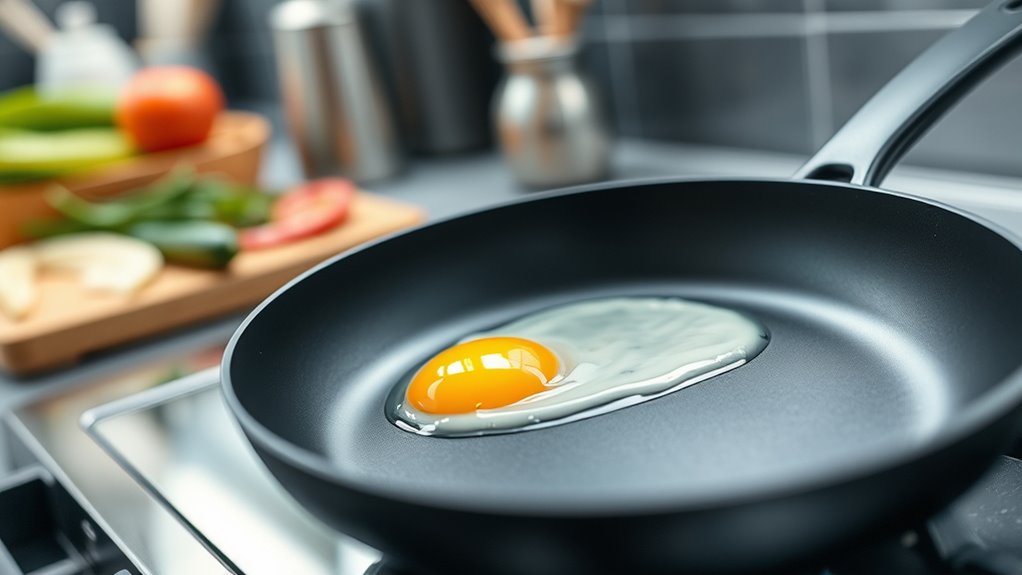
Although you might not know the chemistry behind it, Teflon is a synthetic polymer called polytetrafluoroethylene (PTFE) that coats cookware to create a slick, non-stick surface. When you cook with Teflon-coated pans, food slides off easily because PTFE’s molecules form a smooth, slippery layer that repels other substances. This means you don’t need much oil or butter, making cooking and cleanup simpler.
The unique chemical structure of PTFE prevents food from bonding to the surface, which is why your eggs won’t stick or burn as easily. You’ll find Teflon on many pots and pans because it enhances cooking performance without altering flavors.
What Health Risks Are Linked to Teflon and Overheating?
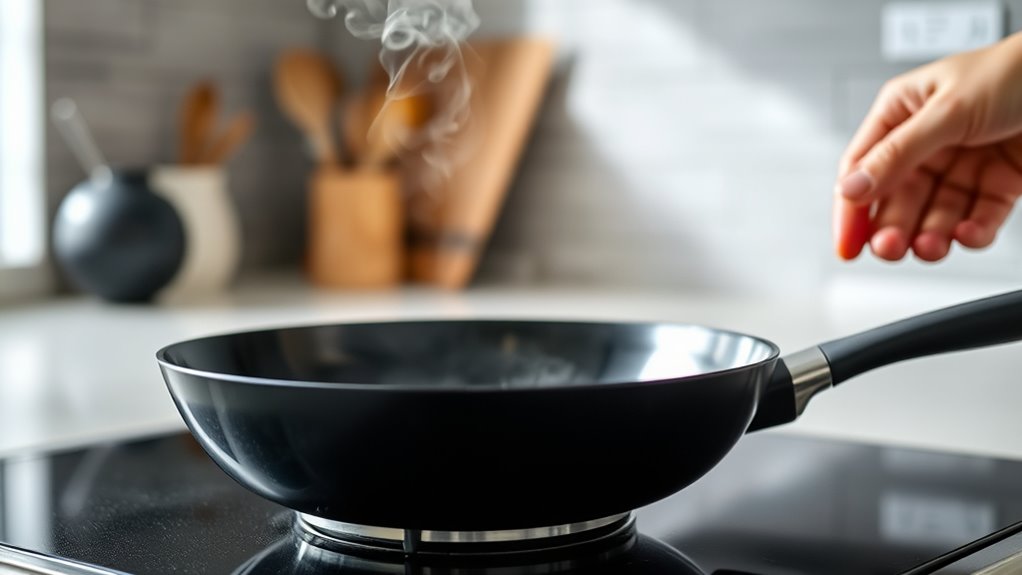
While Teflon makes cooking easier with its non-stick surface, it can pose health risks if overheated. When Teflon-coated pans exceed 500°F (260°C), they release toxic fumes that may cause polymer fume fever, a temporary flu-like condition. Pets, especially birds, are highly sensitive to these fumes.
Prolonged exposure to degraded Teflon chemicals raises concerns about long-term health effects, but occasional use at recommended temperatures remains generally safe.
| Temperature (°F) | Health Risk | Symptoms |
|---|---|---|
| Below 500 | Low risk | None |
| 500 – 662 | Polymer fume fever risk | Flu-like symptoms |
| Above 662 | Increased chemical release | Severe respiratory issues |
To stay safe, avoid overheating and discard scratched or damaged pans.
How Do Environmental Concerns Affect Teflon Use in Kitchens?
Because Teflon production and disposal involve harmful chemicals, environmental concerns have led many people to reconsider its use in kitchens. You might worry about the impact of perfluorooctanoic acid (PFOA), once used in Teflon manufacturing, which is persistent in the environment and linked to pollution. Though PFOA has been largely phased out, its legacy still influences how you view non-stick cookware.
You’re likely drawn to alternatives that reduce chemical waste and environmental harm. Choosing cookware made from sustainable materials or those with safer coatings helps you minimize your ecological footprint. By staying informed about Teflon’s environmental effects, you can make choices that align with your values and contribute to a healthier planet while cooking at home.
Is Teflon Still Used in Modern Cookware Brands?
Your concerns about environmental impact naturally lead to questions about whether Teflon still plays a role in today’s cookware. The answer is yes—many modern brands continue to use Teflon coatings because they offer excellent non-stick performance and ease of cleaning. However, manufacturers have improved the formulation to eliminate harmful chemicals like PFOA, making Teflon safer than it was decades ago.
When you shop, you’ll find that Teflon-coated pans remain popular due to their affordability and convenience. That said, some brands clearly label their products as PFOA-free or use alternative non-stick technologies alongside Teflon. If you want to stick with Teflon, just make sure you buy from reputable manufacturers who comply with current safety standards, ensuring you get effective cookware without unnecessary risks.
What Safer Alternatives to Teflon Coatings Are Available Today?
If you’re looking for safer options than Teflon, ceramic nonstick cookware offers a chemical-free surface that’s easy to clean. You might also consider cast iron, which naturally develops a nonstick coating with proper seasoning and lasts for decades.
Both alternatives give you peace of mind without sacrificing cooking performance.
Ceramic Nonstick Options
While Teflon has faced criticism over health concerns, ceramic nonstick cookware has emerged as a popular safer alternative. You’ll find ceramic options don’t contain harmful chemicals like PFOA or PTFE, making them a healthier choice for everyday cooking.
Plus, they offer excellent nonstick performance without the risk of toxic fumes when overheated.
Here are three reasons you might choose ceramic nonstick cookware:
- Eco-friendly materials – Ceramic coatings are made from natural minerals, reducing environmental impact.
- High heat tolerance – They can handle higher temperatures safely, unlike traditional Teflon.
- Easy cleanup – Food slides off effortlessly, so you spend less time scrubbing.
Switching to ceramic nonstick is a smart way to cook safer without sacrificing convenience.
Cast Iron Benefits
Although cast iron cookware requires a bit more care, it offers a durable, chemical-free alternative to Teflon coatings that many home cooks appreciate. You’ll enjoy excellent heat retention and natural nonstick properties when properly seasoned.
Plus, cast iron adds a small amount of iron to your food, which can be beneficial. While it needs regular seasoning and careful cleaning, its longevity and safety make it a smart choice.
Here’s a quick comparison to help you see why cast iron stands out:
| Feature | Cast Iron Benefits |
|---|---|
| Durability | Lasts for decades with care |
| Safety | Free from synthetic chemicals |
| Heat Performance | Even heat distribution |
| Maintenance | Requires seasoning and drying |
How to Choose Non-Stick Pans Without Teflon Coatings
When choosing non-stick pans without Teflon coatings, look for alternative materials like ceramic, anodized aluminum, or stainless steel with non-toxic coatings.
Pay close attention to safety features and how durable the pan is for everyday use. You’ll want a pan that not only cooks well but also lasts without releasing harmful chemicals.
Alternative Non-Stick Materials
If you’re looking to avoid Teflon coatings in your cookware, several alternative non-stick materials offer great performance without the concerns some associate with traditional non-stick surfaces.
Here are three popular options you can consider:
- Ceramic Coatings – These provide a smooth, non-stick surface made from natural minerals. They’re free from PTFE and PFOA, making them a healthier choice for everyday cooking.
- Cast Iron with Seasoning – When properly seasoned, cast iron pans develop a natural non-stick layer. They’re durable and improve with use, perfect if you don’t mind a bit of upkeep.
- Anodized Aluminum – This material has a hard, non-porous surface that resists sticking and scratches. It offers excellent heat distribution without synthetic coatings.
Choosing any of these helps you cook efficiently without relying on Teflon.
Safety and Durability Factors
Choosing non-stick pans without Teflon coatings means you need to pay close attention to safety and durability factors to get the best value. Look for pans made from ceramic, anodized aluminum, or stainless steel with non-toxic coatings, as these materials resist scratching and avoid harmful chemicals. Check if the pan can withstand high temperatures without releasing fumes or degrading.
Durability also depends on how well the coating adheres to the base—poor bonding leads to flaking and reduced lifespan. You’ll want a pan that cleans easily but won’t chip or peel after a few uses. Finally, consider manufacturer warranties and customer reviews to ensure your pan holds up over time.
Caring for Teflon and Non-Stick Cookware Safely
Although Teflon and non-stick cookware make cooking easier, you need to handle them carefully to keep their surfaces intact and safe. Proper care helps extend their lifespan and prevents harmful chemicals from releasing.
Here’s how you can care for your non-stick cookware:
- Use gentle utensils: Avoid metal tools that can scratch the coating. Opt for silicone, wooden, or plastic utensils instead.
- Cook on low to medium heat: High heat can damage the non-stick surface and release toxic fumes. Keep the temperature moderate.
- Hand wash only: Skip the dishwasher. Wash with a soft sponge and mild detergent to prevent chipping or peeling of the coating.
Where to Find Reliable, Teflon-Free Non-Stick Cookware Options
Taking good care of your Teflon and non-stick cookware helps maintain their safety, but many people still want to avoid Teflon altogether due to concerns about chemical exposure. If you’re looking for reliable, Teflon-free non-stick options, consider ceramic-coated cookware. Brands like GreenPan and Caraway offer durable, non-toxic surfaces that perform well without harmful chemicals.
You can find these products in major retailers such as Williams Sonoma, Bed Bath & Beyond, and online marketplaces like Amazon. Stainless steel and cast iron also provide excellent alternatives if you’re open to different cooking styles. When shopping, look for cookware labeled “PFOA-free” and verify materials to guarantee they meet your safety standards.
This way, you can enjoy non-stick convenience without worrying about Teflon risks.
Frequently Asked Questions
How Long Does Teflon Cookware Typically Last With Regular Use?
Teflon cookware typically lasts about 3 to 5 years with regular use. You’ll notice it wears down faster if you use metal utensils or harsh cleaning methods, so handle it gently to extend its lifespan.
Using wooden or silicone utensils can help preserve the nonstick surface. Avoid abrasive cleaners and scrubbing pads to maintain its coating. Proper care can significantly prolong the life of your Teflon cookware.
Can Teflon Coatings Be Repaired if Scratched or Damaged?
Think of your scratched Teflon like a cracked mirror—you can’t fix the coating itself.
You’ll want to replace the pan, or food might stick and safety could become a concern over time.
Does Teflon Cookware Affect the Taste of Food?
Teflon cookware doesn’t affect your food’s taste because it’s non-reactive and smooth. You won’t notice any flavor changes, so you can cook confidently without worrying about your meals tasting different or off.
Are There Specific Cleaning Products to Avoid With Teflon Pans?
You absolutely can’t use harsh scouring pads or bleach on Teflon pans! They’ll destroy the nonstick coating faster than you can say “scrambled eggs.”
Stick to gentle sponges and mild dish soap to keep them perfect.
How Does Teflon Cookware Perform at High Cooking Temperatures?
Teflon cookware doesn’t perform well at high temperatures; it can start to break down above 500°F, releasing harmful fumes.
You should avoid overheating it to keep your pans safe and effective for everyday cooking.
Conclusion
You can still find Teflon in some cookware, but many brands are moving away from it due to health and environmental concerns. Choosing Teflon-free options is like finding a clear path through a fog—you avoid hidden risks and cook with peace of mind.
By exploring safer alternatives and caring for your non-stick pans properly, you’ll enjoy hassle-free cooking without compromising your health or the planet.
In conclusion, opting for Teflon-free cookware supports both your well-being and environmental sustainability. Making informed choices and maintaining your cookware ensures a safer, more enjoyable cooking experience.