
Are Titanium Cutting Boards Safe to Use Properly?
You can confidently use titanium cutting boards as a safe, hygienic choice for food prep when you care for them properly. Titanium cutting boards offer a non-porous, antimicrobial surface that prevents bacteria buildup and staining, making them an excellent option for maintaining kitchen hygiene.
Their resistance to rust and corrosion ensures long-lasting durability in your food preparation routine. They won’t absorb odors or affect your food’s flavor, nor leach harmful chemicals.
Though heavier than plastic or wood, they’re incredibly durable and easy to clean. Keep using them well, and you’ll discover why many prefer titanium for longevity and food safety.
Key Takeaways
- Titanium cutting boards are non-porous, preventing bacterial penetration and ensuring hygienic food preparation. Their antimicrobial properties and resistance to staining reduce bacterial growth and contamination risks.
- Titanium is biocompatible and non-reactive, posing no health risks or chemical leaching when used properly. They resist rust, corrosion, and damage, maintaining long-term safety and structural integrity without special maintenance.
- Proper cleaning with warm soapy water or dishwasher use keeps titanium cutting boards safe and food-grade compliant.
What Makes Titanium Cutting Boards Different From Wood and Plastic?
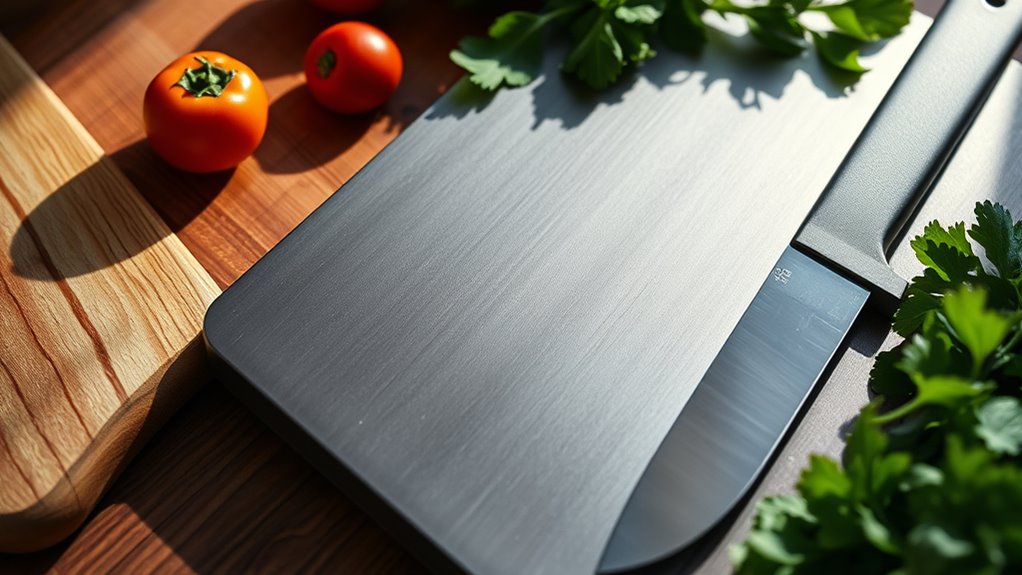
Although wood and plastic cutting boards are common in many kitchens, titanium cutting boards offer unique advantages that set them apart. When you choose titanium, you get a surface that’s incredibly durable and resistant to scratches, dents, and warping. Unlike wood, titanium won’t absorb moisture or harbor bacteria, making it more hygienic and easier to clean.
Plastic boards can stain and retain odors, but titanium keeps its sleek appearance and won’t hold onto smells. Plus, titanium is lightweight yet strong, so you can handle it easily without worrying about damage. If you want a cutting board that combines longevity with effortless maintenance, titanium’s your go-to choice.
It’s a modern alternative designed to withstand daily kitchen challenges without compromising performance.
Are Titanium Cutting Boards Safe for Your Knives?
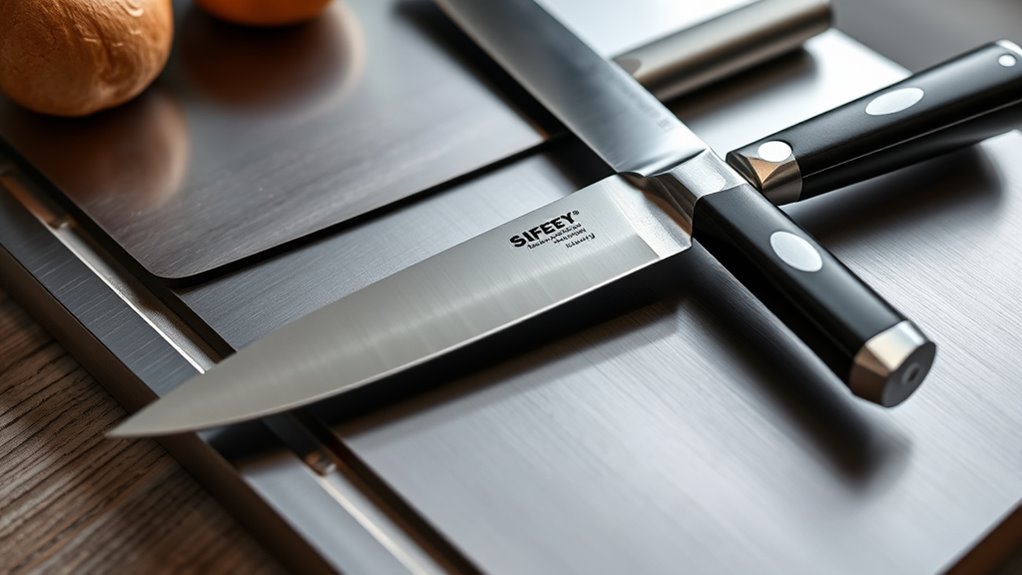
Choosing titanium for your cutting board means you get a tough, non-porous surface that resists damage and bacteria—but you might wonder how it affects your knives. Titanium is harder than traditional cutting board materials, so it can dull your knives faster if you’re not careful. When you cut on titanium, your blade experiences more resistance compared to softer surfaces like wood or plastic.
However, if you regularly sharpen and maintain your knives, this won’t be a major issue. Additionally, titanium’s smooth surface minimizes microscopic nicks that can accelerate blade wear. If you prioritize knife longevity, you might want to limit heavy chopping on titanium boards.
Durability Compared to Wood and Plastic Cutting Boards
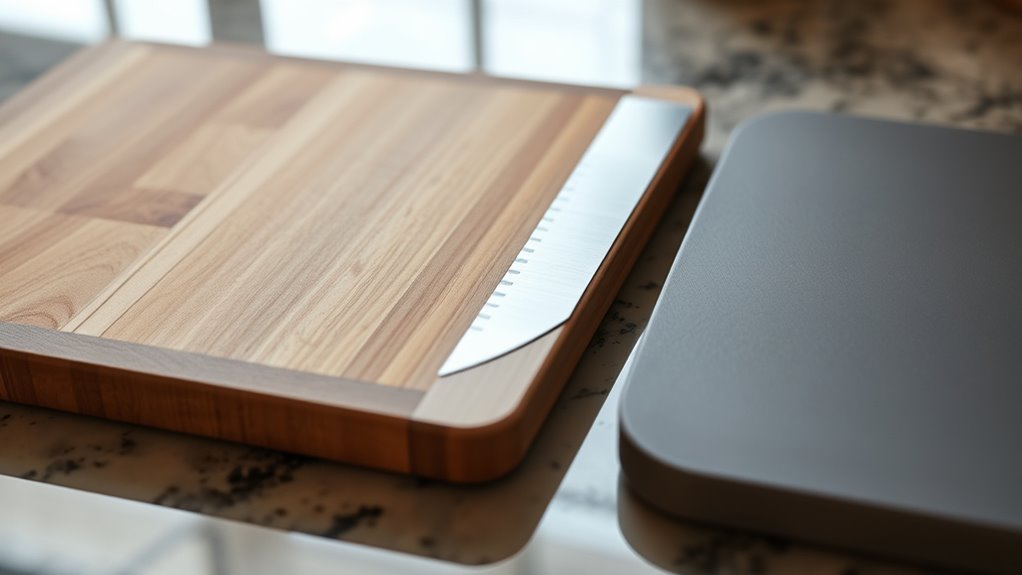
When you compare titanium cutting boards to wood and plastic, you’ll notice their exceptional strength and long lifespan. They resist wear much better, so you won’t have to replace them as often.
Plus, their maintenance is simpler, saving you time and effort in the kitchen.
Strength and Longevity
Since titanium is a metal known for its exceptional strength, you’ll find that titanium cutting boards outlast both wood and plastic options. You won’t have to worry about cracks, warping, or splitting that often affect wooden boards. Unlike plastic, which can degrade or become brittle over time, titanium retains its shape and integrity even under heavy daily use.
When you invest in a titanium cutting board, you get a tool built to withstand years of chopping, slicing, and dicing without compromising its structure. This means fewer replacements and less waste for you. Its robust build ensures consistent performance, making it a practical and long-lasting choice in your kitchen arsenal.
Resistance to Wear
How well does a titanium cutting board hold up against wear compared to wood and plastic? When you use one, you’ll notice it resists scratches and dents far better than traditional materials. Here’s why titanium stands out:
- Titanium’s hardness means it won’t easily scar, unlike plastic, which scratches quickly.
- Wood boards wear down unevenly over time, but titanium maintains a smooth surface.
- Plastic can absorb knife marks, creating grooves that harbor bacteria; titanium stays non-porous.
- Titanium resists staining and discoloration, keeping its appearance intact longer than wood or plastic.
If you want a cutting board that stays durable and clean-looking through heavy use, titanium is a smart choice for resisting everyday wear.
Maintenance and Care
Beyond its impressive resistance to wear, a titanium cutting board requires minimal upkeep compared to wood and plastic options. You won’t have to worry about deep scratches or grooves that can harbor bacteria, as titanium is highly durable and non-porous. Unlike wood, it doesn’t need oiling or conditioning to stay in good shape, and it won’t warp or crack over time like some plastic boards.
Cleaning is simple—you can wash it with warm, soapy water or even place it in the dishwasher without damage. While wood boards demand regular maintenance to prevent drying and cracking, and plastic boards may need replacement when scratched, titanium stands up to daily use with far less fuss.
This durability means you spend less time maintaining your board and more time cooking safely.
Do Titanium Cutting Boards Affect Food Taste or Safety?
You might wonder if titanium cutting boards change the taste of your food or pose any safety risks.
Luckily, titanium is non-reactive, so it won’t affect flavors or leach harmful substances.
Let’s look at how this material keeps your food safe and fresh.
Impact On Food Flavor
Can titanium cutting boards change the flavor of your food? The short answer is no. Titanium is a non-reactive metal, so it won’t impart any metallic or off flavors to what you’re preparing.
Here’s what you should know about the impact on your food’s flavor:
- Titanium doesn’t absorb odors or flavors, keeping your food’s natural taste intact.
- It won’t cause discoloration or chemical reactions that might alter flavors.
- Unlike wooden boards, titanium won’t harbor bacteria that can affect taste over time.
- Its smooth surface means less residue buildup, so you won’t have cross-flavor contamination.
Food Safety Considerations
How safe are titanium cutting boards when it comes to food preparation? You’ll be glad to know titanium is non-porous and resistant to bacteria buildup, making it a hygienic choice. Unlike wooden boards, titanium won’t absorb juices from raw meats, reducing cross-contamination risks.
Since it doesn’t react with acidic foods, it won’t alter your food’s taste or safety. Plus, titanium’s durability means fewer knife grooves where bacteria could hide. However, always clean your board thoroughly after each use—soap and hot water work well.
Avoid harsh abrasives that might scratch the surface. By following these simple steps, you can guarantee your titanium cutting board stays safe and reliable, keeping your meals both tasty and contamination-free.
Can Titanium Cutting Boards Resist Bacteria and Stains?
Although titanium cutting boards are less common than traditional materials, they offer impressive resistance to bacteria and stains. You’ll find that titanium’s unique properties help maintain a cleaner surface during food prep. Here’s why:
- Titanium is naturally antimicrobial, reducing bacterial growth on the surface.
- Its smooth, non-porous texture prevents bacteria and liquids from seeping in.
- Titanium resists staining from acidic foods, like tomatoes or lemon juice.
- The durable surface withstands scratches, which can harbor bacteria on other boards.
Why Titanium’s Non-Porous Surface Makes Cleaning Easier
Titanium’s smooth, non-porous surface doesn’t just cut down on bacteria and stains—it also makes cleaning quick and hassle-free. When you use a titanium cutting board, food particles and liquids won’t seep into tiny crevices like they do with wood or plastic boards. This means you can easily rinse off residue without scrubbing aggressively.
You won’t have to worry about leftover grime hiding in scratches or pores, which often requires extra effort to clean thoroughly. Plus, titanium’s resistance to corrosion allows you to use strong dish soaps or even sanitize it without damaging the surface.
Are There Any Health Risks With Titanium Cutting Boards?
When you choose a titanium cutting board, you might wonder if it poses any health risks. Fortunately, titanium is known for its biocompatibility, meaning it rarely causes allergic reactions or toxicity. Here are some key points to take into account:
- Titanium is non-reactive, so it won’t leach harmful chemicals into your food.
- Its non-porous surface prevents bacteria buildup, reducing contamination risks.
- Titanium is resistant to corrosion and rust, ensuring durability and safety over time.
- Proper cleaning with mild soap and water keeps it hygienic without needing harsh chemicals.
How Heavy and Portable Are Titanium Cutting Boards?
Keeping your cooking environment safe also means considering how easy it is to handle your tools. Titanium cutting boards tend to be heavier than plastic or wooden ones, thanks to titanium’s density and strength. While this weight gives you a sturdy, stable surface for chopping, it can make the board less portable.
If you often move your cutting board around the kitchen or take it outdoors, you might find titanium boards a bit cumbersome. However, their durability means you won’t need to replace them frequently, offsetting the inconvenience. If portability is a priority, look for titanium boards designed with thinner profiles or built-in handles to ease transport.
Ultimately, you’ll balance weight with toughness when deciding if a titanium cutting board fits your needs.
Are Titanium Cutting Boards Easy to Clean and Maintain?
Although titanium cutting boards are known for their toughness, you might wonder how easy they are to clean and maintain. The good news is, they’re quite user-friendly in this regard. You won’t have to worry about stains or absorbing odors like with wood boards.
Here’s what makes them simple to care for:
- Non-porous surface resists bacteria buildup, so cleaning is more effective.
- You can use warm, soapy water or mild detergents without damaging the board.
- Titanium is rust-resistant, so you don’t need to dry it immediately to prevent corrosion.
- Unlike wood, you won’t have to sand or oil the surface regularly to keep it smooth.
With regular washing and drying, your titanium cutting board will stay clean and durable for years.
Cost Comparison: Titanium Vs. Traditional Cutting Boards
When you compare titanium cutting boards to traditional ones, the initial price difference is clear—titanium tends to cost more upfront. However, you’ll save money over time thanks to titanium’s durability and lower maintenance needs.
Let’s look closer at how these factors balance out in the long run.
Initial Purchase Price
Since titanium is a high-quality, durable material, you can expect its cutting boards to come with a higher initial purchase price compared to traditional options like wood or plastic. When deciding which board to buy, consider these factors:
- Titanium cutting boards typically cost several times more than wooden or plastic boards.
- Traditional wood or plastic boards are widely available at lower prices, often under $20.
- Titanium boards may start around $100 or more, reflecting the material’s strength and manufacturing costs.
- The upfront investment in titanium could feel steep, but it’s a one-time expense unlike frequent replacements of cheaper boards.
Understanding these price differences helps you make an informed choice without overlooking the quality and safety benefits titanium offers.
Long-Term Durability Costs
Three key factors make titanium cutting boards a smart long-term investment compared to traditional wood or plastic options. First, titanium resists warping, cracking, and denting, so you won’t need to replace it frequently like wood, which can split or plastic that often wears down.
Second, titanium’s exceptional strength means it withstands heavy use without showing signs of wear, maintaining its integrity longer. Third, titanium cutting boards don’t absorb moisture or stains, preventing damage that typically shortens the lifespan of other materials.
While the upfront cost may be higher, you save money over time by avoiding frequent replacements. By choosing titanium, you invest in durability that outlasts standard boards, reducing your long-term expenses and ensuring a reliable cutting surface for years to come.
Maintenance Expense Differences
Beyond the initial investment, titanium cutting boards also save you money through lower maintenance costs compared to wood or plastic. You won’t need to spend on expensive oils or conditioners, which are essential for wooden boards to prevent cracking and warping. Titanium’s resistance to stains and odors means less frequent replacements, unlike plastic boards that can become deeply scarred and harbor bacteria.
Here’s how maintenance costs typically compare:
- Conditioning: Wood requires regular oiling; titanium doesn’t.
- Cleaning: Plastic boards often need harsh cleaners; titanium is easy to sanitize.
- Replacement Frequency: Plastic and wood boards wear out faster, costing more over time.
- Repairs: Wood can crack, needing repair or replacement; titanium stays intact.
Choosing titanium lowers your ongoing expenses while staying safe and durable.
Who Should Consider Buying a Titanium Cutting Board?
If you prioritize durability and hygiene in your kitchen tools, a titanium cutting board might be the right choice for you. You’ll appreciate its resistance to bacteria and stains, making it ideal if you frequently prepare raw meats or seafood. If you want a board that won’t warp, crack, or harbor odors, titanium fits the bill.
You might also consider it if you prefer a lightweight but strong option that withstands heavy use without dulling your knives quickly. However, if you’re someone who values long-term investment in a virtually indestructible kitchen tool, this board will serve you well. In short, if durability, cleanliness, and low maintenance matter to you, a titanium cutting board is worth considering for your kitchen.
Where to Buy Quality Titanium Cutting Boards and What to Look For?
Choosing the right titanium cutting board starts with knowing where to find high-quality options that meet your needs. You’ll want to look for trusted kitchenware retailers or specialized online stores that focus on durable cookware. When shopping, keep these key points in mind:
- Material Quality: Verify the titanium is food-grade and corrosion-resistant.
- Size and Thickness: Pick a size that fits your workspace and thickness for stability.
- Surface Texture: Look for a smooth, non-porous surface that won’t dull knives quickly.
- Customer Reviews: Check feedback to confirm durability and safety claims.
Frequently Asked Questions
Can Titanium Cutting Boards Be Used for Outdoor Camping or Travel?
Yes, you can use titanium cutting boards for outdoor camping or travel. They’re lightweight, durable, and easy to clean, making them perfect for your trips.
Just pack them carefully to avoid scratches or dents during transport.
How Do Titanium Cutting Boards Handle Extreme Temperatures?
Titanium cutting boards handle extreme temperatures exceptionally well; they won’t warp or crack under heat or cold. You can confidently use them for hot foods or cold prep without worrying about damage or warping.
Are Titanium Cutting Boards Environmentally Friendly or Recyclable?
Yes, titanium cutting boards are environmentally friendly and recyclable. You’ll appreciate their durability, which reduces waste, and when it’s time, you can recycle them easily.
This helps you minimize your environmental impact while enjoying a long-lasting kitchen tool.
Can Titanium Cutting Boards Be Customized or Engraved?
You can definitely make your titanium cutting board uniquely yours—engraving or customizing it is like adding your signature brushstroke to a masterpiece.
Just check with the manufacturer for compatible methods to guarantee durability and style.
Do Titanium Cutting Boards Require Special Utensils or Knives?
You don’t need special utensils or knives for titanium cutting boards. Just use your regular kitchen knives, but be mindful they might dull faster since titanium is harder than wood or plastic surfaces.
Conclusion
Using a titanium cutting board is like having a trusty shield in your kitchen—it’s tough, durable, and keeps your knives sharp while resisting stains and bacteria. If you want a cutting surface that’s easy to clean and long-lasting, titanium’s worth considering despite the higher cost.
Just make sure you choose quality boards to get the best benefits. With proper care, titanium cutting boards can be a smart, safe addition to your culinary toolkit. Overall, titanium cutting boards are safe to use properly and offer excellent durability and hygiene for food preparation.