Is Ceramic Cookware Dishwasher Safe?
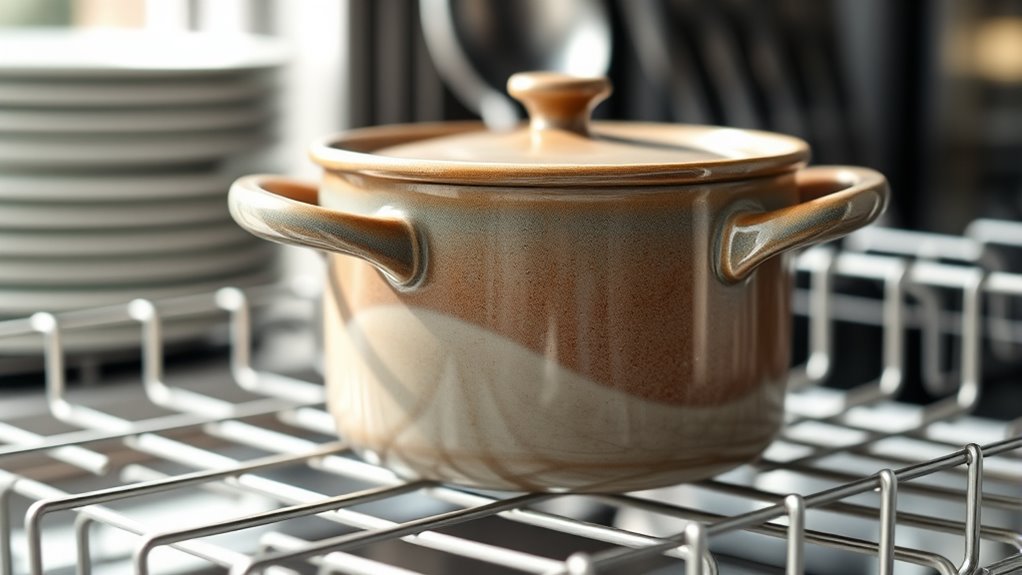
You can put ceramic cookware in the dishwasher occasionally, but regular use can wear down its ceramic coating, dull the finish, and reduce its non-stick performance.
Ceramic cookware dishwasher safe status is often debated because harsh detergents and high heat can cause cracks, chips, and stains over time. Understanding how dishwasher use affects ceramic cookware is important for maintaining its quality.
To keep your cookware looking good and lasting longer, hand washing with mild soap and drying thoroughly is best.
If you want to keep your ceramic pieces in top shape, there’s more to take into account about care and maintenance. Proper cleaning methods help preserve the cookware’s durability and appearance.
Key Takeaways
- Ceramic cookware can be dishwasher safe, but frequent dishwasher use may dull the finish and damage the ceramic coating over time.
- High heat and harsh detergents in dishwashers can cause cracking, chipping, and loss of non-stick properties in ceramic cookware.
- Always check manufacturer labels or manuals to confirm if a ceramic cookware item is dishwasher safe.
- Hand washing with mild detergent and a soft sponge is recommended to prolong ceramic cookware’s lifespan and maintain its surface.
- Signs to replace ceramic cookware include cracks, chips, stains, warping, or degraded non-stick performance from dishwasher damage.
What Makes Ceramic Cookware Different From Other Types
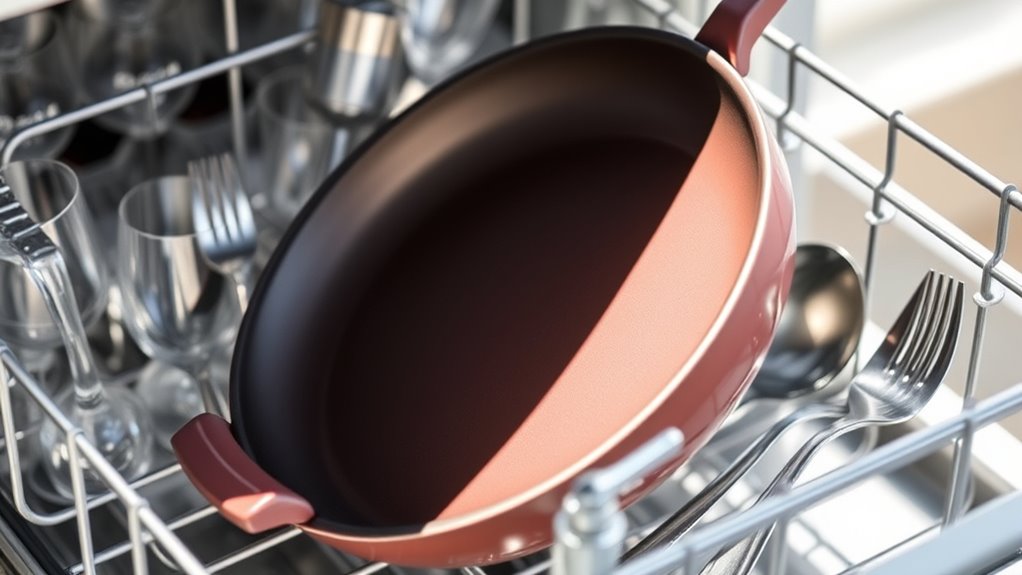
While ceramic cookware may look similar to other pots and pans, its construction and materials set it apart. You’ll find ceramic cookware features a metal base coated with a layer of ceramic, unlike traditional non-stick pans that use synthetic coatings. This ceramic layer is made from inorganic minerals, giving it a naturally non-stick surface without relying on chemicals like PTFE or PFOA.
Because of this, you can cook with less oil and avoid potential toxins. You’ll also notice ceramic cookware heats evenly and retains heat well, which helps your food cook consistently. Plus, its smooth surface resists scratches and stains better than some other types, making it a durable option in your kitchen arsenal.
Can You Put Ceramic Cookware in the Dishwasher?
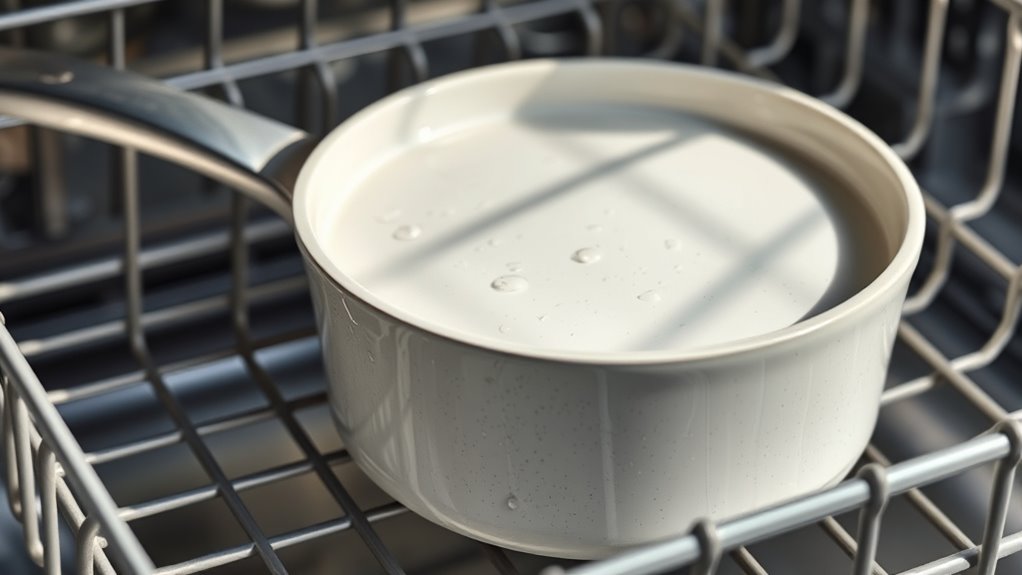
Although ceramic cookware is known for its durability, you should be cautious about putting it in the dishwasher. The high heat and harsh detergents can wear down the ceramic coating over time, causing it to lose its non-stick properties and develop cracks. Repeated dishwasher cycles may also dull the vibrant finish, making your cookware look worn sooner than expected.
While some ceramic pieces might tolerate occasional dishwasher use, hand washing is generally safer to preserve their quality. To keep your ceramic cookware in the best shape, use mild soap and a soft sponge. Avoid abrasive cleaners or scouring pads, as they can scratch the surface.
Ultimately, protecting your ceramic cookware from dishwasher damage extends its life and maintains its cooking performance.
How to Identify Dishwasher-Safe Ceramic Cookware
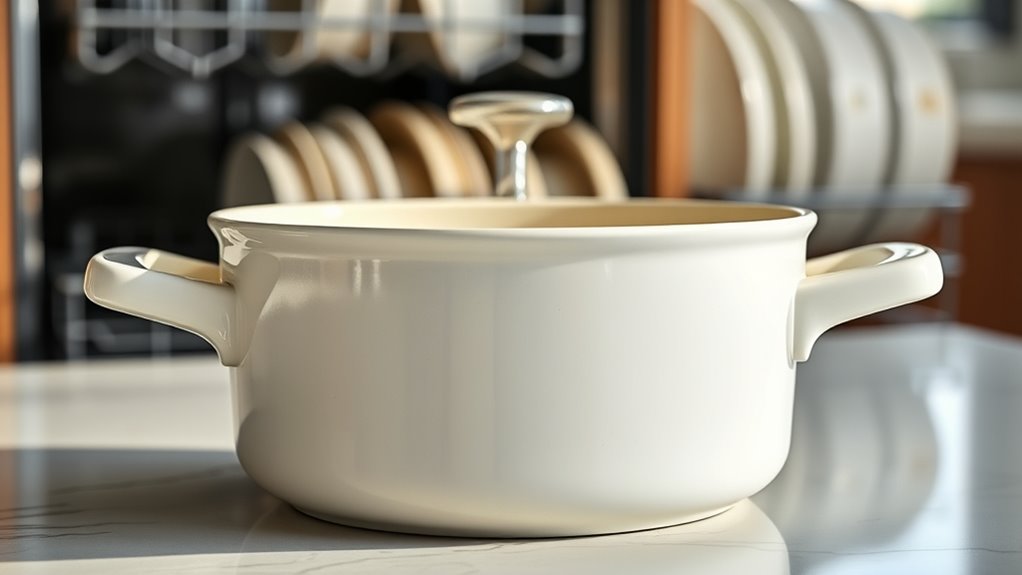
If you want to avoid damaging your ceramic cookware, it’s important to know how to spot dishwasher-safe pieces. First, check the manufacturer’s label or packaging; it often clearly states if the cookware is dishwasher safe. Look for dishwasher-safe symbols, usually a plate or glass with water droplets, stamped on the bottom.
If you can’t find any markings, consult the product’s website or user manual. Be cautious with older or handmade ceramic cookware, as they may not hold up well in dishwashers. Also, consider the glaze—durable, high-quality glazes tend to resist dishwasher wear better.
When in doubt, hand washing is the safest option to prolong your cookware’s life and maintain its appearance.
What Dishwashers Do to Ceramic Cookware’s Non-Stick Coating
How exactly does the dishwasher affect your ceramic cookware’s non-stick coating? When you put ceramic pans in the dishwasher, the high heat, strong detergents, and intense water jets gradually wear down the coating. These elements can cause tiny scratches, dullness, and loss of the smooth surface that makes food release easily.
Over time, your cookware might lose its non-stick performance, making cooking and cleaning harder. The dishwasher’s harsh environment doesn’t discriminate between brands—it can chip away at even the most durable ceramic coatings. While occasional dishwasher use might not cause immediate damage, repeated cycles speed up deterioration.
To keep your ceramic cookware’s non-stick coating intact, it’s best to be mindful of how often and under what conditions you’re relying on the dishwasher.
When to Avoid Using the Dishwasher for Ceramic Cookware
You should avoid using the dishwasher for ceramic cookware when the heat is too high, as it can damage the coating. Also, prolonged exposure to harsh detergents can wear down the surface over time.
Knowing when to hand wash can help keep your cookware in better shape.
High Heat Damage
When does high heat become a threat to your ceramic cookware in the dishwasher? High temperatures during the dishwasher’s drying cycle can cause the ceramic coating to crack or weaken over time. If you regularly use the dishwasher’s high-heat settings, you risk damaging the smooth, non-stick surface.
This damage not only affects the cookware’s appearance but also its cooking performance. To protect your ceramic pots and pans, avoid placing them in the dishwasher when you know it will use intense heat.
Instead, hand wash with warm, soapy water to preserve the integrity of the ceramic coating. Being cautious with heat exposure helps extend your cookware’s lifespan and keeps it looking and working like new.
Prolonged Detergent Exposure
Although ceramic cookware can handle occasional dishwasher cycles, prolonged exposure to harsh detergents can wear down its protective coating. You should avoid using the dishwasher frequently if you want to keep your cookware looking new and performing well. Harsh detergents can cause:
- Fading of the ceramic glaze
- Surface pitting and roughness
- Increased risk of chipping or cracking
- Loss of non-stick properties
To protect your ceramic cookware, wash it by hand with mild soap and a soft sponge whenever possible. This reduces detergent buildup and extends the life of the ceramic finish. If you must use a dishwasher, choose a gentle cycle and mild detergent to minimize damage.
Taking these steps helps maintain your cookware’s durability and appearance over time.
How to Hand Wash Ceramic Cookware for Longer Life
To keep your ceramic cookware lasting longer, you’ll want to use gentle cleaning techniques that avoid harsh scrubbing. Hand wash with warm, soapy water and a soft sponge to protect the surface.
After washing, dry it thoroughly to prevent water spots and damage.
Gentle Cleaning Techniques
How can you extend the lifespan of your ceramic cookware? Gentle cleaning techniques are key. You want to avoid harsh scrubbing and abrasive materials that can damage the surface.
Here are four tips to keep your ceramic cookware in top shape:
- Use a soft sponge or cloth instead of steel wool or rough scrubbers.
- Wash with warm, soapy water immediately after use to prevent residue buildup.
- Avoid harsh chemical cleaners; mild dish soap works best.
- For stuck-on food, soak the cookware in warm water for 15-20 minutes before cleaning.
Proper Drying Methods
Since moisture can weaken the ceramic coating over time, you should dry your cookware thoroughly after washing. Once you rinse your ceramic pots or pans, immediately wipe them with a soft, dry cloth or towel. Avoid air drying because water spots can form, and prolonged dampness may cause damage.
Make certain to dry both the interior and exterior surfaces, including handles and lids. If possible, let your ceramic cookware sit in a well-ventilated area for a few minutes after towel drying to ensure no moisture remains in crevices. Proper drying not only preserves the coating but also prevents mold and unpleasant odors.
Tips to Protect Ceramic Cookware in the Dishwasher
Although ceramic cookware is often labeled dishwasher safe, you’ll want to take certain precautions to keep it looking new and performing well. Dishwashers can be harsh on ceramic surfaces if you’re not careful.
Ceramic cookware may be dishwasher safe, but taking precautions helps maintain its appearance and performance.
Here are 4 tips to protect your ceramic cookware in the dishwasher:
- Place items carefully: Avoid overcrowding to prevent chips and scratches from knocking against other dishes.
- Use the top rack: The lower rack’s heat and water pressure can be too intense for ceramic pieces.
- Avoid high-heat drying: Choose a gentle or air-dry cycle to prevent thermal shock and preserve the ceramic finish.
- Rinse off food residue: Scrape off excess food before loading to prevent buildup and staining during the wash.
Following these steps will help your ceramic cookware stay durable and beautiful.
Which Dishwasher Detergents Are Safe for Ceramic Cookware
You’ll want to choose gentle dishwasher detergents to keep your ceramic cookware looking its best. Avoid harsh chemicals like bleach or strong abrasives that can damage the surface.
Picking the right detergent helps maintain your cookware’s finish and durability.
Gentle Detergents Recommended
Choosing the right detergent plays an essential role in keeping your ceramic cookware safe during dishwasher cycles. Using gentle detergents helps preserve the ceramic coating’s integrity and prevents dulling or damage.
Here are four recommended types for your ceramic pots and pans:
- Mild, phosphate-free detergents – These avoid harsh chemicals that can erode ceramic surfaces.
- Eco-friendly formulas – Designed to be gentle on cookware and the environment.
- Detergents labeled “safe for nonstick” – They usually work well on ceramic coatings too.
- Low-suds detergents – Excessive suds can cause residue build-up, so choose low-foam options.
Harsh Chemicals to Avoid
While detergents can clean effectively, certain harsh chemicals can quickly damage your ceramic cookware’s finish. You should avoid detergents containing bleach, phosphates, or high levels of enzymes, as they can erode the ceramic coating over time.
Also, stay clear of abrasive powders or liquids that may scratch the surface. Instead, opt for mild, phosphate-free detergents designed for delicate dishes.
| Chemical | Effect on Ceramic Cookware | Safe Alternative |
|---|---|---|
| Bleach | Causes discoloration | Mild, phosphate-free detergent |
| Phosphates | Weakens ceramic coating | Enzyme-free detergent |
| High levels of enzymes | Erodes finish | Gentle dish soap |
How Frequent Dishwasher Use Affects Ceramic Cookware Over Time
Although ceramic cookware is often marketed as dishwasher safe, frequent dishwasher use can gradually wear down its surface. You might notice your ceramic pans losing their glossy finish or developing small chips over time. The high heat and strong detergents in dishwashers can break down the ceramic coating, reducing its effectiveness and lifespan.
Here’s what happens with regular dishwasher cycles:
- Surface dulling occurs as the finish erodes.
- Small cracks or chips develop from intense water pressure.
- Stains become harder to remove due to coating degradation.
- Non-stick properties weaken, making cooking and cleaning tougher.
To keep your ceramic cookware in good shape, limit dishwasher use and opt for gentler cleaning methods whenever possible.
Best Ways to Dry and Store Ceramic Cookware
To maintain your ceramic cookware’s quality, you need to dry it thoroughly and store it properly after each use. After washing, towel dry your cookware immediately to prevent water spots and avoid moisture buildup that can damage the ceramic coating. Air drying is fine, but make sure your kitchen is well-ventilated to speed up the process.
When storing, stack ceramic pieces carefully with soft cloth or paper towels between them to avoid scratches. Keep cookware in a cool, dry place away from direct sunlight and humidity, which can degrade the finish. Avoid nesting heavy items on top of your ceramic pots and pans.
How to Know When It’s Time to Replace Your Ceramic Cookware
Proper drying and storage help prolong your ceramic cookware’s life, but eventually, every piece shows signs of wear. Knowing when to replace it guarantees you cook safely and effectively.
Here are four clear signs it’s time to say goodbye:
- Chipped or Cracked Surface – These damage the non-stick coating and can lead to uneven cooking or contamination.
- Persistent Stains or Discoloration – When stains don’t wash off, they may affect food flavor and indicate coating breakdown.
- Warped or Bent Base – This causes unstable cooking and poor heat distribution.
- Food Sticking Frequently – If your ceramic cookware loses its non-stick ability despite proper care, it’s a sign the coating is worn out.
Replacing damaged cookware protects your health and keeps your meals tasting great.
Frequently Asked Questions
Can Ceramic Cookware Be Used on Induction Cooktops?
You can use ceramic cookware on induction cooktops only if it has a magnetic base. If your ceramic cookware lacks this, it won’t work properly.
Check the manufacturer’s specs or test with a magnet to be sure.
Is Ceramic Cookware Safe for Oven Use?
You know what they say, “Don’t put all your eggs in one basket.” You can safely use ceramic cookware in the oven, but avoid extreme temperature changes to prevent cracking.
Always check your cookware’s temperature limits first.
How Does Ceramic Cookware Compare in Heat Retention?
You’ll find ceramic cookware retains heat evenly but not as long as cast iron. It heats up quickly and stays warm enough for most dishes, making it great for consistent cooking without overheating your food.
Are There Health Risks With Ceramic Cookware Coatings?
You won’t face health risks if your ceramic cookware has a high-quality, non-toxic coating. Just avoid chipped or damaged surfaces, as those could expose underlying materials that might not be safe for cooking or your health.
Can Ceramic Cookware Be Used for Acidic Foods?
Yes, you can use ceramic cookware for acidic foods without worry. The non-reactive surface won’t leach chemicals or alter flavors, so your tomatoes or citrus dishes stay safe and taste just right every time you cook.
Conclusion
You might’ve heard that ceramic cookware hates the dishwasher, and there’s some truth to it. While many ceramic pieces can handle a dishwasher cycle, the harsh detergents and high heat can slowly wear down the non-stick coating.
If you want your cookware to last, it’s best to hand wash and dry it carefully. Trust me, a little extra care goes a long way in keeping your ceramic pots and pans looking and performing their best.
For the best results and to maintain the quality, always consider whether your ceramic cookware is dishwasher safe before cleaning, and prioritize gentle hand washing when possible.