How to Zest a Lime Without a Grater in 7 Simple Steps
To zest a lime without a grater, you’ll need a sharp knife or vegetable peeler, a cutting board, and a bowl. Zesting lime without a grater is simple and can add a fresh, citrusy flavor to your recipes.
Start by washing and drying your lime thoroughly to remove any dirt or residues.
Next, warm the lime slightly to soften the skin, making it easier to remove the zest.
Carefully use the knife or peeler to take off thin strips of the bright green outer layer, avoiding the bitter white pith underneath.
If desired, chop the zest finely before adding it to your dishes or drinks for a burst of fresh flavor.
Keep reading to discover helpful tips on zest storage and ways to minimize bitterness.
Key Takeaways
- Use a sharp paring knife or vegetable peeler to carefully remove thin strips of lime zest, avoiding the bitter white pith.
- Wash and dry the lime thoroughly, then warm it slightly to soften the skin for easier zesting.
- Rotate the lime evenly while cutting or peeling to remove zest from all sides without damaging the fruit.
- Finely chop the peeled zest strips on a cutting board to achieve the desired texture and maximize flavor.
- Store leftover zest in an airtight container in a cool, dark place or freeze it for longer preservation.
Gather Kitchen Tools for Zesting a Lime Without a Grater
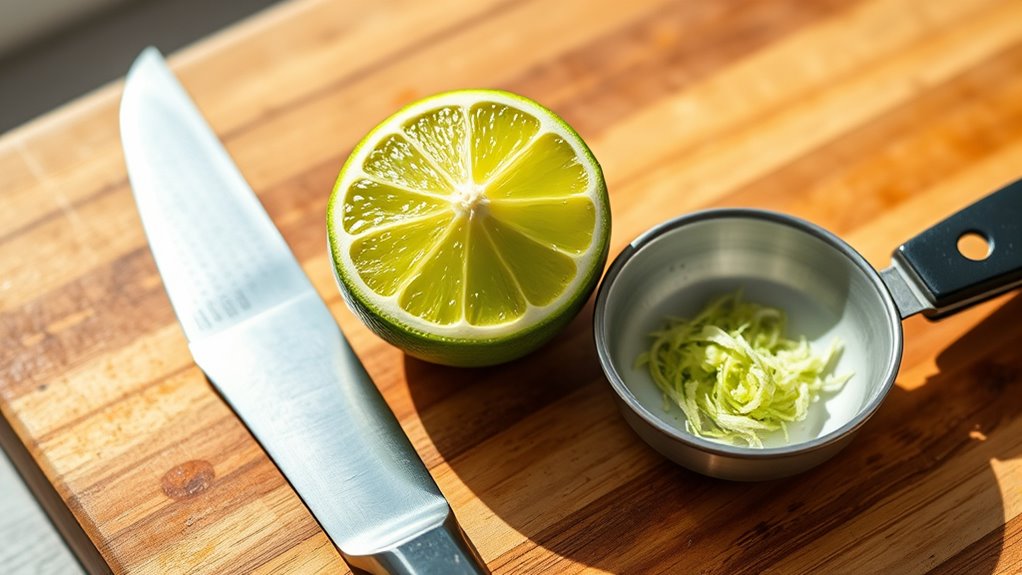
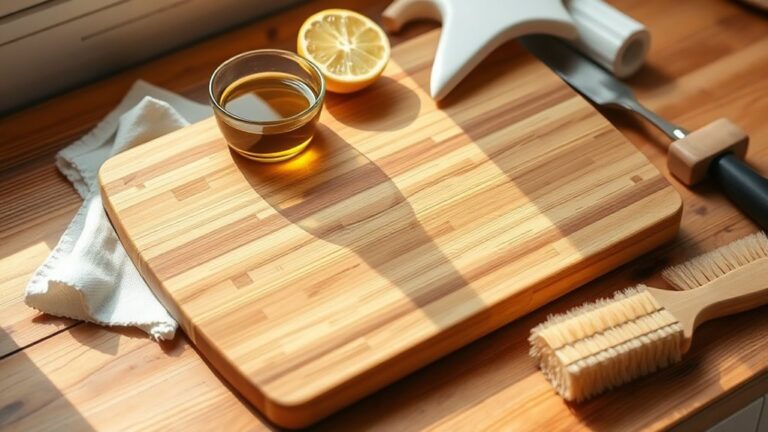
Before you start zesting a lime without a grater, gather a few simple kitchen tools that can do the job effectively. You’ll want a sharp paring knife, a vegetable peeler, or even a sharp vegetable knife. A microplane or zester is ideal but if you don’t have one, these alternatives work well.
A cutting board will provide a stable surface and a bowl to catch the zest keeps things tidy. Tweezers or the tip of a knife help remove any white pith or unwanted bits. Make sure your tools are clean and dry to maintain safety and hygiene.
Having these items ready assures a smooth zesting process without a grater, letting you extract flavorful lime zest quickly and easily.
Prepare the Lime for Easier Zesting and Better Flavor
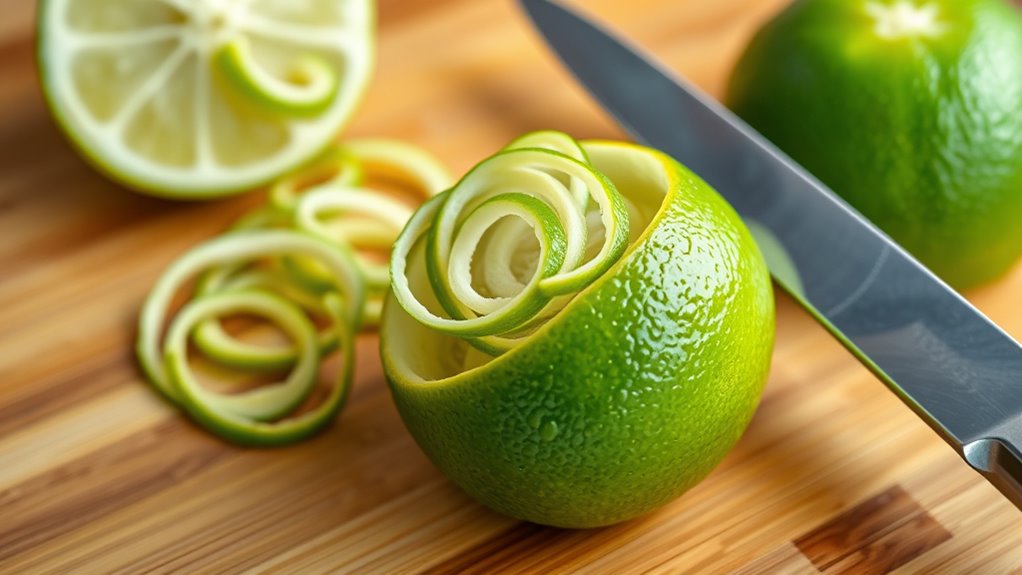
Start by picking ripe, firm limes to get the best zest. Make sure you wash and dry them thoroughly to remove any dirt or residue. To soften the skin and release more flavor, gently warm the lime before zesting.
Choose Ripe, Firm Limes
Although it might seem simple, choosing ripe, firm limes makes zesting much easier and guarantees you get the best flavor. When you pick limes, look for ones with smooth, taut skin. Avoid limes that feel soft or have wrinkles—that means they’re overripe or drying out, making zesting tougher and less flavorful.
A firm lime holds its shape better when you zest, so you avoid gouging into the bitter white pith beneath the skin. Also, ripe limes tend to have a brighter, more vibrant aroma, which translates into zest bursting with citrusy oils. When you select the right lime, you’ll get zest that’s easier to work with and enhances your dish perfectly.
Wash and Dry Thoroughly
Since zesting involves grating the lime’s outer skin, you’ll want to wash and dry it thoroughly to remove any dirt, pesticides, or residues that could affect the flavor or safety of your zest. Start by rinsing the lime under cool running water, using your hands or a soft brush to gently scrub its surface. This helps eliminate any unwanted particles clinging to the skin.
After washing, pat the lime dry with a clean towel or paper towel. Removing moisture is essential because a wet lime can be slippery and harder to handle, making zesting more challenging. Dry skin also ensures that your zest won’t clump or lose its texture when added to your dish.
Taking this simple step sets you up for a cleaner, more flavorful zest every time.
Soften Skin With Heat
Once your lime is clean and dry, warming it slightly will make zesting much easier. Heat softens the skin, releasing more oils and enhancing the flavor. You can do this by microwaving the lime for about 10 to 15 seconds.
Just place it on a microwave-safe plate and heat it briefly. Alternatively, roll the lime firmly under your palm on a countertop for a minute or two to break down the membranes inside. This gentle pressure also helps release the oils.
Avoid overheating; the lime should be warm, not hot. Softening the skin prepares the lime for zesting, making it easier to remove thin strips of zest without tearing. This simple step guarantees your zest packs maximum flavor for any recipe.
Use a Knife to Zest a Lime in Thin Strips
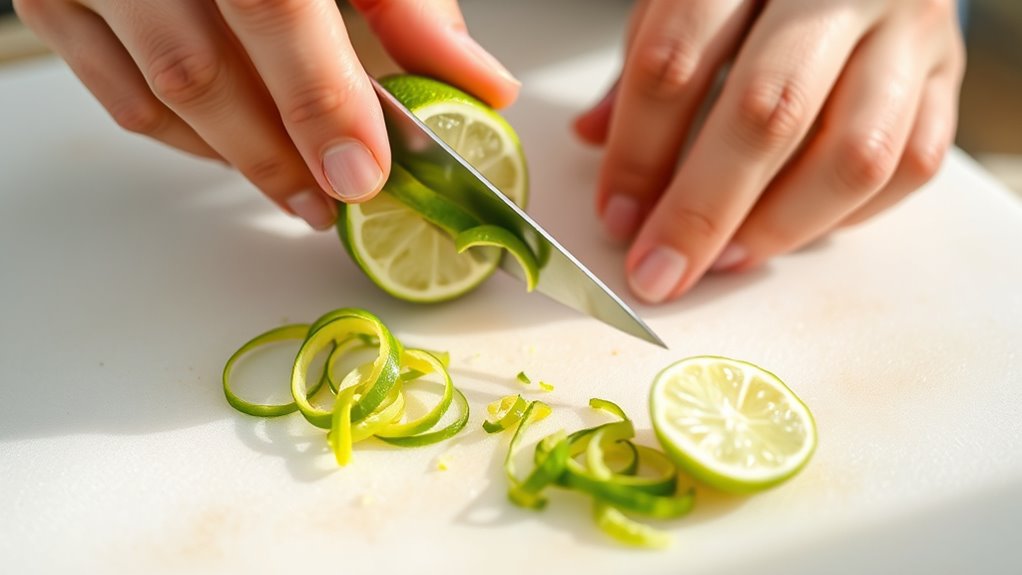
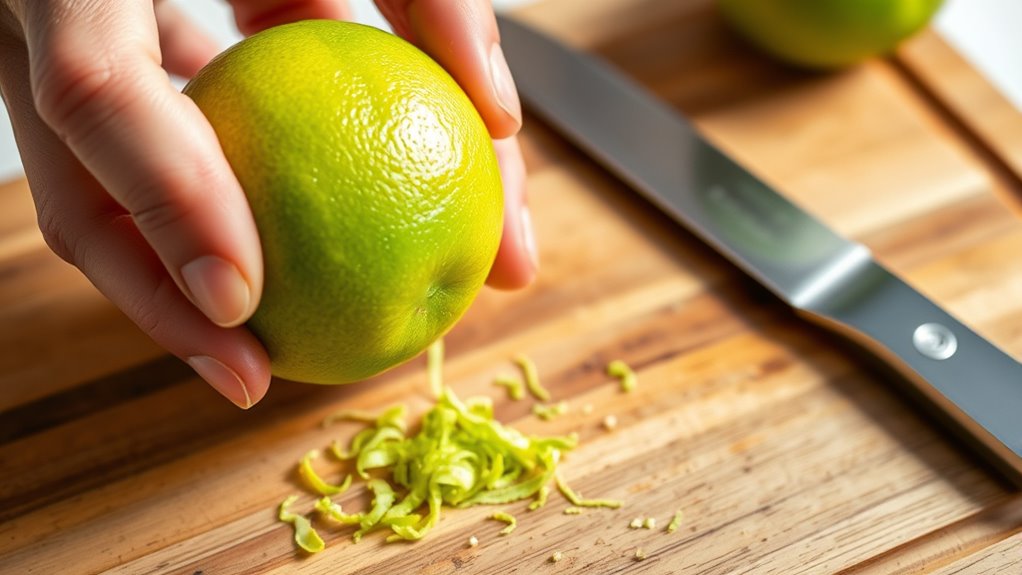
When you want to zest a lime in thin strips, a sharp knife is your best tool. First, wash and dry the lime to remove any residue. Hold the lime steady on a cutting board and carefully slice thin strips of just the green outer skin, avoiding the white pith underneath—it’s bitter.
Work slowly to get consistent, narrow strips. If the strips are too thick, they’ll be tough and less flavorful. Rotate the lime as you go to reach all sides evenly.
After collecting your strips, you can finely chop them if a finer zest is needed. This method gives you control over the size and shape of the zest, perfect for garnishes or recipes that call for larger lime zest pieces.
Use a Vegetable Peeler to Zest a Lime Without the Bitter Pith
You can use a vegetable peeler to remove the lime’s zest in wide, thin strips without grabbing the bitter white pith underneath. Hold the lime firmly and peel gently, applying just enough pressure to catch the colorful skin.
This technique keeps your zest flavorful and free from any unwanted bitterness.
Peeling Technique Tips
Although zesting a lime with a grater is common, using a vegetable peeler lets you avoid the bitter white pith beneath the skin. To get the best results, hold the lime firmly in one hand and the peeler in the other. Gently glide the peeler over the lime’s surface, applying just enough pressure to remove thin strips of zest.
Rotate the lime as you go, peeling small sections to maintain control and avoid cutting too deep. After peeling, lay the strips flat and use a sharp knife to finely chop them if needed. This method keeps the zest flavorful and bright without bitterness, making it perfect for recipes that highlight fresh lime taste.
Avoiding Bitter Pith
Since the white pith beneath a lime’s skin tastes bitter, it’s important to remove only the thin green zest layer. To do this without a grater, grab a vegetable peeler. Gently peel just the bright green skin, avoiding the white pith underneath.
You want thin strips of zest, not thick chunks. After peeling, lay the strips flat and carefully slice them into fine shreds with a sharp knife. This method keeps the zest flavorful and free of bitterness.
Using a peeler gives you more control than a grater, so you won’t accidentally scrape into the pith. With a little practice, you’ll get perfect zest every time—bright, fragrant, and perfectly balanced for your recipes.
Mince Lime Zest Finely Using a Cutting Board and Knife
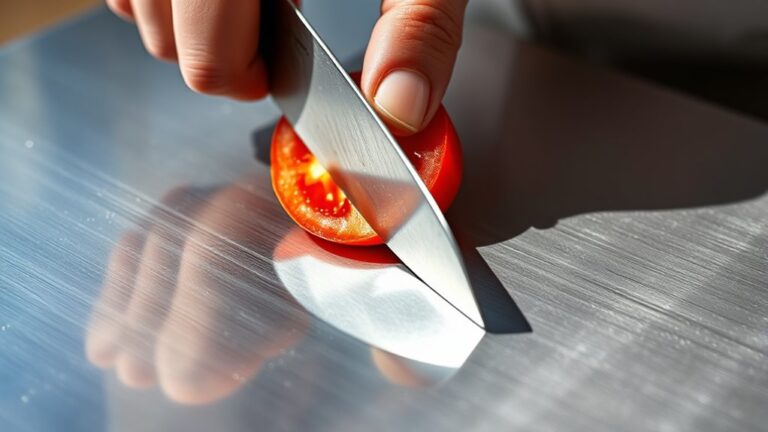
When you want to add a burst of lime flavor without large pieces, mincing the zest finely using a cutting board and knife is your best bet. First, use a sharp paring knife to carefully slice thin strips of zest from the lime, avoiding the bitter white pith underneath.
Gather these strips on your cutting board, then run your knife repeatedly over them, rocking the blade back and forth. Keep chopping until the zest is finely minced to your desired texture. This method gives you control over the size of the zest pieces and keeps the flavor fresh.
Plus, it’s perfect when you don’t have a grater handy. Just be sure to work slowly and carefully to avoid cutting into the pith or your fingers.
Rub Lime Zest on Dishes or Drinks to Add Fresh Flavor
If you want to instantly brighten up a dish or drink, rub lime zest directly onto it to release its vibrant oils and aroma. This simple step adds a lively, tangy punch that elevates flavors without overpowering them. Whether you’re preparing grilled fish, roasted vegetables, or a cocktail, gently rubbing the zest over the surface creates a lively citrus note.
For drinks, try rubbing zest along the rim of a glass to enhance each sip. You can also sprinkle the zest on salads, desserts, or even popcorn for a zesty twist. Just remember to use the zest sparingly—its concentrated oils pack a powerful flavor punch that enhances your dishes and drinks in a naturally invigorating way.
Store Leftover Lime Zest for Later Use
Though lime zest is best fresh, you can store leftover zest to keep its bright flavor handy for later. First, spread the zest out on a small plate or parchment paper and let it air dry for a few hours. Once dry, transfer it to an airtight container or a small glass jar.
Store it in a cool, dark place like your pantry to preserve the oils and aroma. If you want to keep it longer, place the sealed container in the freezer—this slows down flavor loss without affecting texture. When you’re ready to use it again, just take out the amount you need.
Frequently Asked Questions
Can I Zest a Lime Without Any Tools at All?
Yes, you can zest a lime without tools by carefully peeling thin strips of the skin with your fingernail or a knife. Just avoid the bitter white pith underneath, and chop the peel finely for zest-like flavor.
Is Lime Zest Healthier Than Lime Juice?
Lime zest is healthier than lime juice because it contains more fiber, essential oils, and antioxidants. You’ll get extra nutrients and flavor from the peel, while juice mainly offers vitamin C and hydration benefits.
How Long Does Lime Zest Retain Its Flavor?
Lime zest’s flavor dances brightly for about a week when fresh, like a fleeting sunset. If you stash it in the freezer, you’ll keep that vibrant spark for up to six months, preserving its zestful magic.
Can Lime Zest Be Frozen for Long-Term Storage?
Yes, you can freeze lime zest for long-term storage. Just store it in an airtight container or freezer bag, and it’ll keep its flavor for several months, letting you enjoy fresh zest anytime you want.
Are There Alternatives to Lime Zest in Recipes?
Yes, you can substitute lime zest with lemon zest, orange zest, or a splash of lime juice. These alternatives add similar citrusy brightness, but adjust the amount to suit your recipe’s flavor intensity and balance.
Conclusion
Now that you’ve mastered how to zest a lime without a grater, you’re ready to add that fresh zing to any dish or drink—like a culinary time traveler bringing zest from the future!
Remember, whether you use a knife or peeler, keep your zest thin and avoid the bitter pith. Don’t forget to store any leftovers properly, so you’re always prepared to brighten up your meals with just a sprinkle of lime magic.
With these simple techniques for how to zest a lime without a grater, you can easily enhance flavors and add vibrant zest to your recipes anytime. Enjoy the bright, tangy touch that fresh lime zest brings to your cooking and drinks!