How Do Pressure Cookers Work Step by Step
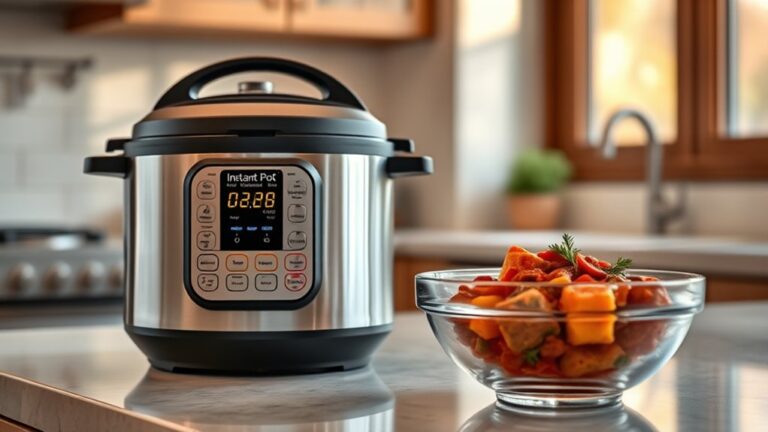
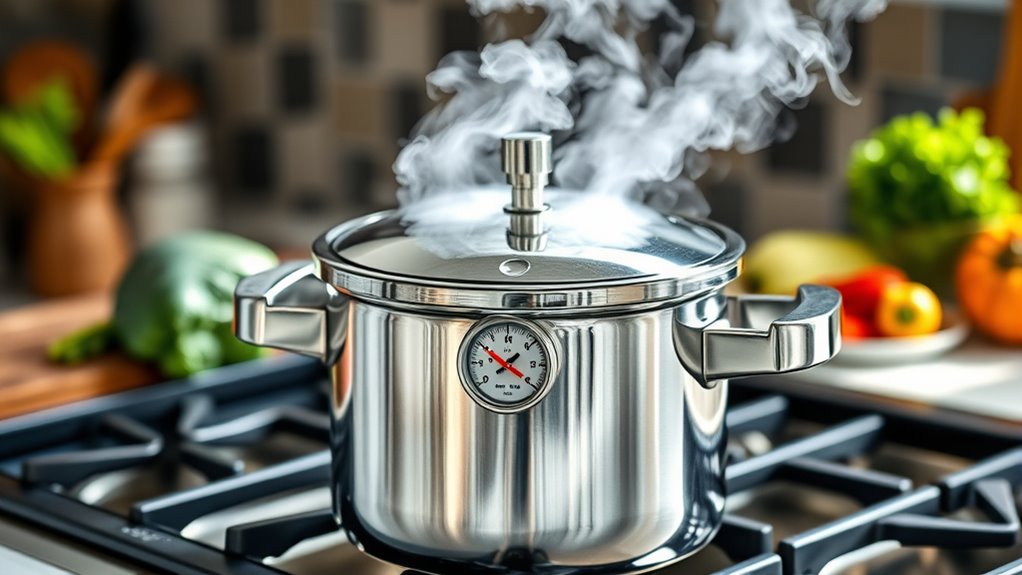
You start by adding ingredients and at least one cup of liquid into the pressure cooker, an essential kitchen tool that uses steam pressure to cook food quickly and efficiently.
Then, securely lock the lid in place to ensure no steam escapes during cooking.
As you heat it, the liquid turns to steam, trapping it inside and building pressure that raises the boiling point above 212°F.
This higher pressure cooks food faster by forcing heat deep into it.
Once done, you release the pressure safely before opening the lid.
Keep going to discover tips for perfect results and safety advice.
Key Takeaways
- Add ingredients with at least one cup of liquid to generate steam inside the sealed cooker.
- Securely lock the lid to ensure no steam escapes during cooking.
- Heat the cooker until the pressure indicator shows the desired pressure level.
- Cook for the recommended time, then release pressure naturally or using the quick-release method.
- Open the lid carefully only after confirming all pressure has been safely released.
How a Pressure Cooker Works
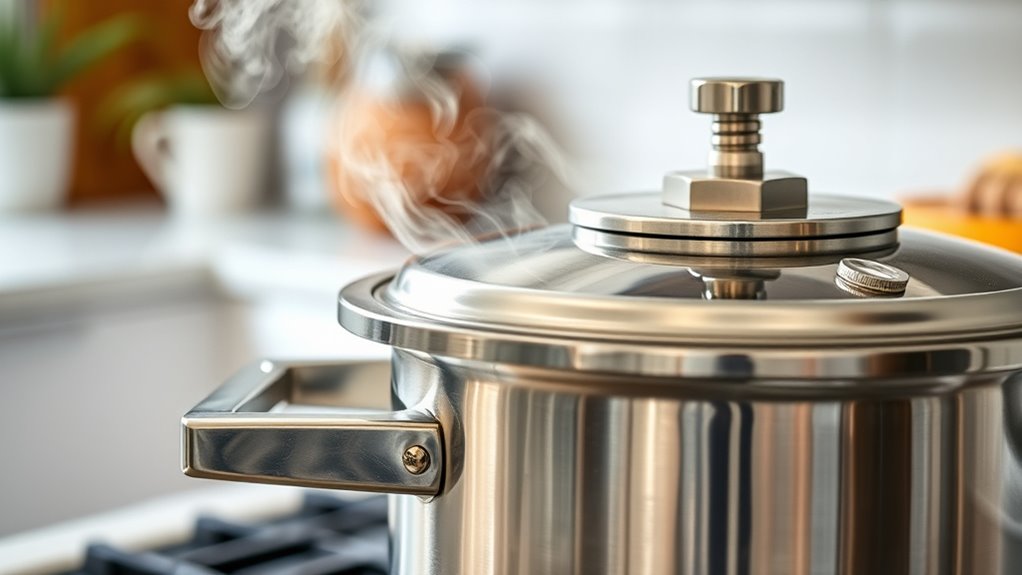
Although it might seem complicated, a pressure cooker works by trapping steam inside a sealed pot, which raises the internal pressure and temperature. When you place food and liquid inside, the lid locks securely, preventing steam from escaping. As the liquid heats up, it turns into steam, creating an environment where temperature exceeds the normal boiling point of water.
This higher temperature cooks your food faster and more efficiently. The sealed environment also helps retain moisture and flavors, making your meals tender and tasty. You don’t have to worry about constantly checking the pot since the pressure cooker maintains consistent heat and pressure.
This speeds up cooking times without sacrificing quality. It’s a smart, time-saving tool for any kitchen.
How Pressure Builds Up Inside the Cooker
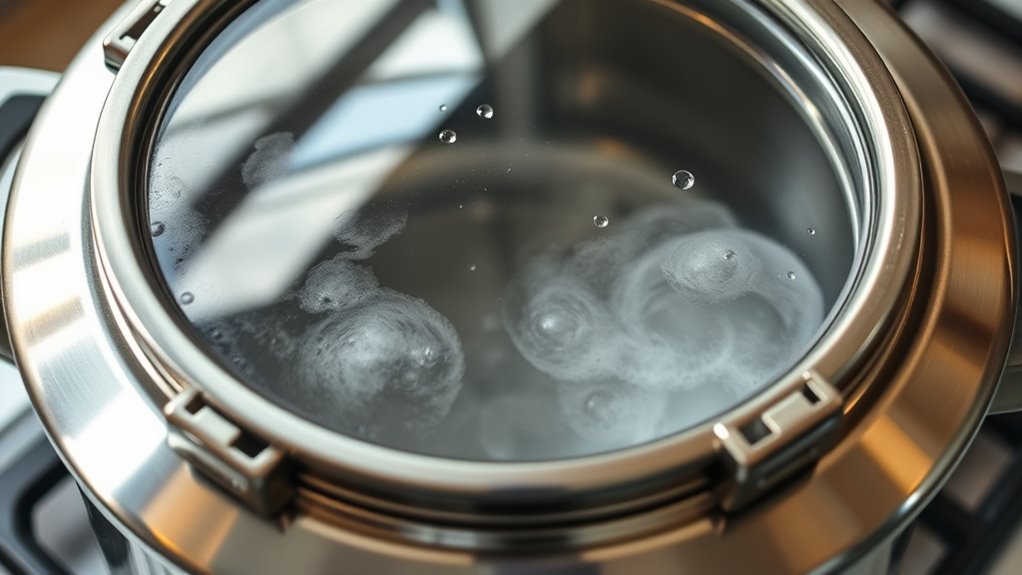
When you heat the liquid inside a pressure cooker, it quickly turns into steam, which has nowhere to escape because of the sealed lid. As steam builds up, it increases the pressure inside the cooker. This rising pressure raises the boiling point of the liquid, allowing the temperature inside to go beyond 212°F (100°C).
The higher temperature cooks food faster. The pressure forces steam and heat deep into the food, breaking down fibers and speeding up cooking. A pressure regulator on the lid maintains the desired pressure by releasing excess steam, preventing dangerous buildup.
You’ll notice the cooker’s weight or valve jiggle as it regulates pressure. This controlled steam pressure is the key to your pressure cooker’s efficiency and safety during cooking.
How to Cook With a Pressure Cooker, Step by Step

Before you start cooking, make sure your pressure cooker is clean and all parts, especially the gasket and pressure valve, are in good condition. This ensures proper sealing and safe operation.
Ensure your pressure cooker is clean and all parts are intact for safe, efficient cooking.
Here’s how to cook with it step by step:
- Add ingredients with the recommended amount of liquid—usually at least one cup—to create steam.
- Secure the lid tightly, aligning it correctly based on your model.
- Place the cooker on a heat source and turn it on. Wait until it reaches the desired pressure, indicated by the pressure valve or indicator.
- Once cooking time is complete, release the pressure either naturally or using the quick-release method, then carefully open the lid.
Following these steps helps you cook meals faster and efficiently with your pressure cooker.
How Pressure Cookers Keep You Safe
You might wonder how pressure cookers stay safe under high pressure. They use built-in safety valves, pressure release mechanisms, and durable locking systems to protect you.
Let’s look at how these features work together to keep you secure.
Built-In Safety Valves
Although pressure cookers operate under high pressure, built-in safety valves guarantee they stay secure and prevent accidents. These valves are your cooker’s first defense, managing pressure and avoiding dangerous buildups.
Here’s how they keep you safe:
- Primary Pressure Valve: Releases steam if pressure exceeds safe limits, preventing explosions.
- Safety Plug: Melts or deforms if the primary valve fails, allowing pressure to escape.
- Locking Mechanism: Stops the lid from opening when pressure is high, protecting you from burns.
- Backup Valve: Acts as an extra release point if the main valve clogs or malfunctions.
Together, these valves ensure your pressure cooker works reliably, giving you peace of mind while cooking.
Pressure Release Mechanisms
When pressure builds inside the cooker, pressure release mechanisms kick in to keep you safe. These systems prevent excessive pressure by allowing steam to escape once it reaches a certain limit. You’ll usually find a pressure regulator or vent pipe that releases excess vapor automatically.
Some models have a spring-loaded valve that opens to let out steam, reducing pressure quickly if it gets too high. Others use a weighted valve that jiggles, signaling steam release while maintaining ideal cooking pressure. By managing this balance, these mechanisms avoid dangerous pressure buildup, ensuring your cooker operates safely.
Understanding how these parts work helps you use your pressure cooker with confidence, knowing it’s designed to protect you from accidents caused by overpressure.
Durable Locking Systems
Pressure release mechanisms handle excess steam, but durable locking systems make sure the lid stays securely in place throughout cooking. These locking systems are essential for your safety, preventing the lid from opening under high pressure.
Here’s how they work:
- Interlocking Lid: The lid fits tightly and locks into the pot, creating an airtight seal.
- Pressure-Activated Lock: When pressure builds, a locking pin or mechanism engages automatically.
- Manual Locking Handle: You must turn or push a handle to secure or release the lid, ensuring it can’t open accidentally.
- Safety Indicators: Visual signals show when it’s safe to open the cooker.
These features keep the lid firmly shut, so you can cook without worrying about sudden steam bursts or accidents.
How to Release Pressure Safely and Quickly
When your cooking time ends, you need to release the pressure inside the cooker safely. You can let it release naturally by waiting for the pressure to drop on its own or speed things up using the quick release method.
Understanding when and how to use each technique helps you avoid accidents and keeps your food perfect.
Natural Pressure Release
Although it might take a bit longer, natural pressure release offers a safe and effective way to let steam escape from your pressure cooker without rushing the process. You simply allow the cooker to cool down gradually, letting the pressure drop on its own.
Here’s how to do it right:
1. Turn off the heat and leave the cooker undisturbed. 2. Wait 10 to 30 minutes, depending on the recipe and cooker size. 3. Check the pressure indicator to confirm it has fully dropped.
4. Open the lid carefully, tilting it away from your face to avoid any remaining steam.
This method preserves flavors and prevents food from overcooking, making it ideal for soups, stews, and delicate dishes.
Quick Pressure Release
If you need to release steam faster than waiting for the cooker to cool down naturally, quick pressure release offers a practical solution. To do this safely, first verify you’re wearing oven mitts or using a utensil to avoid burns. Then, carefully turn or lift the pressure release valve, depending on your cooker model, allowing steam to escape rapidly.
Keep your face and hands away from the vent, as the steam can cause serious burns. This method is ideal when recipes call for immediate pressure reduction to prevent overcooking. However, always follow your pressure cooker’s specific instructions, as some foods or models may not be suitable for quick release.
Using quick pressure release correctly ensures safety while saving you time in the kitchen.
Common Pressure Cooker Mistakes to Avoid
Using a pressure cooker can save you time and enhance flavors, but it’s easy to make mistakes that affect your results or safety. To get the most from your cooker, avoid these common errors:
- Overfilling the pot – Never fill beyond the maximum limit; steam needs room to build pressure safely.
- Ignoring sealing rings – Check and clean the rubber gasket regularly to ensure a tight seal.
- Forgetting liquid – Pressure cookers need sufficient liquid to generate steam; always add the recommended amount.
- Releasing pressure improperly – Follow the recipe’s instructions for quick or natural release to avoid accidents or undercooked food.
Why Higher Pressure in Pressure Cookers Cooks Food Faster
When you increase the pressure inside a pressure cooker, the boiling point of water rises above the usual 212°F (100°C). This means water stays liquid at higher temperatures, allowing your food to cook at a hotter temperature than it would on a stovetop. Because heat transfers more efficiently at these elevated temperatures, your food cooks faster.
The steam trapped inside builds pressure, which forces heat into the food more effectively, breaking down fibers and softening ingredients quickly. You don’t just speed up cooking; you also retain moisture and nutrients better.
Tips for Getting the Best Pressure Cooker Results Every Time
Understanding how pressure speeds up cooking is just the start. To get the best pressure cooker results every time, you need to follow a few key tips. First, always make certain you add enough liquid—pressure cookers rely on steam to build pressure.
Second, don’t overfill the cooker; leave space for steam to circulate. Third, use the right pressure setting for your recipe to avoid overcooking or undercooking. Fourth, allow natural pressure release when cooking delicate foods to maintain texture and flavor.
Frequently Asked Questions
Can I Use a Pressure Cooker on an Induction Stove?
Yes, you can use a pressure cooker on an induction stove as long as your cooker has a magnetic base.
Just make sure it’s compatible, and you’ll enjoy faster, energy-efficient cooking without any issues.
What Materials Are Pressure Cookers Typically Made From?
Pressure cookers are typically made from stainless steel or aluminum. You’ll find stainless steel models more durable and resistant to corrosion, while aluminum ones heat up faster but may wear out quicker over time.
How Do I Clean and Maintain My Pressure Cooker?
You clean your pressure cooker by washing the pot and lid with warm, soapy water, checking and cleaning the gasket and valves regularly. Don’t forget to dry all parts thoroughly and replace the gasket if it’s cracked or worn.
Are Electric and Stovetop Pressure Cookers Different?
Yes, electric and stovetop pressure cookers differ. You’ll find electric ones have built-in controls and timers, making them easier to use.
Stovetop models heat faster and offer more manual control but need closer monitoring.
Can Pressure Cookers Be Used for Canning Food?
Yes, you can use pressure cookers for canning, but only for high-acid foods or small batches.
For low-acid foods, you’ll need a pressure canner specifically designed to reach higher pressures safely.
Conclusion
Now that you know how a pressure cooker works, you’re ready to unleash its magic in your kitchen. Just like a well-tuned orchestra, every step—from building pressure to releasing it safely—plays a part in creating delicious meals faster.
Avoid common mistakes, follow safety tips, and you’ll turn this powerful tool into your best cooking companion. So, go ahead, press on, and let your pressure cooker do the heavy lifting!
By understanding how pressure cookers work step by step, you can maximize efficiency and safety. Embrace this kitchen essential for quicker cooking and tastier results every time.