
Can You Use Metal Utensils on Stainless Steel
You can use metal utensils on stainless steel cookware without worry, as they usually cause only minor, superficial scratches that don’t impact cooking performance. Stainless steel is known for its durability and resistance to damage, making it a popular choice for cookware.
Using metal utensils on stainless steel pots and pans is generally safe and won’t compromise their functionality. Just be gentle—avoid aggressive scraping or sharp edges to keep scratches minimal and preserve your cookware’s look.
Metal tools are durable and safe for daily use, especially on high-quality stainless steel. If you want to keep your pots and pans in great shape and learn how to care for them best, there’s more helpful info ahead.
Key Takeaways
- Metal utensils can be safely used on stainless steel cookware as they cause only minor, superficial scratches without affecting performance.
- Stainless steel’s hardness generally exceeds that of common metal utensils, limiting scratch severity to shallow surface marks.
- Avoid aggressive scraping or using sharp-edged metal utensils to minimize the risk of deeper scratches and surface damage.
- Using smooth-edged metal utensils and gentle handling preserves the cookware’s appearance and extends its lifespan.
- For better surface protection, consider alternatives like wooden, silicone, or nylon utensils, especially for delicate finishes.
Can You Use Metal Utensils on Stainless Steel Cookware?
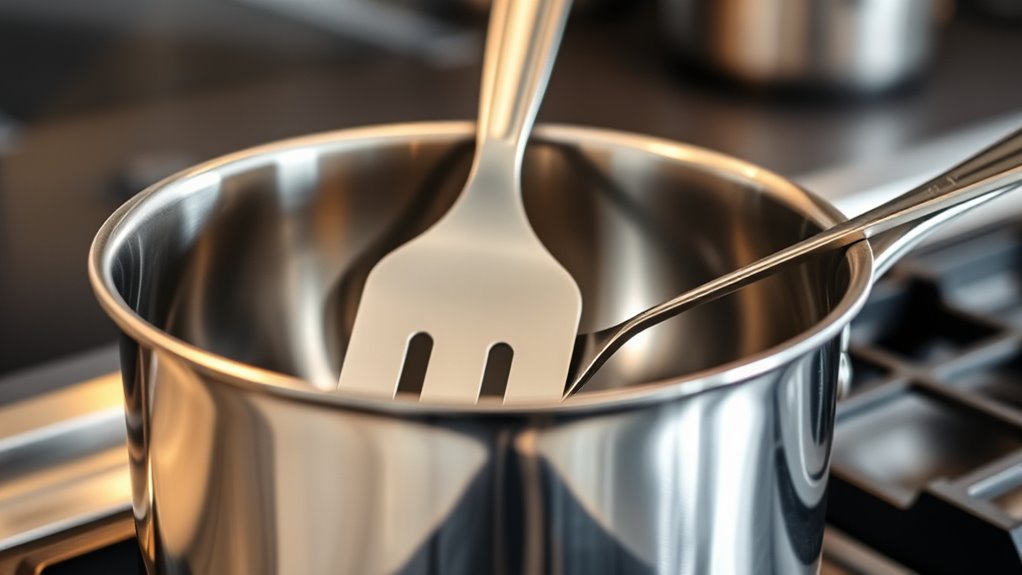
Although metal utensils can scratch stainless steel cookware, you can still use them carefully without damaging your pots and pans. When you handle your stainless steel cookware, using metal tools won’t necessarily ruin them if you’re gentle. It’s all about how you interact with the surface—avoid scraping aggressively or applying excessive force.
Using metal spoons or spatulas for stirring or flipping is perfectly fine as long as you’re mindful. Stainless steel is durable and designed for everyday cooking, so it can handle metal utensils better than non-stick coatings. Just remember to avoid dragging metal tools harshly across the surface.
If you do, you’ll maintain the cookware’s functionality and appearance, letting you enjoy your kitchen gear for years.
Do Metal Utensils Scratch Stainless Steel?

You might wonder if using metal utensils will scratch your stainless steel cookware. Stainless steel is quite scratch-resistant, but factors like the utensil’s hardness and how you use it can cause surface damage.
Understanding these details helps you protect your cookware while cooking.
Scratch Resistance of Stainless Steel
When you use metal utensils on stainless steel, you might notice some fine scratches appearing over time. Stainless steel is known for its durability and resistance, but it isn’t completely impervious to scratching. The metal’s hardness plays a vital role in how well it resists marks from utensils.
Here’s a quick look at how stainless steel compares in hardness and scratch resistance:
| Material | Mohs Hardness Rating |
|---|---|
| Stainless Steel | 5.5 – 6.3 |
| Steel Utensils | ~4.5 – 5.5 |
| Aluminum Utensils | 2.5 – 3 |
| Plastic Utensils | 2 – 3 |
| Wood Utensils | 2 – 3 |
Since stainless steel rates higher than most utensil metals, scratches tend to be minor and superficial.
Factors Influencing Surface Damage
The hardness of stainless steel gives it good resistance against scratches from metal utensils, but several factors can still influence surface damage. How you use your utensils matters—a heavy hand or aggressive scraping increases the risk of scratches. The type of metal used in the utensil also plays a role; harder metals like cast iron or certain knives can leave marks more easily.
Additionally, the finish of the stainless steel surface affects its vulnerability—brushed finishes may hide scratches better than polished ones, but they can still be damaged. Finally, accumulated dirt or food particles trapped between the utensil and surface act like abrasives, worsening scratches. Being mindful of these factors helps you maintain your stainless steel’s appearance longer.
Common Metal Utensils and Their Impact

How do common metal utensils affect your stainless steel cookware? When you use utensils like stainless steel spoons, forks, or spatulas, they can create minor scratches on the surface. While these scratches usually don’t compromise the cookware’s performance, they might dull its shiny finish over time.
Metal tongs and whisks can also leave marks, especially if you apply a lot of pressure. On the other hand, copper or aluminum utensils can be softer and may cause less visible damage but aren’t as commonly used. You might also notice some discoloration or slight abrasion when scraping stubborn food with sharp-edged utensils.
Understanding how typical metal tools interact with your cookware helps you maintain its appearance without sacrificing functionality.
When Is It Safe to Use Metal Utensils?
You can still use metal utensils on stainless steel cookware without causing significant damage if you know when and how to do it properly.
It’s safe when your cookware is of high quality and well-maintained, as these resist scratches better. Avoid scraping aggressively or using sharp edges that can leave marks.
Using metal utensils for stirring or flipping gently is usually fine.
| Situation | Utensil Use | Tips |
|---|---|---|
| Cooking on medium heat | Metal spatula | Avoid scraping harshly |
| Stirring thick sauces | Metal spoon | Use gentle motions |
| Flipping meats | Metal tongs | Don’t force utensil edges |
Metal vs. Silicone and Wood Utensils: Which Is Best?
You might wonder which utensil type holds up best over time without damaging your stainless steel cookware. Metal utensils are tough but can scratch surfaces, while silicone and wood offer gentler options with varying heat resistance.
Let’s compare their durability, impact on your pots, and how they handle high temperatures.
Durability Comparison
Although metal utensils boast impressive strength and longevity, silicone and wood offer unique advantages that might better suit your cooking style. Metal utensils can endure high heat without melting or warping, making them a reliable choice for heavy-duty tasks. However, silicone and wood provide flexibility and gentleness, which can be beneficial depending on the cookware and food you handle.
Here’s how they compare:
- Metal: Extremely durable, resists bending, perfect for tough stirring and scraping.
- Silicone: Heat-resistant to a point, won’t scratch cookware, but may degrade over time.
- Wood: Naturally sturdy, gentle on cookware, but can crack or absorb odors if not cared for.
- Maintenance: Metal is low maintenance; silicone and wood require more care to last.
Surface Safety Impact
When cooking with stainless steel, choosing the right utensil can markedly affect the surface’s condition over time. Metal utensils may cause scratches, dulling the finish, while silicone and wood tend to be gentler, preserving the cookware’s look and lifespan.
You’ll want to balance durability with how much wear you’re willing to accept.
| Utensil Type | Surface Impact |
|---|---|
| Metal | Can scratch and dull surface |
| Silicone | Gentle, minimal surface wear |
| Wood | Mild impact, may absorb moisture |
| Plastic | Low impact but less durable |
Using silicone or wood helps maintain your cookware’s smooth finish, while metal should be used carefully to avoid visible marks.
Heat Resistance Levels
Because heat resistance directly affects how utensils perform during cooking, understanding the differences between metal, silicone, and wood is essential. Metal utensils can handle extreme heat without melting or deforming, making them ideal for high-temperature cooking. Silicone offers excellent heat resistance too, but it can soften or degrade if exposed to very high temperatures for prolonged periods.
Wood, while natural and gentle on cookware, has the lowest heat resistance and may char or crack under intense heat.
Consider these heat resistance levels:
- Metal: Withstands up to 1500°F (815°C), perfect for searing and frying.
- Silicone: Safe up to 600°F (315°C), great for baking and stovetop use.
- Wood: Tolerates about 400°F (204°C), best for low to medium heat.
- Impact: Choose utensils matching your cooking temperature to avoid damage.
How Metal Utensil Scratches Affect Performance
If you use metal utensils on stainless steel cookware, you might notice scratches appearing over time. These scratches don’t usually impact the cookware’s performance substantially. Stainless steel is durable and maintains even heat distribution despite surface marks.
However, deep scratches can create tiny grooves where food particles cling, making cleaning a bit harder. Over time, these grooves might also affect the cookware’s non-stick qualities if it has a polished surface. While scratches don’t cause warping or uneven cooking, they can compromise the cookware’s aesthetic appeal.
You won’t likely see a drop in cooking efficiency, but the surface will look worn sooner than if you avoided metal utensils. So, while performance stays mostly intact, scratches do influence maintenance and appearance.
Tips to Prevent Damage When Using Metal Utensils
Scratches on stainless steel cookware may not ruin its performance, but you’ll want to minimize them to keep your pots and pans looking their best and easier to clean. To protect your cookware while still using metal utensils, consider these tips:
- Use gentle scraping motions instead of aggressive scraping to avoid deep scratches.
- Choose utensils with smooth edges to reduce the risk of gouging the surface.
- Avoid dragging metal utensils across the bottom; lift and place them instead.
- Store your cookware properly, stacking with protective layers like cloth or paper towels between pieces.
How to Remove Scratches From Stainless Steel Cookware
You’ll first want to identify whether the scratches on your stainless steel cookware are surface-level or deeper. Once you know the type, you can choose the most effective method to remove them, like using a non-abrasive cleaner or a polishing compound.
Taking the right approach will help restore your cookware’s smooth finish without causing more damage.
Identifying Scratch Types
When dealing with stainless steel cookware, understanding the types of scratches is key to restoring its shine. Not all scratches are the same, and identifying them helps you decide the best approach for care or repair. You’ll generally encounter:
- Light surface scratches: These are shallow marks that usually don’t penetrate the finish.
- Fine hairline scratches: Thin, barely visible lines often caused by abrasive cleaning tools.
- Deep gouges: Noticeable indentations or cuts that may require professional attention.
- Discoloration scratches: Marks that alter the color or texture, sometimes from chemical reactions.
Recognizing these scratch types allows you to target the right treatment and maintain your cookware’s durability. Before jumping into removal, take a close look under good lighting to categorize the damage properly.
Effective Scratch Removal Methods
Knowing the type of scratch you’re dealing with makes it easier to choose the right removal method. For light surface scratches, use a non-abrasive cleaner or a baking soda paste—just mix baking soda with water, apply it, and gently rub with a soft cloth.
For deeper scratches, try a stainless steel scratch remover or a fine-grade abrasive pad designed for cookware. Always rub in the direction of the grain to avoid making the scratch worse. After treating scratches, rinse and dry your cookware thoroughly to prevent water spots.
For stubborn scratches, you might need to repeat the process or consult a professional. Regular maintenance and careful utensil use can minimize scratches and keep your stainless steel looking great.
Caring for Stainless Steel Cookware With Metal Utensils
Although metal utensils can be tough on some cookware, stainless steel stands up well to their use if you handle it properly. To keep your cookware in great shape, you need to be mindful and gentle. Avoid scraping too hard or using excessive force, which can cause unnecessary marks.
Clean your cookware promptly after use to prevent buildup that can scratch the surface during washing.
Here are some tips to care for your stainless steel cookware when using metal utensils:
- Use smooth, controlled motions instead of aggressive scraping
- Avoid dragging utensils across the surface repeatedly
- Hand wash with a non-abrasive sponge and mild detergent
- Dry immediately to prevent water spots and maintain shine
When to Avoid Metal Utensils and Choose Alternatives
Since metal utensils can sometimes damage your cookware, you should choose alternatives in certain situations to protect your stainless steel. Avoid metal tools when cooking acidic foods like tomatoes or citrus, as scratching the surface can lead to corrosion or discoloration.
Also, skip metal utensils on non-stick coated stainless steel pans to prevent peeling or chipping. If your cookware has a polished or brushed finish, metal can cause unsightly scratches, so opt for wooden, silicone, or nylon utensils instead.
When stirring delicate sauces or scraping the pan, softer tools help preserve both the appearance and performance of your cookware. By using gentle alternatives in these cases, you’ll extend your stainless steel’s lifespan and keep it looking great without sacrificing cooking efficiency.
Frequently Asked Questions
Can Metal Utensils Cause Rust on Stainless Steel Cookware?
No, metal utensils won’t cause rust on stainless steel cookware because stainless steel resists corrosion. However, they can scratch the surface, so you might want to use gentler tools to keep your cookware looking new longer.
Are Metal Utensils Safe for Stainless Steel Kitchen Sinks?
Yes, you can use metal utensils on stainless steel kitchen sinks safely. Just avoid heavy scraping or dropping sharp tools, which might cause scratches or dull the finish.
Regular cleaning helps keep your sink looking great.
Do Metal Utensils Affect the Taste of Food Cooked in Stainless Steel?
When it comes to taste, metal utensils won’t rock the boat with stainless steel cookware. You won’t notice any flavor changes because stainless steel is non-reactive, so your food stays true to its natural taste every time.
Can Metal Utensils Damage Stainless Steel Appliances?
Yes, metal utensils can scratch stainless steel appliances, causing surface damage over time.
You should use silicone, wood, or plastic utensils to keep your appliances looking new and avoid potential corrosion or stains from scratched surfaces.
How Do Metal Utensils Impact Stainless Steel Bakeware?
Metal utensils can scratch your stainless steel bakeware, dulling its finish over time. You’ll want to use silicone, wooden, or plastic tools to keep it looking new and prevent any surface damage during cooking or baking.
Conclusion
Using metal utensils on stainless steel cookware isn’t the forbidden fruit, but you do need to tread carefully. Like a skilled dancer, you can glide metal tools across your pans without causing harm—if you know when and how.
Just remember, gentle use and proper care keep your cookware shining like new. So, go ahead and wield those utensils wisely, and your stainless steel will thank you with lasting performance and beauty.
In conclusion, using metal utensils on stainless steel is safe when done carefully. Proper handling ensures durability and maintains the cookware’s appearance over time.