How a Food Handler Uses Two Different Cutting Boards Properly
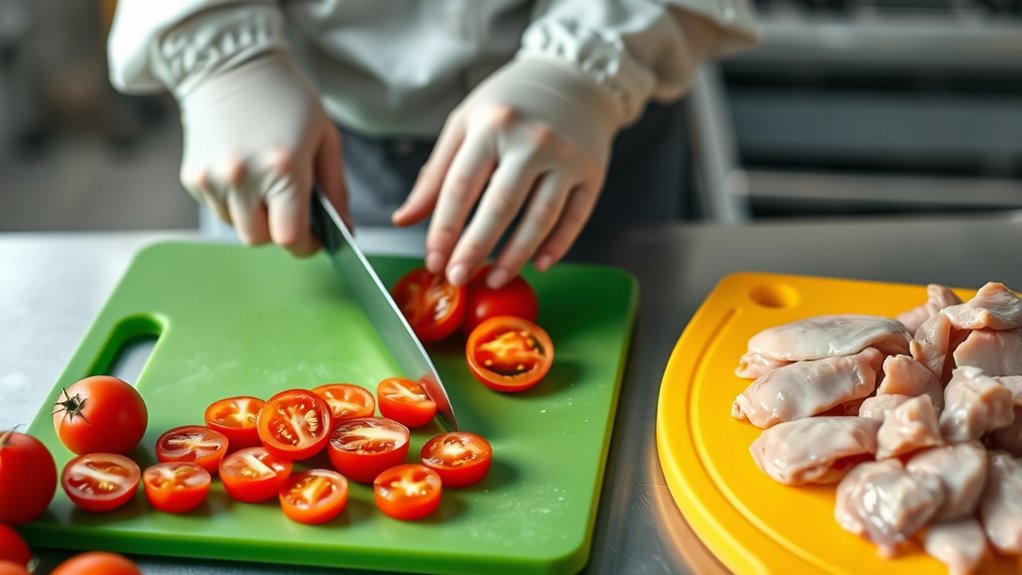
Using two different cutting boards properly is essential for food handlers to prevent cross-contamination and ensure food safety. Assign one board specifically for raw meats—preferably made of plastic or polyethylene—and use another for produce, such as wood or bamboo. This simple practice helps maintain hygiene and reduces the risk of harmful bacteria transferring between foods.
Always keep the cutting boards clean by washing them with hot, soapy water after each use. Sanitize the boards thoroughly to kill any lingering germs.
Store them separately in a dry, ventilated area to prevent moisture buildup and bacterial growth.
Avoid mixing the boards during food preparation to maintain safe practices. Regularly inspect both cutting boards for cracks or damage that can harbor bacteria.
Following these habits guarantees food safety and hygiene in your kitchen. Explore further to master safe cutting board practices and protect your health.
Key Takeaways
- Use one cutting board exclusively for raw meats and a separate one for fruits, vegetables, or cooked foods to prevent cross-contamination.
- Utilize color-coded cutting boards to easily differentiate food types and reinforce proper usage among staff.
- Place cutting boards on stable, clean surfaces to avoid slipping and maintain safe handling during food preparation.
- Thoroughly wash and sanitize each cutting board after use with hot, soapy water and approved sanitizers.
- Store cutting boards separately, preferably vertically in designated clean, dry areas to prevent contact and contamination.
Choosing the Right Cutting Boards for Meat and Produce
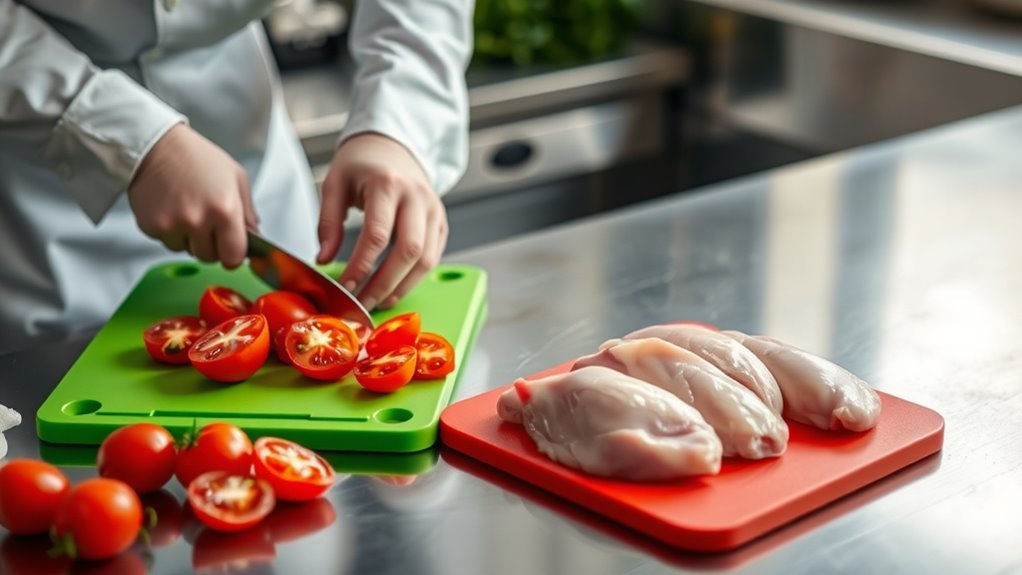
When you choose cutting boards for meat and produce, it’s important to pick materials that prevent cross-contamination and withstand frequent cleaning. Opt for non-porous surfaces like plastic or polyethylene for meat since they resist bacteria absorption and are dishwasher safe. For produce, wood or bamboo boards work well because they’re gentle on knives and naturally antimicrobial.
Avoid boards with deep grooves or cracks where bacteria can hide. Make sure each board is sturdy and large enough for your tasks without overcrowding. Also, consider color-coded boards to help you quickly identify which one is for meat and which is for produce.
Why Using Two Cutting Boards Matters for Food Safety
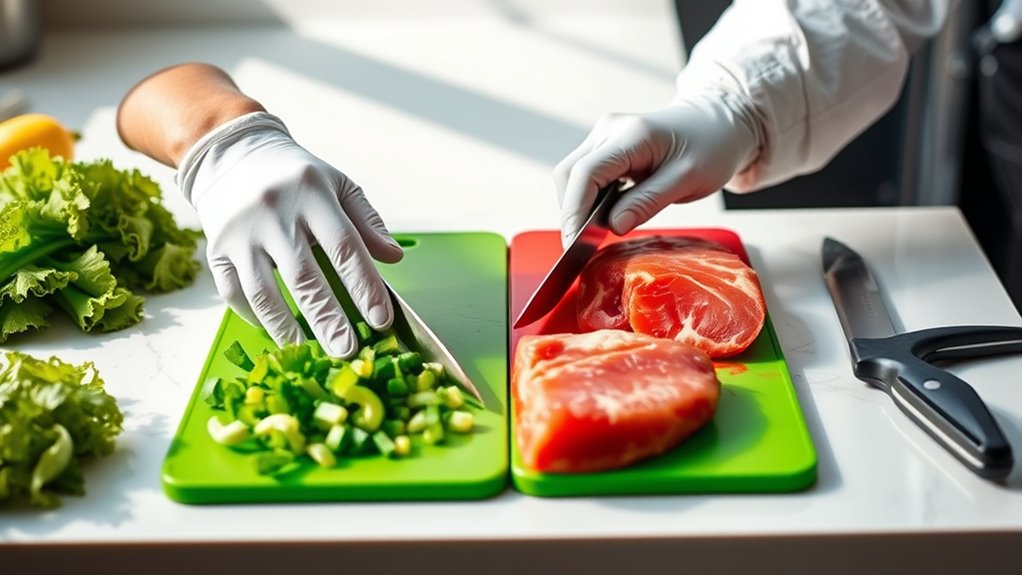
You can stop cross contamination by using two cutting boards—one for raw meat and another for fruits and veggies. This simple step helps keep your food hygienic and reduces the risk of foodborne illness.
Plus, it makes your kitchen safer and easier to manage.
Preventing Cross Contamination
Because raw meats often carry harmful bacteria, using separate cutting boards for different food types is essential to prevent cross contamination. When you switch between raw meat and other foods on the same board, you risk spreading bacteria that can cause foodborne illnesses.
To keep your kitchen safe, follow these tips:
- Use one cutting board exclusively for raw meats.
- Designate another board for fruits, vegetables, and cooked foods.
- Clean and sanitize boards thoroughly after each use.
- Store cutting boards separately to avoid contact.
- Replace boards that develop deep grooves where bacteria can hide.
Maintaining Food Hygiene
Keeping raw meats and other foods on separate cutting boards not only helps prevent cross contamination but also plays a major role in maintaining overall food hygiene. When you use one board for raw meat and another for vegetables or cooked foods, you reduce the risk of harmful bacteria spreading. This simple habit keeps your kitchen cleaner and your meals safer.
| Cutting Board Use | Food Hygiene Benefit |
|---|---|
| Raw meat board | Prevents bacteria transfer |
| Vegetable board | Avoids contamination from meat |
| Regular cleaning | Removes lingering bacteria |
| Designated use | Ensures consistent hygiene habits |
Enhancing Kitchen Safety
Although it might seem simpler to use just one cutting board, using two considerably reduces the risk of cross-contamination and foodborne illnesses. When you separate raw meats from fruits, vegetables, or cooked foods, you create a safer kitchen environment. This practice prevents harmful bacteria from transferring between foods, protecting you and anyone eating your meals.
To enhance kitchen safety, remember to:
- Designate one board for raw proteins and another for produce
- Clean and sanitize boards thoroughly after each use
- Replace cutting boards that have deep grooves or cracks
- Use color-coded boards to avoid confusion
- Store boards separately to keep them dry and bacteria-free
How to Clean and Sanitize Cutting Boards for Food Safety
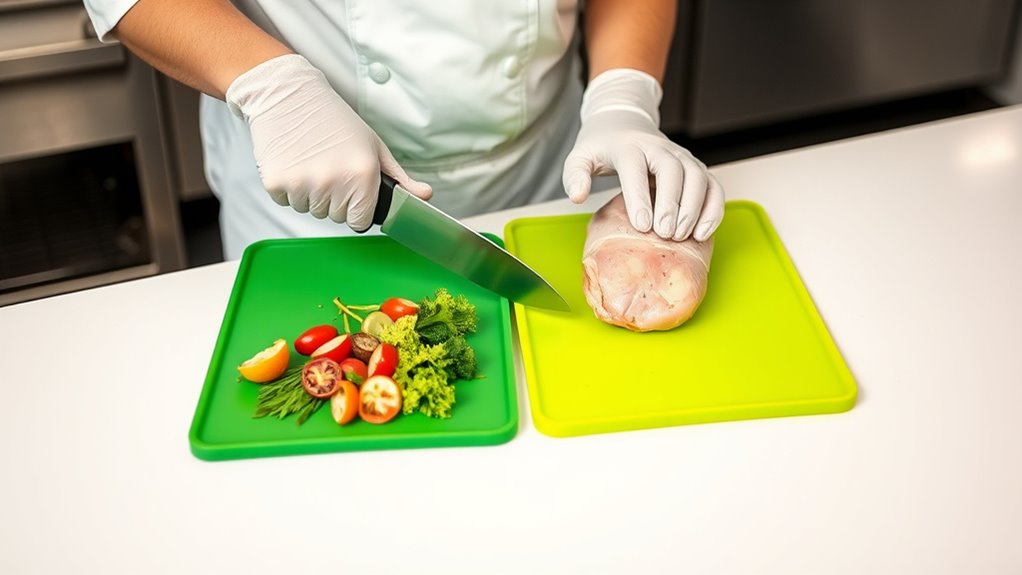
To prevent cross-contamination and foodborne illnesses, you need to clean and sanitize your cutting boards thoroughly after each use. First, scrape off any food debris, then wash the board with hot, soapy water. Use a scrub brush or sponge to remove all residues.
Rinse well and dry with a clean towel or air dry. To sanitize, apply a solution of one tablespoon of unscented liquid chlorine bleach per gallon of water. Let the solution sit on the board for a few minutes, then rinse thoroughly with clean water.
For wooden boards, avoid soaking to prevent warping. Regularly inspect your boards for deep grooves or cracks, as these can harbor bacteria. Replace cutting boards when they become excessively worn to maintain food safety.
How to Store Cutting Boards to Prevent Cross-Contamination
You should separate cutting boards by type to keep raw and cooked foods apart. Store them vertically to allow air circulation and prevent moisture buildup. Always clean and dry your boards before putting them away to stop bacteria from spreading.
Separate Boards By Type
How can you prevent cross-contamination when storing cutting boards? The key is to separate boards by type, so raw meat, vegetables, and cooked foods never mix. This simple step keeps harmful bacteria from spreading.
Here’s how you can do it effectively:
- Assign distinct boards for raw meat, poultry, seafood, and produce.
- Use color-coded boards to easily identify each type.
- Label boards clearly to remind everyone of their purpose.
- Store boards separately in clean, designated areas.
- Clean and dry boards thoroughly before putting them away.
Use Vertical Storage
Although separating cutting boards by type reduces cross-contamination, storing them properly is just as essential. You should store your cutting boards vertically, not flat. Vertical storage allows air to circulate around each board, helping them dry faster and preventing moisture buildup that encourages bacteria growth.
Use a rack or holder designed for vertical storage to keep boards upright and separated. This setup also prevents boards from touching, which reduces the chance of cross-contamination between raw and cooked food surfaces. Make sure the storage area is clean, dry, and away from any potential contaminants.
Clean Before Storing
Before storing cutting boards, always clean them thoroughly to prevent cross-contamination. You want to remove all food residues and bacteria that could transfer to other foods later. Start by scrubbing with hot, soapy water, then rinse well.
For extra safety, sanitize the boards using a solution of one tablespoon of bleach per gallon of water or a commercial sanitizer. Dry the boards completely before storing to avoid bacterial growth. Store your cutting boards properly to keep them safe and ready for use.
- Wash immediately after use with hot, soapy water
- Sanitize regularly to kill lingering germs
- Air dry completely before storing
- Store vertically to allow airflow and prevent moisture buildup
- Separate boards by type (e.g., raw meat vs. vegetables) to avoid cross-contact
Best Practices for Handling Cutting Boards During Food Prep
When you handle cutting boards during food prep, maintaining cleanliness and preventing cross-contamination are essential. Always use separate boards for raw meats and ready-to-eat foods like vegetables or bread. Place your cutting board on a stable surface to avoid slipping, which reduces accidents.
After cutting raw meat, wash the board thoroughly with hot, soapy water before using it for other ingredients. Avoid soaking wooden boards for long periods, as this can cause warping. Use a sanitizer or a diluted bleach solution to disinfect boards regularly.
Store cutting boards upright or in a way that allows them to dry completely, preventing bacterial growth. By following these practices, you guarantee food safety and maintain the longevity of your cutting boards during every prep session.
How to Train Staff to Use Two Different Cutting Boards
To guarantee food safety, you need to clearly teach your staff how to use two different cutting boards—one for raw meats and another for ready-to-eat foods. Start by explaining the importance of preventing cross-contamination and the health risks involved. Then, provide hands-on demonstrations showing the correct use and cleaning procedures for each board.
Reinforce training with clear labeling and color-coding systems.
Here’s how to train your staff effectively:
- Use color-coded boards and ensure everyone knows their purpose.
- Demonstrate proper cleaning and sanitizing after each use.
- Create simple, visible signage near prep stations.
- Conduct regular refresher sessions to maintain standards.
- Monitor and provide feedback to reinforce correct practices.
This approach helps keep food prep safe and consistent.
Common Mistakes Food Handlers Make With Cutting Boards
Although cutting boards seem straightforward, food handlers often make mistakes that compromise food safety. One common error is using the same cutting board for raw meat and ready-to-eat foods without proper cleaning in between. This cross-contamination can spread harmful bacteria.
You might also forget to sanitize cutting boards after each use, especially when switching between different food types. Another mistake is ignoring color-coded boards or mixing them up, which defeats their purpose. Using damaged or deeply scored cutting boards can harbor bacteria in grooves and is another risk many overlook.
When and How to Replace Damaged Cutting Boards
Since cutting boards endure constant use, you’ll need to replace them once they show significant damage like deep grooves or cracks where bacteria can hide. Ignoring these signs risks cross-contamination and foodborne illness. To know when and how to replace your cutting boards, watch for these indicators:
- Deep scratches or gouges that can’t be smoothed out
- Cracks or splits that compromise the board’s integrity
- Warping or excessive wear causing uneven surfaces
- Persistent stains or odors after thorough cleaning
- Boards that absorb moisture, becoming swollen or soft
When replacing, choose non-porous materials like plastic or hard maple for durability and hygiene. Always clean new boards before use. By staying vigilant, you’ll keep your kitchen safe and efficient.
Frequently Asked Questions
What Types of Knives Work Best With Different Cutting Boards?
You’ll want to use sharp chef’s knives on wooden boards for precision chopping, while serrated knives work well on plastic boards to prevent slipping. Avoid using heavy cleavers on plastic to keep both knife and board intact.
Can Plastic and Wooden Cutting Boards Be Used Interchangeably?
You can’t mix plastic and wooden cutting boards like apples and oranges. Each has its place: use plastic for raw meats to avoid bacteria, and wooden boards for veggies or bread to keep flavors pure and safe.
How Does Cutting Board Color Coding Help in Food Prep?
Cutting board color coding helps you prevent cross-contamination by designating specific boards for different food types. This way, you keep raw meats separate from veggies, ensuring safer, more hygienic food preparation every time.
Are There Health Risks With Using Bamboo Cutting Boards?
Yes, bamboo cutting boards can harbor bacteria if not cleaned properly because they’re porous. You should wash them thoroughly, dry them completely, and regularly oil them to prevent cracking and reduce health risks during food prep.
What Is the Environmental Impact of Disposing Cutting Boards?
Imagine tossing a plastic cutting board into a landfill—it can take centuries to break down. When you dispose of cutting boards, they often add to pollution, so choosing biodegradable or recyclable options really helps reduce your environmental footprint.
Conclusion
Using two different cutting boards isn’t just smart—it’s essential. Studies show that cross-contamination causes nearly 48 million foodborne illnesses annually in the U.S. By choosing separate boards for meat and produce, cleaning them properly, and storing them carefully, you drastically reduce this risk.
Remember, training staff and replacing worn boards keep your kitchen safe. Stick to these best practices, and you’ll protect both your food and your customers every time. Proper use of cutting boards is a key step in food safety and preventing contamination in your kitchen.